

Most packaging line failures are not mechanical. The machine never broke; the layout did. After years of watching customers buy packaging machine after packaging machine, bolt them to a factory floor, and then wonder why overall equipment effectiveness (OEE) sits at 45 percent, the engineering team at SunAura Packaging Machines can tell you with confidence that a great machine jammed into a bad layout produces less than a mediocre machine placed correctly. Layout is the difference between a line that makes money and a line that makes excuses.
This article walks through the layout mistakes we see on real factory floors, the failure cases behind them, and the engineering checks that prevent them. Whether you are designing a greenfield line, integrating a new wrapper into an existing plant, or choosing a packaging machinery manufacturer for the first time, the costs of getting layout wrong compound for years.
Why Packaging Line Layout Is a Design Problem, Not a Placement Problem
A packaging line is a coupled system. A flow wrapper, a checkweigher, a case packer, and a palletizer are not independent islands; they share material flow, labor, utilities, and downtime. When each machine is sized to its own brochure output but nobody balances the whole, the line runs at the speed of the slowest station and waits everywhere else. In practical terms, a 120 ppm (packages per minute) wrapper feeding a case packer rated for 80 ppm does not produce 120 ppm. It produces 80 ppm, with 40 ppm of backed-up product and a frustrated operator every two hours.
Layout decisions also lock in your future. Once conveyors are welded, floor pits poured, and power drops sized, changing the footprint means re-cutting the building. That is why the people who regret a line almost never regret the brand of machine they bought; they regret where it was placed and how it was threaded together.
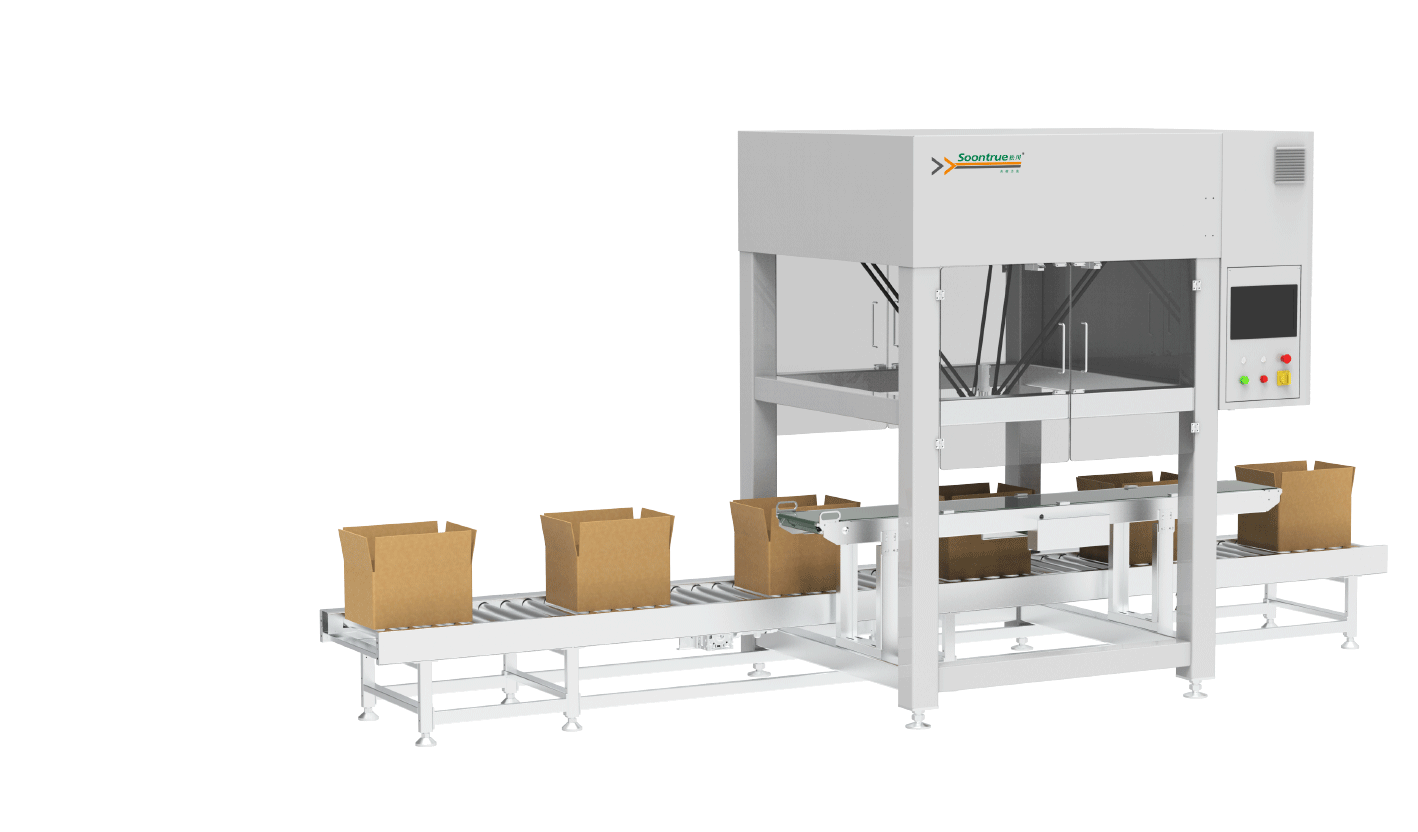
Mistake 1: No Maintenance and Operator Clearance Around Machines
The single most common failure we audit is a line packed so tightly that a maintenance technician cannot open a guard, pull a film roll, or reach a gearbox. Plants optimize for floor area at the quoting stage, then discover during week one that the wrapper needs a 900 mm open side to change forming tools — and there is a wall there.
Real failure case: a confectionery plant installed a horizontal flow wrapper 600 mm from a structural column because the floor plan looked tight on a CAD print. In production, every film change required two operators to tilt the roll cart and negotiate the gap. A 15-minute film change became 45 minutes. At three rolls per shift and three shifts, that is two hours and 15 minutes of lost runtime per day, or roughly 12,000 missing packages per week, all because of 300 mm of missing clearance.
The fix: reserve a minimum of 900 mm on the operator side for film and product changeover, 750 mm on the non-operator side for maintenance, and a full swing radius around any guard that opens outward. SunAura Packaging Machines marks these zones on the general arrangement (GA) drawing before steel is cut, because retrofitting clearance after installation is expensive and often impossible.
Mistake 2: Mismatched Line Speeds Without a Buffer
Plant engineers love to compare nameplate outputs. They build a spreadsheet of “machine A at 150 ppm, machine B at 140 ppm” and declare the line balanced. Nameplate speed is measured on empty machine, with ideal product, fresh film, and a rested operator. Real in-production speed is 65 to 80 percent of nameplate, and every station degrades at a different rate.
When two stations are close in theoretical speed but neither has buffer accumulation between them, the upstream machine must stop every time the downstream machine hiccups. A splice, a rejected pack, a label misfeed — any of these triggers a line-wide stop. Without accumulation, a 20-second stoppage at the case packer stops the wrapper for 20 seconds too, and all the changeover loss and waste that restarting implies.
Real failure case: a bakery line ran a flow wrapper directly into a top-load case packer with a short dead-plate and no conveyor accumulation. The wrapper was rated 120 ppm, the packer 110 ppm. The wrapper tripped on every packer mispick. Measured OEE on the wrapper was 58 percent, because it was idle whenever the packer cycled. Adding 3 meters of buffered accumulator conveyor between the two stations lifted combined OEE to 81 percent without touching either machine.
If you are sizing equipment, our guide on total cost of ownership for automatic packaging lines explains why nameplate figures should be discounted before you balance a line.
Mistake 3: Product Backtracking and Conveyor Snake Paths
When a line is retrofitted into an existing room, conveyors often wander to fit available doors. Product goes left, then right, then doubles back. Each change of direction is a place where product can jam, a corner where film dust accumulates, and a source of noise that operators learn to ignore.
Real failure case: a snack manufacturer ran output around a 90-degree corner and through a 180-degree return before reaching the case packer. Jams at the corner happened 11 times per shift, each requiring a stop and a hand-clear. Worse, the long conveyor meant a 90-second product delay between the wrapper and the checkweigher, so a film defect ran unchecked for 135 packages before anyone saw it on the reject. Rerouting to a straight 6-meter conveyor eliminated both the jams and the quality blind spot.
Avoid backtracking. Route material in one logical flow, raw material to finished pallet, without crossing labor aisles. When you integrate packaging machinery into existing production lines, the first CAD exercise is almost always removing a loop, not adding a machine.
Mistake 4: Under-sized End-of-Line (Case Packing and Palletizing)
Buyers overspend on the front of the line and underspend on the back. The wrapper gets the servo-driven model; the case packer gets the cheapest option; the palletizing is left to two operators and a hand pallet truck. This is where the layout bleeds money.
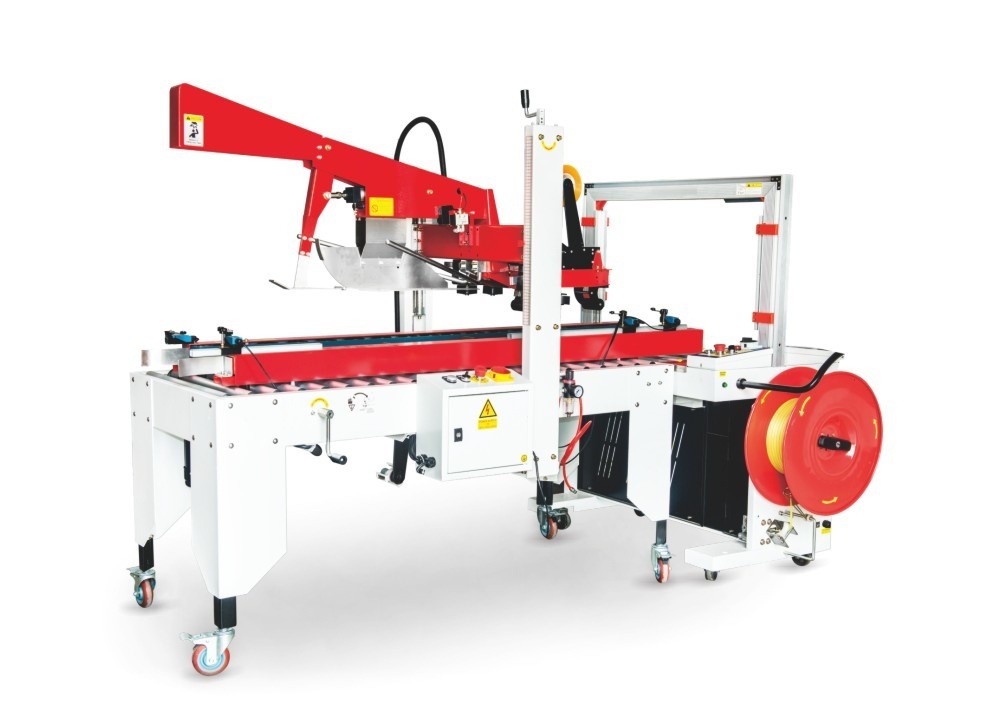
Real failure case: a plant ran three wrappers into one manual case-packing station. Six operators packed boxes by hand in two 8-hour shifts, at a labor cost the controller accepted as “normal.” When we modeled a collaborative palletizing robot upstream and an automatic case packer to feed it, the payback was under 14 months. The real cost of manual end-of-line was never the wages; it was the inconsistency, the absenteeism, and the line stops whenever one of the six people failed to show up.
Our selection guide on end-of-line palletizing system selection covers how to size this station correctly. A properly specified automatic case sealer and palletizer pair should keep up with the fastest upstream line, not the slowest human.
Mistake 5: Ignoring Ergonomics and Manual Workstation Placement
Layout is also about the person who runs the line. A manual feed table at standing height with no footrest, a film reel 1.6 meters off the floor, a reject bin the operator must stretch into — these look minor until absenteeism and injury claims appear. The best automated line still needs someone to load film, remove rejects, and manage changeovers.
Place manual stations at a height between 750 mm and 1050 mm, within a 500 mm reach envelope for frequently touched items, and with enough space for a seated or seated-and-standing posture. Position the HMI so the operator can watch the infeed while touching the screen. These rules are cheap on a GA drawing and expensive on a live line.
Mistake 6: Treating Utilities as Afterthoughts
Compressed air, drain, power, and extraction are routinely placed last, after the machines are already drawn in. A wrapper needs clean, dry air at a specific pressure; a shrink tunnel needs a dedicated power circuit and venting; a cartoner needs a drain for CIP if it touches product. If the air drop is 20 meters away with three quick disconnects, every pneumatic valve loses pressure, and seals that should be 0.35 seconds become 0.5 seconds of drift.
Real failure case: a shrink line was placed near a wall because it “fit,” but the required exhaust duct ran 12 meters to the nearest roof penetration. The tunnel could not vent properly, so heat built up and the film over-shrank. It took a week of engineering time to realize the problem was ducting, not the machine. Map utilities before footprint; the machine supplier should deliver a pneumatic, electrical, and service schedule with the GA drawing.
Mistake 7: No Room for SKU Growth and Changeover
A line designed for one SKU dies when the second SKU arrives. The layout should reserve a changeover zone, a place to stage size parts, and enough conveyor width to accommodate the largest foreseeable pack. If your next product is a family-sized box that is 40 mm taller than today’s, the low rail on the wrapper may need to rise 50 mm; if there is no headroom, the line cannot accept it.
This is where a turnkey supplier earns its keep. SunAura Packaging Machines designs the GA around a 3-year product roadmap, not just today’s order, and documents the changeover clearances on the drawing so future SKUs are a recipe swap rather than a civil works project.
Mistake 8: Ignoring Floor Loading, Drainage, and Cleanability
A packaging line weighs far more than people assume. A servo flow wrapper on its frame is 1.2 to 1.8 tonnes; a case packer with a gantry is 2.5 to 4 tonnes; a loaded palletizer with a full magazine of corrugate approaches 6 tonnes. Floor slabs in older buildings are often rated for light manufacturing, not concentrated point loads. Without a structural check, heavy machinery ends up on a haunch, and within months the frame torques, the conveyors misalign, and the bearings run hot.
Drainage and cleanability matter as much as weight. Food and pharmaceutical lines need floor gradients, coved corners, and equipment raised on stainless legs so pressure washing reaches underneath. A machine placed dead flat on the slab with no clearance traps product debris, invites pests, and fails its own GMP audit. The same is true for drainage: a wrapper that produces condensate or a CIP system without a nearby floor drain forces operators to run hoses across aisles, which is both a slip hazard and a contamination risk. SunAura Packaging Machines supplies the center-of-gravity and point-load drawings with every line so the civil contractor can size the slab and drainage before the steel arrives.
The Failure-Cost Math: Why Layout Errors Are Expensive
| Mistake | Typical consequence | Estimated daily loss (8-hour shift) |
|---|---|---|
| Inadequate maintenance clearance | Longer film/part changeovers | 60–110 minutes runtime |
| No buffer between stations | Line-wide stops on every hiccup | 5–12% OEE loss |
| Backtracking conveyor | Jams and quality lag | 2–6 jams per shift |
| Under-sized end-of-line | Labor bottleneck, absenteeism stops | 2–4 operators locked in |
| Poor ergonomics | Turnover and slow recovery | Hidden, 3–8% output |
On a line producing 80 packs per minute, one lost hour per shift at a product value of $0.60 per pack is $2,880 of lost contribution margin per day, roughly $86,400 per month. A layout correction that costs $15,000 to $40,000 to implement pays for itself in days. The reason these mistakes persist is that the loss is invisible until someone puts a stopwatch on the floor.
How a Turnkey Supplier Prevents These Mistakes
Piecemeal purchasing — one wrapper from a vendor, one case packer from another, integration outsourced to a local integrator — is precisely how layout mistakes get baked in. Each supplier optimizes its own machine; nobody owns the interface. A turnkey packaging machinery manufacturer owns the whole line, balances the speeds, sizes the accumulation, places the utilities, and signs off on the GA as one system.
When you are ready to specify a line, our RFQ checklist for sourcing automatic packaging machinery lists the layout and interface data every bid should include. You can also compare this approach in our look at in-house assembly versus buying complete turn-key packaging lines, and see how layout ownership changes the project risk. To discuss your own floor plan, contact the SunAura Packaging Machines engineering team or explore the broader range on our packaging solutions page.
Conclusion
Packaging line layout is not furniture arrangement. It is the engineering decision that determines whether your capital equipment returns its cost or becomes a very expensive bottleneck. The failure cases above are not exotic; they are the mistakes SunAura Packaging Machines corrects on nearly every rescue project we take on. Clearance, speed balance, accumulation, straight material flow, properly sized end-of-line, ergonomic stations, mapped utilities, and headroom for growth — get these on the GA drawing before you buy, and you avoid paying for them on the factory floor for the next decade.

James oversees the engineering architecture for full end-of-line projects: defining machine sequence, conveyor layout, line balance, footprint and expansion capacity before individual machines are ordered. He reviews customer specifications, production rates and facility constraints, and signs off on the engineering drawings and acceptance tests. His articles take the system-level view a procurement manager needs.
See Full Bio ›