
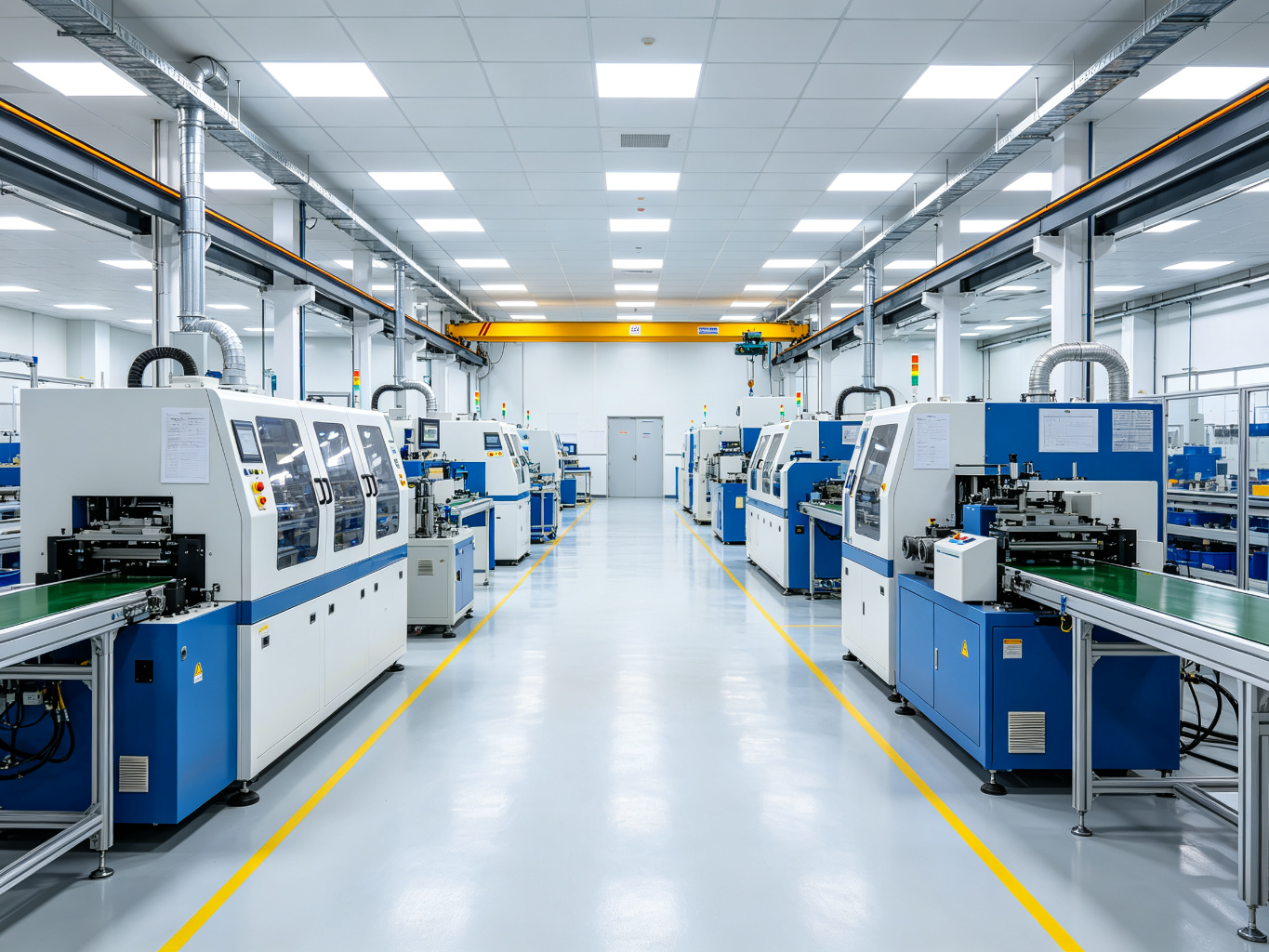
Every production manager who has ever priced a packaging line faces the same fork. Should your own engineering team buy individual machines and assemble them in-house, integrating conveyors, controls, and software as an internal project? Or should you buy a complete, pre-integrated, single-supplier packaging line ready to switch on? The decision looks like a cost question, but it is really a risk, timeline, and capability question. This comparison from SunAura Packaging Machines lays out the real trade-offs between in-house assembly and a complete turn-key packaging line, with the decision criteria that keep the choice honest.
What Each Option Actually Means
In-house assembly means you, the buyer, act as the integrator. You buy a wrapper from one supplier, a case packer from another, a palletizer from a third, and hire (or assign) engineers to design the conveyors, write the control interfaces, make the machines talk, and debug the whole on your floor. You own the schedule, the integration risk, and the downtime.
Turn-key supply means one supplier designs, builds, integrates, tests as a system, and delivers a line that runs your product on arrival. You write one PO, accept one FAT, commission one project, and hold one party accountable for the whole. The supplier owns the interfaces.
Neither is universally right. The mistake is choosing based on sticker price alone. The right choice depends on your internal engineering bench, your timeline, and your tolerance for integration risk.
The Hidden Hard Part: Machine-to-Machine Communication
When engineers picture in-house assembly, they picture conveyors and frames. The real difficulty is invisible: making the machines talk. A wrapper, a checkweigher, a case packer, and a palletizer each have their own PLC, their own alarm logic, and their own idea of what “stop” means. Integrating them means agreeing on a communication protocol (typically a fieldbus or OPC-UA), designing handshakes so a reject does not crash the upstream machine, sharing recipe and speed data, and building a common HMI that operators actually understand.
This is where weeks disappear. A wrapper supplier’s standard logic assumes it controls the whole line; a palletizer’s logic assumes it is independent. Reconciling those assumptions, translating alarms into a unified system, and testing the failure modes (film break, case jam, pallet full) is real controls engineering. A turn-key supplier has done this handshake design a hundred times and standardizes it. A self-integrating buyer designs it once, under schedule pressure, and pays for the learning curve. This is the single best reason to favor turn-key for any line with more than two stations.
Warranty and After-Sales Ownership
After the line runs, the ownership model continues to matter. In a multi-vendor in-house build, a failure becomes a detective story. The wrapper supplier says the line was starved by the case packer; the case packer says the wrapper fed irregular product. You are the referee, and the clock is running. Each vendor’s warranty covers only its own machine, so interface faults fall outside every warranty and onto you.
A turn-key supplier’s warranty covers the integrated behavior, not just the box. When the whole line is one product, the supplier cannot disown the interface. This is why a single PO is also a risk-transfer instrument: it moves the argument from your conference room to the supplier’s engineering department. Combined with a structured after-sales and spares program, this ownership means the line is supported as one asset for its life, not as a bag of mismatched parts.
The Hybrid Middle Path
The choice is not binary. Many buyers find a workable hybrid: buy the core, hardest-to-integrate station (often a high-speed wrapper or a robotic cell) as a turn-key, single-vendor package, and handle simple peripheral conveyors in-house. Or buy a modular turn-key line now, then expand it with compatible modules later. SunAura Packaging Machines designs lines to be modular precisely so a customer can start with one wrapper-and-case-pack cell and add a second cell as volume grows, without re-engineering the whole integration. This captures most of the turn-key benefit at a lower upfront commitment.
Whatever the structure, insist that whichever supplier owns the line also owns the integration. Buying machines and hiring a third-party integrator does not remove the risk; it adds a layer. The strongest position is one accountable supplier that built the line itself.
The Cost Comparison: Purchase Price vs Real Cost
On paper, in-house assembly looks cheaper. You buy each machine at what appears to be a transparent price, add conveyor steel, and “your own engineers do the integration in house.” The word in-house hides the cost. Burdened engineering hours, project management, procurement overhead, rework during commissioning, and the weeks of delayed production while the line is debugged all add up. Independent integrators and plant engineers routinely find that the true fully-loaded cost of self-integration lands 20 to 40 percent above the apparent machine-budget.
| Cost element | In-house assembly | Turn-key line |
|---|---|---|
| Machine purchase | Lower per machine | Slightly higher, integrated |
| Integration engineering | Internal, hidden | Included in price |
| Conveyors & interfaces | Designed in-house | Included and tested |
| Commissioning downtime | Weeks of your production | Days, pre-tested at factory |
| Project management | Your PM time | Supplier project team |
| Warranty ownership | Split between vendors | Single responsibility |
The single biggest hidden cost is commissioning downtime. A self-integrated line commonly spends three to six weeks on the floor before it runs reliably, because interface bugs only appear when dissimilar machines meet. A turn-key line is tested as a system at the supplier’s factory, then commissioned in days. Every week of delayed ramp is lost contribution margin. Model the full picture in our analysis of total cost of ownership for automatic packaging lines.
The Risk Comparison
This is where the decision usually flips. In-house assembly puts the integration risk entirely on you. When the wrapper and the case packer do not handshake, when the conveyor speed does not match, when the reject logic crashes the upstream machine, your team owns the late nights. Blame between vendors becomes a billable negotiation: each supplier blames the other’s machine, and your line sits idle while they argue.
A turn-key supplier carries that risk contractually. One name on the PO means one throat to choke when something does not work. The supplier has already run the whole system together, knows the interfaces, and has incentives to make it work because it is their reputation on the line. Our look at integrating packaging machinery into existing lines shows how those interfaces behave when they are designed by one owner.
The Timeline Comparison
In-house projects almost always slip. They depend on your engineers’ availability, vendor lead times that no single project manager controls, and debugging that cannot be predicted. A realistic self-integrated project from order to reliable production is often nine to fourteen months, with schedule slip baked in.
A turn-key project is compressed because the supplier repeats the same system architecture. Design is faster, procurement is the supplier’s routine, and the FAT removes most on-site debugging. A comparable line from an experienced turn-key supplier is typically six to nine months from order to production, and the schedule is more predictable because the supplier owns the dependencies. If your growth window is now, time to market is a financial argument, not a convenience.
When In-House Assembly Actually Makes Sense
We are not arguing turn-key is always right. In-house assembly wins in specific conditions:
- You have a strong in-house automation team. If you already employ controls and mechanical engineers who have integrated packaging lines before, your marginal integration cost is real and low.
- The line is simple and standard. A single machine plus a short conveyor needs little integration; self-build is reasonable.
- You want deep internal IP. If the packaging process itself is your competitive advantage, owning the design protects it.
- You have the time to absorb risk. If a six-month slip does not hurt your launch, in-house flexibility has value.
For smaller teams, a middle path exists: buy semi-automatic or modular stations and grow incrementally, as our guide on semi-automatic solutions for small and medium factories describes.
When Turn-Key Wins
Turn-key wins decisively when:
- The line is multi-station and high-speed. The more machines that must handshake, the more integration risk you are buying off your plate.
- You lack a dedicated packaging controls team. Without in-house engineers, self-integration means learning on your own downtime.
- Time to market matters. A compressed, predictable schedule is worth a premium when sales are waiting.
- You want a single warranty. When one supplier owns the line, there is no vendor-of-vendors blame game.
- You want a partner for the future. A turn-key supplier learns your products and supports the line for its life.
A Worked Example: The Integration That Broke a Budget
A confectionery buyer priced a wrapper from one vendor at $38,000, a case packer from another at $52,000, and budgeted $10,000 for in-house conveyor and controls. On paper the line was $100,000. In practice, the controls engineer spent four months reconciling the two PLCs (billable overtime and a contractor), the first commissioning took five weeks instead of one, and a recurring interface fault (the case packer dropping packs when the wrapper speed-changed) took another six weeks to diagnose because neither vendor owned it. The true cost reached about $155,000, and the line launched five months late. A turn-key quote for the same scope had been $118,000 and a one-day commissioning plan. The sticker-price saving was a mirage that cost $37,000 and half a year.
This is the pattern. The numbers change by industry, but the lesson does not: the integration is where the money hides, and a supplier that owns the integration prices it honestly because they have already priced it a hundred times.
A Decision Framework
| Question | If yes leans… |
|---|---|
| Do you employ packaging controls engineers? | Yes -> in-house possible |
| Is the line 3+ integrated stations? | Yes -> turn-key |
| Does a 3-month slip hurt? | Yes -> turn-key |
| Do you want one warranty owner? | Yes -> turn-key |
| Is the process your core IP? | Yes -> in-house |
Be honest about your internal capability. Overestimating your own engineering bench is the most common reason self-integration projects fail. If you are unsure, the fastest way to calibrate is to test the supplier: as our guide on judging a manufacturer’s real engineering capacity explains, a real turn-key supplier demonstrates its integration depth before you commit.
How SunAura Packaging Machines Delivers Turn-Key Value
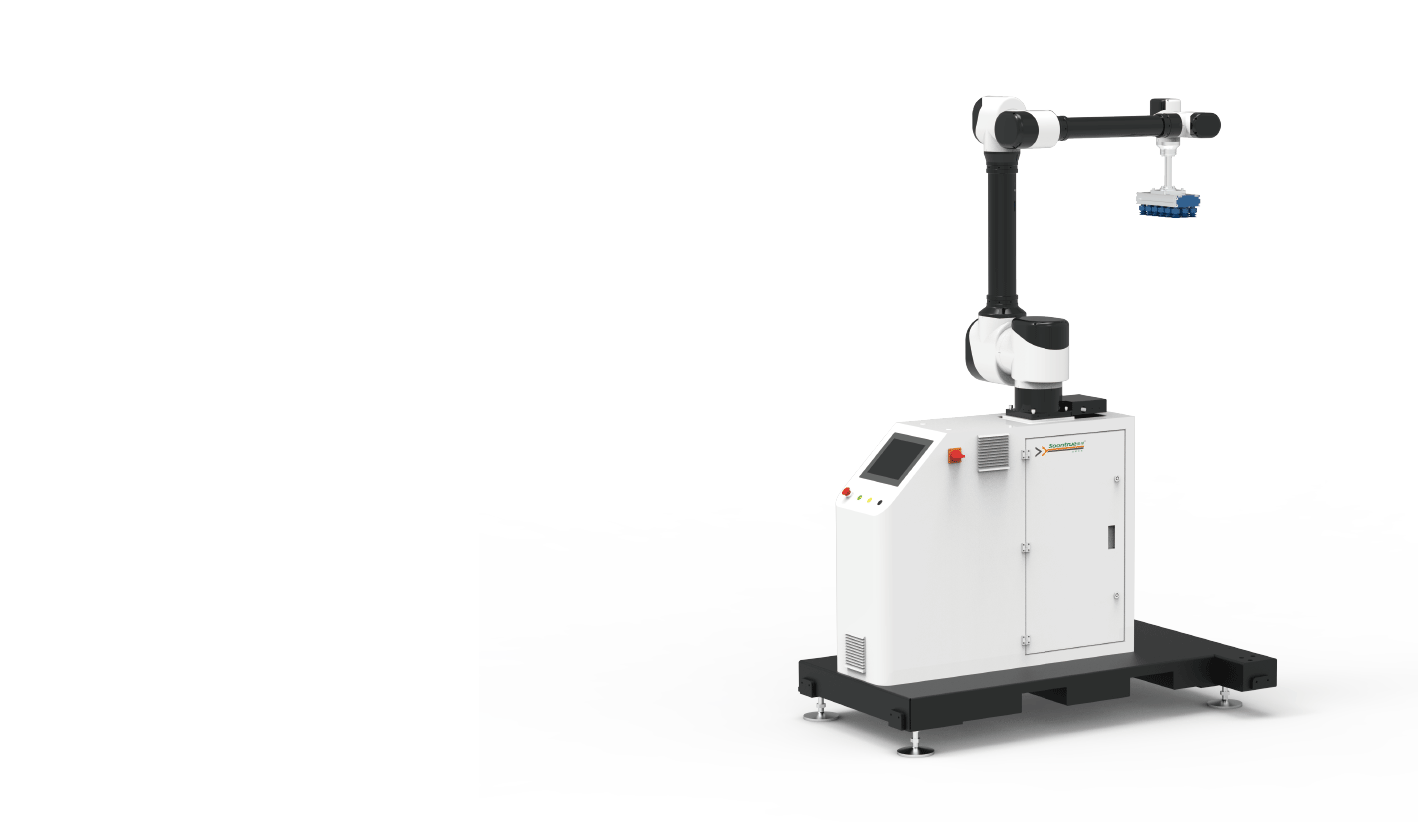
SunAura Packaging Machines designs and builds complete turn-key lines as one integrated system, from the upstream flow wrapper to the end-of-line robot. A project like our cake and bread handling packaging line is engineered, FAT-tested as a whole, and commissioned by one team; the collaborative palletizing robot and the wrapper that feeds it are balanced from day one. We show this in practice on our packaging solutions page and in the bakery turn-key case study.
Whether you lean in-house or turn-key, the next step is a scoped comparison rather than a single machine quote. Contact the SunAura Packaging Machines team with your product, speed, and internal engineering capacity, and we will tell you honestly which option fits — and price the turn-key version if it does.
Whichever path you choose, document the decision criteria in writing before suppliers quote. Comparing an in-house build estimate against a turn-key quote on an apples-to-apples basis — engineering hours, commissioning weeks, warranty scope, and schedule risk included — is the only way to make the choice with confidence. The buyer who does that exercise rarely regrets the decision they make afterward.
Conclusion
In-house assembly and a turn-key line are not right or wrong; they match different organizations. In-house fits teams with a strong automation bench and a simple, strategically sensitive process. Turn-key fits teams that want speed, a single warranty, and an integration risk they do not want to carry themselves. The error is choosing on purchase price alone. Count the hidden engineering hours, the commissioning downtime, the vendor blame risk, and the schedule slip. Add those up honestly, and the correct option usually becomes obvious. Buy the integration you cannot do yourself, and the machine you buy will earn its money from day one.

Kevin works on machine development for shrink bundling, shrink hoods and vacuum packaging. He tests film shrink ratios, tunnel heat zones, seal bar performance and chamber cycle times, and feeds that back into machine frame and conveyor design. He writes technical articles on shrink film selection, tunnel temperature balancing and vacuum packaging for industrial and food-adjacent secondary packs.
See Full Bio ›