

SunAura Packaging Machines has commissioned an automated shrink-multipack and end-of-line system for a bottled beverage producer in central Mexico, the company announced, replacing hand grouping and manual pallet handling on a line running PET bottled water and soft drinks in multiple pack formats. The installation groups bottles into multipacks, shrink-wraps them in printed or clear film, stacks the packs onto pallets with a collaborative robot and wraps the finished loads, with the line configured to change between pack formats by recipe.
The project is the latest in SunAura Packaging Machines’ beverage work across Latin America, where the company has delivered custom sleeve, erection and pallet wrapping projects in Brazil and Mexico and backs installations through its regional spare-parts and commissioning support. It shows how a mid-speed beverage line removes the manual stations that limit output without moving to a dedicated high-speed system.
The problem on the line
Beverage multipacks are awkward to handle by hand. Bottles arrive single-file from the filler and labeller and must be grouped into packs — commonly six, twelve, fifteen or twenty-four units — wrapped tightly so the pack carries as one unit, and then stacked layer after layer onto pallets. Where grouping and wrapping are manual or semi-automatic, the line is limited by the people at the station, packs vary in tightness and appearance, and palletizing filled multipacks is heavy, repetitive work that is hard to staff across shifts. Loose or weak multipacks split at the retailer, and hand-built pallets shift in the truck, producing the damaged packs and rejected loads beverage producers see at goods-in.
The producer wanted the flexibility to run water in the morning and soft drinks in the afternoon, across several multipack sizes, without long mechanical changeovers and without adding labour as volume grew.
The configured line, stage by stage
SunAura Packaging Machines configured the end-of-line as a continuous sequence balanced to the filler, with accumulation between stages so a short pause downstream does not stop product. Bottles are conveyed from the existing line and grouped automatically into the selected multipack pattern; the groups feed a sleeve shrink wrapper, which wraps the pack in film and passes it through a hot-air tunnel, where the film contracts tightly around the bottles; the packs cool on the outfeed and are conveyed to the palletizing cell, where a collaborative robot stacks them in interlocked patterns from stored recipes; and completed pallets move to a rotary-arm wrapper that secures them for road distribution.
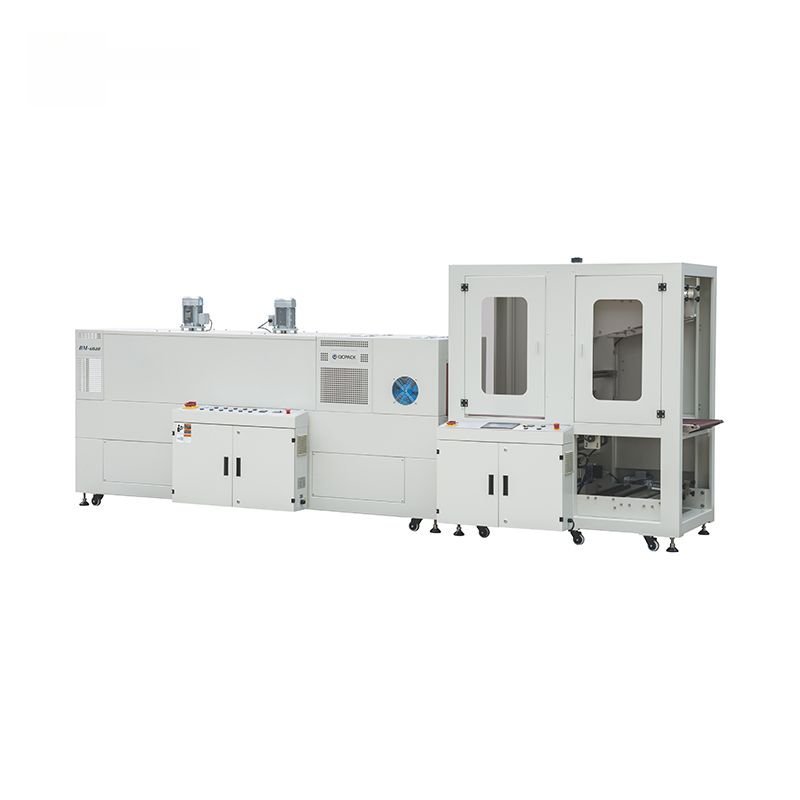
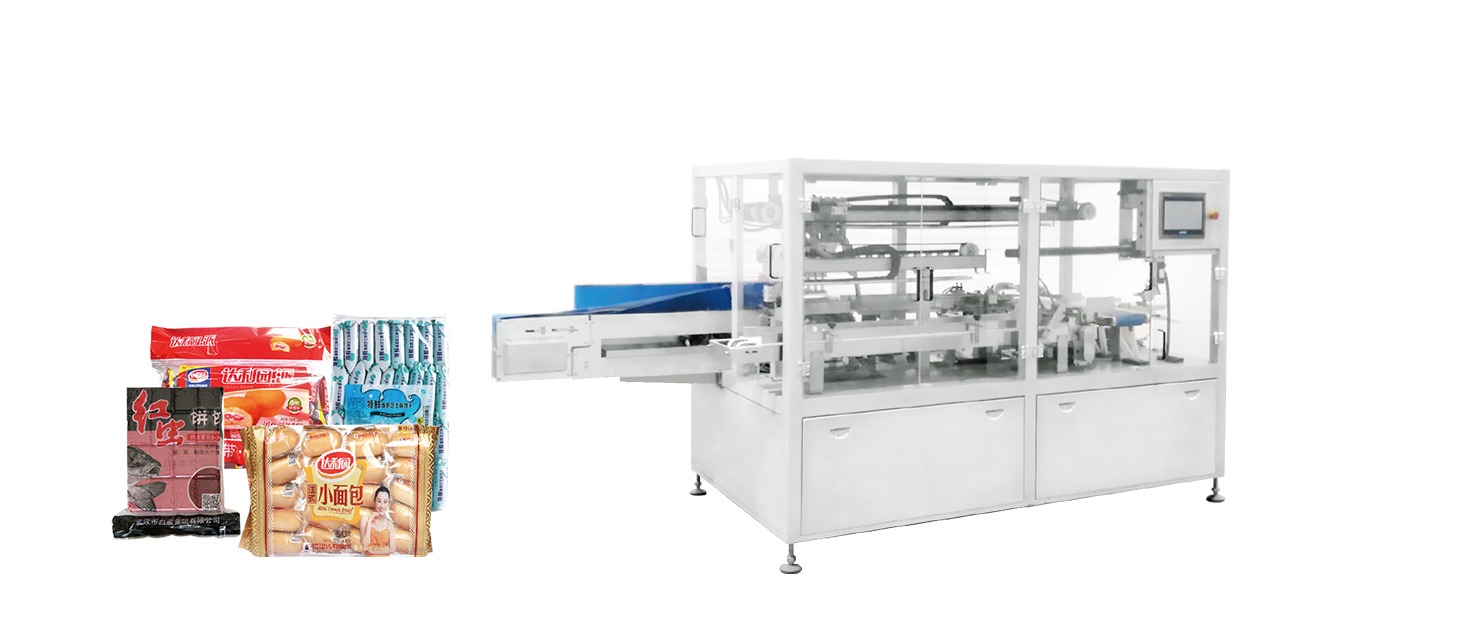
The wrapping stage uses an automatic sleeve machine in the class of the BTX-6040 sleeve shrink wrapper, built for high-volume multipacks of bottles, cans and cartons, with sensor-controlled film feed that cuts film waste, Teflon-coated sealing blades and automatic feeding, wrapping, sealing, shrinking and cooling without an operator. For secondary bundling of smaller packs the line can also run a bundle packer in the class of the SP260 secondary bundle packer, which groups wrapped product into larger promotional or transit bundles.
Palletizing multipacks without a cage
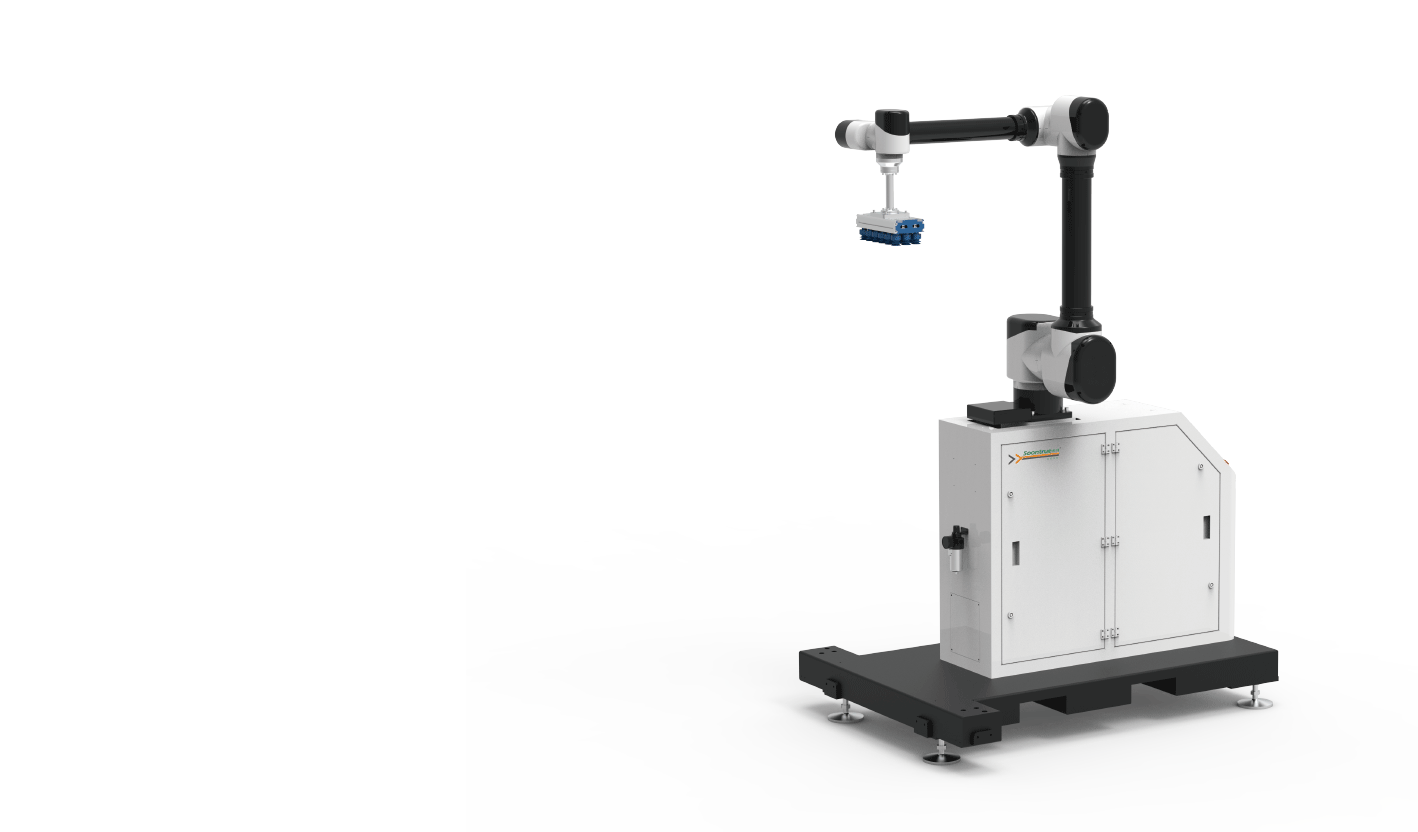
Filled multipacks are not rigid cases, and the palletizing stage was specified accordingly. A collaborative robot in the class of the WP-20 collaborative palletizing robot picks the packs with a gripper suited to their shape and places them in interlocked layer patterns, with the pack weight, gripper and multi-pick cycle checked against the cell’s payload as SunAura Packaging Machines does in its palletizing guide. Patterns for each multipack size are stored as recipes and recalled at the HMI, so changing from a twelve-pack water pallet to a twenty-four-pack soft-drink pallet takes seconds rather than a mechanical setup, and the cell runs beside operators with force sensing and the configured scanner or guarding arrangement.
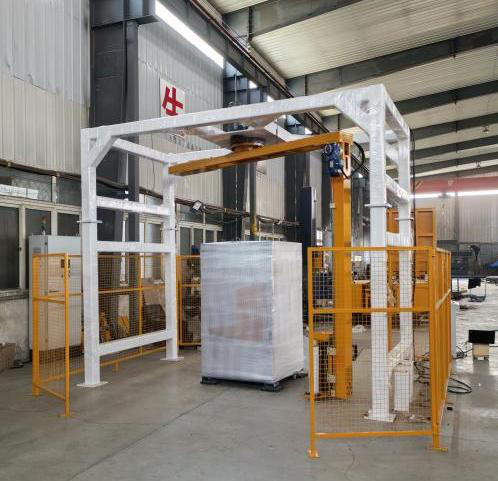
Completed pallets are wrapped on a rotary-arm machine in the class of the inline rotary-arm wrapper, chosen because it wraps stationary or lightly loaded pallets without spinning the load, which suits multipacks that could shift on a turntable, and it runs continuously with the line. Controlled pre-stretch sets the film tension and consumption, following the selection logic in SunAura Packaging Machines’ comparison of turntable, rotary-arm and orbital wrappers.
Changeover and the results
The line’s flexibility is measured in how it handles the producer’s mixed schedule. Multipack pattern, film, pallet pattern and wrapping settings are stored per product, so a format change is a recipe selection plus the film and change parts, rather than a full mechanical reset, and the same discipline that SunAura Packaging Machines documents in its SMED playbook for reducing changeover time. Since commissioning, the line runs the producer’s water and soft-drink multipacks at a consistent rate independent of staffing, packs leave the wrapper tight enough to carry as a unit, and the interlocked pallets arrive at retailers without the shifted loads the hand-built pallets produced.
SunAura Packaging Machines supported installation and commissioning on site, trained the operators on the recipes and changeover routine and supports the line through its Latin America parts and service channel, with the wear parts for the wrapper, robot and film handling available regionally rather than shipped from China for every need.
A production day on the line
The change is best seen over an ordinary shift. The morning run starts with bottled water in twelve-packs: the operator recalls the water twelve-pack recipe at the HMI, which sets the grouping pattern, film settings, pallet pattern and wrapping tension, and loads the matching film. Bottles flow from the filler into the grouping section, the sleeve wrapper wraps and shrinks the multipacks, and the robot builds pallets layer by layer, with completed pallets moving through the rotary-arm wrapper without stopping the line. At midday the schedule changes to soft drinks in twenty-four-packs: the operator recalls that recipe, changes the film and change parts, and the line resumes with a different grouping and pallet pattern rather than a mechanical rebuild. Through the day the line runs at a rate set by the filler and the wrapper, independent of how many people are on the floor, and the packs and pallets look identical at the end of the shift as at the start — the consistency manual stations never produce.
Film, consumables and the cost per multipack
For beverage producers the film is a recurring cost, not a one-off purchase, and the wrapper was specified partly to control it. Sensor-controlled film feed and the correct film width cut the scrap that comes from over-feed and mis-cuts, and the tunnel’s heat profile shrinks the film without wasting energy or distorting the bottles; on the pallet, controlled pre-stretch stretches the wrapping film to its usable limit, so each pallet consumes less film for the same containment. SunAura Packaging Machines works through the film structure and gauge with the customer and verifies it during factory acceptance, because a multipack that is tight enough to carry but not over-wrapped is the difference between a competitive cost per pack and one that erodes margin. The same logic is documented in SunAura Packaging Machines’ calculation of film cost per pallet.
Why not a dedicated high-speed line?
A fair question for any beverage producer is why a mid-speed, recipe-based line rather than a dedicated high-speed system, and the answer is the producer’s schedule. Dedicated high-speed multipack lines run one product, one pack format, at very high output, and they suit large single-brand plants that fill that capacity continuously; they are expensive, fixed and slow to change. The Mexican producer runs several products and pack sizes across the week at volumes a dedicated line would not fill, so a flexible mid-speed line — sleeve wrapper, collaborative cell and rotary-arm wrapper — matches the actual demand, changes formats quickly and costs far less, while still removing the manual stations. The line can also be expanded later, adding a second wrapper or palletizing cell as volume grows, rather than replacing the equipment.
Regional support and how it works
Machinery only earns its keep while running, and the support arrangement behind the line is part of the project rather than an afterthought. SunAura Packaging Machines backs Latin American installations through its regional spare-parts and commissioning channel, so the wear parts for the wrapper, robot and film handling are available without shipping every item from China, and faults are diagnosed through the same engineering team that configured the line. During commissioning the producer’s maintenance staff are trained on the wrapper, robot and controls, and the operator training covers the recipes, film changes and the daily checks that keep the line running. This is the same regional model SunAura Packaging Machines describes in its announcement of the Latin America parts and commissioning support, and it removes the usual risk of an imported line supported only by messages.
Expansion and adjacent projects
The installed line also opens adjacent improvements the producer is evaluating. A second multipack line for a different bottle size can share the palletizing and wrapping stages; promotional multipacks and seasonal bundles can run through the secondary bundle packer; and pallets can be handled further into the warehouse with the same conveyors and controls. Because the cells are modular and the recipes and patterns are stored rather than mechanically fixed, each addition extends the line rather than rebuilding it, which is how SunAura Packaging Machines designs turn-key systems for producers expecting growth. The company continues to discuss the next stages with the producer while supporting the running line.
Cans as well as bottles
The same architecture handles canned drinks, and producers running both containers often specify with that in mind. Cans are grouped into multipacks in the same counts, wrapped in film or run through a secondary bundler, and palletized with a gripper adjusted for the can pack; the differences lie in the grouping change parts, the gripper and the recipes, not in the line itself. For plants that add can lines seasonally or run promotional can multipacks, the flexibility means one end-of-line system serves both containers rather than a second dedicated installation, and SunAura Packaging Machines verifies both during factory acceptance using the customer’s actual packs.
What the producer avoided
It is worth stating what the installation replaced, because the alternative was not simply more labour. Hand grouping and wrapping produced variable multipacks, some loose enough to split in transit; hand-built pallets shifted and arrived damaged; staffing the stations across shifts was increasingly difficult; and the line’s output was capped by whoever was available rather than by the filler. Those costs — damaged product, rejected loads, overtime and the administrative work of covering shifts — are recurring and hidden, while the machine is a one-off purchase supported for years, the comparison SunAura Packaging Machines sets out in its total-cost work. Since commissioning the producer plans around the filler rather than around staffing the end of the line, which is the practical definition of automation on a beverage floor.
Frequently asked questions
What multipack sizes can a sleeve wrapper run?
A wide range of bottle and can counts, with the grouping pattern and film stored per product and changed by recipe, plus the matching change parts.
Can multipacks be palletized like cases?
Yes, with a gripper suited to multipacks and interlocked stored patterns; the payload check includes the gripper and any multi-pick cycle.
Why a rotary-arm rather than turntable wrapper?
Rotary-arm machines wrap without spinning the load, suiting multipacks and lighter pallets that could shift on a turntable.
How are format changes handled?
Multipack, pallet and wrapping settings are stored recipes recalled at the HMI, with film and change parts prepared in parallel.
Conclusion
The Mexican installation shows how a mid-speed beverage producer automates multipack end-of-line without a dedicated high-speed system: automatic grouping, sleeve shrink wrapping, collaborative palletizing and rotary-arm wrapping run as one balanced line, with recipe-based changeover across water and soft-drink formats and regional parts and service behind it. SunAura Packaging Machines continues to deliver such systems across Latin America, working from the producer’s actual bottles, packs and distribution requirements rather than a catalogue configuration.
If you pack beverages and want to automate multipack handling, contact SunAura Packaging Machines’ applications engineers with your bottle and pack specifications, or review the equipment in the products hub.

David leads our case sealing and cartoning engineering team. Over 14 years he has specified, installed and commissioned hundreds of random-size case sealers, top- and side-loading cartoners, and automatic case packers for food, household and industrial product lines. He writes buying guides and troubleshooting articles around seal quality, tape and hot-melt glue selection, and carton throughput limits.
See Full Bio ›