

Here is a situation every maintenance fitter knows. The flow wrapper ran perfectly on the morning shift, the afternoon changed the film, and now the seals look weak, the cut keeps landing a finger-width off, and nobody can agree whether the problem is the machine, the material or the operator. Flow wrappers are among the most forgiving machines on a packaging line when they are set correctly, but they combine three things that must stay in step — a moving product, a moving web of film and a set of temperature-controlled sealing jaws — so when one of those drifts, the fault shows up as a bad pack and the cause is rarely the part the operator is staring at. SunAura Packaging Machines supplies servo flow wrappers across a wide range, and this guide collects the faults our engineers are actually called about, with the logic used to find and fix them.
This is not a replacement for the machine manual; it is a structured way to think about the common problems so a fault is diagnosed from evidence rather than by turning every dial on the panel. We will cover sealing faults, cutting and timing faults, film handling and tension faults, and product feeding faults, then cover the settings that should be recorded per job and the maintenance that prevents most of these problems from appearing. If you run a flow wrapper — on bakery, snacks, hardware, trays or multipacks — the sections below follow the order in which an experienced technician works through a bad-running line.
First, understand what has to stay in step
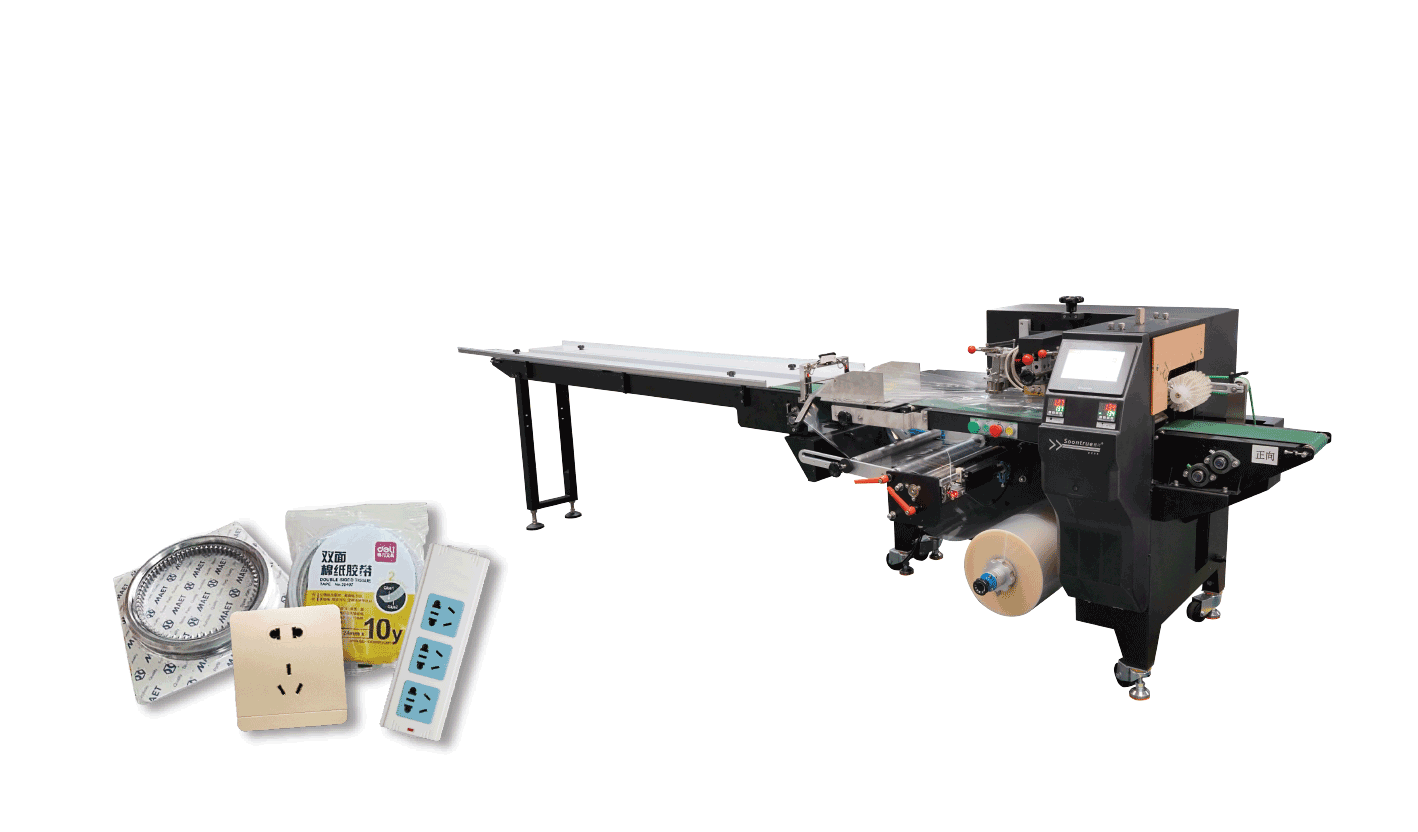
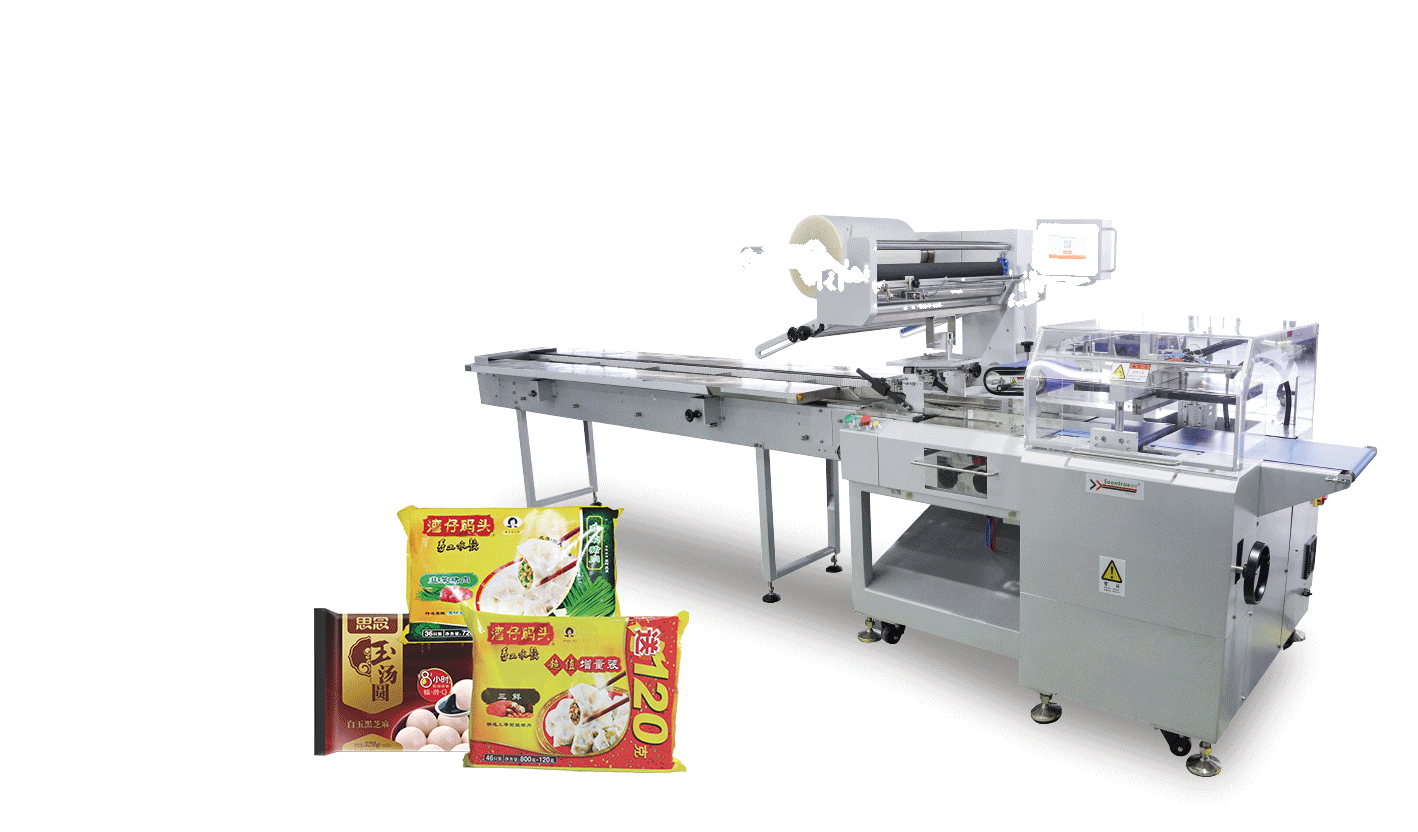
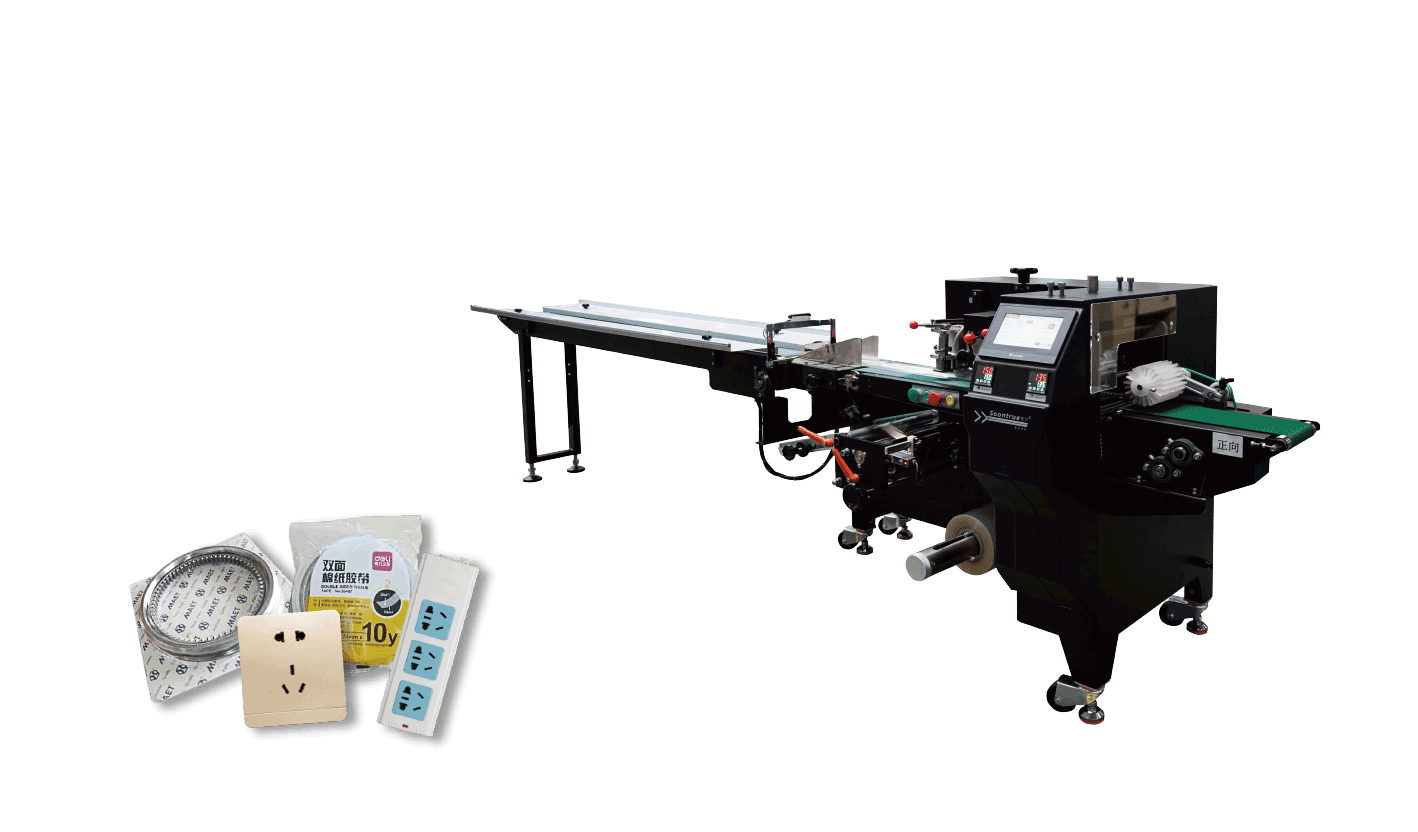
A flow wrapper forms a flat web into a tube around the product, makes a longitudinal (fin) seal along the overlap, and then a pair of rotating jaws makes the cross seals between products while a knife cuts between them. Product is fed in at a pitch that matches the jaw cycle, and on printed film an eye-mark photocell corrects the web so the cut lands in the right place. Temperature, web speed, jaw speed, product pitch and film tension therefore have to agree: change one and the packs change. Most faults reduce to one of these being off, and the fastest diagnosis starts by asking what was changed when the problem began — a new film roll, a new product, a shift change, a cleaned jaw — rather than treating the line as a mystery.
Sealing faults
Weak or open cross seals
A weak seal is the most common fault and has three usual causes, which should be checked in order. First is temperature: if the jaws are too cold for the film, the seal does not fuse, and this appears after a film change or at start-up before the jaws reach temperature. Second is contamination — product, crumbs, grease or burnt film on the jaw faces stops the surfaces meeting, producing a seal that looks patchy, and the jaws must be cleaned with the machine locked out. Third is pressure or wear: knurling worn smooth, springs weakened or jaws misaligned reduce the closing pressure, and these are mechanical faults rather than settings. The fix follows the cause — correct temperature for the film, clean faces, or service the jaws — rather than simply raising the temperature, which is the common operator reflex and the cause of the next fault.
Burned, shrunk or melted film at the seal
Film that burns, holes or shrinks back at the seal means the jaws are too hot, the dwell too long or the film too thin for the setting. It appears when operators raise temperature to fix a weak seal caused by contamination, which is why the two faults are linked and why temperature is changed deliberately and in steps. Sealing temperature follows the film material and speed — faster running tends to need higher settings because the contact time is shorter — and the correct value for each film is part of the stored recipe, not a number improvised per shift.
Wrinkled or creased seals
Wrinkles in the cross seal come from the film not lying flat as the jaws close — tension too low or uneven, the fin seal not centred, product pushing against the seal area, or jaws closing out of parallel. It is often accompanied by packs that look slightly twisted. Check the film is centred through the forming box, the fin is flat, and product reaches the jaws with clear space for the seal; a pack that is overfilled or misaligned will wrinkle the film every cycle.
Cutting and timing faults
The cut does not land between products
When the knife cuts across a product or off the centre of the seal, the wrapper is out of timing. On plain film the cause is usually the relationship between product pitch and jaw speed — products are being fed at the wrong spacing — or the cut position adjustment has drifted. On printed film, the eye-mark photocell must reliably read the registration mark; a dirty, mispositioned or incorrectly set sensor chases the mark and produces drifting cuts, and the film may be slipping so the marks arrive inconsistently. The fix starts with confirming products feed at the correct pitch and the photocell reads every mark, then the cut position is adjusted and observed over a run rather than set from a single pack.
Pack length varies or drifts
If packs come out alternately long and short, or the length slowly drifts, the web and jaws are not synchronised — on a servo machine this points to a timing or encoder problem, while on mechanically driven machines it can mean a worn clutch or slipping drive. Printed film that is not corrected by the eye mark will also wander. Because drifting faults often follow wear rather than settings, a machine that needs frequent re-timing should be checked mechanically rather than reset at every start-up.
The cut is incomplete or jagged
A cut that does not separate the packs, or tears rather than cuts, means the knife is dull, misaligned or not meeting its anvil correctly. This is a tooling fault: blades are replaced or lapped and the clearance set, and it is one of the wear items checked on schedule, since a half-cut pack jams the discharge and multiplies the problem.
Film handling and tension faults
Film tears or the web breaks
Web breaks usually mean tension is too high for the film, guides are binding or misaligned, or the film has a nick or defect from the roll. Thin films tear at the forming box if the tension does not relax as the web accelerates, which on servo machines is handled by the driven unwind; check the unwind is actually following and that rollers turn freely. A roll that is damaged or wound badly should be replaced rather than forced, and the film path should be checked for anything newly sharp or out of position.
The web wanders or runs off centre
Film that drifts side to side produces bad fin seals and wrinkles, and the cause is in the unwind and forming section: the roll not seated square, the forming box misaligned, or side guides not set. Centre the web with the machine running slowly, confirm the fin seal sits where it should, and check the roll itself is wound straight — a poorly wound roll wanders regardless of machine settings.
Bags are loose or full of trapped air
Packs that look baggy or balloon with air are usually a product-and-formation issue rather than a seal fault: the product does not fill the film, or air is not expressed before the cross seal. Pin perforations in the film allow air to escape for bulky products, and infeed speed can be set so the film is pulled tight around the product. For products that genuinely need a controlled atmosphere, a flow wrapper is the wrong machine and a chamber or MAP system applies.
Product feeding faults
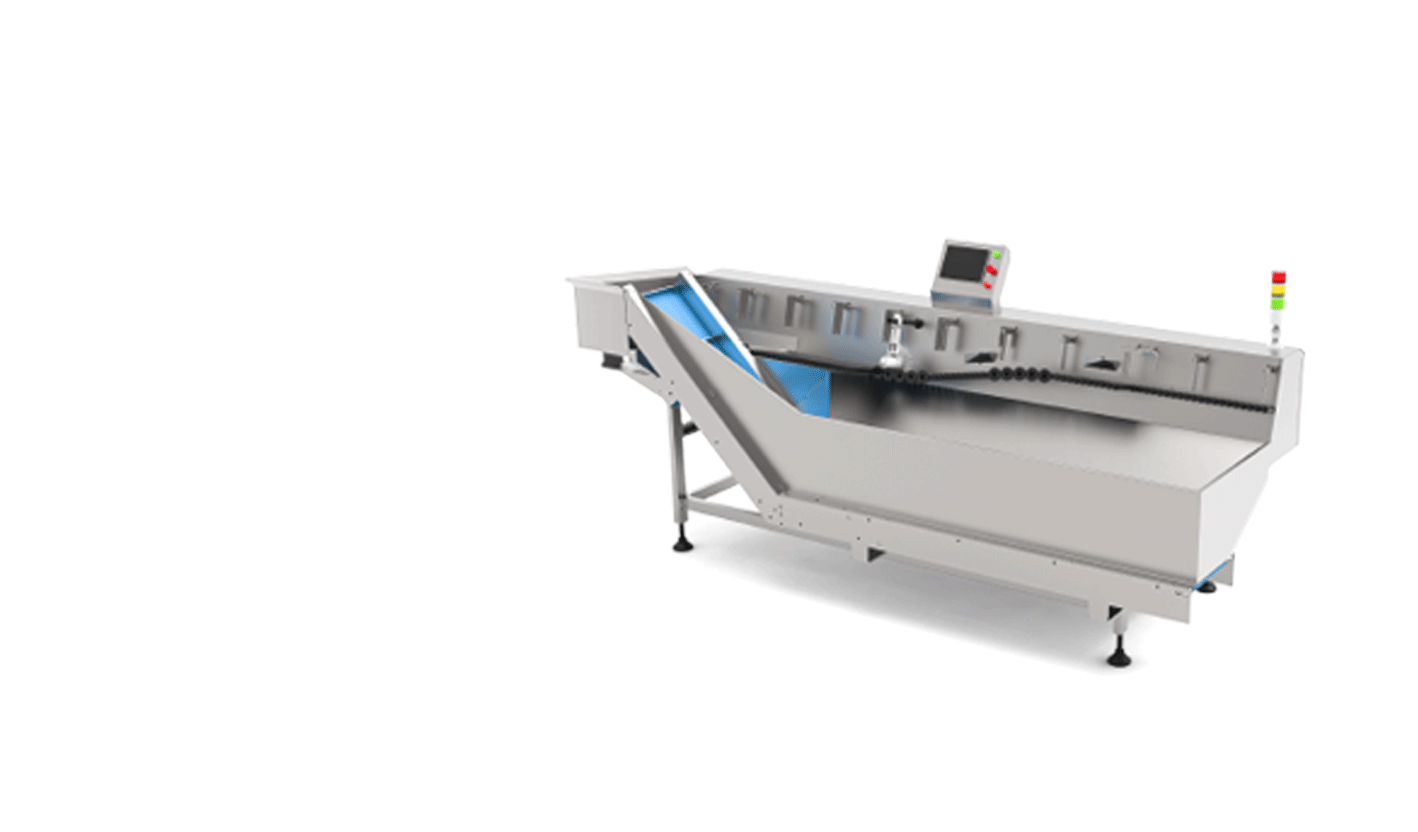
A large share of apparent wrapper faults actually start at the infeed. Products arriving inconsistently spaced, touching or misoriented force the machine to make seals in the wrong place or run empty cycles, and the wrapper cannot correct a stream that was never organised. Manual feeding depends entirely on the operator’s rhythm; automatic feeding with an aligning station such as the WX160 random product aligning feeder presents products at a fixed pitch and removes the variability. When the faults are intermittent and worse at high speed, the infeed is the first place to watch, ideally with the guard arrangement that still lets the stream be observed.
Record the recipe so faults do not return with the next shift
The single habit that most reduces repeat call-outs is recording the settings that produce good packs for each product and film: jaw temperature, fin-seal temperature, film tension, product pitch, cut position and eye-mark settings. Servo wrappers store these as recipes and recall them by product, so a changeover reproduces a known-good state instead of being tuned afresh each time. Where a plant runs many short jobs, this also shows whether a current fault is a genuine change from the baseline — and therefore something mechanical or material-related — rather than a setting that was never right.
Maintenance that prevents the faults above
- Clean the sealing jaws and check the knurling; keep the faces free of burnt film.
- Inspect and replace knives before they tear rather than cut.
- Check the film path rollers turn freely and the unwind follows the web.
- Verify the eye-mark sensor is clean, positioned and reading reliably.
- Inspect belts, clutches and timing drives for wear on non-servo machines.
- Keep the forming box and guides secure and centred.
- Check guarding and e-stops function; never run with interlocks bypassed.
- Store recipes and confirm changeovers against the recorded baseline.
Frequently asked questions
Why do my seals fail only after a film change?
The new film likely needs a different temperature, or the jaws picked up contamination. Confirm the film specification, set the stored recipe and clean the jaw faces before raising temperature blindly.
Why does the cut keep drifting on printed film?
The eye-mark photocell is not reading the marks reliably, or the web is slipping. Clean and position the sensor, confirm the film feeds without slipping and then adjust the cut position over a run.
The machine runs fine at low speed but faults at high speed — why?
That pattern usually means the infeed cannot present products at the required pitch, the unwind cannot follow the film, or a drive is worn. Check the infeed stream and film handling before changing seal settings.
Should I increase the temperature when seals look weak?
Only after checking for contamination and pressure. Raising temperature fixes a genuinely cold seal but burns the film when the real cause is dirty jaws or worn pressure surfaces.
How do I stop packs varying between shifts?
Store and recall recipes per product, so every shift starts from the same known-good settings rather than re-tuning the machine by hand.
Conclusion
Flow wrapper faults are repetitive because the machine’s requirements are repetitive: jaws at the correct temperature, clean and with good pressure; film fed at the right tension and centred; products presented at the correct pitch; and on printed film, the eye mark read every cycle. Diagnosed from what changed and worked through in the order above — seals, timing, film, feeding — the common faults are fixed quickly and, with stored recipes and scheduled maintenance, largely prevented. When a machine repeatedly loses its timing or tears film regardless of settings, treat it as wear and service the mechanism rather than resetting the panel for another shift.
If you are specifying a new flow wrapper or need a machine that handles frequent format changes reliably, SunAura Packaging Machines supplies servo wrappers with recipe control and integrated feeding across the full range of widths and rates. Contact our applications engineers with your product, film and target packs per minute, or browse the wrappers in the products hub, including the SZ-5800W reciprocating flow wrapper and the full servo range.

Kevin works on machine development for shrink bundling, shrink hoods and vacuum packaging. He tests film shrink ratios, tunnel heat zones, seal bar performance and chamber cycle times, and feeds that back into machine frame and conveyor design. He writes technical articles on shrink film selection, tunnel temperature balancing and vacuum packaging for industrial and food-adjacent secondary packs.
See Full Bio ›