

Most of the cost and damage in a secondary packaging operation is decided before a single case is erected or a single metre of film is applied. It is decided at the moment someone chooses the master case dimensions, the count per case, and the way cases will stack on a pallet. Get those three numbers right and the entire end-of-line runs better — the case erector forms cleanly, the case packer places without forcing, the palletiser builds a stable column, and the stretch wrapper uses less film. Get them wrong and you live with crushed corners, rejected pallets, void filling, wasted film and containers that cube out below weight.
This guide is about master case and pallet load optimization for end-of-line packing: how to size the corrugated case around the primary product, choose a sensible pack count, build a pallet pattern, match it to the regional pallet standard, and hold the load together through to the destination. SunAura Packaging Machines builds the machines that form, fill, seal and palletise these loads, and we see the difference between a well-designed pack and a poorly designed one on every line we commission.
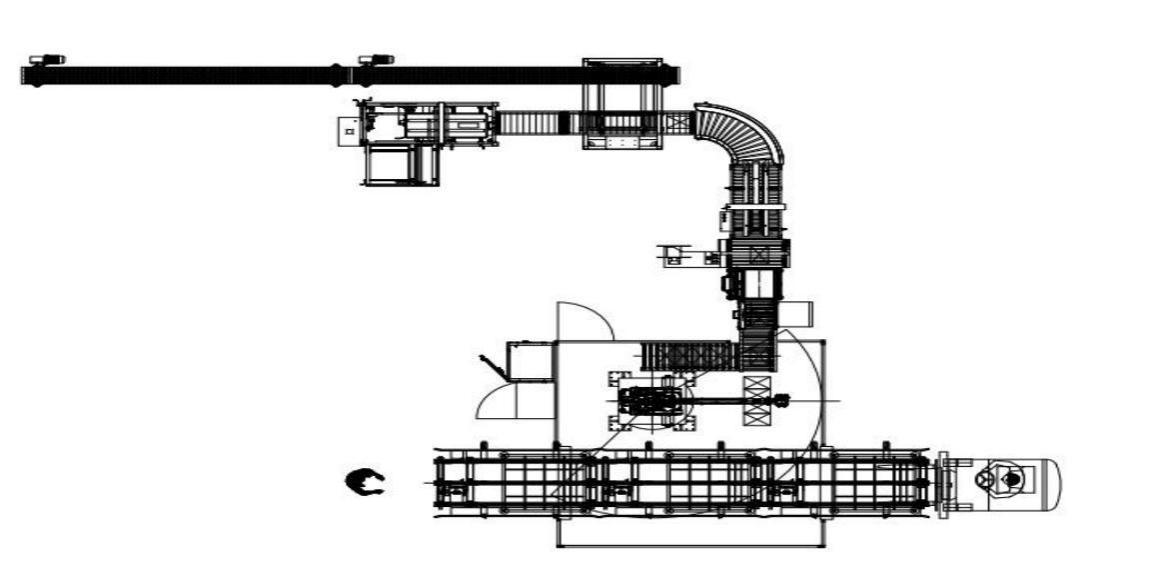
Step 1: Define the constraints before designing the case
The master case cannot be designed in isolation. It has to satisfy five constraints at once, and the design is the intersection of them:
- The primary product. The number of units, their orientation, and whether they need a liner or divider.
- The pallet. The footprint and stacking height limits of the regional pallet standard.
- The transport mode. Container height, truck height, double-stack capability in a warehouse or on a ship.
- The case’s mechanical strength. How many layers will be stacked and how much weight the bottom case must carry.
- The packing machine. The maximum and minimum case dimensions and the case count the case packer or erector can handle.
The temptation is to start with a standard case size from a corrugated supplier and work backwards. The better starting point is the pallet footprint and the unit dimensions, because the case is the building block that has to tile the pallet with the least wasted area.
The pallet standards you actually ship on
- GMA 48 × 40 in (1219 × 1016 mm) — the standard grocery pallet in North America and common in many export lanes.
- EUR / Euro pallet 1200 × 800 mm — the standard across most of continental Europe.
- 1200 × 1000 mm — the UK and much of the chemical and industrial trade.
- 1100 × 1100 mm — common across Japan, South Korea and parts of Asia.
An export line that serves both Europe and North America often ends up with two case sizes, or one case size that tiles both pallets acceptably. A case that perfectly tiles a 48 × 40 GMA pallet may leave a wide strip of unused space on a 1200 × 800 Euro pallet; the optimization software or a spreadsheet can show both layouts before the case is finalised.
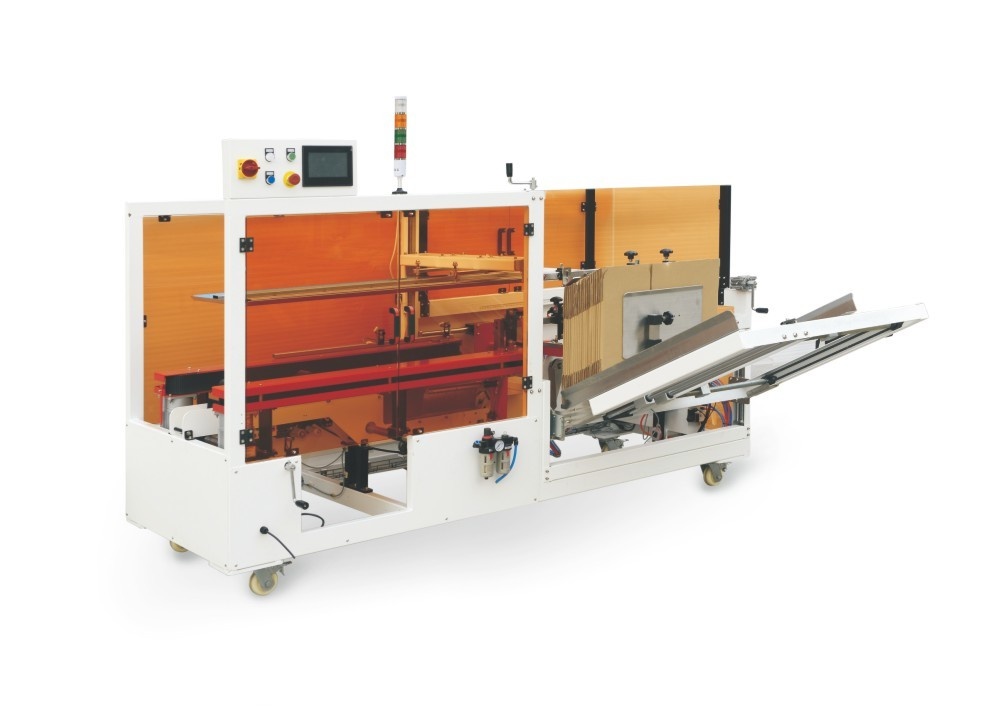
Step 2: Size the case to the product and the machine
An RSC (regular slotted container) case should be sized on its internal dimensions, because the machine handles the outside and the product occupies the inside. Leave a controlled clearance, not a large void: a few millimetres of clearance lets the case packer place product without scoring the case, but a large void lets the product shift in transit, which is what causes scuffed cartons and glass breakage. Voids should be filled with a divider or liner, not with extra air and corrugated board that only adds cost.
The board grade and flute profile are set by the stack load. Board is specified by edge crush test (ECT) or by the older Mullen burst rating. A common practice is:
- 32 ECT (around 200# test) for light, single-layer or short-storage loads.
- 44 ECT (around 275# test) for the majority of warehoused, multi-layer consumer goods.
- 55 ECT or higher for heavy contents or loads that will be double-stacked or spend long periods in a humid warehouse.
Moisture matters: the crush strength of a corrugated case drops significantly in high humidity, so coffee, frozen, beverage or tropical export loads often need a board grade that looks over-specified on a dry day. The company’s corrugated case specification guide covers board grade, flute and tolerances in detail, including the dimensional tolerances an automatic erector needs from the blank.
Match the case to the erector and sealer
A case designed for hand packing does not necessarily feed through an automatic case erector. The machine needs consistent blank dimensions, square scores, a board stiffness it can pull from the magazine, and a case weight that the suction cups can lift. A run of blanks with moisture at the upper limit, or a board that is too light for the case size, is the single most common cause of erector jams. Specify the tolerances with the corrugated supplier and lock a single board grade to each case size rather than accepting “equivalent” substitutes.
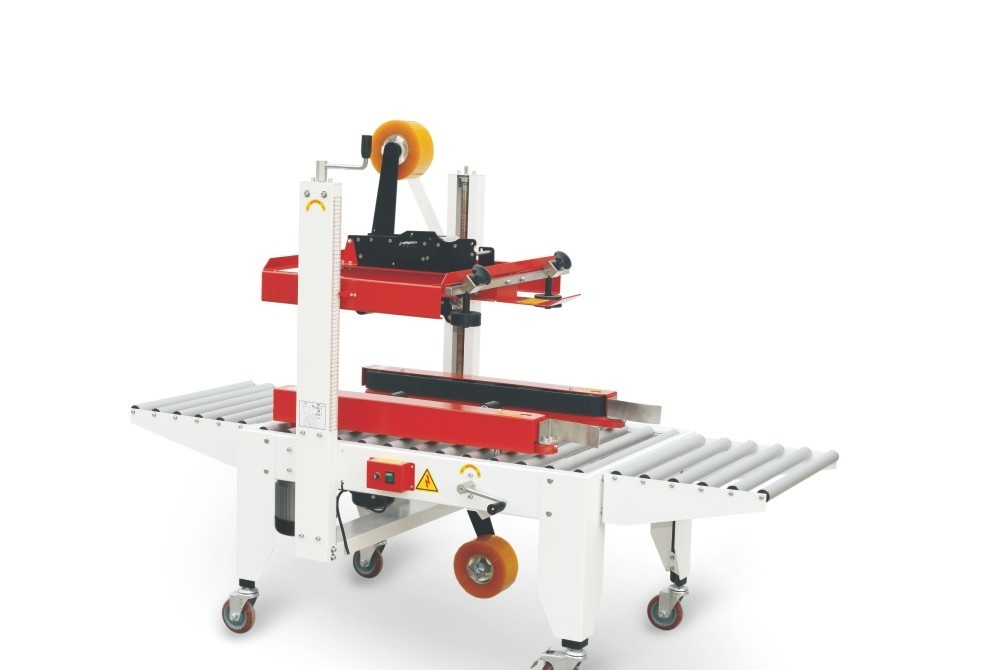
For sealing, confirm whether the case will be taped or hot-melt glued and choose the machine accordingly. A case sealer built for tape applies two strips to the seams; a hot-melt model glues the flaps. Export loads and double-stacked pallets sometimes add an L-type corner-edge seal, which reinforces the seam with an extra strip.
Step 3: Choose the pack count per case
The number of primary units per case is a small decision with large consequences. It affects how many cases the line produces, the case weight a worker or robot can handle, the retail order multiples, and the pallet height. The pack count should be chosen by working through four questions:
- What is the maximum comfortable case weight? For any line that may be manually handled, a target of roughly 10–15 kg per case keeps the load in a range most operators can lift; heavier cases push you toward full robotic handling.
- What pack count tiles the pallet? The case footprint and count are chosen together so that the case count and case size produce a clean layer without a large overhang.
- What order multiples do retailers use? Customers often order in round case counts; a pack count that matches a retailer’s order multiple reduces split cases.
- Can the case packer handle it? The case packer has a defined pick matrix and case count; a high count may require a second pick cycle per case, which changes the throughput.
It is common to standardise two pack counts — one for retail and one for club or bulk — rather than one case that compromises both. The robotic case packer stores both as recipes and changes between them in minutes, but the two cases must still be designed to tile the pallet.
Step 4: Build the pallet pattern and the Ti-Hi
The pallet pattern is the arrangement of cases on each layer, and the Ti-Hi is simply the number of cases per layer (Tiers, in the traditional shorthand) times the number of layers high (High). The two fundamental patterns are:
- Column (aligned) stacking places every case directly above the one below. It gives the highest compressive strength — the load runs straight down the case corners — and is the strongest for light, tall or crushable loads.
- Interlocking (brick) stacking rotates alternate layers, like a brick wall, which locks the cases together and resists side-to-side movement. It sacrifices a portion of stack strength but improves stability.
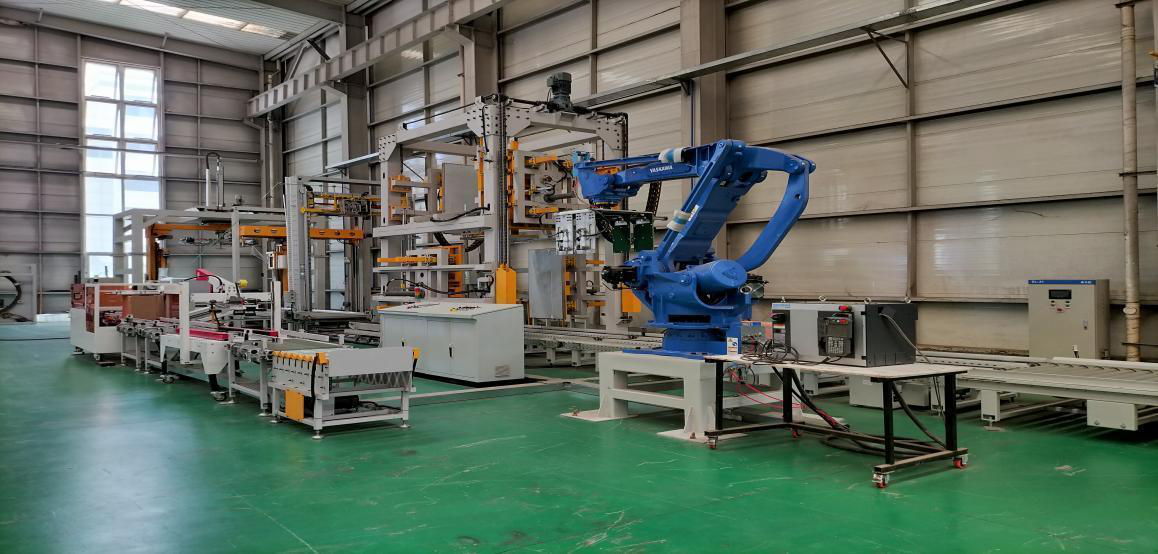
For most stretch-wrapped consumer goods, a practical compromise is a column stack with an interlocked top layer and a few interlocked layers at the bottom, combined with good wrap tension. A palletiser can store several patterns and the layer arrangements, including the orientation of each case. Choosing whether to use a conventional high-speed palletiser or a robotic cell depends on the rate, case weight and number of SKUs; a robot is especially flexible when several patterns or mixed-SKU pallets are required.
Overhang, underhang and height
Cases should not overhang the pallet edge — an overhang as small as a few centimetres transfers the load from the case corner to the middle of the panel and can cut stacking strength by a large margin. A small underhang is preferable. The total load height, including the pallet, is then set against the container or truck ceiling and against the warehouse racking. A typical sea-container target is a load height around 2,100–2,200 mm; a few extra millimetres of case height per layer will lose an entire layer over a tall pallet, and that is capacity you cannot recover.
Step 5: Contain the load with the right wrapping and strapping
A perfect pattern is wasted if the load breaks apart in handling. Load containment is the force holding the load together, and it comes from the combination of film, wrap pattern and additional reinforcement.
Stretch film is specified by gauge (or micrometre thickness), pre-stretch and applied force. Modern power pre-stretch machines elongate the film by 200–300% before applying it, which both increases the yield (fewer kilos of film per pallet) and gives the film elastic memory that pulls the load together. The applied force-to-load must be set high enough to stabilise but not so high that it crushes the leading corners of light cases. The three parts of the wrap pattern are:
- Base wraps — several overlapping turns at the bottom that lock the load to the pallet.
- Body wraps — the upward and downward passes that create the vertical containment.
- Top wraps — overlapping turns at the top that stop the upper layers moving; a top sheet can be added for moisture protection.
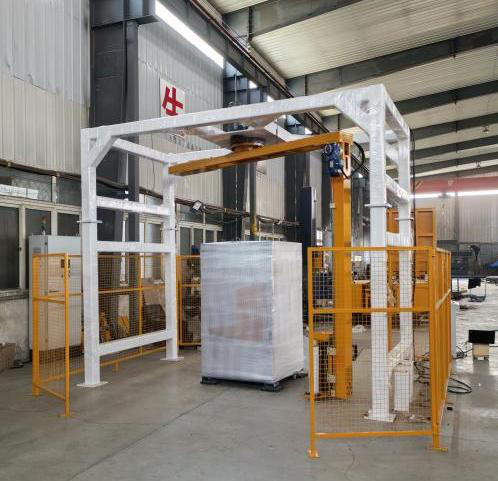
For very light or unstable loads, or where a rotating load is a problem, an inline rotary-arm wrapper rotates the arm around a stationary pallet instead of rotating the load. Heavier, rigid or export loads often combine wrapping with strapping — PET or PP bands applied through the eye or across the top — and the through-eye or horizontal pallet strapping machines can be integrated inline before the wrapper. Corner boards (edge protectors) distribute the band pressure and protect the case corners on rigid loads.
Worked logic: how the numbers interact
Consider a consumer goods export pack. Suppose the retail unit is a small carton, and the candidate master cases are 12-pack or 24-pack. The 24-pack reduces the case count and the labour per unit, but the case is heavier and taller; on the pallet it may produce a layer that overhangs a Euro pallet. The 12-pack tiles the Euro and GMA pallets more cleanly, keeps case weight in a manually manageable range and gives a stable layer count, at the cost of more cases and more sealing consumables. Running both layouts against the pallet dimensions, the container height and the erector’s case range often reveals that the smaller case produces a higher pallet fill and lower total freight cost per unit, even though the per-case packaging cost is higher.
That is the core insight: optimize the delivered cost per unit, not the cost per case. Corrugated board, tape and film are cheap compared with empty container space, rejected pallets and damaged goods.
Checklist before you freeze the case and pallet design
- Tiled the case footprint on every pallet standard you ship to, with no overhang.
- Confirmed the load height fits the container and racking with a layer to spare.
- Selected the board grade and flute for the stack load, including humidity margin.
- Kept a controlled internal clearance and designed in dividers rather than voids.
- Set a case weight that suits the handling method (manual or robotic).
- Chosen column or interlock patterns for the actual strength and stability need.
- Specified film gauge, pre-stretch, force-to-load and wrap pattern — and tested a pallet by pushing it through real handling.
- Verified the case dimensions, count and sealing method against the erector, case packer and sealer ranges.
When SunAura Packaging Machines supplies an end-of-line cell — an erector, a case erector and bottom sealer, a case packer, a sealer, a palletiser and a wrapper — the project runs most smoothly when the case and pallet data arrive with the RFQ. Send the case dimensions, board grade, pack count, pallet standard and target throughput, and the line can be sized and laid out correctly the first time. If the case design is still open, the application engineers can help optimize it before the corrugated blanks are ordered, because the cheapest place to fix a bad pallet pattern is before a single case is produced.

David leads our case sealing and cartoning engineering team. Over 14 years he has specified, installed and commissioned hundreds of random-size case sealers, top- and side-loading cartoners, and automatic case packers for food, household and industrial product lines. He writes buying guides and troubleshooting articles around seal quality, tape and hot-melt glue selection, and carton throughput limits.
See Full Bio ›