

A coffee exporter in Colombia’s Coffee Triangle has commissioned a SunAura Packaging Machines case packing and palletising line that takes filled valve-bags of green and roasted coffee directly from the bagging and weighing station, groups them into corrugated master cases, seals the cases and builds finished pallets without manual lifting. The installation replaces a section of the plant where operators had been hand-stacking bags into cases, hand-taping the flaps and building pallets with a hand pallet jack — a bottleneck that became acute after the roaster expanded exports to Europe and North America.
The line handles two primary pack formats: 250 g and 500 g retail valve bags, and 1 kg stand-up pouches for ground coffee. The cases are standard RSC corrugated boxes, and the cell is sized to run around 8 to 10 cases per minute on the most common count pattern, with a recipe-based changeover between the two bag types. The project is SunAura Packaging Machines’ first coffee commissioning in Colombia, part of the company’s growing work across Latin America following earlier beverage and multipack installations in Mexico and Brazil.
Why a coffee exporter needed a case and pallet line
Coffee bags are awkward to case-pack by hand. Valve bags are filled rigidly and can be slightly irregular in shape; stand-up pouches are floppy and must be presented to the case in a consistent orientation or the case will not close. On the old manual line, three operators were needed to keep up with the bagging machine during peak season, and a fourth person built pallets. Fatigue in the afternoon shift produced inconsistent case counts, misaligned bags and occasionally torn pouches, which showed up as customer complaints at the destination port.
The customer’s brief to SunAura Packaging Machines was specific: remove the four manual positions, accept both bag formats on the same cell, keep the floor footprint compact (the room is a retrofit, not a greenfield building), and provide a palletising section that did not require a full industrial fence between the cell and the existing corridor.
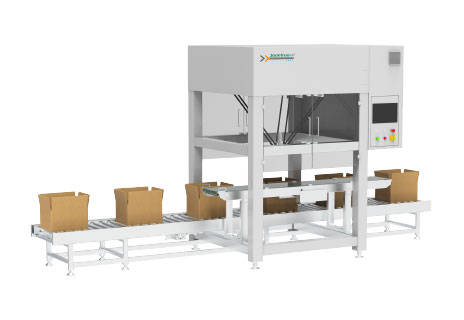
The line layout
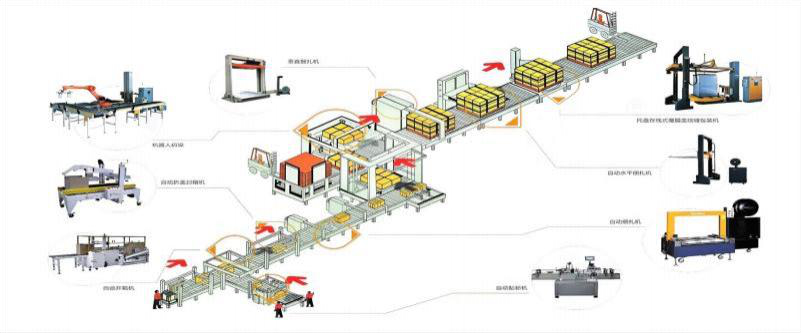
SunAura Packaging Machines configured the cell in a compact U-shape that follows the existing room. Filled bags leave the weighing station on an inclined conveyor and enter a collection and orientation section. A spider-robot case packing station then picks and places the bags into cases that have been formed upstream by a servo case erector. The packed cases travel through a tape sealer, a labelling position and onto the palletising section, where a collaborative robot builds the load pattern. A turntable stretch wrapper then stabilises the finished pallet before it is moved to the warehouse.
The main machine groups are all drawn from SunAura Packaging Machines’ standard catalogue, which the customer specifically requested so that spare parts and local service knowledge would be easy to maintain:
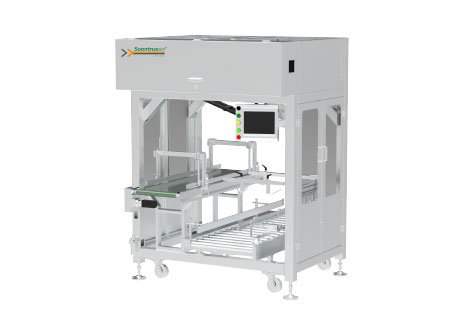
- A servo-driven case erector and bottom sealer that forms the RSC blanks and tapes the bottom before bags arrive.
- A spider-robot case packing station with a vision-assisted pick for the more variable stand-up pouches.
- A uniform case sealer that tapes the top flaps at a constant height.
- A collaborative palletising robot feeding an inline or turntable pallet wrapper.
- A short accumulation conveyor between the sealer and palletiser to decouple the two machines and prevent a single stop from cascading upstream.
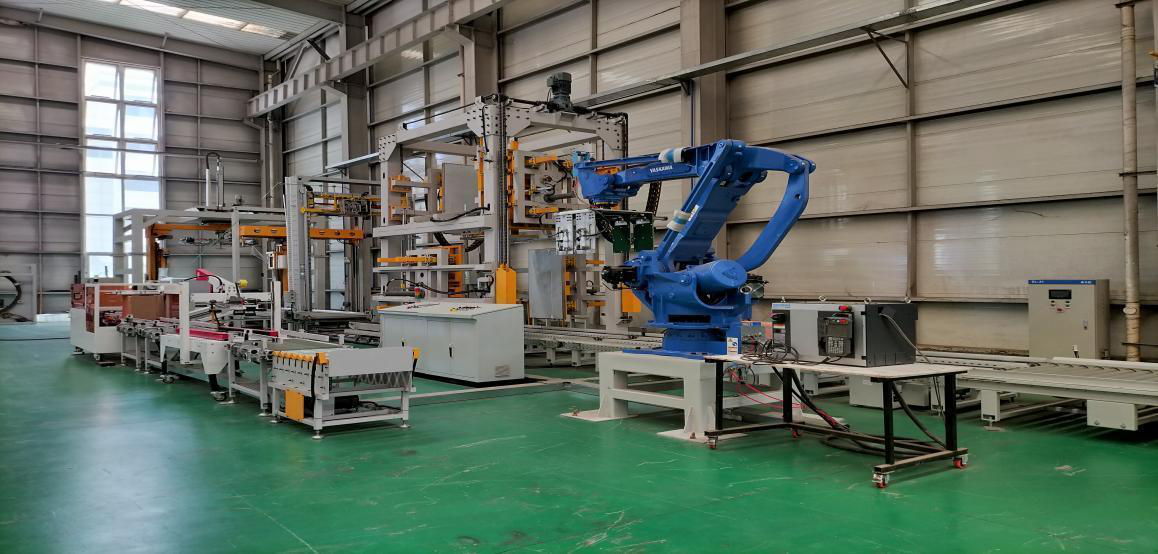
Case erection: the quiet part of the project
The customer initially expected the robot case packer to be the most difficult part of the cell. In the end, the case erector demanded the most tuning. Colombian corrugated supply varies between board mills, and the roaster’s cases were arriving with slightly different board flute and moisture conditions depending on the season. A machine that formed cases perfectly in a dry week could jam in a rainy week.
SunAura Packaging Machines selected a servo case erector rather than the cheapest pneumatic model precisely because the servo motions could be adjusted for flap resistance and square-holding pressure from the HMI. During commissioning, the engineers logged three blank variants and created separate case-formation parameters for each, so the line operator can select the active board type rather than forcing every blank through a single setting.
Robot case packing for flexible bags
The case packer is the technical heart of the line. Valve bags are picked from a collated row and placed in a 6- or 12-count arrangement depending on the case. Stand-up pouches are picked individually and stood upright in the case, which requires a gentler gripper and a longer place stroke. The gripper uses vacuum cups selected for the pouch film and a light clamp that holds the bag without squeezing the one-way valve.
SunAura Packaging Machines’ spider case packing station handles the valve bags, while the pouch recipe uses the same cell with a different end-of-arm tool and a reduced speed. Changeover is a stored recipe, not a mechanical rebuild — the operator selects the SKU on the HMI and the pick points, gripper selection and case count update automatically.
Palletising without a full fence
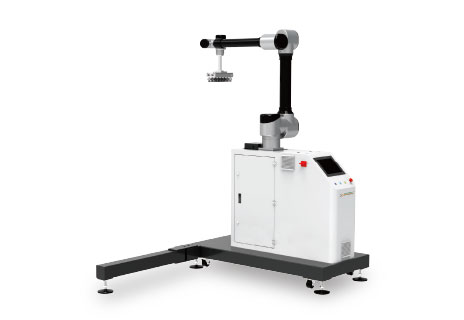
Because the line runs through a retrofitted room with an adjacent pedestrian corridor, the customer wanted to avoid a conventional fenced industrial cell. SunAura Packaging Machines specified a collaborative palletising robot for the case weights involved (the packed coffee cases stay within the payload and the cobot’s force and speed limits). The robot’s pattern editor lets the plant build two or three load patterns — one for each pallet standard the export market uses — and switch between them as orders change.
The team’s own guidance on choosing a collaborative machine is set out in its collaborative palletising robot guide. For the coffee line, a cobot was the right fit because the cases were light, the rate was moderate and the floor space was constrained. At higher weights or faster rates, the company would instead move to the conventional robotic palletising system.
Stretch wrapping for a long sea voyage
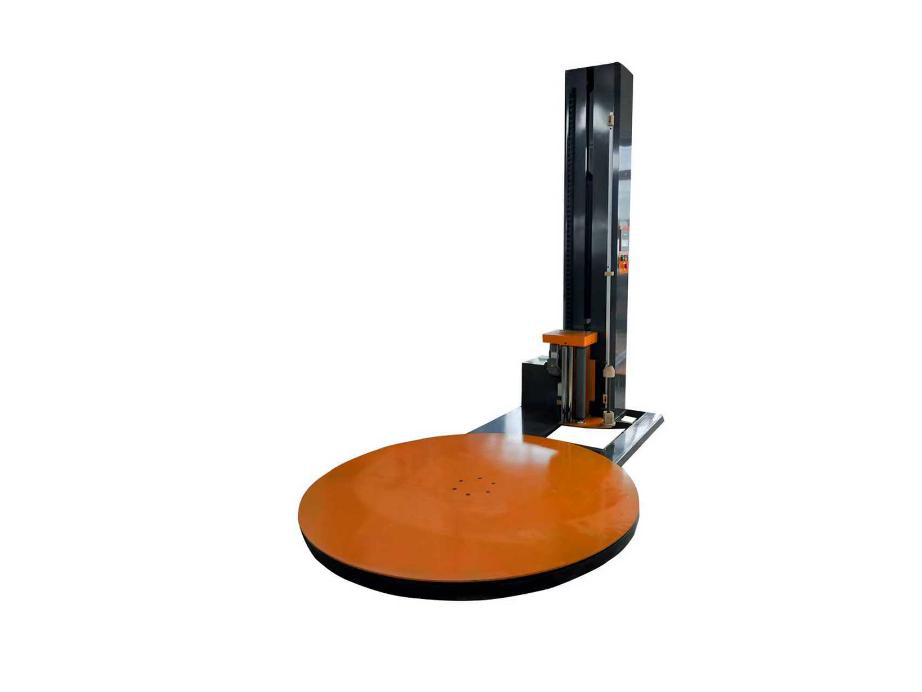
Coffee leaves Colombia by container for a multi-week sea crossing, so the stretch wrapper matters. A loose load that shifts in the container can crush cases and tear bags. SunAura Packaging Machines specified a turntable wrapper with a higher pre-stretch setting and a reinforced base wrap, with the roping pattern adding vertical containment for the top layers. The wrapper settings are documented for the customer, including the film gauge and the recommended number of top and bottom turns.
Buyers sizing their own wrapper can compare turntable and rotary-arm formats in the pallet wrapper selection guide, and work through film consumption in the company’s stretch-film cost material.
Results and the handover
After commissioning and operator training, the cell runs with a single operator whose role is to feed case blanks, monitor the HMI and move finished pallets. The four manual positions that had been tied to case packing and palletising have been redeployed to the roastery and quality areas. The plant reports consistent case counts and a marked drop in pouch damage, and the export pallets now leave the warehouse with a documented wrap pattern rather than a variable hand-built load.
SunAura Packaging Machines’ service team delivered the machine documentation in Spanish, kept the electrical schematics and spare-parts list with the cell, and commissioned a follow-up visit after the first 30 days of production to check film settings, case-formation parameters and the robot’s repeatability under real ambient conditions.
Commissioning timeline and the FAT
The project followed the standard SunAura Packaging Machines sequence for a turn-key export line. Once the case and bag dimensions were locked and the layout was approved, the cell was built and assembled at the Qingdao factory, where the customer was invited to a factory acceptance test using the two bag formats and a sample of the case blanks. The FAT ran the line through a full pallet of each format, checked the robot repeatability and the wrapper settings, and closed a short punch list before the cell was dismantled and shipped to the Colombian port of Buenaventura.
On site, the commissioning was completed in two stages: mechanical and electrical installation followed by a live production run, with the SunAura Packaging Machines commissioning engineer working alongside the customer’s maintenance team. The final stage is the most important — the cell is tuned to the actual ambient conditions and the actual corrugated and film supply in the plant, which are never identical to the factory conditions. Three case-formation parameters were adjusted in the first week, as noted above, and the wrapper pre-stretch was set once the customer’s chosen film gauge was confirmed.
Training, spare parts and documentation
The handover included operator and maintenance training in Spanish. Operators were trained on the recipe changeover, case-blank loading, the start-up and shutdown sequence, and how to respond to the common stop messages; the maintenance team was trained on the case erector adjustments, the vacuum-cup and gripper inspection, the sealing-head maintenance, and the wrapper film carriage. The cell carries a recommended spare-parts list covering the items that cause a stop if they fail — vacuum cups, a tape head, sensors, sealing elements and film carriage components — rather than a long generic list.
The electrical schematic, machine drawings, HMI manual and the spare-parts list were delivered with the machine and left on site. The documentation deliberately follows the same machine model numbers as the catalogue, so the customer can order parts without ambiguity; a part number is easier to maintain than a verbal description. For a roaster that had previously run a manual section, this documentation is what allows the new line to be maintained by the plant’s own staff rather than depending on an external fitter.
What made coffee different from the other end-of-line projects
SunAura Packaging Machines has commissioned beverage, snack, frozen-food and chemical lines, and coffee presented its own set of details. The one-way valve on a retail coffee bag is the most sensitive point: it is there to let gas escape without admitting oxygen, and the case-packer gripper cannot crush or block it. The product is also relatively light, so the case packer works with a light bag and a gentle place stroke, but the bags are individually irregular, which is why the spider cell uses a collated and orientation section rather than picking from a loose pile.
The packaging line also has to handle both the export bag, which is a rigid valve bag, and the pouch, which is a flexible stand-up format. Two bag formats on one cell is the kind of requirement that, in a less flexible line, would force a manual stage or a second cell. The SunAura Packaging Machines solution uses one robot and two recipes, with the gripper and pick points selected automatically. The vertical case packing solution is the reference when the flexible bag is dropped vertically into the case rather than placed flat.
Lessons for other bag-handling exporters
The Colombian project offers a few practical lessons for any coffee, tea, grain, nut or confectionery exporter considering a similar upgrade:
- Get the case erector right. In a retrofit with variable corrugated supply, a servo erector with adjustable formation parameters is worth the difference over the cheapest pneumatic model.
- One case packer with two recipes is usually better than two packing stations when the bag formats run in batches rather than simultaneously.
- A collaborative palletiser is a genuine option for light cases and moderate rates, but only when the cell is assessed for it; it is not a generic fence-free option.
- Specify the stretch wrapper around the actual sea journey and the destination’s pallet-handling practice, not against a nominal film setting.
- Decouple the cell with accumulation so a minor stop at the palletiser does not stop the case packer and erector.
For coffee exporters, tea packers, grain and nut processors and other bag-handling operations weighing up a similar upgrade, the company’s integrated packaging line team reviews case and bag dimensions, pallet standards and floor drawings before proposing a layout. The Colombian project is a useful reference point: it shows that a retrofitted room, two bag formats and a no-fence palletising requirement can be met with standard machines, provided the case erector, case packer and palletiser are engineered as one cell.

James oversees the engineering architecture for full end-of-line projects: defining machine sequence, conveyor layout, line balance, footprint and expansion capacity before individual machines are ordered. He reviews customer specifications, production rates and facility constraints, and signs off on the engineering drawings and acceptance tests. His articles take the system-level view a procurement manager needs.
See Full Bio ›