
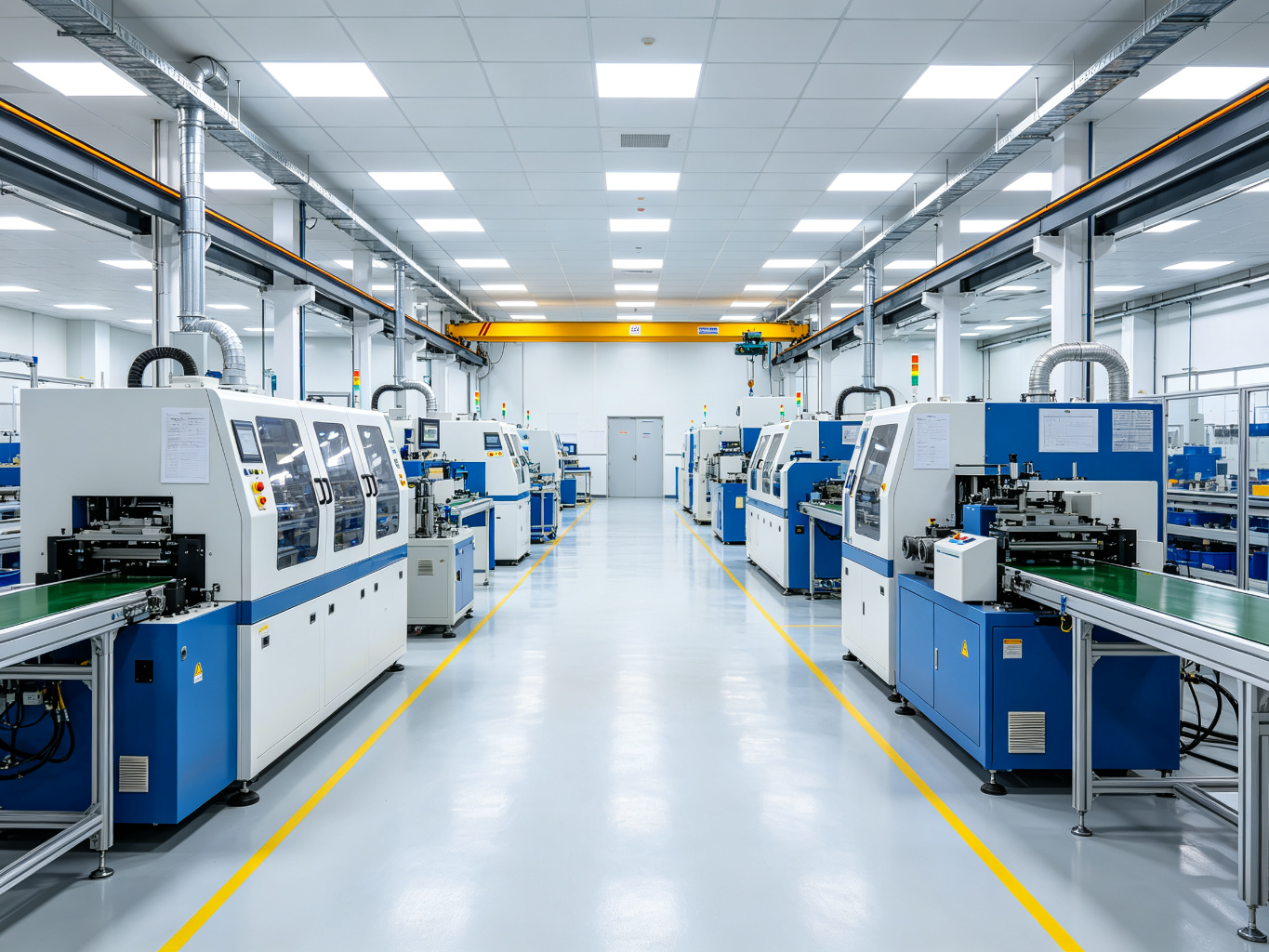
Few decisions on an end-of-line project divide engineers as predictably as the choice between a robotic palletizing cell and a conventional layer palletizer. Both can stack cases reliably for years, but they make very different demands on floor space, labour, changeover routines and capital budget. At SunAura Packaging Machines we see buyers search for “robotic palletizer vs conventional”, “palletizing robot ROI” and “automatic palletizing machine for small factory” when they reach the point of justifying automation. The right answer depends less on the technology than on your production profile — the number of SKUs, required rate, case characteristics and how the cell will be staffed.
This guide compares robotic and conventional palletizing on the dimensions that actually affect total cost, and gives a framework for choosing on mid-speed lines. It is written for production managers and engineers who need a defensible recommendation rather than a sales preference.
What each technology actually does
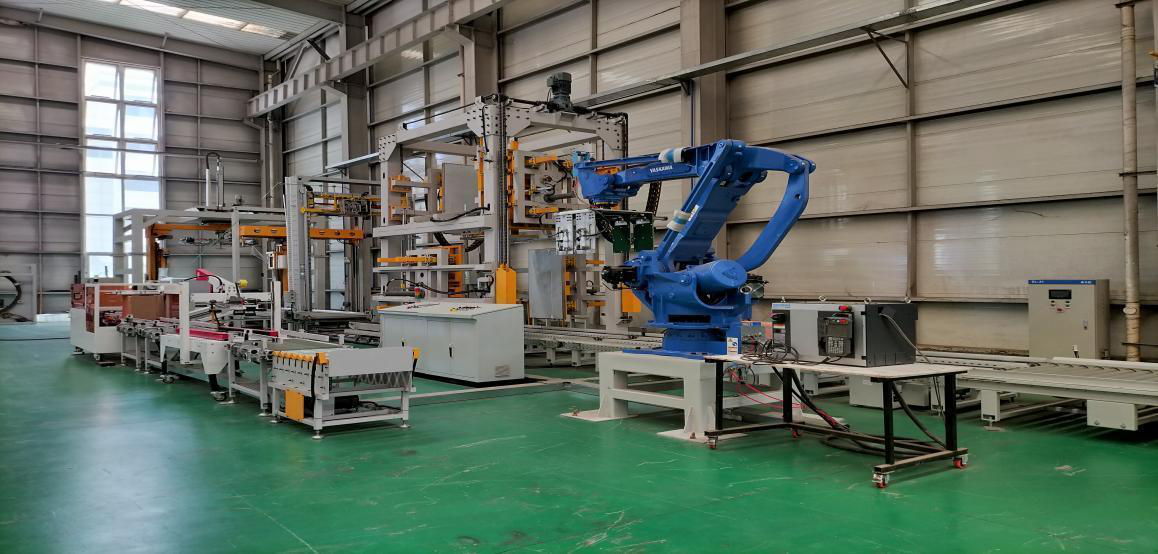
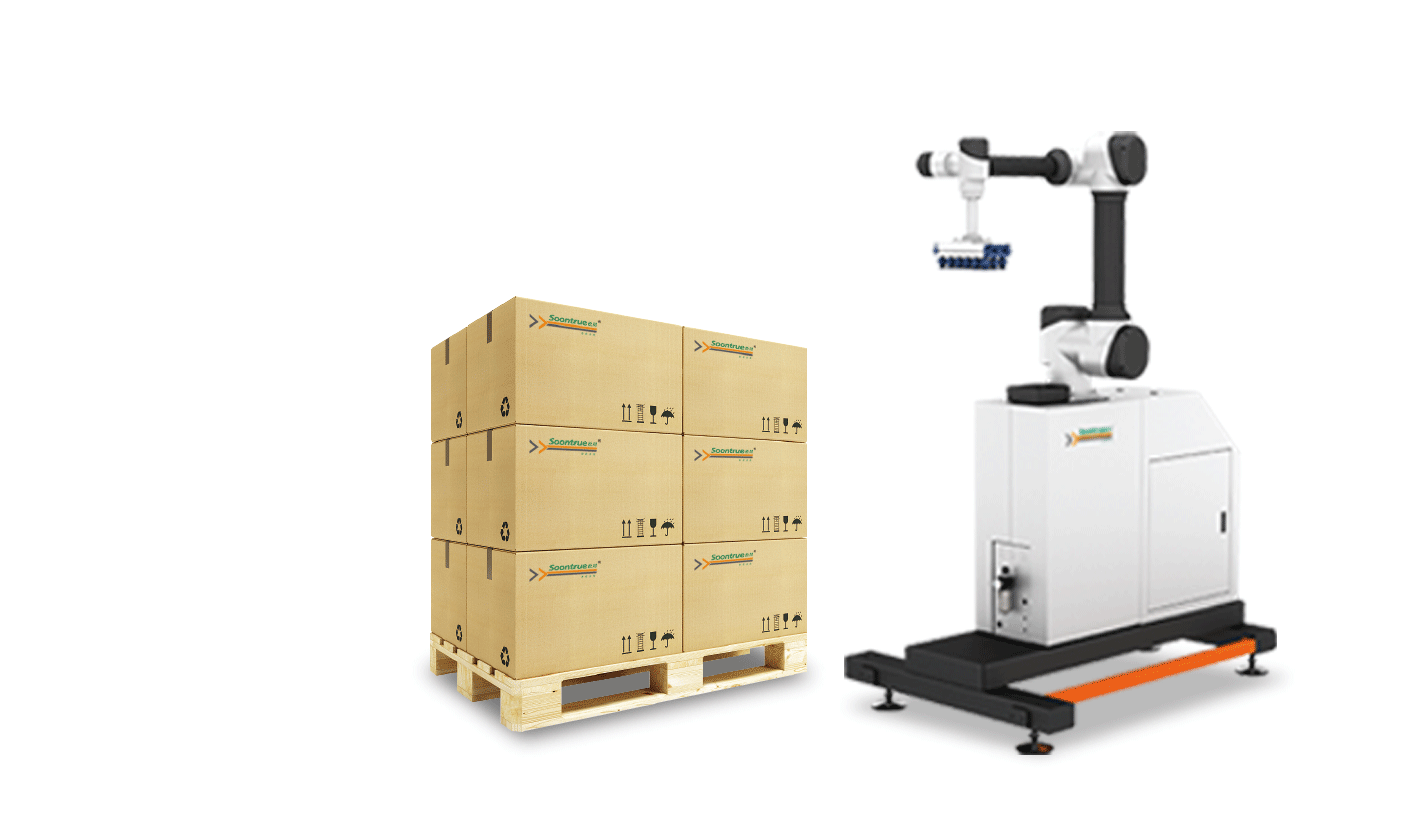
A conventional (layer) palletizer receives cases at high level or low level, forms them into a complete layer on a forming plate, and deposits that layer onto the pallet. It is a mechanically continuous system built around a fixed pattern, which is why it achieves very high sustained rates with a single product. A robotic palletizer uses a multi-axis arm (or a collaborative robot) with a gripper designed for the case, picking and placing products according to programmed patterns. The robot is inherently reconfigurable: changing product is largely a matter of selecting a new program and, if needed, changing the end-of-arm tool.
Neither is universally superior. The layer palletizer wins on raw speed and consistency for one high-volume SKU; the robot wins on flexibility, footprint and the ability to handle several lines or patterns in one cell.
The flexibility argument in detail
Modern packaging operations rarely run one product forever. A cell that palletizes three lines, handles frequent promotions, or switches between display pallets and standard patterns benefits enormously from a robot. Pattern changes that would require mechanical adjustment — or a change part — on a conventional machine are made in software, often in seconds. Robots can also build mixed-SKU or rainbow pallets, place slip sheets and tier sheets automatically, and manage multiple pallet positions within one cell. For operations whose range changes seasonally, this reconfigurability is the deciding factor.
SunAura Packaging Machines routinely configures robotic cells to pick from more than one infeed and to call different patterns automatically based on the product arriving, which reduces the changeover labour that conventional cells require.
Speed and throughput: where conventional still leads
For a single high-volume SKU running continuously, a high-level layer palletizer can outperform a single robot on sustained cases per minute, because layer formation happens in parallel rather than through sequential pick-and-place cycles. Robotic cells close this gap in two ways: by using a faster arm with optimised motion, or by deploying multiple robots or multiple pick positions. At the mid-speed rates typical of most food, cosmetic and household-product lines — roughly 5 to 25 cases per minute — a well-selected robot meets the rate comfortably with margin. It is mainly at the highest continuous rates, or with very heavy cases, that conventional technology retains a clear edge.
As always, the figure that matters is the real throughput your line sustains, including stops and changeovers, not the peak catalogue number. A robot that runs at a slightly lower peak but eliminates changeover downtime can deliver more cases per shift.
Footprint and installation
Robotic cells are generally more compact than the equivalent layer palletizer, especially high-level machines that require case elevation. A robot can be installed into an existing packing hall with limited headroom, fed directly from the case sealer, and the cell can be relocated if the layout changes. Conventional palletizers, particularly high-level versions, demand more vertical space, longer infeeds and heavier civil work. For factories retrofitting automation into an older building, the smaller footprint and simpler integration of a robotic cell is often the practical reason to choose it.
Case characteristics and the end-of-arm tool
A robot’s suitability starts with the gripper. Vacuum tools handle uniform sealed cartons well; fork or clamp tools suit bags, bundles or open cases; and adjustable tooling can cover a range of dimensions. Cases that are under-filled, soft or irregular are harder for any system, but a robot can be tuned with gentle motion and a tailored tool where a fixed layer machine would jam. It is important to test your actual cases — including the weakest, least-filled sample — during the design phase. A reputable supplier will run product on the proposed tool and confirm performance before manufacture.
Labour and the workforce question
Both technologies remove the repetitive manual stacking that causes fatigue and injury, but they affect labour differently. A conventional palletizer tends to run with minimal operator attention once set, while a robotic cell is so easy to re-task that it often absorbs work previously spread across several manual stations. Collaborative robots, which can operate beside people with reduced guarding at lower rates, lower the automation threshold for smaller factories that cannot justify a fully guarded conventional line. The labour case should be built on the specific roles removed — end-of-line stackers, forklift movements between palletizer and wrapper, and rework from unstable hand-built pallets.
Maintenance and reliability
A modern multi-axis robot is a mature, low-maintenance device with long service intervals and well-supported spare parts; reliability is broadly comparable to conventional machines when both are specified from established manufacturers. Conventional layer palletizers contain more mechanical motion — rollers, elevators, forming plates — that can wear but are often simple for in-house mechanics to understand. Robots require comfort with controls and programming, though day-to-day operation does not. SunAura Packaging Machines recommends that the choice consider which maintenance skills your team already holds, and that training and spare-parts kits be part of the purchase rather than an afterthought.
Capital and operating cost compared
At mid-speed, robotic cells frequently carry a lower installed cost than a conventional layer palletizer once civil work, elevation and guarding are included, and collaborative robots extend this down to very modest throughputs. Conventional machines can be more economical at very high volumes where their speed is fully used. The honest financial comparison is total installed cost divided by the cases the cell will actually handle over its life, plus the avoided labour and rework. A flexible robot that remains useful as products change also protects the investment against a future SKU shift that would strand a single-pattern machine.
| Dimension | Robotic palletizer | Conventional layer palletizer |
|---|---|---|
| Flexibility / SKU changes | Excellent — software patterns | Limited — mechanical changeover |
| Peak sustained speed | Good; excellent with dual robots | Excellent for one SKU |
| Footprint / headroom | Compact, low headroom | Larger, high-level needs elevation |
| Mixed/rainbow pallets | Yes | Generally no |
| Best fit | Multi-SKU mid-speed lines | High-volume single product |
Integration with the rest of the line
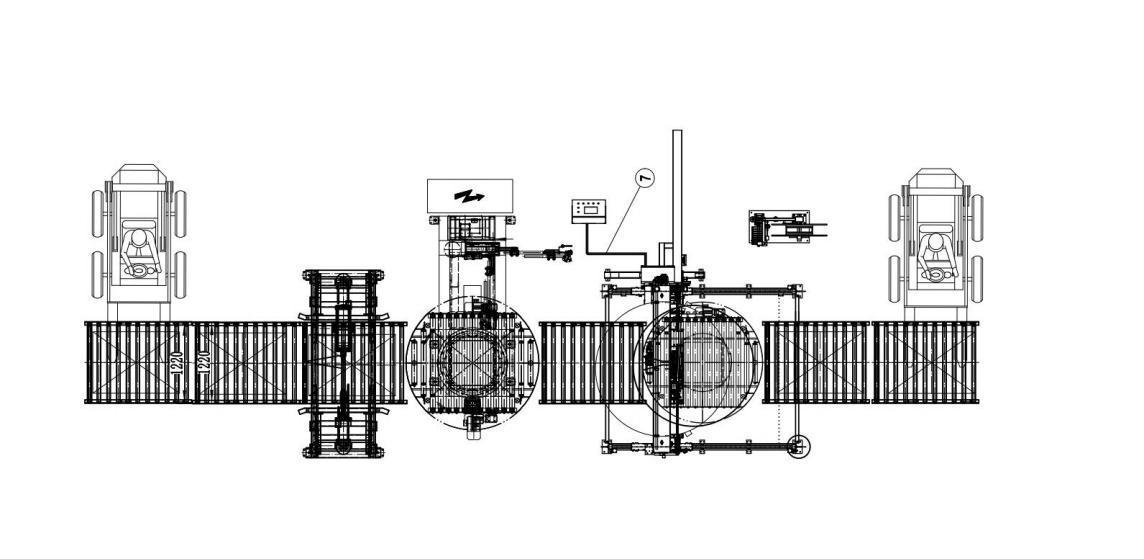
Palletizing does not stand alone. Cases arrive from the carton sealer, empty pallets must be presented, and finished loads need wrapping. Integrating a pallet magazine and feeding the completed pallet directly into a wrapping and strapping system removes the forklift step that otherwise creates bottlenecks and safety risks. Treating these as one connected end-of-line — rather than three isolated purchases — is where the largest efficiency gains appear.
One robot serving multiple infeeds
A frequently under-used capability of a robotic cell is the ability to palletise from more than one production line into separate pallet positions within a single guarded envelope. Instead of dedicating one machine per line, a robot can alternate between infeeds as product arrives, using the dwell time while one line accumulates to service another. This arrangement shares the capital, guarding and pallet handling across lines and often removes the need for a second or third machine entirely. It does require honest rate modelling — the combined demand must stay within the robot’s cycle capacity — and adequate accumulation so product is never waiting. When the numbers fit, consolidating several modest lines onto one well-scheduled robot is among the most cost-effective automation configurations for a multi-product factory.
A selection framework for mid-speed lines
Start from your real sustained rate and SKU count. If you run one dominant product at high continuous volume, model a conventional layer palletizer. If you run multiple products, need mixed pallets, have limited floor space or expect the range to change, a robotic cell will usually be the stronger and more future-proof choice. Below roughly 8–10 cases per minute with an operator nearby, evaluate a collaborative robot. Confirm every option by testing your actual cases and weakest samples on the proposed tooling before committing.
Frequently asked questions
Can a robot keep up with my case sealer?
At typical mid-speed rates, yes with margin. Provide the sustained cases per minute from your line and the robot can be sized — or doubled — to match, including stops and changeovers.
Are collaborative robots safe without guarding?
Cobots reduce guarding requirements at lower speeds and forces, but a full risk assessment still determines the final arrangement, particularly around infeed conveyors and the pallet area.
Which is cheaper to install?
At mid-speed a robotic cell is often cheaper once civil work and elevation are included; conventional machines can win at the highest volumes where their speed is fully utilised.
How hard is it to change pallet patterns on a robot?
Patterns are stored and selected in software, and new patterns can be added without hardware. Slip and tier sheets can also be placed automatically.
Pallet magazines, slip sheets and peripherals
The robot is the visible part of the cell, but the peripherals determine whether it runs unattended. A pallet magazine presents empty pallets automatically, holding enough for a shift or more, while slip-sheet and tier-sheet dispensers place protection between layers or under the load. Conveyors must accumulate full and empty pallets without blocking the robot, and the finished load should transfer automatically toward wrapping. Under-specifying these peripherals is a common reason a cell that was sold as automatic still needs a person standing beside it. SunAura Packaging Machines sizes the whole cell — magazine, dispensers, accumulation and discharge — around the intended unattended run time so the robot is never waiting on a manual task.
Safety and the cell risk assessment
Any palletizing cell moves significant mass and must be treated as guarded machinery. Fenced cells use light curtains or safety scanners at the operator opening, with the robot stopping safely when a person enters. Collaborative robots reduce the need for physical guarding at lower speeds and payloads, but the conveyors, pallet stack and gripper may still require protection, and the entire system — not just the arm — is assessed. The output of the risk assessment should be a clear set of zones: where the machine runs at full speed, where it slows, and where it stops. Planning these zones with the layout early avoids the costly rework of discovering that the operator’s access route passes through the robot’s working envelope.
Building the financial justification
A defensible palletizing business case combines four line items: the direct labour removed from manual stacking, the reduction in forklift movements when wrapping is connected, the fall in rework from inconsistent hand-built pallets, and the avoidance of injury and absence costs associated with repetitive lifting. Offset against these are the installed cost, any operator training and a modest maintenance allowance. Most mid-speed cells recover their cost within a few years on labour alone, and become more attractive when the robot absorbs work from more than one line. Using real measured rates — cases per shift, labour minutes per pallet, current rework percentage — produces a figure your finance team can defend, and a reputable supplier will help you gather them rather than present a generic payback claim.
Recommended solutions
- Flexible multi-SKU lines: our robotic palletizing system;
- Lower-rate operations beside staff: the collaborative palletizing robot;
- Connected end-of-line: an integrated wrapping and strapping system.
SunAura Packaging Machines can evaluate your cases, patterns and throughput and recommend the right palletizing approach as part of a complete end-of-line. Talk to our engineers, or explore the full range in the product section.

David leads our case sealing and cartoning engineering team. Over 14 years he has specified, installed and commissioned hundreds of random-size case sealers, top- and side-loading cartoners, and automatic case packers for food, household and industrial product lines. He writes buying guides and troubleshooting articles around seal quality, tape and hot-melt glue selection, and carton throughput limits.
See Full Bio ›