

A mid-sized specialty bakery in Southeast Asia was growing fast in 2024. Its cakes, swiss rolls, and artisanal loaves sold through supermarket chains and e-commerce, but the packaging room was the bottleneck. Six women packed product by hand into flow-wrap bags, tied labels, and loaded shippers by hand. Output was capped at the bakery’s human ceiling, absenteeism halted the line, and the packs were inconsistent enough that one major retailer threatened to delist the brand. This is the case study of how SunAura Packaging Machines designed, built, and commissioned a complete turn-key packaging line for that bakery, and what changed on the floor in the first six months.
This is a real project pattern, not a generic brochure story. It is written for the production manager who is weighing whether to piece together machines from multiple vendors or buy packaging machine capability as one integrated, guaranteed system. The numbers below are representative of a typical bakery turn-key installation; your own figures will vary with product mix, but the engineering logic transfers.
After six months the bakery commissioned a second, smaller wrapper on the same platform for a new frozen line, using the same recipe architecture and the same trained operators. That is the quiet dividend of a turn-key build: the second project is faster and cheaper because the organization already knows how to run the equipment. Standardization across lines is a benefit that rarely appears in the first-year spreadsheet but compounds over a decade.
The Starting Point: A Manual Packaging Room at Capacity
The bakery produced three families of product: soft cakes and swiss rolls (high-speed, delicate, often tray-packed), toast and artisanal bread (slower, larger, variable), and pastries (medium speed, fragile). Before the project, packaging was almost entirely manual. Two workers fed product into a semi-automatic flow wrapper, two more applied labels by hand, and two more hand-packed shipper cartons. Peak output was about 45 packs per minute, and only with all six people fully present.
The symptoms were familiar to any plant that has outgrown manual packaging: inconsistent seal quality, torn wrappers on delicate cakes, label placement that drifted, a two-hour start-up every morning while the team warmed up, and a hard ceiling on growth. The bakery could bake more; it could not pack more. That is the classic signal that a turn-key line, not another manual shift, is the right investment.
What the Turn-Key Scope Included
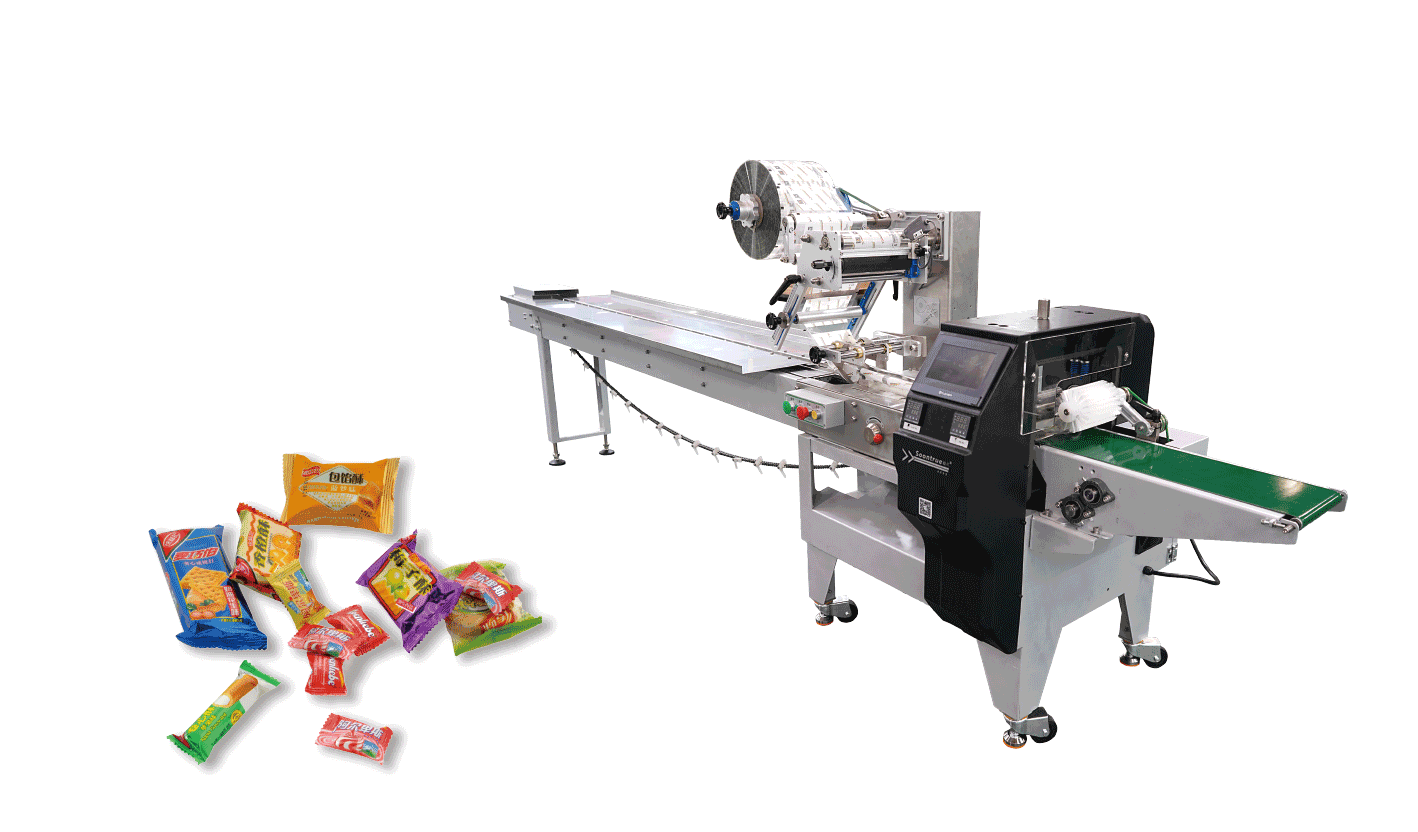
Rather than sell the bakery one wrapper and walk away, SunAura Packaging Machines scoped the whole packaging room as one system. The line was engineered, manufactured, FAT-tested as a whole, then shipped, installed, and commissioned by one project team. The scope covered:
- A servo-driven horizontal flow wrapper sized for the fastest cake SKU, with a product-specific infeed belt and gentle top-hold for soft cakes.
- Automatic product accumulation and a buffer conveyor so upstream baking does not stop when the downstream station cycles.
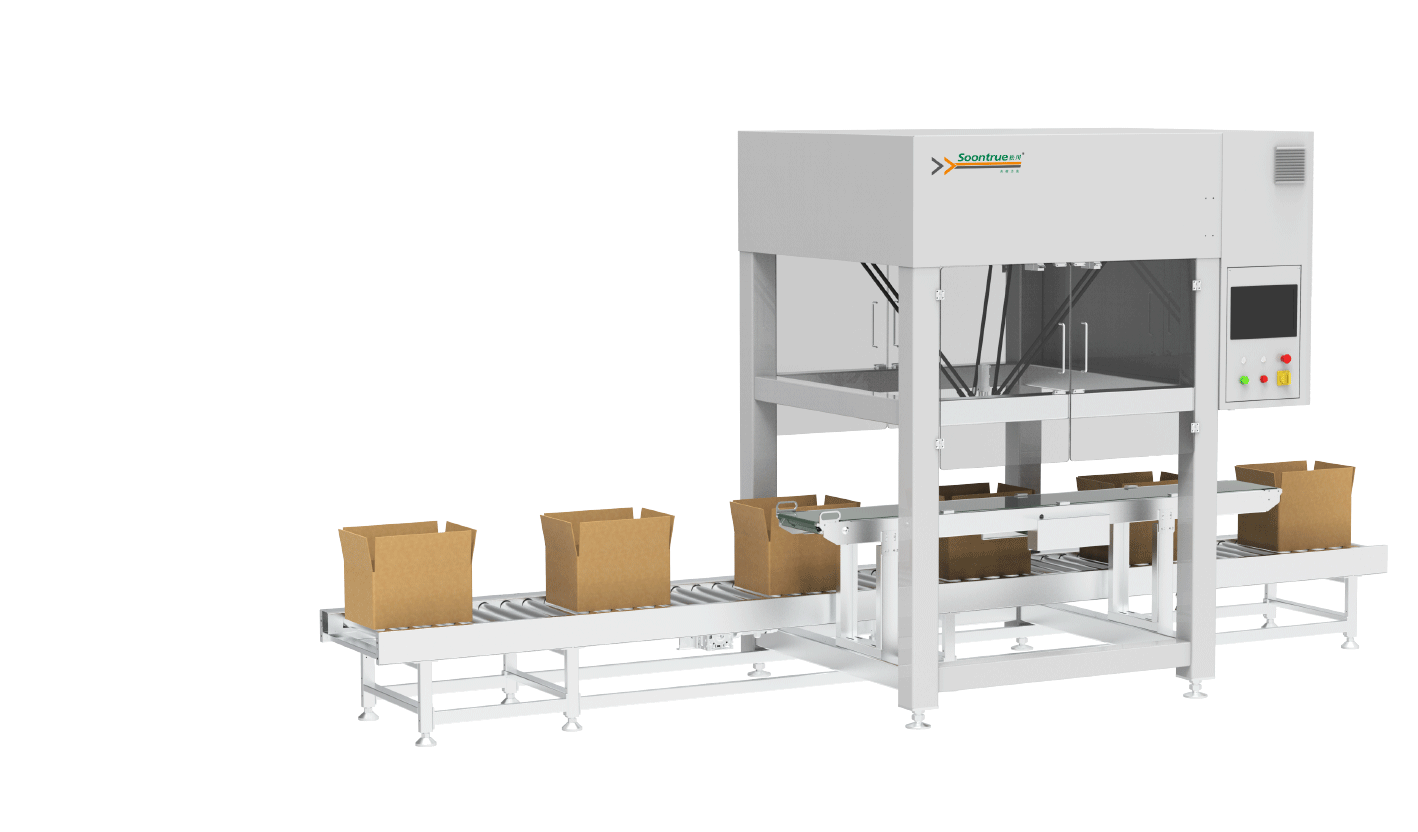
- An automatic cartoning or case-packing module to collate packs into shipper trays.
- A case sealer and automatic strapping unit at the discharge.
- A collaborative palletizing robot to build finished pallets without a dedicated operator.
- Conveyors, guarding, electrical integration, and a single HMI with recipe recall for all three product families.
This is the difference between buying machines and buying a line. Each machine is chosen to balance the others, the speeds are matched, the accumulation is sized, and one supplier carries the responsibility for the whole. Our cake and bread handling packaging line is the ready-made platform this project was built on, customized to the bakery’s trays and cartons.
Engineering the Bakery-Specific Details
Bakery packaging has three demands that generic packaging lines miss. First, product is soft and irregular: a swiss roll deforms if the infeed grips it too hard, so the line uses a low-friction infeed with a spring-loaded top guide that holds, not squeezes. Second, product is warm and oily just after baking, which affects film and seals; the line includes a cooling section before the wrapper so the film seals on a stable product. Third, SKUs change frequently: the bakery runs cakes in the morning, bread at midday, pastries in the afternoon, so recipe recall and quick-change parts were non-negotiable.
The film itself was a question. The bakery wanted to move toward compostable film for its premium line, so the wrapper was specified with the closed-loop jaw control and servo film pull that biodegradable film requires. That decision is documented in our biodegradable film packaging machine compatibility guide; the point here is that it was designed in before purchase, not retrofitted after.
Layout and Installation: Why It Mattered
The packaging room was an existing space, which made layout the make-or-break decision. SunAura Packaging Machines produced a full 3D general arrangement before steel was cut, reserving maintenance clearance, sizing the buffer between wrapper and case packer, and routing utilities. This is exactly the discipline we describe in our packaging line layout mistakes from factory floors article: clearance, accumulation, and straight material flow decided on paper, not learned on the floor.
Installation took eleven days. The first three were mechanical and utility; the next four were FAT-style commissioning on the bakery’s own products; the final four were operator training and production ramp. By day twelve the line was running full shift. A piecemeal project, bought from three vendors with a local integrator, typically takes six to ten weeks of on-site integration because no one owns the interfaces.
The Results After Six Months
| Metric | Before (manual) | After (turn-key) |
|---|---|---|
| Peak throughput | ~45 packs/min, labor-capped | 90+ packs/min on cake SKUs |
| Packing labor | 6 operators per shift | 2 operators per shift (monitoring + changeover) |
| Seal/reject rate | ~3.5% torn or weak seals | under 1.0% reject |
| Line start-up time | ~120 minutes | under 20 minutes via recipe recall |
| OEE (wrapper) | ~55% | ~82% |
The labor math alone justified the project. Moving from six to two operators per shift, across two shifts, redeployed eight people to higher-value work and removed the absenteeism risk that used to halt production. The reject drop saved film and product, and the OEE jump meant the bakery finally sold the volume it could already bake. The retailer that had threatened delisting renewed the contract, citing the consistent pack quality.
For the controller, the full economics are best understood through the lens we lay out in total cost of ownership for automatic packaging lines: the purchase price is the smallest part of the cost, and the labor, waste, and OEE gains dominate the payback.
How the Project Was Scoped and Priced
The bakery’s first instinct was to ask for three competing quotes on “a flow wrapper.” That is the wrong unit of purchase. Instead, SunAura Packaging Machines started with the production plan: which SKUs, at what mix, what forecast volume over three years, and what floor space was available. From that, the engineering team derived the required bottleneck speed, the buffer length, the number of changeovers per day, and the labor model. The price followed the scope, not the other way around.
This matters because the cheapest way to buy a packaging line is to buy the wrong scope cheaply. A wrapper that matches today’s throughput but cannot handle next year’s SKU is a false economy. The bakery chose a five-servo wrapper with headroom: its rated speed exceeded the fastest SKU by roughly 25 percent, deliberately, so that speed loss from film change, reject, and product variation still left comfortable margin. That decision cost slightly more up front but meant the line was not obsolete the day the bakery added a fourth product family.
The Challenges, and How They Were Handled
No turn-key installation is frictionless. Three challenges defined this project. First, the bakery’s warm, oily product gummed early film trials; the fix was adding a controlled cooling section before the wrapper and specifying an oil-resistant film laminate. Second, the existing floor was not flat enough for accurate conveyor alignment, so the installation crew built adjustable machine feet and re-graded two short sections rather than fighting the slab. Third, the bakery’s maintenance team had never run servo equipment, so training was scheduled across three days rather than one: mechanics on the hardware and recipes, operators on changeover, supervisors on the HMI and alarm interpretation.
These are exactly the details a turn-key supplier absorbs and a piecemeal buyer inherits. A wrapper vendor who ships a machine to your dock will not redesign your cooling section or train your maintenance crew; they will hand you a manual and invoice you. The case for one responsible supplier is the difference between a project and a support relationship. See also our comparison of in-house assembly versus complete turn-key lines for how risk is allocated in each model.
The Payback Model
Putting numbers on a representative installation clarifies the decision. Eight redeployed operators across two shifts, at a fully loaded cost of roughly $12 per hour, save about $374,000 per year in avoidable labor. The reject drop from 3.5 percent to under 1 percent on a line moving 3,000 packs per hour at $0.40 pack value saves a further $75,000 to $90,000 per year in film and product waste. Add the OEE-driven volume gain — the bakery finally sold the cakes it already baked — and the total annual benefit typically lands in the $450,000 to $600,000 range.
Against a turn-key line investment in the low six figures, payback comfortably lands inside 12 to 18 months, and the line carries a 10-to-15-year service life. The reason more bakeries do not do this is not the math; it is the fear of a complex capital project. A turn-key supplier removes most of that fear by carrying the integration risk themselves.
Quality also improved in ways the spreadsheet cannot fully capture. Because the line seals consistently and labels with vision verification, the bakery stopped receiving retailer complaints about crooked labels and weak seals. That is a brand-protection benefit: a single repeat delisting would have erased the project’s entire first-year savings, and the consistent pack removed that risk entirely.
What the Bakery Learned
Three lessons came out of the project that apply to any food factory automating packaging. First, size the line to the fastest SKU and the 3-year product plan, not today’s average. The bakery’s fastest cake line set the wrapper speed; sizing to average would have left the bottleneck in place. Second, budget for changeover, not just running speed. Recipe recall and quick-change parts cut a two-hour start-up to twenty minutes, and that saved time dwarfed the headline speed difference. Third, buy the integration, not just the iron. The value was not the wrapper alone; it was the wrapper balanced against the case packer, accumulator, and palletizer by one team that owned the result.
How SunAura Packaging Machines Delivered the Project
SunAura Packaging Machines managed the project end to end: needs assessment, GA design, manufacturing, factory acceptance testing on the bakery’s own products, shipping, installation, commissioning, and operator training. The five-servo flow wrapper at the line’s heart, the end-of-line collation, and the collaborative palletizing robot were all specified as one balanced system. Ongoing support runs through our after-sales service program, with spare parts and scheduled preventive maintenance to protect the OEE the project earned.
If your bakery is hitting the same manual-packaging ceiling, the next step is a scoped line proposal rather than a single machine quote. See more on our case studies page, explore the pastry handling packaging line platform, or contact the SunAura Packaging Machines team with your product range and floor space and we will model a turn-key line sized to your growth.
Conclusion
This bakery case study is a template, not an anecdote. The pattern repeats across food factories: manual packaging caps growth, a balanced turn-key line breaks the cap, and the payback comes from labor, waste, and OEE far more than from headline speed. By engineering the whole room as one system, sizing to the fastest SKU, and building in changeover and biodegradable-film readiness, SunAura Packaging Machines handed the bakery a line that could grow with it. That is the promise of turn-key done right — one supplier, one responsibility, one result.

Kevin works on machine development for shrink bundling, shrink hoods and vacuum packaging. He tests film shrink ratios, tunnel heat zones, seal bar performance and chamber cycle times, and feeds that back into machine frame and conveyor design. He writes technical articles on shrink film selection, tunnel temperature balancing and vacuum packaging for industrial and food-adjacent secondary packs.
See Full Bio ›