

Qingdao, China — SunAura Packaging Machines has completed a series of engineered-to-order packaging projects for customers across Latin America, North Africa and the Gulf, the company confirmed this month. The batch spans sleeve shrink multipack lines, high-speed and e-commerce case erectors, and turntable and rotary-arm pallet wrappers — each modified around the customer’s product, voltage and line layout rather than supplied as a fixed catalogue unit. Full details and machine footage are published in SunAura Packaging Machines’ customer case studies.
The projects reflect what the company describes as a sustained rise in demand for non-standard machinery from emerging-market packers, particularly in Brazil, Mexico and Egypt, where factory voltages, case dimensions and product formats frequently sit outside the envelope of an off-the-shelf machine. SunAura Packaging Machines’ approach in each case is to begin from one of its proven standard platforms and modify the infeed, sealing head, conveyor and guarding, rather than engineering from a blank sheet.
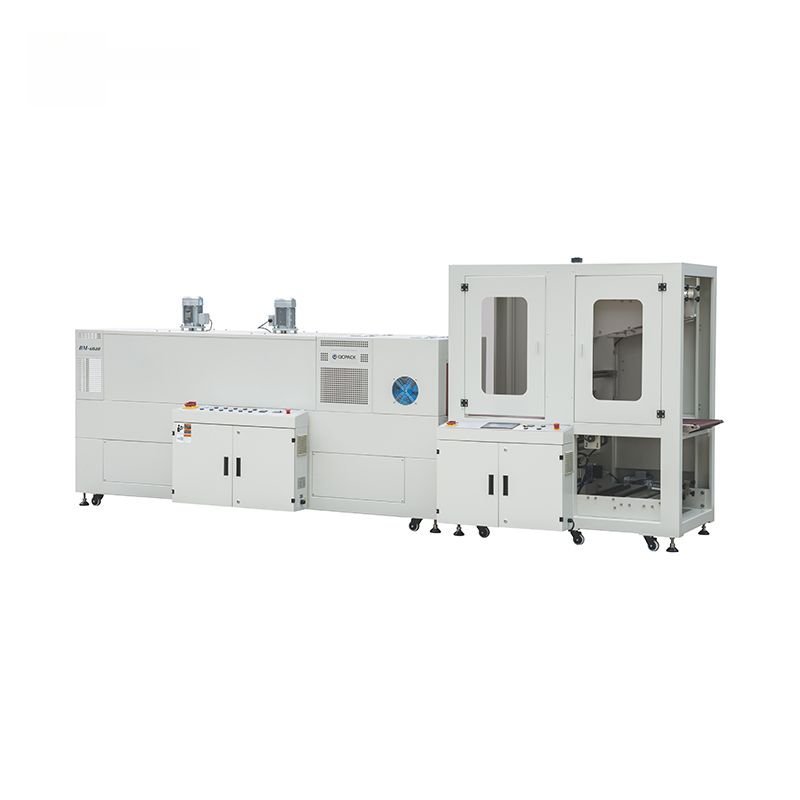
São Paulo, Brazil: a sleeve multipack line built around two bottle formats
The largest project in the batch went to a regional bottled-water producer in São Paulo that needed 6×500 ml multipacks on a 220 V/60 Hz supply, but also wanted the flexibility to run 2 L family packs. SunAura Packaging Machines supplied an automatic sleeve shrink wrapping machine with a wider infeed and a taller shrink tunnel, together with a one-button size change between the two formats. On test, the line reached 36 multipacks a minute on a single frame with a single operator, according to the company.
“The customer’s real requirement was not just speed — it was avoiding a second machine for the family-size bottle,” said a SunAura Packaging Machines engineer involved in the build. “Raising the tunnel and widening the infeed on a proven sleeve frame solved both on one line.”
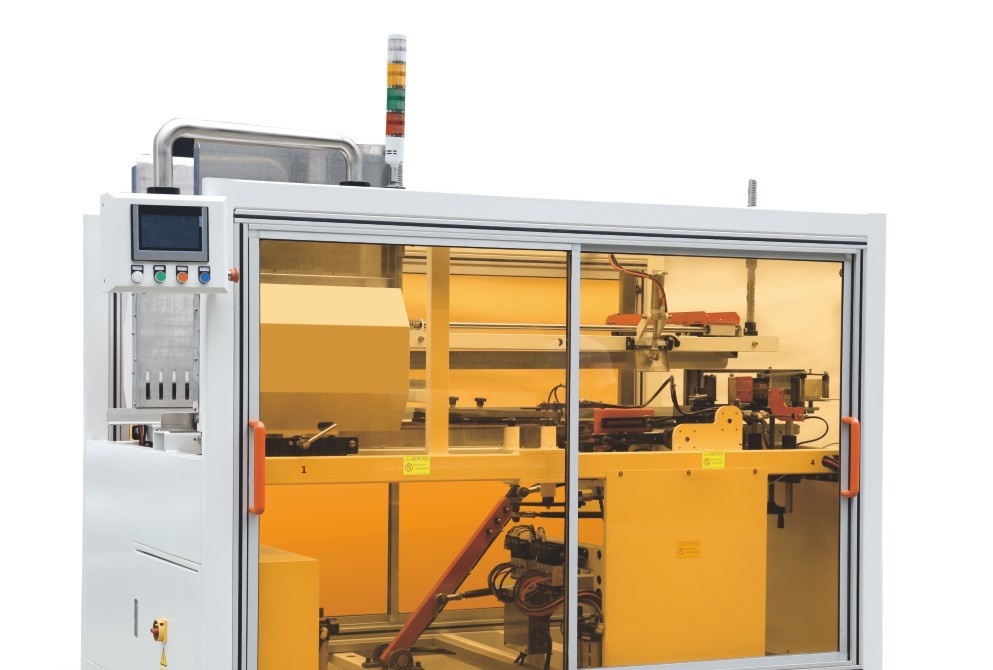
Monterrey, Mexico: a high-speed erector with a handshake to an existing packer
A snack co-packer in Monterrey required a high-speed case erector and bottom sealer K30T configured with a low-level hopper for easy loading and hot-melt closure. Critically, the machine had to communicate with the customer’s existing case packer so that cases were erected and released only as they were needed. SunAura Packaging Machines engineered the control interface to match the installed line, reporting 28 cases a minute and unmanned running for up to two hours at a time once the hopper was loaded.
Integration, rather than the machine itself, was the defining challenge — a recurring theme across the batch. SunAura Packaging Machines notes that it supplies the signal handshake and conveyor interface as part of the project rather than leaving connection to the customer.
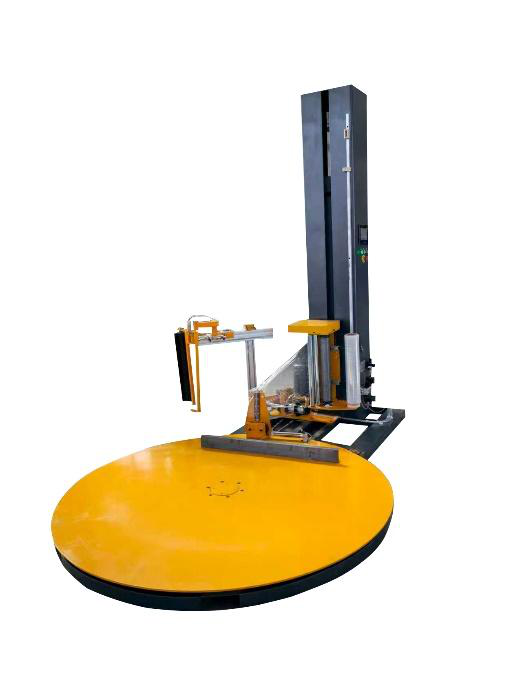
Cairo, Egypt: a heavy-duty wrapper for 1,200 kg export pallets
A building-products exporter in Cairo needed to stabilise loads of up to 1,200 kg for sea freight, in a facility where fine dust put ordinary cabinets under strain. SunAura Packaging Machines supplied a large-turntable pallet wrapper fitted with a top platen to hold the load, a roping function and a dust-resistant control cabinet. The company reports that the machine produced stable, sea-freight-ready loads while cutting stretch-film use by around 40% through controlled pre-stretch.
The second Egyptian project, for a plastics extruder in Alexandria, addressed a different problem: wrapping 1.8 m profiles continuously in polyethylene. SunAura Packaging Machines supplied a high-speed side-seal shrink wrapper with an extended infeed and a slow, stable seal, allowing essentially unlimited-length wraps at 8 metres a minute.
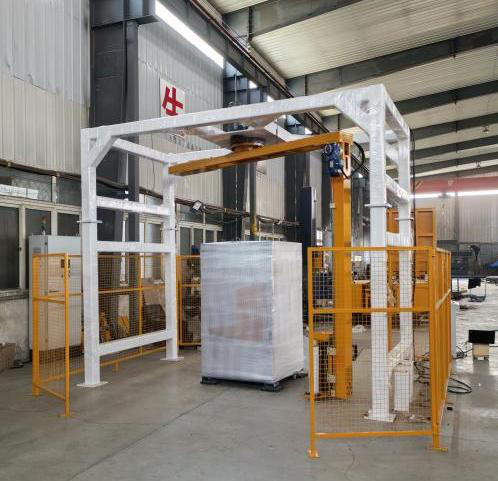
Casablanca, Morocco: a rotary-arm wrapper that does not disturb light loads
For a customer in Casablanca, empty and lightweight pallets were tipping when rotated on a conventional turntable. SunAura Packaging Machines instead supplied an inline rotary-arm wrapper, in which the arm travels around a stationary load, with automatic film cut and clamp and a top-sheet option. The configuration eliminated load disturbance entirely while reaching 20 pallets an hour, the company said.
Dubai, UAE: tape-free erection of mailer boxes for a 3PL
A third-party logistics provider in Dubai handling beauty subscription boxes needed die-cut mailer cartons erected without tape, with rapid changeover across four box sizes. SunAura Packaging Machines supplied an e-commerce carton erector and bottom sealer K20TDS, achieving 14 boxes a minute and a four-size changeover in roughly 90 seconds. For fulfilment customers that run folded rather than centre-taped boxes, SunAura Packaging Machines also supplies a dedicated fold case sealer FC500DS.
Why modified platforms, not fully bespoke lines
Notably, none of the six projects required a machine designed entirely from scratch. In each, SunAura Packaging Machines says, a standard platform could meet the core process, and only selected elements — infeed width, tunnel height, control interface, guarding or load handling — needed engineering. That distinction is central to how the company manages both lead time and risk on non-standard orders: the proven mechanics and safety architecture of the serial machine are retained, while the parts that differ are designed and tested for the application.
“Customers sometimes assume a special product means a wholly custom machine and a long, uncertain build,” the company explained. “In the large majority of cases we can modify a proven frame, which is faster to deliver and far easier to support over ten years.” SunAura Packaging Machines sets out the decision between standard, modified and fully custom equipment in its technical guide, Standard, Modified or Custom Packaging Machine?
Testing before shipment
Every modified machine in the batch was built and tested before release, with several customers sending their film, cartons or product for a pre-shipment trial. SunAura Packaging Machines says it runs the machine at the agreed rate, verifies seal or wrap quality and confirms changeover on the customer’s actual consumables — the step it regards as the main safeguard against problems after installation. Where customers cannot travel, the company records the test and shares footage and dimensional reports.
What buyers should send for a fast quote
For packers considering a similar project, SunAura Packaging Machines says the fastest route to an accurate proposal is to provide product and pack dimensions and weight, the packaging material (or a sample), the real target packs or cases per minute, the number of sizes and changeover frequency, the available floor space and conveyor directions, the voltage and frequency, and the equipment the new machine must connect to. A guided version of these questions is available on the custom packaging machine page, and the full list is captured in SunAura Packaging Machines’ RFQ checklist.
The wider trend behind the orders
SunAura Packaging Machines says the batch is representative of a broader shift it has observed over the past year: packaging buyers in emerging markets are increasingly specifying machines around their exact product and local utilities rather than accepting a standard export specification. The reasons are practical. Factory voltages and frequencies vary by country and even by industrial zone; case and bottle formats reflect local market preferences; and labour costs, while still below those in mature industrial economies, are rising enough to make automatic erection, sealing and unitizing worthwhile.
The result is demand that does not fit neatly into a catalogue. A water producer in Brazil may run a bottle count and voltage that no standard multipack line assumes; an Egyptian exporter may need to handle heavier loads in dustier conditions than a typical warehouse machine is built for; a Gulf fulfilment house may need mailer boxes erected without tape across several sizes. SunAura Packaging Machines reports that the majority of these enquiries are solved by modifying proven platforms rather than designing entirely new machines, which keeps both lead times and risk contained.
Commissioning across borders
Delivering a modified machine is only the first stage; commissioning it on a distant factory floor is where many projects lose time. SunAura Packaging Machines says it supports installation through a combination of remote guidance, detailed documentation and, where required, on-site commissioning and operator training. For the projects in this batch, much of the setup was handled remotely, with the machines pre-configured for the customer’s voltage and line interface before shipment and the test footage shared in advance. The company points to this preparation as the reason commissioning on modified machines is usually shorter than buyers expect: the parts most likely to need adjustment have already been resolved in the factory.
Language and time-zone differences are a practical consideration, and SunAura Packaging Machines assigns engineering contacts to each project so that questions during installation reach someone familiar with the specific build rather than a generic support desk. The company’s help and after-sales centre also provides a single route for spare parts, troubleshooting and warranty support after handover.
Film savings and load stability as measurable outcomes
Several of the projects were justified not by speed alone but by measurable reductions in consumables and damage. The Cairo wrapper, through controlled pre-stretch, reduced film use by roughly 40% while producing loads stable enough for sea freight; the Casablanca rotary-arm machine eliminated the tipping that had been damaging light pallets on a turntable; the Monterrey erector removed the manual labour and inconsistency of hand-erecting cases around the clock. SunAura Packaging Machines encourages buyers to evaluate projects on these operating outcomes — film per pallet, labour hours, rejected or reworked loads — rather than solely on machine price, an approach explored in its analysis of total cost of ownership and stretch-film cost per pallet.
What customers sent to get the projects built
SunAura Packaging Machines notes that the projects that moved fastest were the ones where the customer supplied complete information early: bottle and multipack dimensions for the sleeve line, case specifications and the existing packer’s interface details for the Monterrey erector, load weights and the warehouse environment for the Cairo wrapper, and box-size ranges for the Dubai mailer project. In several cases customers sent physical samples — film, cartons or product — which allowed a meaningful pre-shipment test. The company regards this exchange as the foundation of accurate non-standard engineering; incomplete specifications, by contrast, lead to assumptions that surface late and delay the build.
What comes next
SunAura Packaging Machines says it is now building a further set of modified end-of-line projects, including additional pallet wrapping and strapping combinations for heavy industrial loads and further sleeve and case-erecting lines for beverage and fulfilment customers. The company continues to add machine footage and project write-ups to its case studies, and it has published supporting technical guidance for buyers evaluating non-standard equipment, including its strapping machine buying guide, its explanation of carton sealing defects and closure methods, and its decision framework for standard versus custom machinery.
For packers beginning a project, SunAura Packaging Machines’ recommendation is to engage early with product and pack details, real throughput targets and the constraints of the existing line, so that the simplest machine that genuinely fits — standard, modified or custom — can be identified before any metal is cut.
Combined operations on a single frame
Beyond the six headline projects, SunAura Packaging Machines reports growing interest in machines that combine two operations on one frame, a configuration it has supplied alongside the recent builds. Combining sealing and strapping, or wrapping and strapping, removes the need to transfer a load between separate units and saves floor space — an advantage that matters in the smaller facilities common among the buyers placing these orders. The trade-off is that a combined machine should be specified carefully around the real load, because its two stations are sized together. SunAura Packaging Machines’ guidance to buyers is to describe the complete end-of-line objective, not just the single machine they think they need, so that a combined or modified solution can be considered before defaulting to several standalone units.
The company says it will continue to favour the simplest configuration that genuinely meets each application — a standard machine where one fits, a modified frame for the majority of special requirements, and a fully engineered line only where the process demands it.
About SunAura Packaging Machines
SunAura Packaging Machines is a Qingdao-based manufacturer of end-of-line packaging equipment, including case erectors and sealers, shrink and sleeve wrappers, strapping machines, pallet wrappers and robotic palletizers, together with modified and fully engineered-to-order lines. The company ships to more than 60 countries and provides commissioning, operator training and remote after-sales support, with engineering contacts assigned to every project from quotation through installation. Readers can explore the full product range, watch machines running in the case studies, or reach the engineering and support team through the help centre.

Michael designs automated palletizing stations and ties upstream case or bag flow to downstream stretch wrapping. His work spans conventional layer palletizers, robotic arm cells, conveyor routing, safety fencing and handover logic between machines. He writes about palletizer selection, load stability and how an end-of-line sequence should be balanced.
See Full Bio ›