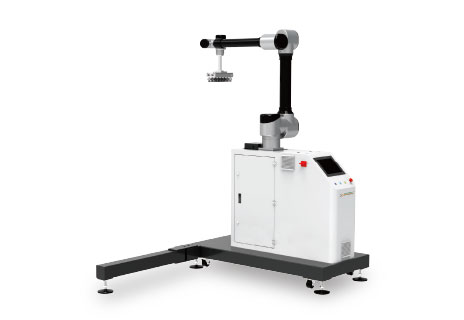
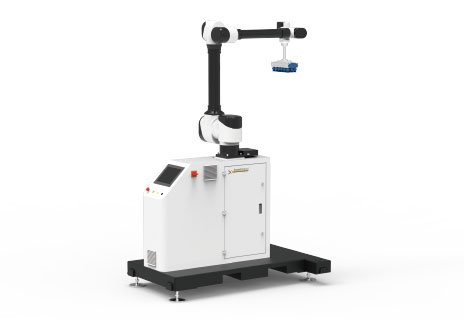
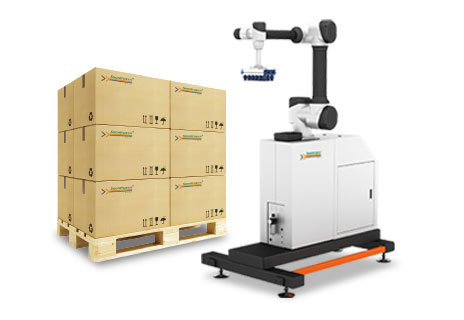
ケース・結束品から完成パレットを構築する協働・多関節ロボットパレタイザー。さらにセル周辺の重量物・異形物を扱う 90° 反転機・180° タイラーを提供。
パレタイザーは完成ケース・結束品・シュリンク包装品を安定した段パターンでパレット上に積み上げます。 A conventional palletizer uses fixed pusher and roller mechanisms; a robotic palletizer uses a programmable arm — articulated or collaborative — with a gripper that picks one or more cases and places them according to a layer pattern held in the controller. Changing the product or the pattern is then a software change rather than a mechanical rebuild, which is the central reason robotic palletising has taken over mixed and mid-speed lines.
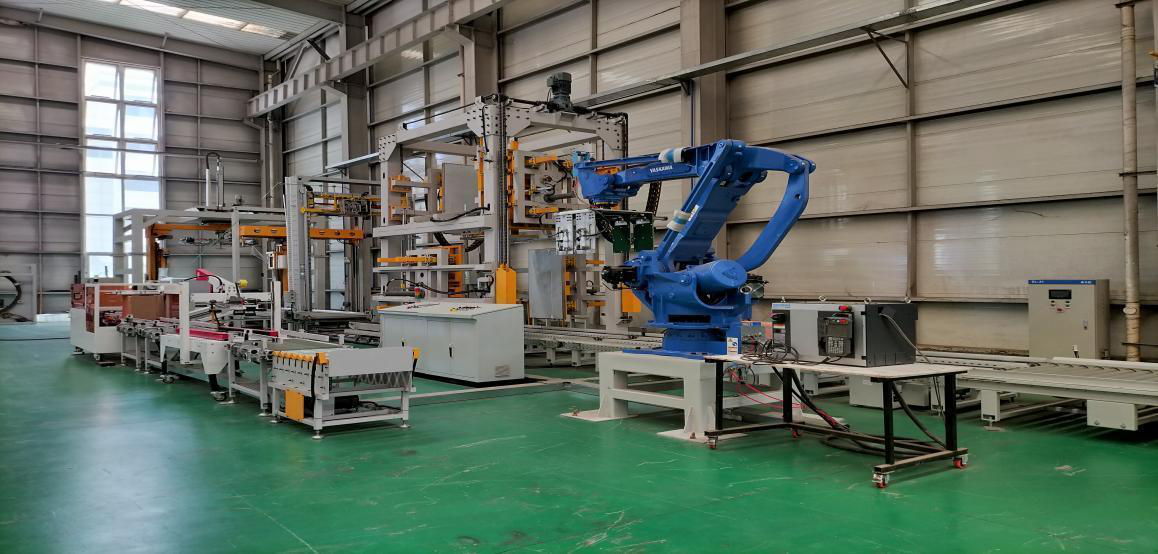
The SunAura Packaging Machines range is built around the WP collaborative palletizing robots and the higher-payload robotic palletizing system. The WP-20, WP-40 and WP-50 are collaborative cells that can work beside people without a full safety fence, pick cases from the line and build one or two pallets, and are the natural first step for a line that is still palletising by hand. The full robotic palletizing system is the inline, higher-throughput cell for continuous production, often integrated with a case packer and an inline rotary-arm wrapper.
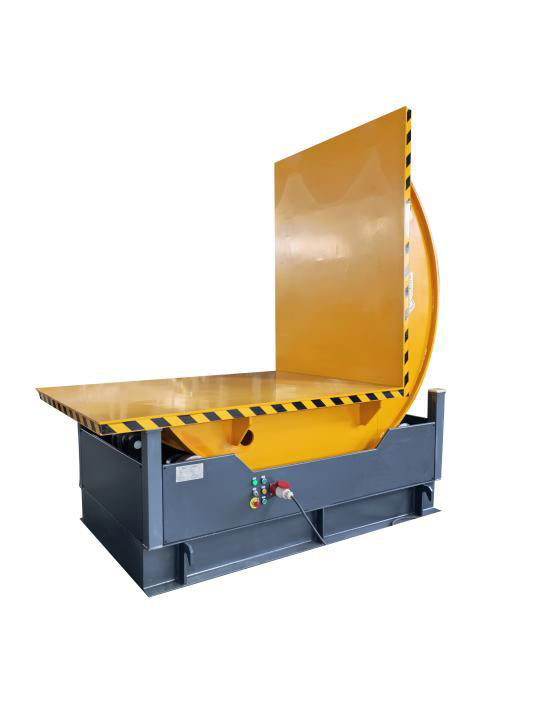
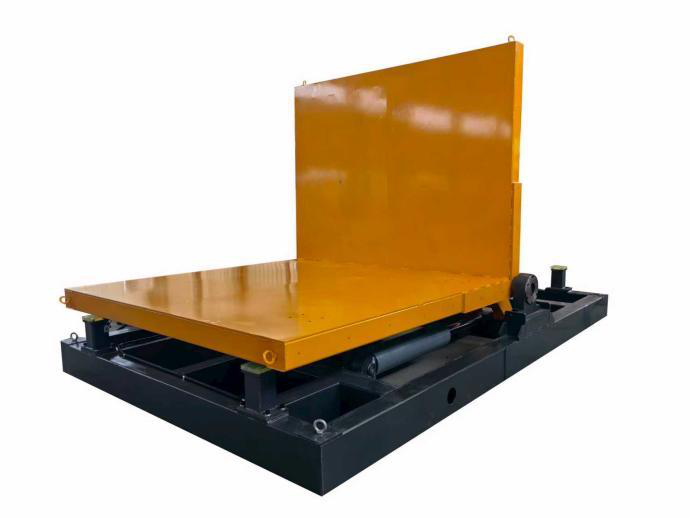
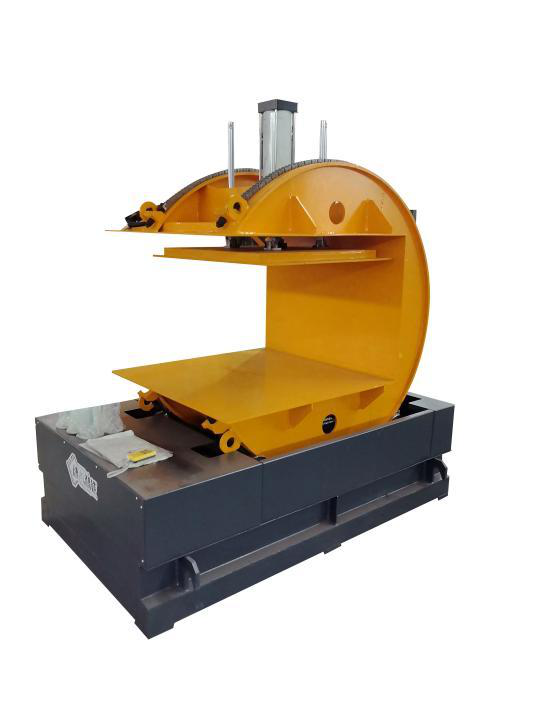
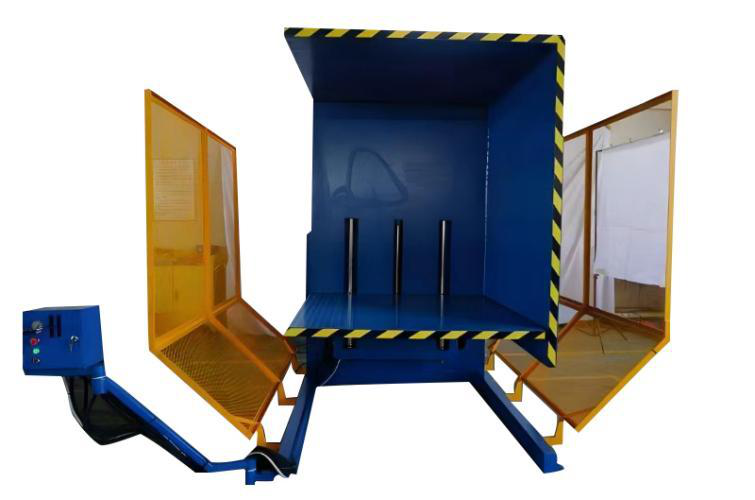
Palletising rarely sits alone. Around the same cell we build the load-handling equipment that presents or turns the heavy and awkward items: mechanical and hydraulic 90° upenders and mechanical and enclosed 180° tilters for coils, moulds, drums and large assemblies that a forklift cannot safely reorient. The palletizer and the tilters are sold together when the product has to be turned before or after it is stacked.
ロボットパレタイザー4機種 + 機械式・油圧反転機・タイラー4機種。包装ラインページにはターンキーシステムを掲載。
ケース/分、ピックパターン、周辺セルでロボットと反転機要否が決まります。
A single collaborative WP cell suits one or two lines at modest rates; a high-speed continuous line needs the full robotic palletizing system or multiple robots, because cycle time is set by the pick-and-place motion and the gripper.
The WP robots can build one pallet or be programmed to alternate two positions. Two inbound lines or mixed products are a common reason to add a second robot or a higher-payload arm with a wider reach.
Corrugated cases are gripped with a vacuum or mechanical gripper; bundles and shrink-packs may need a clamp or a layer pick. The gripper is product-specific and is the single most important detail to get right.
Provide the case dimensions and the pallet footprint so the layer pattern is checked for stability and interlock. Mixed or frequently changing SKUs suit robotic palletisers because the pattern is a recipe rather than a fixed guide.
A collaborative WP cell can run beside operators with reduced guarding and a small footprint, which suits existing lines with no space for a safety fence. High-speed cells still use articulated robots inside guarding.
Coils, moulds, drums and large assemblies are reoriented by a 90° upender or a 180° tilter rather than by the robot. If the product must be turned before stacking, the tilter is part of the cell and should be quoted together.
The same WP robots are sold for one line of cases; the difference between cells is the gripper, the throughput and whether a tilter or wrapper is integrated.
Robotic palletizer or conventional palletizer?
Choose a conventional machine for a single, very high-speed fixed product; choose a robot for anything with mixed SKUs, changing layer patterns, limited floor space or a need for flexibility. A robotic cell changes pattern as a recipe and the WP collaborative versions run beside people without a full fence.
How many cases per minute can a collaborative robot handle?
The rate is set by the pick-and-place cycle and the number of cases per pick; a WP cell is typically the right answer for one or two lines at modest rates rather than a single ultra-high-speed line. For continuous high throughput, the full robotic palletizing system or a second robot is used. Give us your cases per minute and pallet format and we will calculate it.
What gripper do I need?
Corrugated cases are handled by vacuum or mechanical grippers; bundles and shrink-packs by a clamp or layer pick; the gripper is purpose-built for the product and is the detail that determines whether the cell works reliably. This is always specified from the case dimensions, weight and surface.
When do I need an upender or tilter?
Whenever the product — a coil, mould, drum or large assembly — must be rotated 90° or 180° and it is too heavy or awkward for a forklift to do safely. The mechanical and hydraulic upenders and the enclosed tilters are purpose-built machines that sit beside or inside the cell.
Can the robot palletise more than one line?
Yes — the WP robots can alternate between two pallet positions and can be programmed for several patterns. Two inbound lines or several products may require a wider-reach arm or a second robot, which is a layout decision we confirm from the line rates rather than assuming.
Provide the case/bundle dimensions, weight, pallet footprint and cases per minute, plus whether the load needs turning. We will specify the WP robot or full system and the gripper, and design the cell with the wrapper.
当サイトでは、サイトの運用、トラフィック分析、お問い合わせ対応のために Cookie を使用します。すべてを受け入れるか、設定を管理できます。当社の プライバシーポリシー および Cookie ポリシー.