

TL;DR. This technical note explains how to work out the film web width and former size for a horizontal flow wrapper from product dimensions, before a snack bar, tray pack or pillow box ever runs on the machine. It covers the product measurement that matters, the allowance added for the fin seal and end seals, the relationship between former depth and bag circumference, and the numbers that change when the product goes on a tray, gets gusseted, or switches film material. The worked examples use planning dimensions; substitute your own product drawings and the machine’s former range. This article stays within flow wrapping film and former setup, and does not cover upstream forming, cartoning or case packing.
By Luna Yang, Process Engineer — Cartoning & Secondary Packaging. Luna sets up flow wrapping and secondary packaging lines, working through former sizing, film feed and seal conditions on snack, bakery and cosmetic products.
Film width is one of the first decisions when a new product goes onto a horizontal flow wrapper. Pick a web that is too narrow and the fin seal does not close; pick one too wide and film folds into wrinkles, wastes material, and can jam the sealing jaw. The former, which curls the flat film web into a tube around the product, has to match that width and the product cross-section. Getting both right on paper avoids a trial run spent unwinding the wrong film and reshaping the former. The current wrapper lineup, including servo and reciprocating models, is listed on the flow wrappers hub page.
Measure the product the right way before any calculation
The calculation starts with the product cross-section as it sits on the wrapper belt, not the dimensions on the packaging artwork. Three measurements drive the bag size: product width across the belt direction, product height above the belt, and product length along the flow. Width and height set the tube circumference and therefore the film web; length sets the end seal position and the cut-off, not the web width.
- Product width (W): the widest point across the product as it travels, including any tray flange or protruding topping.
- Product height (H): the tallest point from the belt to the top of the product or tray.
- Product length (L): along the flow direction, used for bag length and jaw timing.
Measure the worst-case product, not an average. A bar with an uneven topping, a tray with a raised flange, or a pack that bulges after filling all add to the cross-section. If the product varies in height across the batch, size the former and film to the tallest sample. A former cut for a flat sample will bind on the bulging ones. Soft products that compress under the film need their settled height measured after a light press, since the tube closes around the product as it feeds.
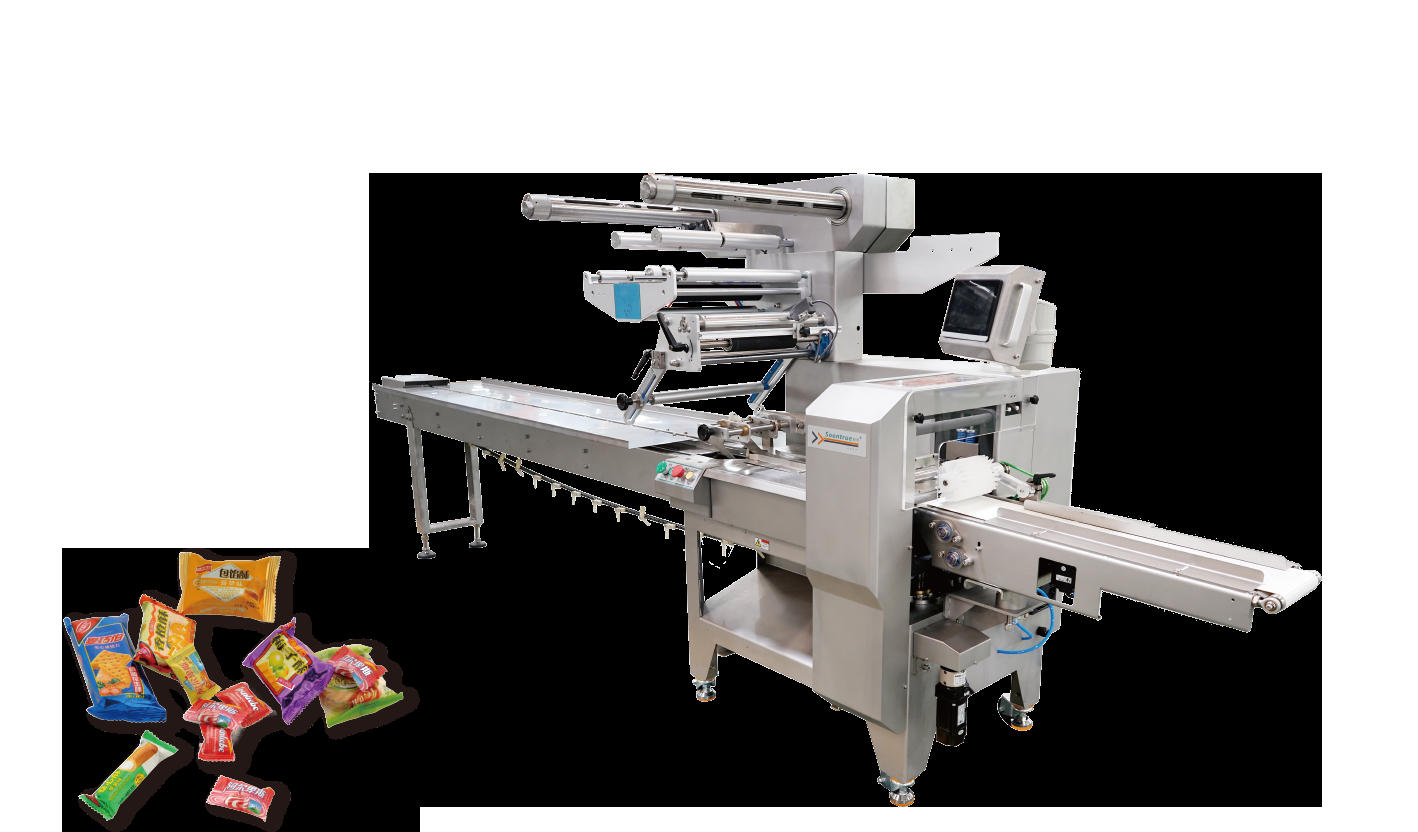
Bag circumference and the film web width
A pillow pack wraps the product on four sides: two sides folded into the fin seal, a top and a bottom around the product, and end seals at each cut. The tube that forms around the product has a circumference that follows the product cross-section. For a roughly rectangular product, the tube circumference is close to twice the product width plus twice the product height, with a small clearance so the product slides through the former without dragging.
The film web must cover that circumference plus the fin seal allowance. The fin seal is the folded overlap running along the back of the pack; the two film edges meet and are crimped together there. That overlap adds material on top of the tube circumference. A common planning allowance for the fin seal is 40 to 60 mm total across the two edges, depending on jaw width and film stiffness. The web width therefore lands around the tube circumference plus the fin seal overlap, plus a small side clearance for film tracking.
- Tube circumference (plan): 2 × W + 2 × H, plus 5 to 15 mm clearance for product movement through the former.
- Fin seal overlap: 40 to 60 mm total for a standard crimp fin seal.
- Web width (plan): tube circumference + fin seal overlap, rounded up to the nearest standard film roll width.
These are planning ranges, not fixed formulas. Actual allowance depends on the former radius, the film’s stretch and memory, and how tightly the pack is drawn. Thin coextruded films hold a crease and need a slightly narrower overlap; stiffer films need more overlap to feed through the fin rollers without slipping. Always confirm the calculated width against the former’s available web range before ordering film.
Worked example 1: a flat snack bar
Take a flat cereal bar 60 mm wide, 18 mm high and 120 mm long, wrapped in a plain pillow pack. The cross-section is close to a flat rectangle. Tube circumference plans to 2 × 60 + 2 × 18 = 156 mm, plus a small clearance for the bar sliding through, say 10 mm, giving a tube near 166 mm. Add a 50 mm fin seal overlap, and the web plans to about 216 mm. Standard film rolls are stocked in stepped widths, so the order rounds up to the nearest available width that clears the former, rather than cutting a custom web for a few millimetres.
The former for this pack is shallow and narrow. Its opening matches the 60 mm width and 18 mm height with clearance, and its forming radius curls the flat web into the tube without sharp folds. A shallow product does not need a deep former throat; using a former sized for a tall tray would leave the film loose around the bar and produce a bag with excess slack that wrinkles at the seal.
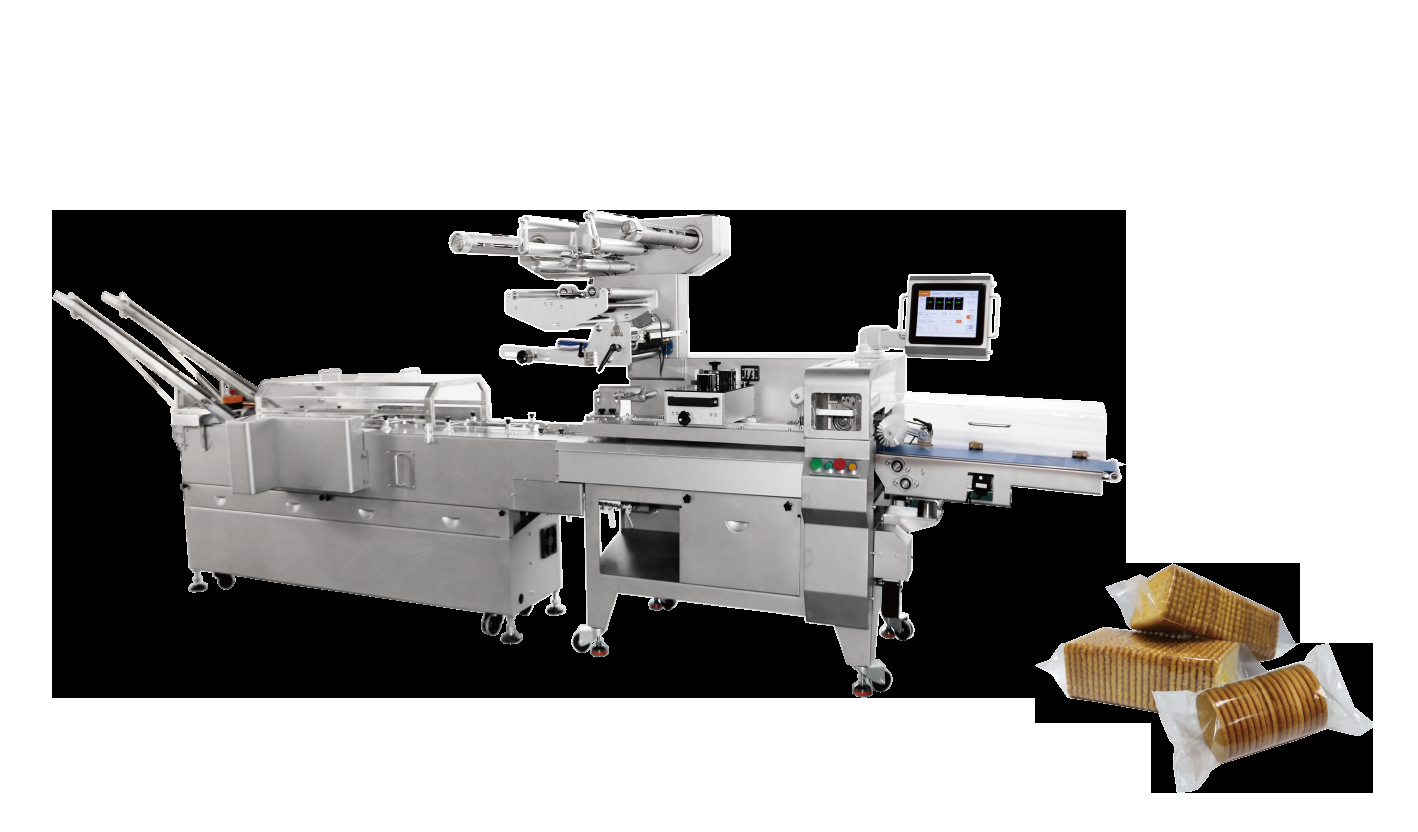
Worked example 2: a tray-mounted product
A tray-packed product changes the geometry. Suppose a frozen meal sits in a 180 × 130 mm tray with a 35 mm total tray-and-product height, including the tray flange. The tray has a rigid perimeter that the film must wrap over, so the cross-section follows the tray outline rather than a soft rectangle. Tube circumference plans around 2 × 180 + 2 × 35 = 430 mm, plus clearance for the tray to pass, and a wider fin overlap because the heavier film often used for frozen packs runs a broader seal. The web lands well above the flat bar case, and the former throat has to clear the tray’s side walls and flange.
Tray packs also introduce a lip seal consideration. The film may seal over the tray flange rather than form a fin seal at the back, depending on pack style. Where the film forms a fin over the tray back, the former must hold a larger, stiffer cross-section; where it lids the tray, the former geometry and film feed follow a different path. Tray depth and flange width go into the former selection, and a reciprocating wrapper such as the SW-60E full-servo reciprocating wrapper is often matched to deeper or heavier packs because its jaw can dwell longer on the seal.
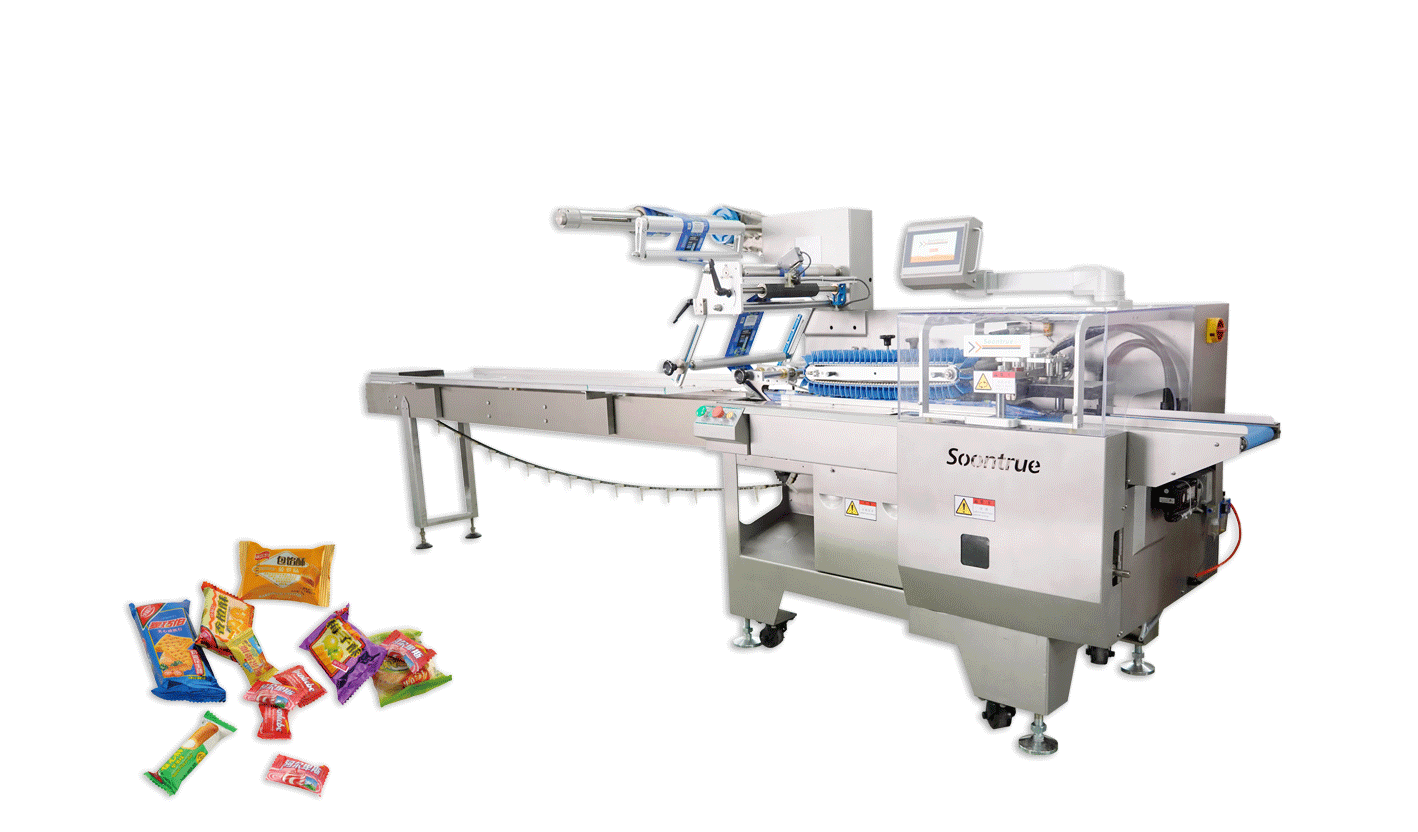
Former depth and bag headroom
The former curls the web into a tube whose depth matches the product height plus headroom. Headroom is the space left inside the bag above the product. Too little headroom and the film drags over the product as it feeds, scuffing the print or crushing soft items. Too much headroom and the bag balloons, film wrinkles gather at the fin seal, and the pack looks loose on the shelf. For a snug retail pillow pack, headroom above the product is often held in the range of a few millimetres; for a tray or a product that settles after sealing, a little more room keeps the film off the top edge.
Former width sets the side-to-side wrap, former depth sets the top-to-bottom wrap, and the forming radius transitions the flat web into the tube. A mismatch shows up as a bag that rides up on one edge, a fin seal twisted to one side, or film that rubs through a corner. When a new product shares a former with an existing run, check that the new cross-section sits inside the former’s adjustable range; products beyond that range need a former swap, not a tension adjustment.
Gussets, film thickness and seal conditions
Gusseted bags fold in the sides to hold a taller or bulkier product without a wide tube. A gusseted pack needs the web to form inward side folds, which changes the former geometry and the effective width at the seal. Bulkier products that would otherwise demand an over-wide flat bag often run better with gussets that tuck the sides in; the former is shaped to guide those inward folds rather than closing a simple rectangle. If the artwork calls for a gusseted stand-up style, the former and film width have to be specified together, not set from the flat product width alone.
Film thickness interacts with width and seal quality. A thicker film holds the former shape but needs more heat and dwell to seal; a thin film feeds easily but can tear at the jaw if the web is undertensioned. Seal width on the fin and end jaws depends on film material: polypropylene oriented films seal at a narrow crimp, while laminates with a polyethylene layer need a broader seal and longer dwell. The wrapper’s jaw temperature, belt speed and seal pressure are set after the film and former are chosen; troubleshooting those once the pack is running is covered in the flow wrapper common faults and fixes guide.
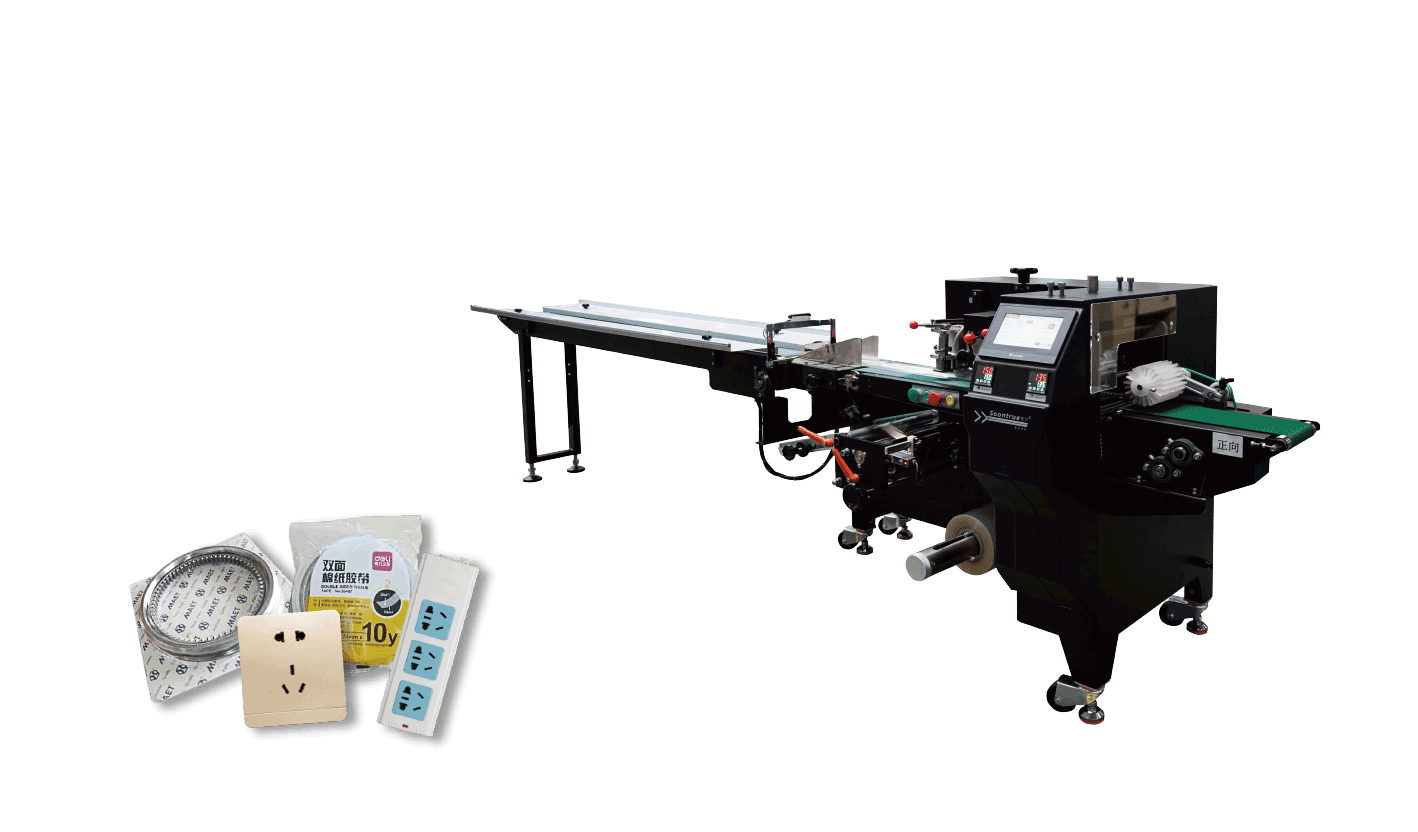
Common sizing errors that show up on the trial run
Most former and film problems trace back to a measurement or allowance error rather than a machine fault. The first is sizing to product dimensions without the tray flange, topping or bulge, so the former binds the real pack. The second is using the artwork bag width as the film web width; the artwork measures the finished bag, which already assumes the tube and seal geometry, while the web includes the overlap that gets folded away. The third is choosing a web wide enough for the tube but too narrow for the fin overlap, leaving the seal edges short of the jaw.
- Fin seal short on one edge: web too narrow or film tracking off-center; check web width allowance and film guide alignment.
- Wrinkles along the back seal: web too wide or former too deep for the product; excess film gathers at the crimp.
- Product dragging the film: former headroom too small; the bag is pulling on the item as it feeds.
- Loose, baggy pillow: former too large or film over-fed; reduce headroom and recheck feed ratio.
- Uneven seal across the jaw: former twisted or product cross-section off-center; square the product path before adjusting heat.
Putting the numbers together before booking a trial
Before a product runs on the wrapper, write down W, H and L from the worst-case sample, sketch the cross-section, note whether the pack is flat, tray-mounted or gusseted, and record the film material and gauge. From those, estimate the tube circumference, add the fin overlap and headroom, round to a standard web width, and confirm that width and the former throat sit inside the chosen machine’s range. The SZ-580 five-servo wrapper, the SL-150 trayless wrapper and the other machines on the flow wrapper lineup list their product size and film width bands, so the former range can be checked against the calculated bag before film is ordered.
A trial run then confirms what the paper calculation cannot prove: how the film tracks through the former, whether the seal holds at the chosen temperature and speed, and how the pack looks at production rate. Bring samples of the actual product, the proposed film roll and the artwork to that trial. Adjust web width and former in small steps, and record the final settings against the product dimensions so the next format change can recall the recipe rather than start from the film roll each time.

Luna validates cartoning and secondary packaging processes on live product samples: carton erection, tuck and glue closure, leaflet insertion, multipack grouping and case loading handover. She writes about carton formats, process flow, packaging changeovers and validation steps buyers should run before accepting a cartoning machine.
See Full Bio ›