
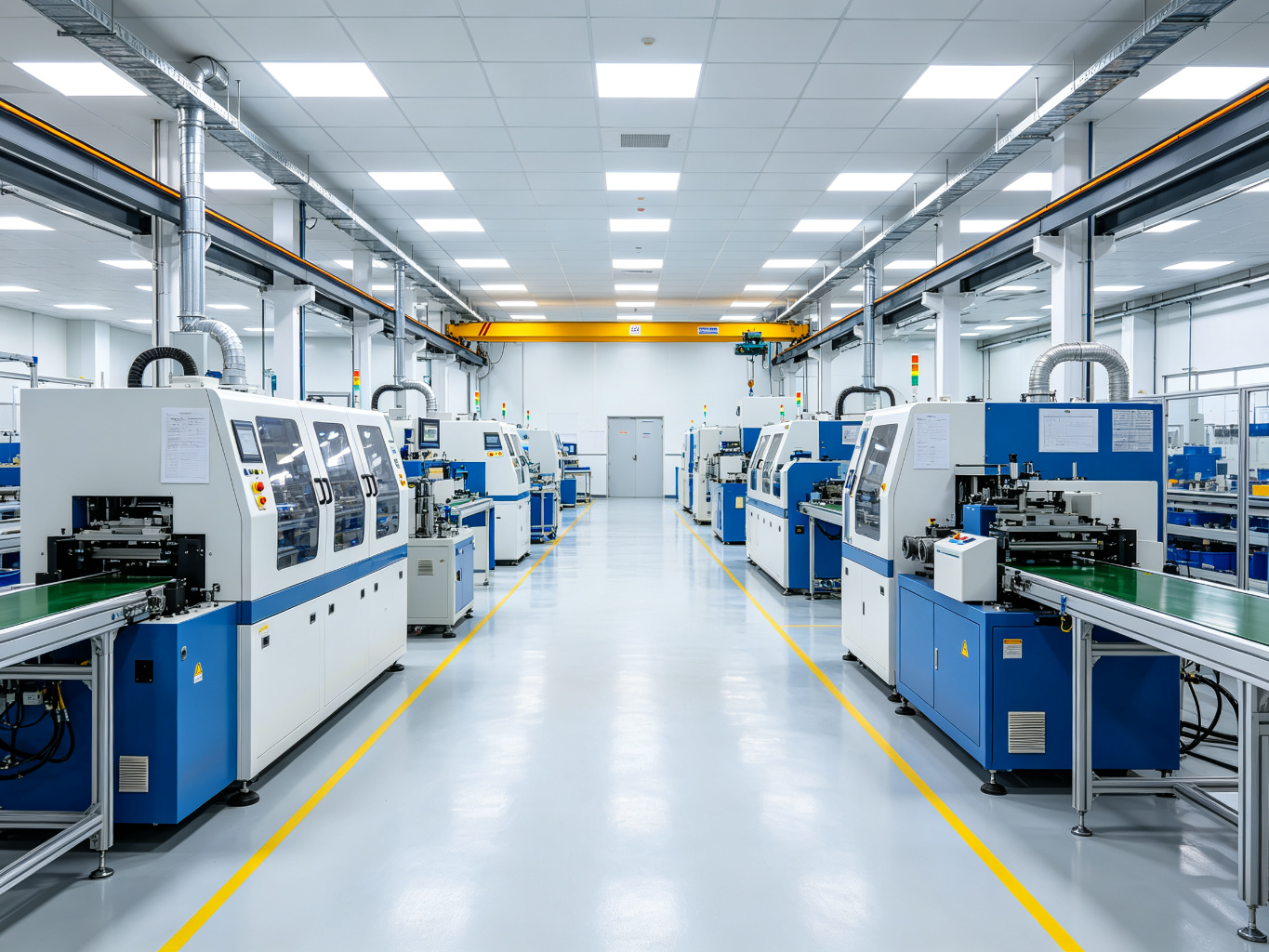
TL;DR. A cellophane overwrapping machine wraps a finished carton, tray or multipack in a clear or printed film and seals it into a neat three-dimensional bundle. On the floor we see three closure styles in regular use: tuck-fold machines that fold film flaps without a heat seal, fin-seal machines that weld a longitudinal film seam, and overlap-seal machines that lap two film edges and seal them together. Speed bands for the classes discussed here run roughly 15–40 boxes/min on semi-automatic units, 40–90 boxes/min on servo-assisted automatic machines, and 90–150+ boxes/min on high-speed full-servo lines. Planning purchase prices fall in rough bands of $15k–$35k for entry semi-automatic units, $40k–$120k for servo-assisted automatic machines, and $120k–$250k+ for high-speed full-servo overwrappers; film stock, seal parts, change parts and training usually add another 8–18% on top of the base price over the first year. This guide walks through buyer profiles, closure styles, film grades, feed mechanisms, box-size ranges, supplier tiers, five-year running cost, the questions we ask suppliers, the mistakes buyers make most often, and a scenario-by-scenario recommendation. It stays on secondary film overwrapping only; the upstream choice between cartoning, shrink bundling and case packing is covered in our secondary packaging route comparison.
By Ryan Huang, Sales Application Engineer. Ryan has configured more than 200 end-of-line wrapping projects and tracks film price indices quarterly.
If your cartons already leave the cartoner looking plain, and the complaint from sales and customers is that the pack reads cheap on the shelf, a cellophane overwrapper is one of the few secondary steps that changes the visible finish without touching the product itself. The machine takes a carton or a small group of cartons, lays a film web underneath and over the top, folds or seals the film around the sides, and ejects a wrapped bundle that can carry a tear tape, a window, a printed pattern or an anti-tamper seal. The term “cellophane” survives in the trade even though most modern machines run BOPP film rather than the old regenerated cellulose sheet; the buying decisions are the same either way.
The right machine depends less on the headline speed number on a brochure and more on the box dimensions you actually run, how often those dimensions change, the film you can source locally, and how the unit connects to the cartoner, bundler or manual loading station upstream. We have seen buyers over-spec a high-speed servo line for a product that changes size twice a week, and under-spec a simpler machine for a three-shift plant where film scrap and rejected bundles quietly eat the budget. The sections below break the decision into parts you can price and check against supplier quotes.
Who buys a cellophane overwrapping machine: buyer profiles and production targets
Overwrappers are bought for four fairly different reasons, and the machine that fits one profile will often be wrong for another. Before comparing machines, map your own production pattern against these profiles. The questions that matter are how many boxes per shift you run, how many different carton sizes you run in a month, how often the artwork or film changes, and what the finished bundle has to survive in distribution.
High-volume single-SKU producer, multi-shift
This profile runs one or two carton formats through two or three shifts, five or six days a week. The product is often a regular food carton, a cosmetics set, a pharmaceutical-style box or a household-goods pack where the wrapped bundle must look identical at 7 a.m. and 11 p.m. The buying priority here is steady throughput, low film scrap per bundle, and seal quality that holds through stacking and shipping. Changeover is a minor event because the box size barely moves. A high-speed full-servo machine or a strong servo-assisted automatic unit earns its price here; the case for a manual machine is weak because labor and reject rate dominate the cost picture over a year. For this profile we usually look at a machine in the high-speed class, such as the BTB-300H high-speed cellophane wrapping machine, and ask the supplier to demonstrate a bundle at your actual carton size rather than a demo box.
Multi-SKU and frequent changeover producer
This profile runs a family of cartons in different lengths, widths and heights, and changes size several times a week. A confectionery maker, a gift-set assembler or a contract packer typically sits here. The buying priority is changeover speed and repeatability: how long it takes to move from one carton size to the next, how many change parts are needed, and whether the machine stores a recipe that recalls settings. A machine that runs fast on one size but takes an hour and a half to change over will lose more time across a month than a slightly slower machine with quick guides and servo adjustment. Film width and box height range matter more here than peak speed, because the machine has to cover the largest carton in the family without wasting film on the smallest.
Small or entry-volume producer
This profile wraps a few hundred to a few thousand bundles a day, often by hand-feeding cartons into the machine. The buying priority is capital cost, footprint, ease of maintenance and a supplier who can support a small line without a long service contract. A semi-automatic unit or a compact servo-assisted machine fits this profile; a high-speed full-servo line is hard to justify on volume alone. The trade-off to watch is labor: if the wrapping station needs a dedicated operator for the whole shift, the running cost can approach that of a more automatic machine, and the case for stepping up becomes clearer.
Export and regulated-market producer
This profile ships wrapped bundles to markets where the pack must resist tampering, survive longer distribution, or meet buyer specifications for film type, seal integrity and traceability. The buying priority is seal reliability, film compatibility with the destination market, and documentation the supplier can provide. Safety and guarding still follow the general machinery requirements; the relevant baseline for machine guarding and control-system safety is ISO 12100, and control-system performance levels are referenced to ISO 13849-1 where safety functions are involved. We treat these as checklist items to confirm with the supplier, not as reasons to overbuild the machine.
Machine type comparison: tuck-fold vs fin-seal, semi-auto vs full servo
The first real split in a buying decision is how the film closes around the bundle. Closure style drives the seal appearance, the film waste, the reject modes and the price. The second split is how the machine feeds and adjusts: manual mechanical, servo-assisted or full servo. The table below compares the common classes on the points buyers actually check.
| Class | Closure style | Typical speed | Box-size range | Changeover | Planning price band | Best fit |
|---|---|---|---|---|---|---|
| Semi-automatic, manual feed | Tuck-fold or simple fin-seal | 15–40 boxes/min | Small to medium cartons; limited height range | Manual guide and film adjustments, 20–60 min | $15k–$35k | Entry volume, single or few SKUs, hand-fed lines |
| Servo-assisted automatic | Fin-seal or overlap-seal | 40–90 boxes/min | Medium carton family; adjustable guides | Servo recipe recall plus a few change parts, 10–30 min | $40k–$120k | Multi-SKU lines, mid-volume automatic production |
| High-speed full servo | Fin-seal or overlap-seal | 90–150+ boxes/min | Wide carton family; servo size adjustment | Recipe recall, minimal physical parts, 2–10 min | $120k–$250k+ | Multi-shift high-volume, stable product family |
| Tuck-fold specialty unit | Folded film flaps, no heat weld | 20–60 boxes/min | Flat to medium cartons; gift sets | Fold-plate and guide changes, 20–45 min | $25k–$70k | Premium presentation packs where a flat folded edge is required |
Tuck-fold machines fold the film flaps underneath and around the carton rather than welding a seam. The finish reads flat and clean, which suits premium gift sets and display packs, but the bundle depends on fold geometry and film tension; a film that wrinkles or a carton that is slightly out of square will show in the fold. Fin-seal machines run a film seam down the back or bottom of the bundle and weld it with a heated jaw or sealing roller. They tolerate a wider range of film and box shapes, and the seal is easier to inspect, but the seam leaves a visible ridge. Overlap-seal machines lap one film edge over the other and seal across the overlap; this is common on wider bundles and multipacks where a single fin seam would look uneven.
Semi-automatic machines rely on the operator to place the carton in the film path and to set guides and tension by hand. Servo-assisted machines drive the film feed and the main adjustment motions with servo motors, which improves repeatability and lets settings be stored as recipes. Full-servo machines drive more motions independently, so a change in carton size can be recalled without swapping many mechanical parts. The servo advantage is most visible on multi-SKU lines; on a single-SKU three-shift line, the payback comes mainly through steadier film tension and fewer rejects.
It is worth keeping this choice distinct from shrink bundling. A shrink bundler groups loose products or trays in a sleeve film and tunnels the bundle through heat to shrink the film tight; an overwrapper wraps a finished carton in a light BOPP or cellophane film and closes with a fold or a seal at machine temperature, without a shrinking tunnel. The two are sometimes confused because both use clear film, but the film behavior, the heat section and the resulting bundle look are different. If your real need is to hold a tray of loose cartons together for palletizing, a bundler is usually the lower-cost route; if the goal is a clean wrapped finish on an individual carton, an overwrapper is the right class.
Configuration matrix: film grade, feed, coding, tear tape and box size
Once the closure style and machine class are set, the configuration choices determine whether the line runs smoothly or spends the shift adjusting. The matrix below lists the configuration points we check on a quote, the options available, and the trade-off behind each one. These are selection choices, not specifications the supplier can promise without seeing your cartons.
| Configuration point | Common options | What it affects | Check before quote |
|---|---|---|---|
| Film grade | BOPP plain, BOPP with window, printed BOPP, regenerated cellulose film, anti-static or low-seal-temperature grades | Seal temperature, film cost, clarity, tear behavior, regulatory acceptance | Film thickness, width and supplier source in your region |
| Film feed | Mechanical tension control, servo film feed, independent web tension rollers | Film scrap per bundle, wrinkle rate, repeatability across speeds | Whether you run one film width or several |
| Carton feed | Manual hand feed, inline conveyor feed, single-lane or dual-lane | Operator load, possible speed, connection to upstream cartoner | Upstream output, carton orientation, gap between cartons |
| Tear tape | None, inline tear-tape applicator, colored or perforated tape | Consumer opening, added film station, change parts | Whether the pack needs an easy-open feature |
| Coding and marking | Printer mount, coded film, inkjet or laser station supplied upstream | Batch or date code on film or carton, line integration | Where the code must sit and who supplies the coding unit |
| Box-size range | Fixed small range, adjustable medium range, servo wide range | Guide and fold-plate parts, film width needed, changeover time | Min and max carton length, width, height in your family |
| Window and print registration | Plain film, registered printed film, pre-cut window film | Registration accuracy, film scrap at setup, station requirements | Artwork repeat size and registration tolerance |
| Dust and static control | Anti-static film, ionizing bar, dust extraction at feed | Film clarity, reject rate, clean-room or dry-room suitability | Product dust level and environment humidity |
Film grade is the configuration buyers underestimate most often. BOPP is the usual running film because it seals at a moderate temperature and is widely available; a lower-seal-temperature grade helps on machines with limited heat control, while a thicker film stands up to heavy bundles but needs more sealing energy. Printed or window film adds registration demands, and the machine must hold the film web steady enough to line the window up with the carton graphic. Regenerated cellulose film still appears in premium and traditional packs, but it is less uniform in supply and often needs its own sealing parameters. Confirm the film you can actually buy locally before locking the machine to a film grade the supplier favors.
Carton feed determines how the overwrapper sits in the line. A hand-fed unit can be placed anywhere a worker can stand, but it sets the operator as the bottleneck. An inline conveyor feed pulls cartons straight from the cartoning machine or an accumulation table; here the gap between cartons, their orientation and any skewing coming upstream all affect wrapping quality. Dual-lane feeds roughly double throughput on a compact frame, but they need balanced lanes and wider film, and changeover becomes more involved.
Box-size range deserves an honest measurement. Buyers often quote only the hero carton and forget the smallest and largest packs in the family. The machine must cover the largest carton for film width and fold reach, and the guides must close down to the smallest without over-tensioning the film. Measure length, width and height for every SKU you plan to run, and include the loose tolerance on carton dimensions; a carton built slightly out of square will fail a tight folding machine faster than a loose-seal machine.
A typical mid-range automatic unit for a single-product line, such as the BTB-290 automatic cellophane wrapping machine, covers a compact carton family with servo feed and a fin-seal or fold station; the high-speed class adds independent servo motions and a wider size range. Match the machine’s stated size envelope to your measured min and max, not to the average box.
Supplier tiers and what each tier is good for
Overwrappers are sold through three broad supplier tiers. The tier you buy from changes price, lead time, parts availability and the depth of engineering support you can expect. There is no single correct tier; the right one depends on volume, how specialized your pack is, and how you handle maintenance in-house.
Global OEM suppliers. These are the established packaging-machine manufacturers with a broad catalogue, standard configurations and a global parts and service network. They quote higher on the base machine, but they tend to offer documented performance, consistent build quality and faster access to spare parts. They suit high-volume lines where downtime carries a real cost, and buyers who want a known reference and a formal FAT. The trade-off is a longer lead time, less flexibility on a one-off custom configuration, and a price that reflects the brand and the support network.
Regional specialists. These are builders focused on wrapping and film packaging for a local or regional market. They often know the locally available film grades, the common carton sizes in the region, and the service expectations of nearby plants. Their machines sit in a middle price band, and they can usually adapt guides and stations to a specific pack more readily than a large catalogue OEM. They suit mid-volume multi-SKU lines where close supplier contact matters and where the buyer can work directly with the builder on setup and film parameters. Check their installed base for machines running a similar carton, and ask for references you can visit or call.
Local or refurbished suppliers. These supply entry-level new machines from smaller builders, or refurbished and used overwrappers. The capital cost is the main draw, and for a low-volume or trial product this can be a sensible route. The risks are parts availability, unknown wear on seal jaws and film feed, and limited engineering support for an unusual pack. If you consider a refurbished machine, inspect the seal stations, drive belts, guide rails and film feed rollers, and price the wear parts that will likely need replacing in year one. This tier suits small producers, test markets and lines with simple cartons and single shifts.
Across all three tiers, ask who supplies the film and the spare seal parts locally, and how long a seal jaw or roller typically lasts before wear affects the finish. A machine whose parts must be air-freighted from overseas can quietly raise the running cost regardless of the purchase price.
Five-year TCO: purchase, film, wear parts, labor and downtime
The purchase price is the easiest number to compare and the smallest part of what the machine costs over five years. Film consumption, wear parts, labor, rejects and downtime usually weigh more heavily. The table below lists the cost categories we track in a five-year TCO review, what drives each one, and how to ask the supplier to estimate it. These are planning categories, not fixed quotes; your actual figures depend on carton size, film grade, shift pattern and local labor cost.
| Cost category | Driver | Typical note | How to estimate |
|---|---|---|---|
| Base machine purchase | Class, servo level, stations included | One-time capital cost; largest single line item | Compare like-for-like stations and size range, not headline price |
| Installation and commissioning | Foundation, utilities, upstream connection, FAT/SAT | Often 5–12% of base price | Ask what the quote includes: hookup, training, sample runs |
| Film stock | Bundles per year, film width and thickness, scrap per setup | Recurring consumable; can exceed parts over five years | Estimate film grams per bundle and multiply by annual bundle count and local film price |
| Seal and wear parts | Seal jaws, rollers, belts, brushes, fold plates | Replaced on wear schedule; seal parts contact heat and film | Ask expected life per part and the local price of each consumable |
| Labor | Operator loading, setup, changeover, film threading | Semi-auto keeps a worker at the station; automatic reduces attendance | Count labor hours per shift and multiply by local wage |
| Rejects and scrap | Wrinkled film, bad seals, misregistration, setup waste | Often overlooked; high on thin film or frequent changeovers | Ask the supplier for a typical reject rate band and track your own trial bundles |
| Downtime and changeover | Changeover time, parts lead time, service response | Hidden cost on multi-SKU lines | Compare changeover minutes and parts availability for your planned SKU count |
| Energy and utilities | Seal heat, drives, any extraction or ionizing equipment | Modest on overwrappers compared with heat tunnels | Check connected load and seal duty cycle |
Film is the recurring consumable that moves most over a five-year horizon. A wider film and a taller carton use more film per bundle, and every setup change and every rejected bundle wastes film that never reaches a customer. On multi-SKU lines, film scrap at changeover can be a meaningful share of total film use; a machine that holds tension steadily and recalls a recipe will waste less film between runs than one that needs manual re-threading and heat adjustment each time. Track film price trends separately, because film grades tied to petrochemical feedstocks move with broader commodity markets; broad packaging-material and end-market demand figures are compiled by trade and market sources such as Smithers and Statista, and broader packaging machinery demand is tracked by PMMI market research. Treat these as directional context for budgeting, not as a fixed film price for your next purchase.
Wear parts concentrate in the sealing and film-feed zones. Seal jaws and rollers contact heated film every cycle, and their surface condition directly affects seal consistency; belts and feed rollers carry the web through the machine. Ask for the expected service interval on each wearing part and whether the part is stocked locally. Labor is where semi-automatic and automatic machines separate most clearly over five years: a hand-fed unit keeps an operator occupied, while an inline automatic machine usually needs only attendance and changeover support. Rejects and downtime are the soft costs that show up later; a cheap machine that wrinkles film on half its bundles will lose more in scrap and lost output than the price difference to a better unit.
Ten questions to ask the supplier, and five pitfalls to avoid
When you shortlist suppliers, the same questions asked of each builder make the quotes comparable. We take these to every overwrapper review, in addition to the standard safety and compliance checks. Pack your measured carton dimensions, your film grade and thickness, your annual bundle count and your SKU list before the call.
- What carton length, width and height ranges does this machine cover, and what change parts are needed across that range?
- What closure style does the machine use, and what seal temperature and film thickness ranges are it rated for?
- What speed can it hold on our actual carton size and film, not the demo box in the catalogue?
- How long does a full changeover take between two carton sizes in our family, and how many parts are swapped?
- Is the film feed servo-driven, and are settings stored as recipes that recall by SKU?
- Which film grades and suppliers has this machine run in production, and what film width is required for our largest carton?
- What wear parts contact the film or seal zone, what is their expected life, and are they stocked locally?
- How does the machine connect to an upstream conveyor or cartoner, and what gap and orientation does it require?
- What does the quote include for installation, training, sample runs, documentation and warranty?
- Can you provide references for a similar carton and volume, and arrange a trial or FAT with our own cartons and film?
The five pitfalls we see buyers walk into most often are the same ones we flag when reviewing a late-stage quote.
Choosing on peak speed only. A brochure speed measured on a flat demo carton in ideal film conditions will not match your line. Compare speed on your own carton, under your film grade, and include reject rate in the comparison.
Under-sizing the box range. Buying to the average carton leaves the machine unable to cover the largest SKU or over-filming the smallest. Measure the full min and max family before locking the guides and film width.
Ignoring film availability. A machine tuned to a film grade you cannot source locally will run poorly or force expensive imports. Confirm local film supply and thickness range early, and test that film on the machine.
Counting only the base price. Installation, parts, film, labor and rejects over five years can outweigh the upfront difference between tiers. Compare the TCO categories in the previous section rather than the headline number alone.
Skipping the trial with real cartons. Film tension, fold geometry and seal consistency are hard to judge from a video. A trial with your actual cartons, film and tear tape exposes wrinkles, misregistration and seal gaps that catalogues hide.
Recommendation by scenario: which machine fits which line
Bringing the profiles, classes and cost together, the recommendation follows the production pattern rather than the budget headline. For a high-volume, stable product family on multiple shifts, a high-speed full-servo or strong servo-assisted automatic overwrapper is the justified choice; the payback comes through steady film tension, low rejects and short changeovers, and the supplier should run a FAT or trial on your carton. For a multi-SKU contract packer or gift-set line that changes size often, prioritize changeover speed, recipe recall and a wide adjustable size range over peak speed; a servo-assisted automatic unit usually balances cost and flexibility, and tuck-fold fold plates should be checked against your premium-pack presentation requirements.
For a small producer or a trial product at a few hundred to a few thousand bundles a day, a semi-automatic or compact servo-assisted machine keeps capital cost in check; watch the labor at the station, and if the wrapping work fills a full shift, step the case for an inline feed. For export or regulated-market packs, specify seal inspection, film compatibility and documentation up front, and confirm guarding and control safety against the relevant machinery standards rather than treating compliance as an afterthought. If your real goal is grouping loose cartons or trays for palletizing rather than finishing an individual carton, revisit the bundling and case-packing routes in the secondary packaging route comparison; an overwrapper may be the wrong tool for that job.
Trade shows and supplier directories remain the practical place to see machines side by side; events such as interpack bring wrapping and film-packaging builders together for comparison. Whatever tier you shortlist, the decision that protects the budget most is the same across profiles: measure your own cartons and film first, then ask every supplier to run those samples before you commit.
Frequently asked questions
What is the difference between a cellophane overwrapping machine and a shrink bundler?
A cellophane overwrapper wraps a finished carton or multipack in a light BOPP or cellophane film and closes it with a tuck-fold or a seal at machine temperature, without a shrinking tunnel. A shrink bundler groups loose products or trays in a sleeve film and passes the bundle through a heat tunnel to shrink the film tight. Overwrapping finishes an individual pack; bundling holds a group together for handling and palletizing.
What carton sizes can a typical overwrapper handle?
Semi-automatic units usually cover small to medium cartons with a limited height range. Servo-assisted automatic machines cover a medium carton family with adjustable guides, and full-servo high-speed units cover a wider range with servo size adjustment. The safe answer for your line is the min and max length, width and height you measure across your own SKU family, confirmed against the machine’s stated envelope during a trial.
BOPP film or traditional cellophane: which should the machine run?
Most modern overwrappers run BOPP, which seals at a moderate temperature and is widely available. Traditional regenerated cellulose film still appears in premium and traditional packs but can be less uniform in supply and needs its own sealing parameters. Confirm the film grade, thickness and width you can source locally before locking the machine, and test that film in a sample run.
How long does a changeover take between carton sizes?
Manual mechanical changeovers on semi-automatic machines typically run 20–60 minutes. Servo-assisted automatic machines with recipe recall and a few change parts usually land in 10–30 minutes, and full-servo high-speed machines can recall a size in roughly 2–10 minutes with minimal physical parts. The actual time depends on how many fold plates, guides and film widths must change for your SKU family.
What should I check on a refurbished overwrapper before buying?
Inspect the seal jaws and rollers for wear and surface condition, the film feed rollers and belts, the guide rails and fold plates, and the film tension control. Confirm the machine’s size range matches your cartons, price the wear parts likely to need replacement in year one, and check whether seal parts and spare parts are available locally. Ask for a demonstrated run with your own cartons and film where possible.
Sources and further reading: PMMI market research; ISO 12100 machinery safety; interpack packaging trade fair; Smithers packaging materials research; Statista packaging and industrial equipment data. Price and speed bands in this guide are planning ranges for buyer comparison; actual machine performance depends on carton samples, film grade, line layout and supplier test results.

Ryan translates customer product, package and production data into a machine configuration and quotation: package format review, throughput estimation, machine type selection, optional equipment, spare parts, lead time and payback calculations. His articles help overseas buyers prepare a complete application brief and understand how configuration choices change price and output.
See Full Bio ›