

Most of the questions buyers ask before ordering a packaging line are about the machine itself: its speed, its changeover, its price. The questions that tend to get asked two weeks before delivery are different and more urgent — where does it sit, what does it plug into, and why is the air compressor tripping every afternoon? A surprising number of installations lose their first week to utility problems that were knowable months earlier: a case erector starved of compressed air that cycles weakly and jams, a strapper fed from a circuit that cannot carry its heater load, a pallet wrapper placed where no forklift can reach it. At SunAura Packaging Machines we supply a site-requirements document with every line, and the projects that commission fastest are the ones where the factory’s air, power and floor were prepared before the crates arrived.
This guide walks through the utilities and site conditions an end-of-line packaging system actually needs. We will cover compressed air — how much, how clean and dry, and why pressure at the machine matters more than pressure at the compressor; electrical supply in terms of voltage, phases and circuits; floor loading, levelness and the space required around machines; and the ambient conditions that affect both equipment and products. We will get into how to total the loads across a multi-machine line, what to verify on site, and the short checklist that prevents the common first-week delays. If you are planning a line or preparing a factory for one, the sections below follow the same logic our applications engineers use when they review a customer’s facility.
Compressed air: the utility most often under-specified
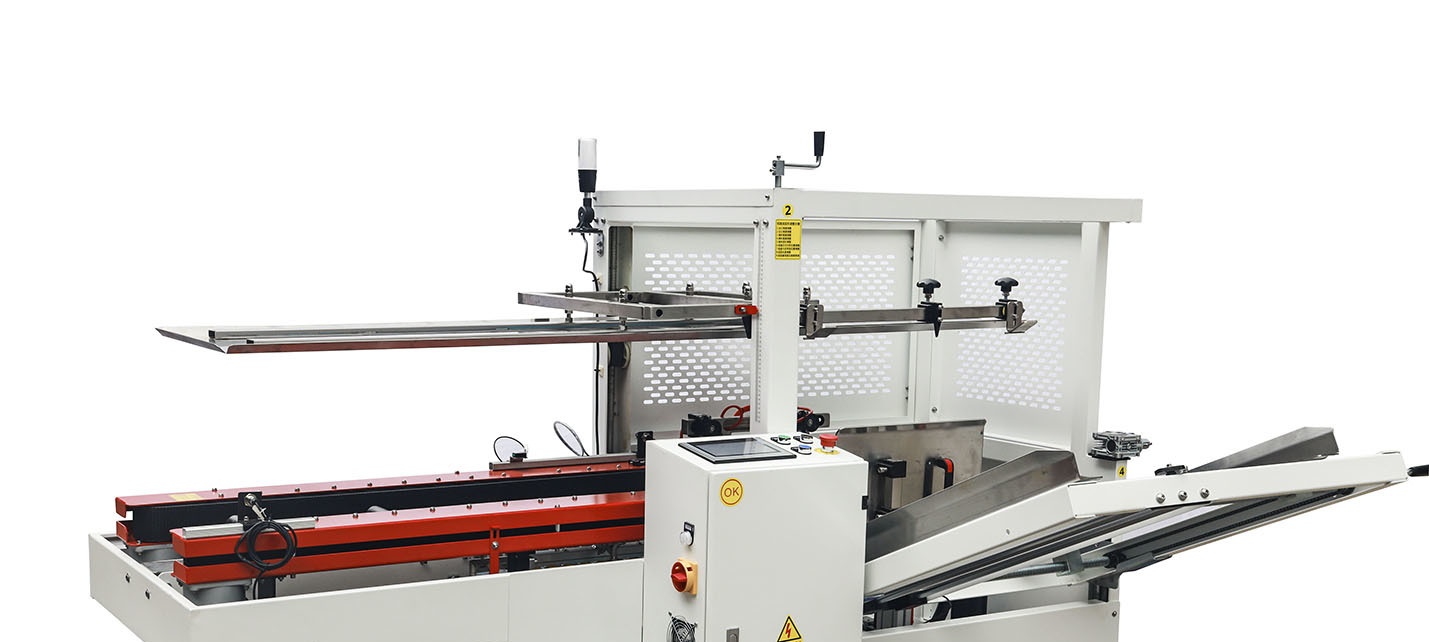
Many packaging machines rely on compressed air for the same motions a human would otherwise make: pneumatic case erectors use cylinders to pull blanks from the magazine and fold flaps, sealers actuate tape heads and flaps, packers and diverters use air to move and reject product, and blow-off stations clear debris. The convenient assumption is that the factory already has air, so nothing more needs specifying. The problem is that “we have a compressor” tells you nothing about whether the air reaches the new machine at the pressure and flow it needs while the rest of the plant is drawing from the same system. Air is also the most wasteful utility in most plants — leaks and over-pressurisation quietly consume a great deal of electricity — so a correctly sized, regulated and maintained system protects both performance and the power bill.
Pressure and flow are not the same thing
Pneumatic machines specify a working pressure, commonly in the region of 0.5–0.7 MPa (roughly 70–100 psi), and an air consumption figure, usually expressed in litres per minute or cubic feet per minute at a stated pressure. Pressure is the force available; flow is the volume the system can deliver as cylinders cycle. A line can show correct static pressure at idle yet collapse under load when several cylinders fire together, because the compressor, dryer or pipework cannot deliver the flow, and pressure at the machine drops mid-cycle. That produces exactly the symptoms that get misdiagnosed as machine faults: cases half-formed, flaps not pushed home, weak sealing and intermittent rejects. The requirement is therefore specified at the machine, under running conditions, with the rest of the plant drawing air as it normally does.
When the total is added up, the compressor should have margin over the combined consumption — a common rule of thumb is to size it with roughly 20–30% spare capacity, and to account for leaks, which in older systems can account for a substantial share of demand. Running a compressor flat-out at its maximum is both inefficient and leaves no room for the occasional high-demand cycle, while an oversized compressor cycling on and off is wasteful in a different way. The right answer comes from totalling the machines’ figures rather than buying to a catalogue number, which is why SunAura Packaging Machines provides consumption data for each machine in the line.
Dry, clean and regulated air
Air quality matters as much as quantity. Compressed air carries water vapour that condenses in the pipework, especially in humid climates, and untreated wet air corrodes cylinders, ruins seals and introduces moisture into products and packaging — the same condensation problem we address in our export packaging protection guide. A refrigerated or desiccant dryer, appropriate filtration and drain traps deliver dry air; a filter-regulator-lubricator unit at each machine sets the local pressure and protects the pneumatic components. Machines supplied with wet, unregulated air fail predictably and wear faster, and the warranty position on such failures is as limited as the cause is preventable. In cold facilities, water in lines can also freeze, which is part of why air preparation is specified carefully for cold and washdown environments.
Pipework and drops
The distribution system is the last place capacity is lost. Pipes that are too narrow, long runs with many fittings, and undersized hoses all create pressure drop; a ring main around the plant delivers air more evenly than a single dead-end run. Each machine needs a dedicated drop with an isolation valve, regulator and, where the machine requires, lubrication, so it can be isolated and serviced without affecting neighbouring equipment. These are minor costs at installation and major inconveniences when added later, which is why the layout is planned alongside the machine positions rather than improvised by the maintenance fitter.
Electrical supply: voltage, phases and circuits
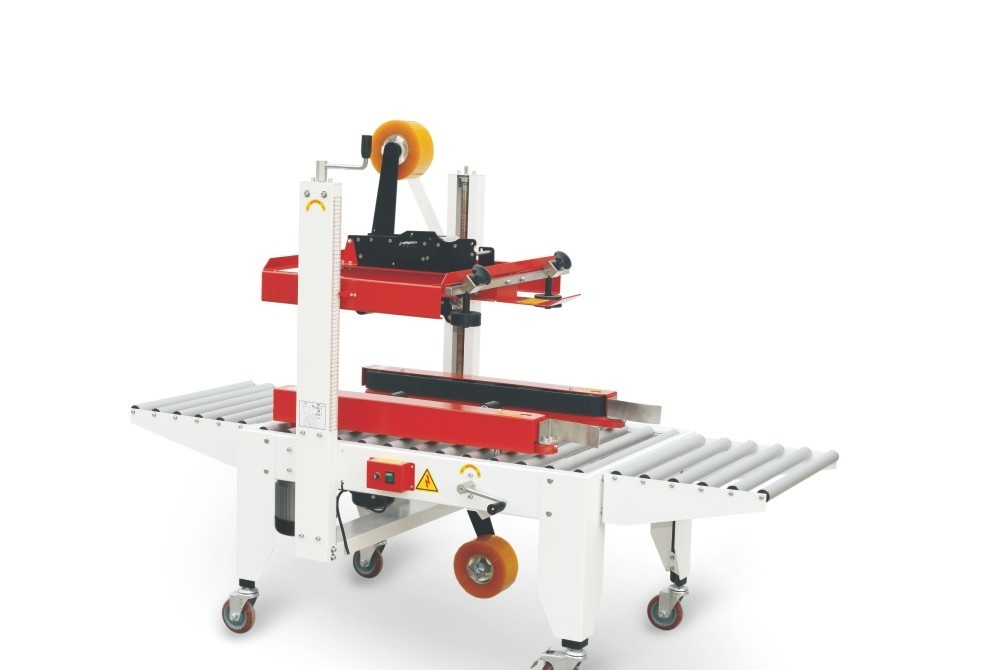
Packaging machines are predominantly electric, with motors, drives, heaters and controls, and the supply must match the machine’s specification exactly — electrical equipment is not forgiving of assumptions. The key parameters are voltage, number of phases, frequency and the protective earthing arrangement. Industrial machines commonly run on three-phase supplies, such as 380–415 V at 50 Hz or 460–480 V at 60 Hz, while smaller machines and control circuits may run on single-phase; the machine is built to the supply stated on the order, which is why customers confirm their factory voltage before manufacture. A machine built for one frequency or voltage cannot simply be plugged into another, and transformers or VFD adjustments, where possible, are better planned than improvised.
Each machine or group of machines needs circuits sized to its full-load current, with the correct overload and short-circuit protection, and machines with heaters — strappers, shrink tunnels and hot-melt systems — draw particular attention because their heating load is high. Putting several such machines on one marginal circuit causes nuisance tripping precisely when the line runs hardest. The machine’s electrical drawing states the load so the customer’s electrician can plan the distribution; isolators or disconnect switches at each machine allow safe servicing and lockout, a requirement in every serious safety regime. Controls and safety circuits must also be respected: guarding, e-stops and interlocks are wired to standards and are not to be bypassed to save time.
Floor, levelness and machine space
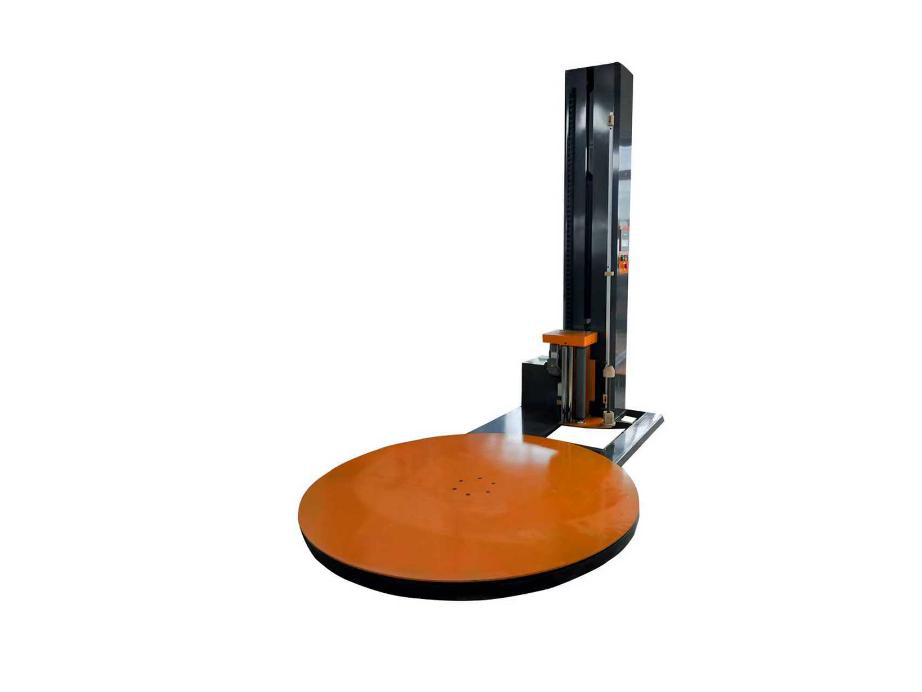
The factory floor carries the equipment and everything staged on it, and it must be flat, sound and strong enough. Heavy machines — palletisers, robotic cells, shrink tunnels and filled accumulation conveyors — impose point loads that require a concrete floor of adequate thickness and quality; floors that crack or settle under a machine create alignment problems that are very difficult to correct. Machines must also be set level and, where they join, at matching heights, so cases and products transfer cleanly; shimming and anchoring are part of installation, not optional finishing. Turntable wrappers and robotic cells in particular need a level, stable base to operate accurately.
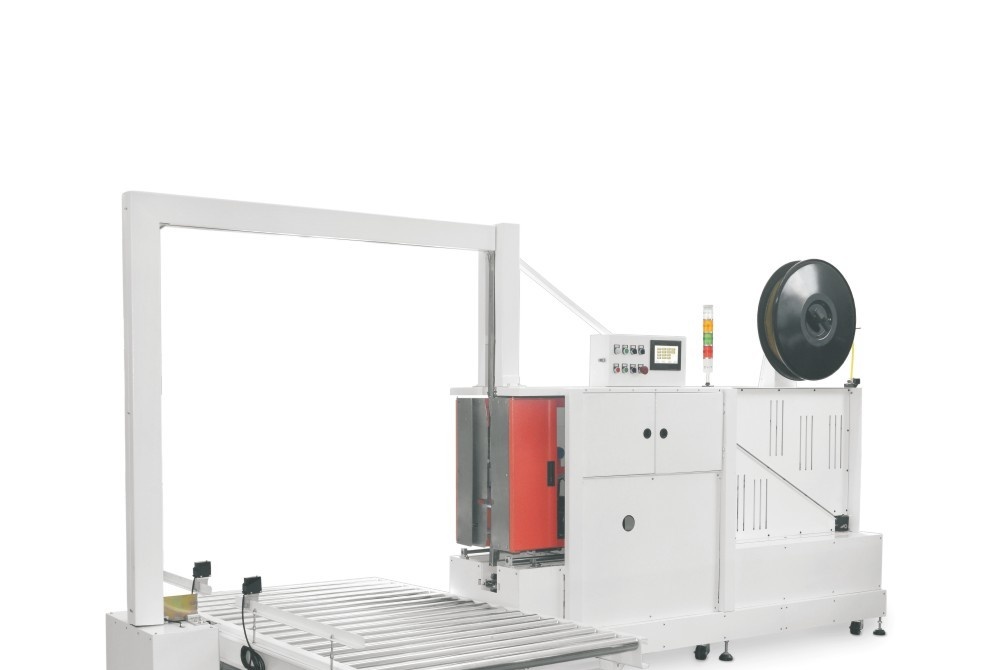
Space around machines is routinely underestimated. A layout needs room not only for the equipment footprint but for operators to work, for guards and doors to open, for magazines of case blanks and consumables to be replenished, and — critically — for maintenance access and for forklifts or pallet jacks to deliver material and remove finished pallets. Clearance above machines and at control panels, space to withdraw a sealing head or a film roll, and aisles wide enough for loaded pallets all belong on the layout. The lines that look most compact on paper are often the ones that cannot be serviced or supplied efficiently once installed.
Ambient conditions and product considerations
Equipment is specified for an environment, and extremes of temperature, humidity and dust affect both the machines and the products moving through them. Hot, unventilated spaces reduce the life of controls and motors and can cause films and adhesives to behave inconsistently; damp and dusty conditions call for the appropriate enclosures and sealing; cold and washdown areas need machines built for them from the outset. Lighting at the line should allow operators to inspect packs and read controls, and the layout should account for drainage where wet cleaning occurs. For heat-sensitive products and films, the position of heat tunnels relative to other machines and to operators also matters. These conditions are reviewed at the specification stage because they change how the machine is built, not merely where it is placed.
Totalling a multi-machine line
For a complete line — erector, packer, sealer, strapper, wrapper and palletiser with their conveyors — the utilities are summed rather than treated machine by machine. The air consumption of all stations is totalled with margin; the electrical loads are allocated across properly sized circuits; the floor loads are checked at the heaviest points; and the services are routed to match the final layout. SunAura Packaging Machines supplies this information in the site-requirements documentation and, for turn-key projects, reviews the customer’s facility and layout in advance. Where the existing compressor or supply is marginal, it is far cheaper to upgrade before installation than to discover the limitation during commissioning, when every day of delay is lost production.
Site preparation checklist
- Confirm each machine’s air pressure and consumption; total them and size the compressor with margin.
- Provide dry, filtered, regulated air with a dedicated drop, valve and FRL at each machine.
- Verify supply voltage, phases and frequency before the machine is built to order.
- Allocate circuits to full-load current, especially for heaters and tunnels, with local isolators.
- Check floor thickness, quality and levelness; anchor and shim machines as required.
- Reserve space for operation, guarding, maintenance, consumables and forklift movement.
- Review ambient temperature, humidity, dust, lighting and drainage for the actual environment.
- Route and test utilities before delivery so the line can be commissioned on arrival.
Frequently asked questions
How do I know if my compressor is big enough?
Add the air-consumption figures of all machines at their stated pressure, allow for leaks and a margin of roughly 20–30%, and verify pressure at the machines while the line and plant are running. Static pressure at idle is not evidence of adequate capacity.
Does every machine need its own air regulator?
Each machine should have a dedicated drop with an isolation valve and a filter-regulator, with lubrication where the machine requires. This sets the correct local pressure and protects the pneumatic components from wet or dirty air.
What voltage should I tell the manufacturer?
The actual voltage, number of phases and frequency at the installation point — for example 400 V three-phase 50 Hz or 480 V three-phase 60 Hz. The machine is built to that supply, so it must be confirmed before manufacture.
How much space does a line need beyond the machine footprint?
Room for operators and guards, for replenishing blanks and film, for maintenance access and for forklifts to move pallets, plus the relevant safety aisles. These clearances are part of the layout rather than space to be cut.
Can utilities be added after the machines arrive?
They can be, but doing so delays commissioning and often costs more. Preparing air, power and floor work before delivery is the standard recommendation for a fast, trouble-free installation.
Conclusion
A packaging line performs as specified only when its site conditions match its requirements: compressed air delivered at the right pressure and flow, dry and regulated; electrical circuits matched to voltage, phases and full-load current; a floor that is level and strong enough; and the space and ambient conditions the machines and products need. Totalling these loads across the whole line and preparing them before delivery removes the problems that most commonly consume the first week of an installation. Specified early and verified on site, the utilities become invisible — which, for utilities, is exactly the goal.
If you are planning a packaging line and want to confirm the air, power and floor requirements for your facility, SunAura Packaging Machines provides the site documentation and, for turn-key projects, an advance facility review. Contact our applications engineers with your factory supply details and target line, or explore the machines in the products hub, including the pneumatic case erectors and the full range of end-of-line equipment.

Kevin works on machine development for shrink bundling, shrink hoods and vacuum packaging. He tests film shrink ratios, tunnel heat zones, seal bar performance and chamber cycle times, and feeds that back into machine frame and conveyor design. He writes technical articles on shrink film selection, tunnel temperature balancing and vacuum packaging for industrial and food-adjacent secondary packs.
See Full Bio ›