
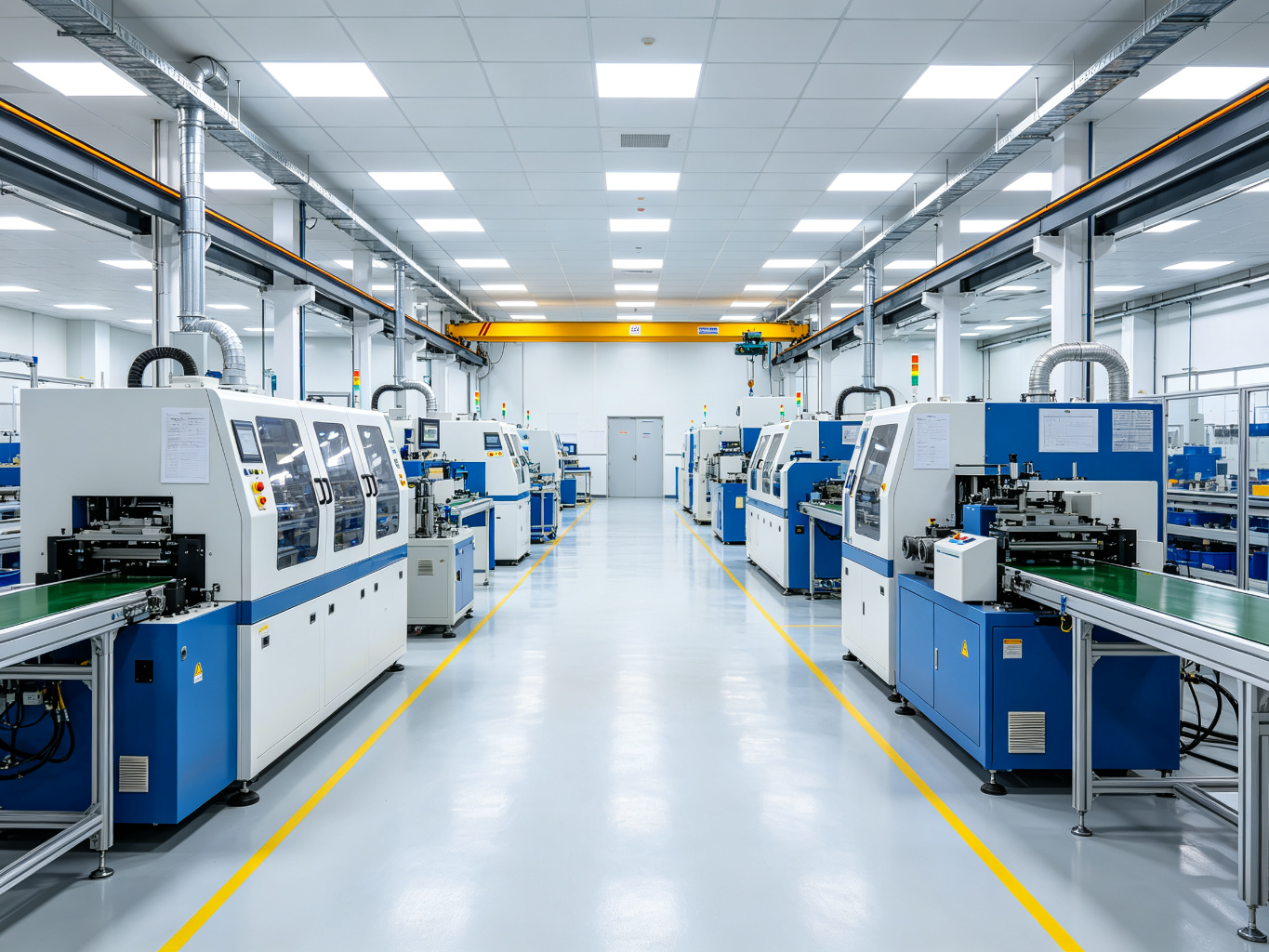
Qingdao, China — SunAura Packaging Machines has introduced a new random case sealer purpose-built for e-commerce fulfilment and third-party logistics lines where every box on the conveyor can be a different size. The machine detects, adjusts to and seals mixed-size corrugated cases automatically as they arrive, removing the manual adjustment that has long made random case sealing one of the most labour-intensive stations in a fulfilment centre.
The launch extends SunAura Packaging Machines’ existing range of uniform and random case sealing equipment into the high-variety segment, where order profiles have shifted sharply toward many small, mixed cartons rather than pallets of identical product. “Most of the case sealers on the market are built for one box at a fixed size,” said a SunAura Packaging Machines engineering manager. “A fulfilment line is the opposite. Our customers asked for a machine that reads each case, sets itself, and keeps moving — and that is what we have delivered.”
The problem random sealing solves
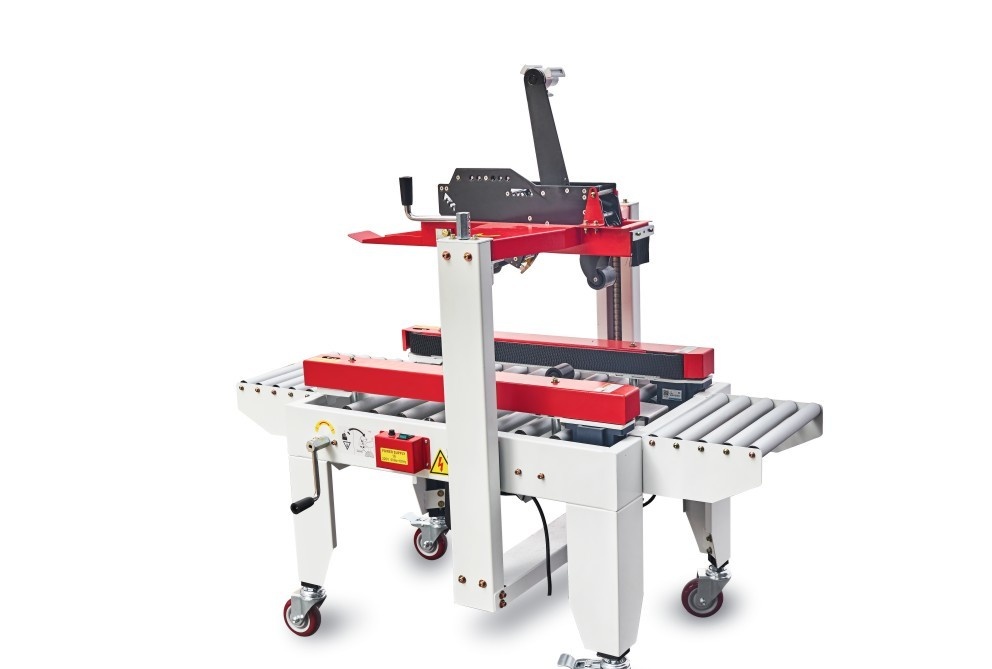
A uniform case sealer is set once for a single case size and runs that size all shift. It is simple and fast, but it assumes homogeneity that e-commerce does not have. In a fulfilment centre picking consumer orders, one carton might hold a single cosmetic item and the next a kitchen appliance. On a manual or semi-automatic station, an operator must adjust the machine — or hand-fold and tape — for virtually every order. That is slow, inconsistent and physically tiring, and it becomes the bottleneck the moment order volumes rise.
Random case sealers remove the adjustment step. As each case enters, sensors measure its dimensions; the top flap folders and the sealing head move to the case’s height, and the side belts adapt to its width, before tape is applied. The case flows through without stopping for manual setting. For lines that previously stationed one or two operators purely to fold and tape mixed boxes, the change is direct: the station becomes automatic and the labour is redeployed to picking, where it is actually needed.
How the new machine works
The system combines three functions in a compact frame. First, an infeed sensing stage reads each case as it arrives. Second, motorised flap folders and a moving sealing carriage position themselves to the measured dimensions — top and bottom, then the tape head. Third, the case is sealed with pressure-sensitive tape as it passes, with the side drive keeping it square. The adjustment happens continuously rather than in a stopped setup, so mixed cases run one after another at a steady pace.
The machine is built around the realities of fulfilment boxes, which are often lightly graded and occasionally imperfect. It tolerates the range of board grades common in express shipping cartons and is designed for quick tape changes, since consumable replenishment is one of the few interventions that remain. Safety guarding and emergency stops are integrated across the moving carriage, as on SunAura Packaging Machines’ industrial uniform sealers.
Where it fits in a fulfilment line
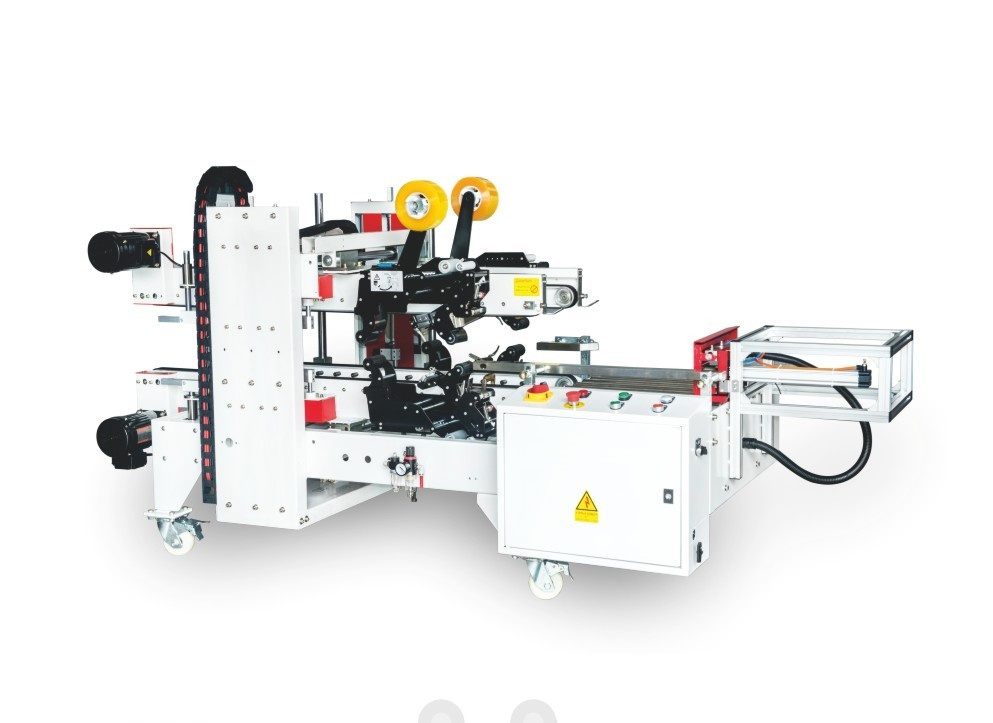
The random sealer is one station in a sequence that increasingly runs end to end. In a typical automated fulfilment layout, picked orders are packed into cases, the random sealer closes and tapes them, and the cases then move to labelling and sortation. SunAura Packaging Machines also supplies the equipment around it: e-commerce case erectors for lines that form their own boxes, corner-edge sealers for small express cartons, and pallet wrappers for cases that leave in unit loads rather than parcel networks.
Not every line needs a fully random machine, and SunAura Packaging Machines is explicit about matching the equipment to the order profile. Operations that ship a limited number of standard case sizes are often better served by a uniform sealer with quick changeover, which is simpler and lower cost. The random sealer is the right choice when box variety is genuinely high and changes order by order — the defining condition of most e-commerce and 3PL throughput. The company’s engineers review the customer’s case-size distribution before recommending one or the other.
Why now: the shift to mixed orders
The demand behind the launch is structural. Online retail and contract logistics have grown around order profiles of many small, mixed shipments rather than bulk pallet moves, and that changes what packaging equipment has to do. A machine built for a homogeneous production line is a poor fit for a fulfilment centre whose output changes by the minute. Labour, meanwhile, remains the largest operating cost in manual packing stations and the hardest to scale during seasonal peaks, when order volumes can multiply for a few weeks and then fall back.
Automating the random sealing station addresses both: it converts a variable labour cost into a fixed machine cost, and it adds capacity that is present every day rather than only when temporary staff can be hired and trained. It also improves consistency — machine-applied tape at the correct position is more uniform than hand taping across a tired shift, which reduces the number of cases that fail in the parcel network and come back as returns.
Integration and commissioning
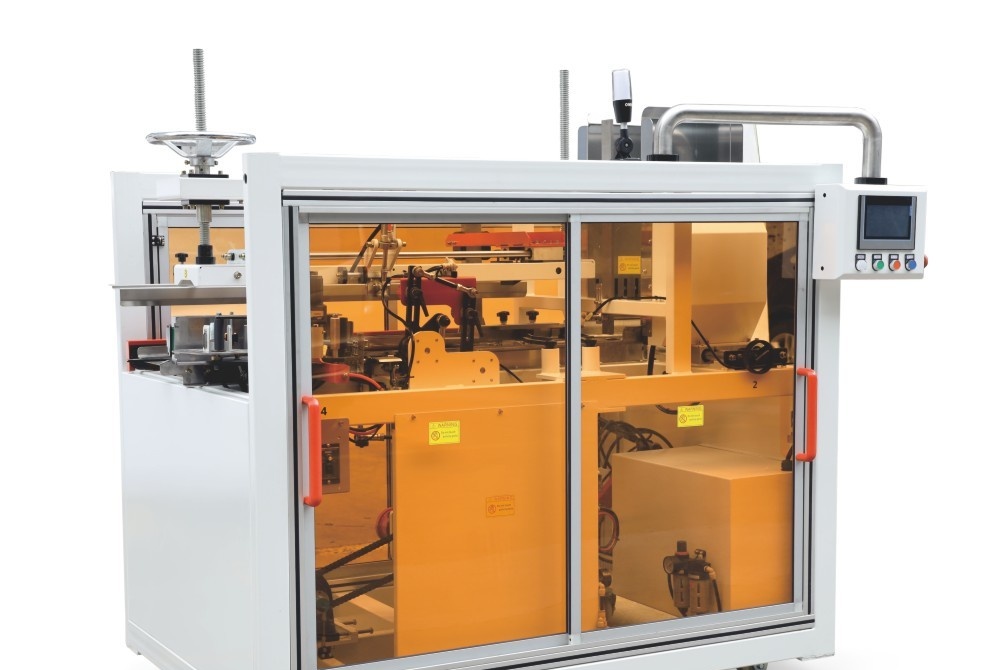
SunAura Packaging Machines designs the random sealer to slot into existing conveyors rather than requiring a rebuilt line, with infeed and outfeed heights matched to the customer’s layout. As with its other end-of-line equipment, the machine is tested before shipment from the Qingdao factory and commissioned on site, with operator training covering the sensor stage, tape changes and the small set of routine adjustments. Remote after-sales support backs the installation, a point the company says matters particularly to logistics customers who cannot afford a sealed station to be down during peak.
For customers planning larger automation, the random sealer can be specified as part of an integrated erect-pack-seal layout rather than as an isolated purchase, which lets the infeed, erector and sealer be balanced to the same throughput. Buyers choosing this route benefit from defining the case-size range and peak volume up front so the whole line is sized correctly.
Tape versus hot melt in random sealing
Buyers moving from hand sealing to an automatic random machine often ask whether to use tape or hot-melt adhesive. For high-variety fulfilment, tape is by far the common choice, and for good reason. Pressure-sensitive tape tolerates the range of board grades and moisture conditions typical of express cartons, it changes over quickly between rolls, and it bonds immediately with no cooling time — important when every case is a different size and there is no fixed clamp dwell. It also produces the easy-open tab consumers expect.
Hot melt can be faster on uniform, high-speed production lines where one case size runs for hours and bead placement is fixed. In a random, order-by-order environment those advantages shrink: the adhesive must be metred onto varying flap positions, the board surface has to be consistent for the glue to wet out, and cases must be held while the bond sets. For that reason SunAura Packaging Machines configures the random sealer around tape and reserves hot-melt systems for uniform industrial lines. The trade-offs between the two methods are explored in our article on tape versus hot-melt sealing.
Calculating the labour savings
The case for automating a random station is straightforward to estimate on your own operation, and doing the arithmetic before purchase is more reliable than relying on a supplier’s headline number. The calculation has three parts: the labour currently tied to the sealing station, the value of added throughput during peaks, and the cost of the machine.
Take a fulfilment centre that stations two operators across a shift purely to fold and tape mixed cases. The first cost is the fully loaded wage of those operators; the second, often larger, is the variability they create — the station slows under peak volume and produces uneven seals when staff are tired or temporary. An automatic random sealer converts that into a fixed machine cost and keeps the station running at a constant pace through the seasonal spikes that are hardest to staff. As a simple illustration, if two loaded operator positions cost the equivalent of a fixed annual sum and the machine replaces most of that labour while adding peak capacity, the payback is commonly measured in months rather than years. The same logic, applied across the whole line, is developed in our total cost of ownership guide. Run it with your own wage and volume figures rather than generic ones.
Seasonal peaks sharpen the argument. A manual sealing station scales only by adding temporary labour, which is precisely when labour is scarcest and least experienced, and a slow station at peak means parcels miss carrier cut-offs and ship late. An automatic random sealer holds the same throughput through the spike without depending on seasonal hiring, and it seals consistently across long shifts when fatigue would otherwise degrade hand taping. For operations that measure themselves against carrier deadlines rather than average daily volume, removing that bottleneck is often the decisive benefit — the saved labour is real, but the avoided late shipments and returns are what customers mention after their first peak on the machine. Costing this in requires your own peak volumes and cut-off times, but it is rarely negligible.
Questions fulfilment buyers ask most
Will it handle my full range of boxes? The machine works within a defined dimension window. SunAura Packaging Machines reviews your actual case-size distribution — including the smallest and largest percentiles — and confirms coverage before quoting; cases outside the window are identified rather than discovered later.
What happens to an unusual or damaged case? Lines are arranged so out-of-range or badly formed cases can be diverted to a manual lane rather than stopping the automatic flow, which keeps the bulk of orders moving.
How fast does it really run? Because each case is individually sensed, throughput is lower than a fixed-size uniform sealer and depends on the case mix. The company quotes a realistic rate for the customer’s profile rather than a best-case speed.
Can it fit our existing conveyors? The sealer is matched to current infeed and outfeed heights and integrated without rebuilding the line, with the layout confirmed before manufacture.
What support is provided? Machines are commissioned and operators trained on the sensor stage and tape changes, with remote after-sales support for a station that cannot afford downtime during peak.
Specifications and availability
The machine accommodates a defined window of case dimensions covering the small-to-medium cartons that make up the bulk of e-commerce traffic, with the exact accepted range confirmed against the customer’s box portfolio. It seals with standard-width pressure-sensitive tape and runs at a continuous throughput suited to order-by-order fulfilment rather than the higher fixed speeds of uniform industrial sealers — an expected trade-off, since each case is individually sensed and adjusted. Customers with unusually large or heavy cases are directed to SunAura Packaging Machines’ heavy-duty range.
The random case sealer is available to quote now, with lead times in line with the company’s standard custom end-of-line equipment. Prospective buyers can view the surrounding range in the Products catalogue, including the e-commerce case sealer and the corner-edge carton sealer, and the company recommends reading its case erector and sealer selection guide before choosing between uniform and random sealing.
For SunAura Packaging Machines, the launch is part of a broader push toward equipment that handles variety automatically — a direction the company expects to keep developing as fulfilment lines grow more diverse. The company also notes that the same sensing and adjustment platform can be extended as a customer’s box range evolves, protecting the investment rather than locking it to today’s case sizes. Fulfilment operators evaluating automated random sealing are invited to share their case-size distribution, peak volumes and carrier cut-offs for a line-specific recommendation, a realistic throughput figure against their own mix, and a fixed quotation.

Kevin works on machine development for shrink bundling, shrink hoods and vacuum packaging. He tests film shrink ratios, tunnel heat zones, seal bar performance and chamber cycle times, and feeds that back into machine frame and conveyor design. He writes technical articles on shrink film selection, tunnel temperature balancing and vacuum packaging for industrial and food-adjacent secondary packs.
See Full Bio ›