

Once a product is cartoned or bagged, someone — or something — has to put those cartons into shipping cases. That step, case packing, is where many otherwise efficient primary-packaging lines lose speed, because it is frequently left manual or specified with the wrong machine architecture. Choosing between a top-load case packer, a side-load packer and a robotic packing cell is a decision that affects rate, changeover time, floor space and the range of products one machine can handle. Engineers searching for “case packer types”, “top load vs side load case packer” or “robotic case packing machine” are usually trying to match a machine to a varied product range and a constrained layout.
This guide compares the three main case-packing architectures, explains which products suit each, and shows how SunAura Packaging Machines approaches selection as part of an integrated end-of-line. It is written for production and engineering teams who need to justify a specific configuration.
The three architectures defined
Top-load case packers erect or present an open case beneath a loading station, collate products into the required arrangement, and lower or push them vertically into the case. Side-load (or horizontal) packers form a collation and push it horizontally through the open side of a case, which is then folded and sealed. Robotic case packers use a delta, articulated or gantry robot with a tailored gripper to pick collated or individual products and place them into the case, often combining collation and loading in one motion. The boundaries overlap — many modern top-load machines use a robotic loading axis — but the orientation of the load and the way the product is handled remain the useful distinctions.
Product orientation is the starting point
The single most important question is how the product tolerates being moved. Stand-up cartons, bottles and rigid boxes that must remain vertical suit a top-load machine, because they are grouped while upright and lowered straight down. Pouches, sachets, flow-wrapped bars and flat cartons that lie on edge or flat can be collated horizontally and side-loaded efficiently. Delicate products — soft bakery, decorated cosmetics, aerated snacks — benefit from a robotic gripper that picks gently and avoids the compression of a push bar. Defining your product’s orientation, rigidity and fragility before comparing machines eliminates most wrong choices.
SunAura Packaging Machines always tests actual samples, including the softest and most irregular, because a machine that handles the average product but fails on the weakest sample is the one that ends up running manually.
Speed and the nature of collation
Case-packing rate is governed less by the loading mechanism than by how quickly products can be collated into the exact case arrangement. Continuous-motion side-loaders and high-speed delta robots excel with uniform, high-volume products such as snack bars and sachets, where collation flows without interruption. Articulated robotic and servo top-load packers operate slightly slower per cycle but handle a wider range with minimal change parts, and can pack multiple pack patterns. At mid-speed — the majority of lines — the flexibility of a servo-driven robotic packer is usually worth more than a small difference in peak rate, because it keeps running during product changes instead of stopping for mechanical adjustment.
Changeover and the cost of variety
This is where the architectures diverge most sharply in real operating cost. A conventional side-loader or mechanical top-loader relies on change parts — guides, funnel buckets, pushers — to switch product size, which takes time and ties up capital in part sets for every SKU. A robotic packer with servo adjustment and a gripper that covers a size range changes over largely through recipe selection, with no dedicated parts for many products. For operations running frequent promotions or a broad catalogue, the robotic approach removes both the changeover downtime and the risk of losing or damaging change parts. If the range is narrow and stable, a simpler mechanical machine can be the more economical choice.
Case erection, loading and sealing as one system
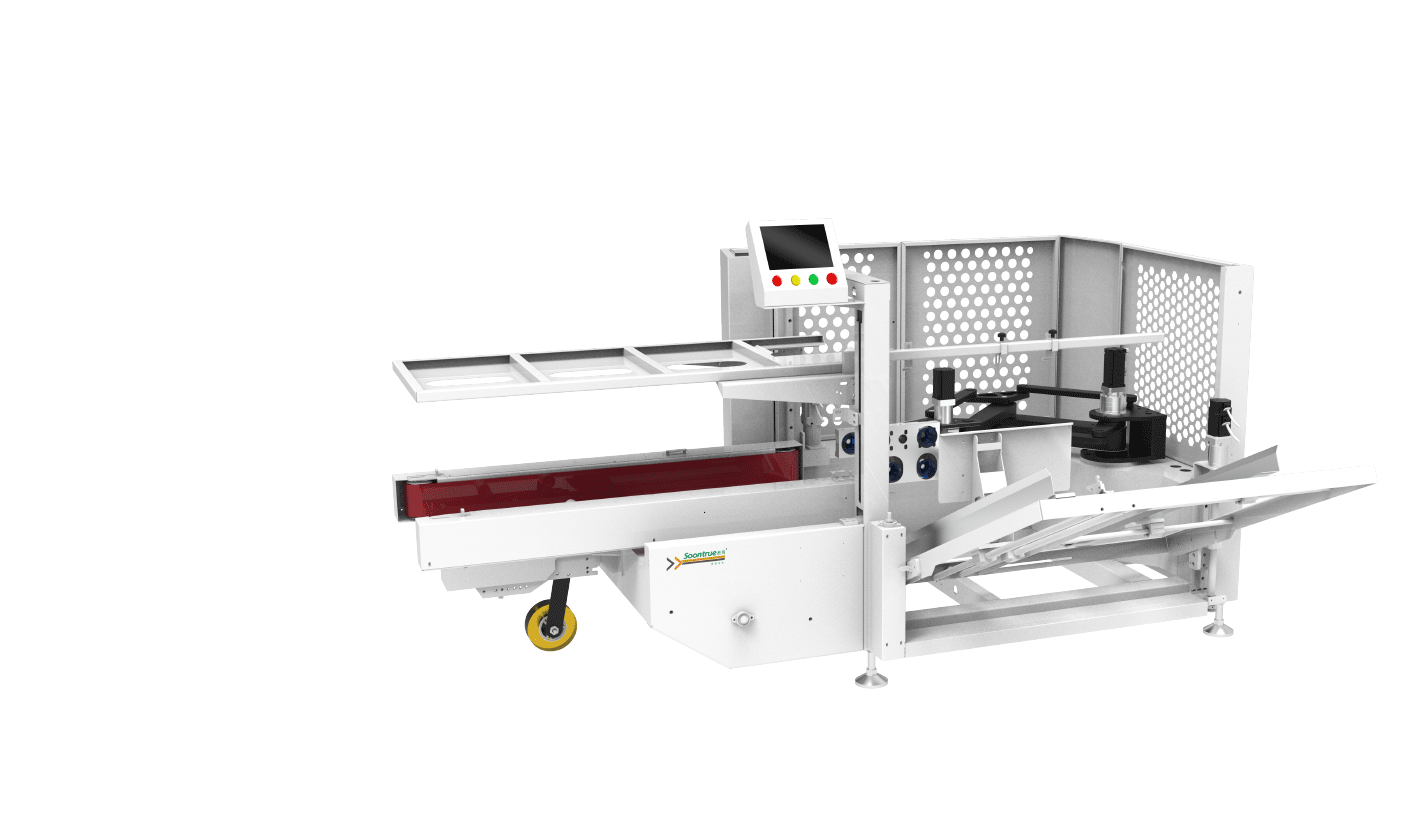
A case packer is only one stage. Empty cases must be erected and bottom-sealed, products loaded, and the filled case closed and top-sealed. Buying these as a connected system — a robotic case erector feeding the packer, which feeds a case sealer — guarantees the handshakes work and avoids the common situation where three separately bought machines cannot keep pace with one another. SunAura Packaging Machines treats case erection, packing and sealing as a balanced line sized around a single real throughput, so no station becomes a permanent bottleneck.
Floor space and layout
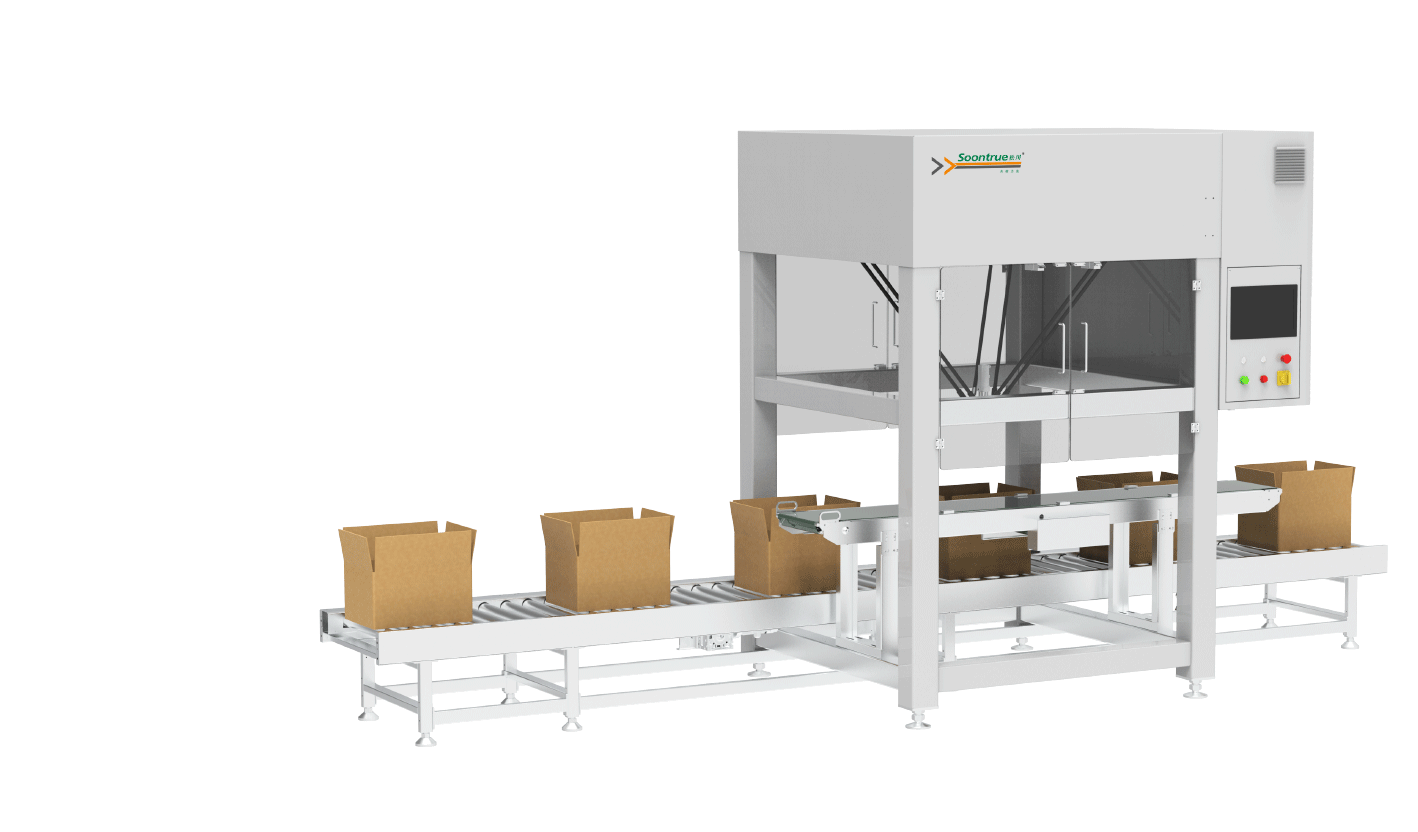
Side-load packers are typically longer, because collation and horizontal loading extend in a straight line, while top-load and robotic cells are more compact vertically and can be arranged around the available conveyor. Delta robots mount overhead and free floor space beneath, which suits lines where square metres are limited. Retrofitting case packing into an existing hall often favours a compact robotic top-load cell that can accept product from the existing conveyor and discharge toward an existing sealer. Layout constraints should be captured early, ideally with a scale plan, so the chosen architecture genuinely fits rather than forcing costly re-routing.
Gentle handling and premium products
For premium and fragile goods the loading method is a quality issue as much as an efficiency one. Push-type loading can scuff decorated cartons, crush soft bakery or disturb bottles, generating rework and customer complaints. A robot with a soft gripper and controlled acceleration places products without impact and can even place layer sheets or partitions between rows. If your product is sold on presentation, the cost of gentle handling is easily justified against even a small rate of damaged units, and it is worth specifying reject and collation sensors so only complete, correct arrangements are loaded.
Automation level and the step-up path
Not every operation needs a fully automatic line on day one. A sensible path for growing brands is to automate the most repetitive, rate-limiting stage — often case erection or loading — while keeping a short, well-designed manual station elsewhere, then add the next module as volume grows. Modular robotic cells support this because they can be specified with spare capacity and connected to additional infeeds later. The goal is a line that matches current volume without over-investing, yet does not have to be replaced when output rises.
| Architecture | Best products | Strength | Watch point |
|---|---|---|---|
| Top-load packer | Upright cartons, bottles, rigid boxes | Keeps products vertical; compact | Needs open case presented below |
| Side-load packer | Pouches, bars, flat sachets | High continuous speed | Longer footprint; change parts |
| Robotic packer | Mixed, delicate, varied range | Gentle, fast changeover, flexible | Slightly lower peak than dedicated high-speed |
Throughput example: balancing a typical line
Consider a line producing cartons that arrive at 40 per minute from primary packaging but are packed 12 to a case. The case packer therefore needs to handle a little over three cases per minute, while the erector upstream must supply those cases and the sealer downstream close them at the same rate. If any station is specified at the others’ peak without accumulation, a momentary stop cascades immediately and the real shift output falls well below the rated figure. Adding a few cases of accumulation before and after the packer decouples these short stops, allowing each machine to run at its steady rate. The line’s real throughput is then set by the genuinely slowest process rather than by every small interruption — usually a meaningful gain in cases shipped per shift even though no individual machine was made faster.
Labour planning during the transition
Automating case packing changes the role of the people on the line rather than simply removing a position. Manual packers, who understand the products and the fault patterns, are often the best candidates to become cell operators responsible for material supply, changeover, quality checks and first-line response. Planning this redeployment before installation — including training during the factory acceptance phase — makes the change smoother and protects the operational knowledge that keeps a varied line running. It is worth presenting automation to the team as the removal of repetitive stacking and an upgrade of the role, with the machine handling the rate and the operator handling judgement and exceptions.
Controls, inspection and data
Servo-driven packers offer more than flexibility. They provide repeatable motion, lower mechanical wear, and data on cycles, stops and rejected collations that support maintenance and OEE calculation. Adding case-count verification, barcode or vision checks ensures the right product goes into the right case in the right count — increasingly expected by large retail customers. When specifying a cell, define the inspection and reporting you need up front, because integrating vision and data capture at the design stage is far cheaper than retrofitting it.
Frequently asked questions
Which case packer is best for pouches and sachets?
Flat pouches and sachets are usually collated and side-loaded at high speed, or picked by a delta robot; upright stand-up pouches suit a top-load cell. Your product’s orientation decides it.
Do robotic packers need change parts for every SKU?
Many size ranges are covered by servo adjustment and a common gripper, with recipe-based changeover. Only unusually shaped products may need a specific tool.
Can a case packer feed my existing sealer?
Yes, provided the discharge height and case spacing are matched. A connected erector–packer–sealer line is the most reliable arrangement.
How do I protect fragile products during loading?
Choose a robotic cell with a soft gripper and controlled motion, and add collation sensors and optional layer sheets to avoid the impact of push loading.
Sustainability and shelf-ready packaging
Retailers increasingly ask for shelf-ready cases that open cleanly and go straight onto the shelf, and for reduced secondary packaging overall. Case packers influence both: a machine that places products accurately supports cases designed with less material and no internal partitions, and robotic loading handles the lighter cases and loose arrangements that sustainability-driven designs create. There is a technical tension, because thinner cases and fewer partitions are less forgiving during loading, which is precisely where controlled robotic motion outperforms a hard push. If your customers publish shelf-ready or packaging-reduction requirements, share them at the design stage; the packer, case design and collation can then be developed together rather than the machine being asked to handle a case it was never sized for.
Common case-packing sizing mistakes
Several errors recur across projects. The first is specifying from the product’s nominal rate rather than the rate the line actually sustains after stops and changeovers, which leaves the packer either over-built or starved. The second is ignoring the softest, least-filled or newest promotional product, which then cannot be run automatically. The third is treating erection, packing and sealing as independent purchases that do not balance, creating a permanent bottleneck at the slowest station. A fourth, less obvious, is omitting accumulation conveyors, so a short stop upstream immediately halts the packer and a stop downstream blocks it. Including modest accumulation and sizing every station to one real throughput removes most of these problems.
What to provide a supplier for an accurate quote
To specify a case packer correctly, gather the product dimensions and weight across the full range, the case dimensions and pack patterns, the required cases per minute, and the orientation products must keep. Add samples of the most delicate and the most irregular items, the film or carton material, details of any shelf-ready requirements, and an accurate scale plan of the available space with infeed and discharge directions. With this information a supplier can confirm the architecture, identify whether change parts are needed, and test your samples before manufacture. Quoting from a single photograph or a model number alone is where mismatches begin; a short sample-testing stage is inexpensive insurance against a cell that does not handle the real product range.
Recommended equipment
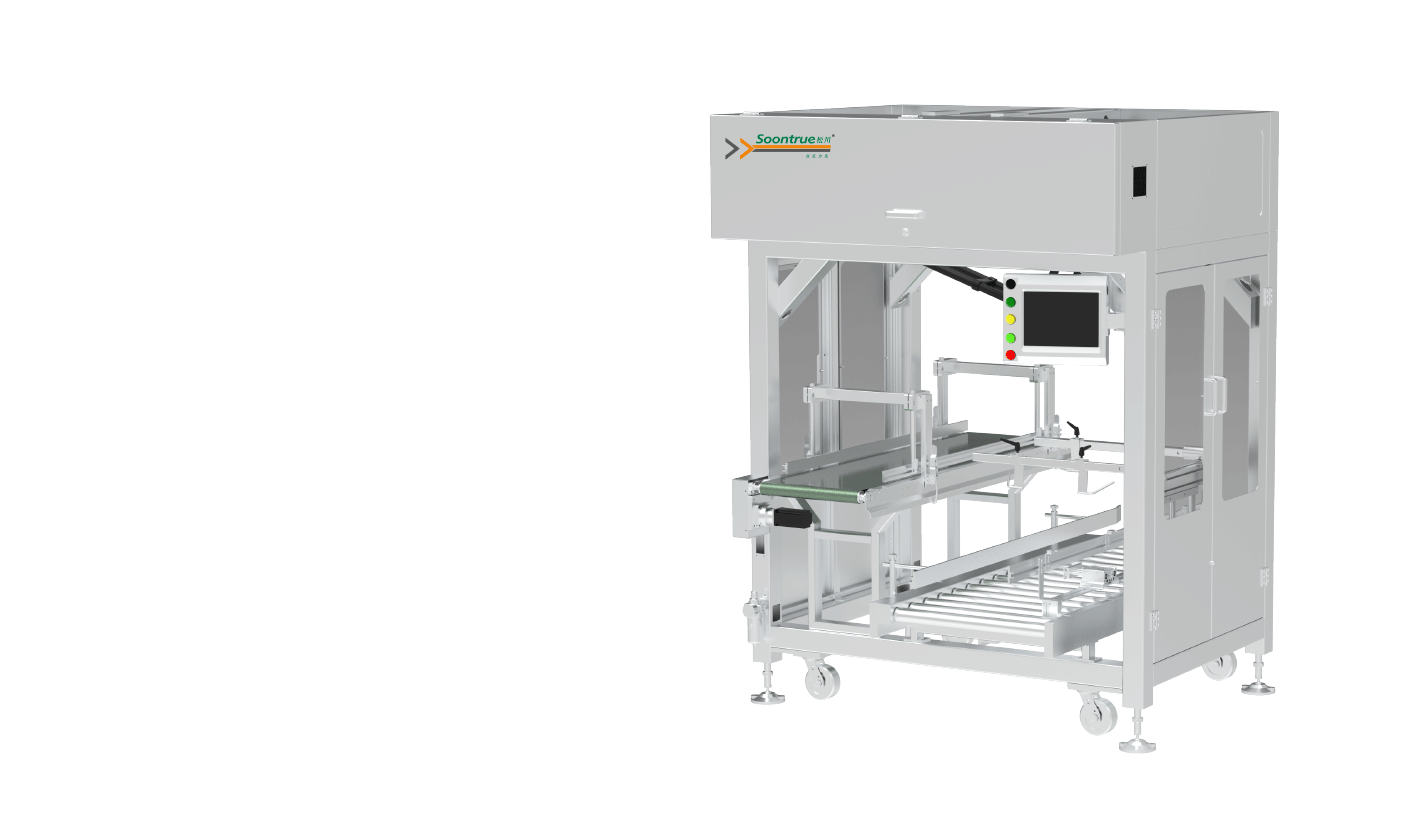
- Flexible top-loading: the two-axis robotic case packer;
- High-speed small products: the spider case packing station;
- Upstream supply: the servo robotic case erector.
SunAura Packaging Machines can specify the right case-packing architecture from your product samples, case dimensions and target rate, integrated with erection and sealing. Contact our team, or browse related equipment in the products area.

Michael designs automated palletizing stations and ties upstream case or bag flow to downstream stretch wrapping. His work spans conventional layer palletizers, robotic arm cells, conveyor routing, safety fencing and handover logic between machines. He writes about palletizer selection, load stability and how an end-of-line sequence should be balanced.
See Full Bio ›