

SunAura Packaging Machines has completed factory acceptance testing and shipment of several integrated end-of-line packaging systems for overseas customers, combining robotic case erecting, automatic product loading, case sealing and palletizing in a single synchronised line. The deliveries reflect a growing preference among mid-volume manufacturers for complete, single-supplier turn-key lines over separately purchased machines.
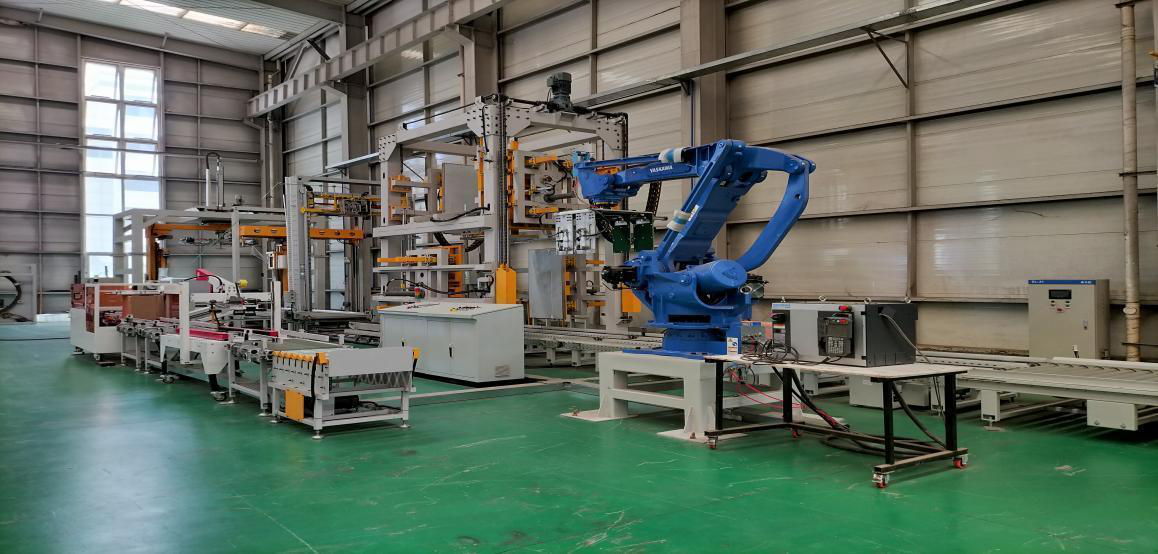
What was delivered
Each shipped system follows the same core sequence. A case erector forms and bottom-seals corrugated cartons; an automatic loading station places product into the open box; a case sealer folds and seals the top; and the closed cartons are conveyed to a palletizing stage, with strapping and stretch wrapping securing the finished load. The stations share a common control architecture, so speeds and interlocks are synchronised rather than retrofitted after installation. Customers purchasing the case erecting–packing–sealing–palletizing system receive the complete cell as one scope.
Why buyers are choosing integrated lines
The trend is driven by three practical factors. First, labour availability and cost: an integrated line removes the manual packing station that is so often the real constraint in an otherwise automated end-of-line. Second, accountability: when forming, loading, sealing and palletizing come from one manufacturer, commissioning and after-sales support are not divided between suppliers. Third, predictable throughput: synchronised controls allow the whole line to run at a balanced cycle time rather than the pace of its slowest island.
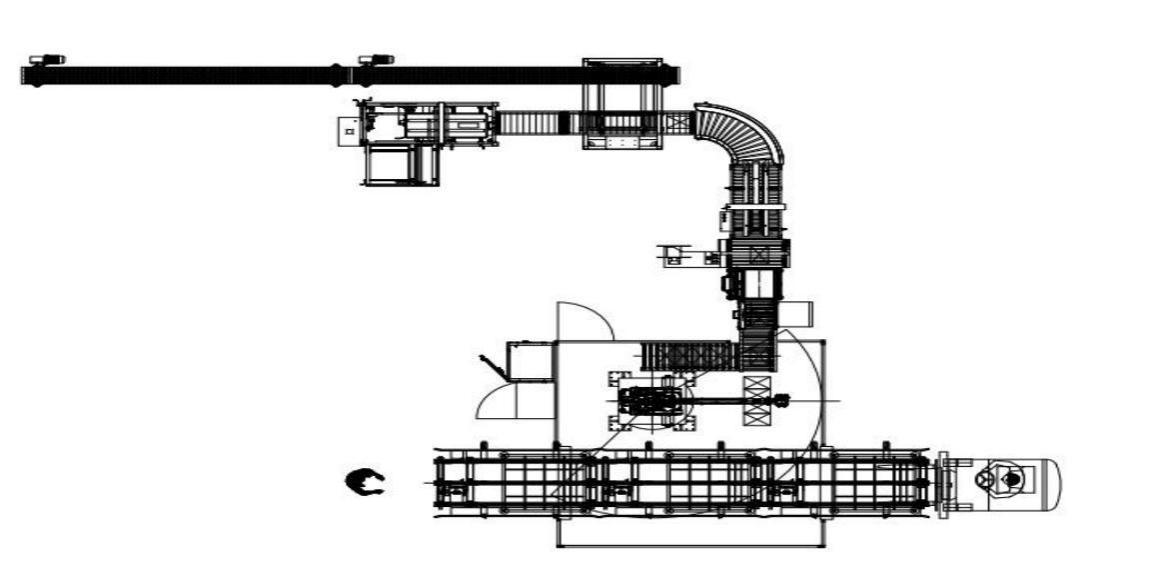
Factory acceptance before export
Before shipment, each line undergoes factory acceptance testing at SunAura Packaging Machines’s Qingdao facility, where customers or their agents review cycle time, carton handling and safety guarding using the actual corrugated blanks and products. Catching adjustments at this stage — rather than after arrival — shortens on-site commissioning. For customers who cannot travel, testing is documented remotely with video and performance records. Visitors are welcome; the company and factory page includes the location and a map for planning a visit.
Supporting equipment in the same scope
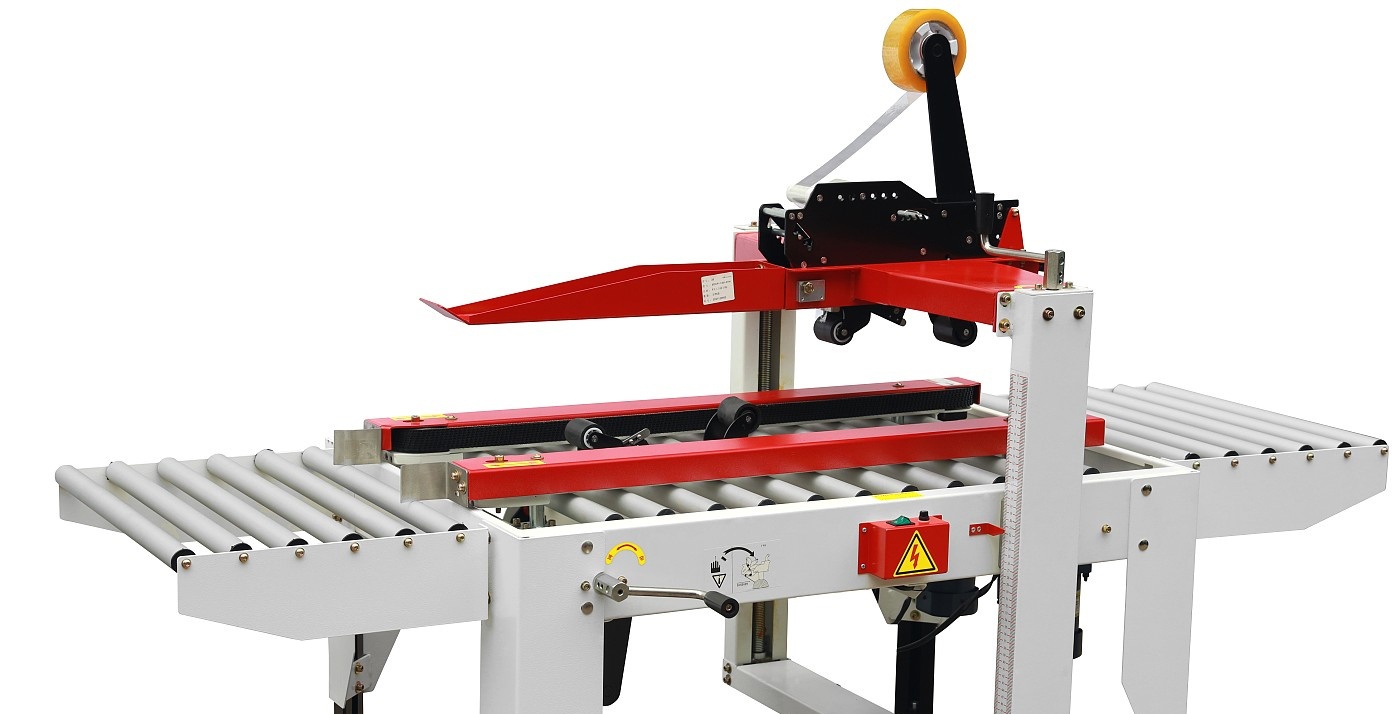
Several shipments included ancillary stations matched to the main line: robotic case erectors for customers running multiple carton sizes, such as the AIS400 robotic case erector; automatic case sealers such as the FA500F case sealer; and unattended bundling through the automatic strapping machine. Including these in the original order ensures conveyor heights, signals and spare-parts kits are consistent from commissioning onward.
What this means for buyers planning a line
For plants considering a similar upgrade, the practical sequence is to confirm the carton range, define the genuine peak in cases per minute, and decide which steps — forming, loading, sealing, palletizing — should be automated together. A complete inquiry with case dimensions, product samples and target throughput allows the engineering team to propose a balanced layout and a realistic lead time. Buyers can start through the SunAura Packaging Machines inquiry page and review the full equipment range. For the underlying selection logic, the technical article on case erector and sealer selection provides a detailed reference.
Inside the project: from layout to acceptance
The path from order to shipment for these lines followed a structured sequence that is now standard for SunAura Packaging Machines turn-key projects. It began with the carton and product data: customers supplied case dimensions, board grades, loaded weights and target cases per minute, together with samples where possible. Engineering then produced a balanced layout in which the forming, loading, sealing and palletizing stations share a cycle time, and conveyor heights and control signals were defined across the whole line rather than per machine. Only after that balance was confirmed were the individual stations built, which prevents the classic integration problem of capable machines that cannot run together.
Factory acceptance testing formed the critical checkpoint. Using the customer’s actual corrugated blanks and representative products, the line was run at its agreed cycle while engineers checked blank opening, loading, flap folding, sealing and the transfer toward palletizing. Adjustments to guides, sensors and timing were made at the factory rather than on site. For customers unable to travel, the tests were recorded and documented, including performance against the contracted throughput, before the equipment was disassembled, packed and marked for reassembly.
The role of robotics and servo motion
Several of the delivered lines reflect two technology trends that are reshaping end-of-line packaging. The first is robotic case erecting, where a pick-and-place arm opens blanks instead of a fixed mechanical magazine. For customers running a wide and changing range of carton sizes, the robotic case erector trades a little raw speed for substantially faster changeover, because a new size is handled through motion settings and change parts rather than a full mechanical reset. The second trend is servo-driven motion across loading and sealing, which allows stations to synchronise electronically and to store recipes per SKU. Together, robotics and servo control make an integrated line more adaptable to the product mix changes that most mid-volume manufacturers face over the life of the equipment.
Why single-supplier integration matters in practice
The advantage of a single-supplier line becomes clearest during commissioning and after-sales support. When machines come from separate vendors, the boundaries between them — the transfer from erector to loader, from sealer to palletizer — are where problems accumulate and where responsibility is least clear. A line built under one scope has those transfers designed, tested and supported together, and the control architecture treats the cell as one machine. For the customer this means shorter commissioning, one point of contact for troubleshooting, and consistent spare parts and documentation. It also protects throughput: a balanced, synchronised line runs closer to its rated cycle than a collection of islands connected after the fact.
Planning the spares and service package
Alongside each line, customers received a wear- and spare-parts package matched to their shift pattern, along with maintenance guidance for the stations that handle consumables — tape knives and glue systems, suction cups, sensors and conveyor wear parts. Planning these at delivery is especially valuable for overseas installations, where lead time for a small component can otherwise stop an entire line. The service approach mirrors the equipment: rather than leaving each station’s maintenance to separate manuals, the full cell is documented as one system, with scheduled tasks aligned across forming, loading, sealing and palletizing.
How to start a comparable project
For manufacturers considering a similar integrated line, the most useful first step is a complete data package rather than a request for a single machine. That means the full carton range with dimensions and weights, product samples, the genuine peak in cases per minute, the steps to be automated, and the destination and timeline. With those inputs the engineering team can return a balanced layout, a realistic cycle time and a clear scope, including any automatic case sealing, strapping or pallet-wrapping stations the application requires. Inquiries can be submitted through the SunAura Packaging Machines contact page, and the selection logic is explained in the company’s technical knowledge library.
Customer outcomes and the case for measured automation
The common thread across these shipments is measured rather than maximal automation: each customer automated the steps that constrained their specific operation, rather than purchasing automation for its own sake. For some, that meant a complete line from erecting through palletizing; for others, the priority was removing a single bottleneck — manual box forming or the packing station — while keeping the rest of the operation as it was. The engineering value lies in identifying which case applies, which returns to the cycle-time analysis: map every station in seconds, find the genuine constraint, and automate to balance the cell. This discipline prevents both under-automation, where an expensive machine is starved by a manual neighbour, and over-automation, where capital is spent on capacity the product forecast does not justify.
The delivered lines also illustrate how flexibility is built rather than added later. Customers with broad SKU ranges selected robotic erecting and servo loading so that future sizes are handled through recipes and change parts; those with stable, high-volume packs favoured the efficiency of fixed automation. Matching the technology to the product mix is a decision best made at the layout stage, where the robotic erector, sealing stations and downstream strapping can all be balanced together.
A note for prospective visitors and partners
SunAura Packaging Machines encourages prospective buyers and distribution partners to see the equipment under power before committing, either during a scheduled factory acceptance for a live project or by arranging a visit to the Qingdao facility. Seeing a line run real cartons is the most direct way to judge build quality, guarding and integration, and it provides an opportunity to discuss a project face to face with the engineers who will size it. The about and factory page provides the address, map and guidance on arranging a visit, and the contact page lists the international sales team for scheduling. For partners and buyers planning ahead, the company continues to publish application notes, selection guides and project updates in the Insights section, where the technical reasoning behind these integrated lines is covered in greater depth.
What buyers should take from these shipments
Beyond the equipment itself, these projects offer a practical template for any manufacturer evaluating end-of-line automation. The first lesson is that data quality decides project quality: the lines that commissioned fastest were those where the customer supplied complete carton specifications, representative samples and a genuinely measured peak throughput. The second is that the line should be balanced as a system before individual machines are selected, so that no station is starved by a slower neighbour. The third is that flexibility is a design choice — robotic and servo configurations suit changing SKU mixes, while fixed automation suits stable, high-volume packs — and that choice is best made at the layout stage rather than retrofitted.
The fourth lesson concerns partnership. An integrated line is a long-life asset, and the relationship with its manufacturer extends well beyond shipment through spares, commissioning support and future expansion. Buyers are well served by evaluating that capability directly: by seeing machines run, by reviewing how transfers and controls are documented, and by discussing the service arrangement for an overseas installation. SunAura Packaging Machines welcomes these discussions early, before a specification is frozen, because they allow the line to be sized correctly the first time. The relevant equipment — including the robotic case erector, case sealer, integrated packing and palletizing line and unmanned strapping — can be reviewed in the products section, and technical questions are answered through the international sales team on the contact page.
Continued investment in end-of-line capability
The company continues to build its turn-key capacity alongside its individual machines, with ongoing work in servo synchronization, robotic handling and factory-tested integration, and with documentation structured for overseas commissioning and support. Customers with active projects will receive the usual build and shipment updates from their sales engineer, while those planning future lines can follow new application notes and project reports as they are published. SunAura Packaging Machines remains focused on a single practical objective across these investments: that the throughput agreed in a customer’s layout is the throughput their line reliably achieves, shift after shift, once it is installed. Readers can review the supporting engineering guidance — including the detailed case erector and sealer selection guide and related shrink wrapping and cartoning references — in the technical knowledge library.
In closing
These shipments are a practical reminder that end-of-line automation is most successful when treated as a balanced, well-documented system rather than a collection of individually rated machines. SunAura Packaging Machines continues to welcome inquiries from manufacturers and distribution partners planning integrated case packing and palletizing projects, and its engineering team is available to review layouts, sample cartons and throughput targets before any specification is finalised. Prospective customers can reach the international sales team directly, explore the full equipment range, or arrange to see equipment under power during a scheduled visit.
Looking ahead
SunAura Packaging Machines continues to expand its end-of-line and turn-key packaging-line capacity alongside its individual machines, with ongoing investment in servo-driven motion, robotic handling and factory-tested integration. Customers with active projects can contact their sales engineer for the latest build and shipment schedule. The company publishes application and sourcing guidance regularly in the Insights section.

James oversees the engineering architecture for full end-of-line projects: defining machine sequence, conveyor layout, line balance, footprint and expansion capacity before individual machines are ordered. He reviews customer specifications, production rates and facility constraints, and signs off on the engineering drawings and acceptance tests. His articles take the system-level view a procurement manager needs.
See Full Bio ›