

SunAura Packaging Machines has launched a standardised range of heavy-duty 90-degree upenders and 180-degree tilters for reorienting coils, moulds, dies, pallets and bulky industrial loads, the company announced, bringing together mechanical and hydraulic drives, wireless control and custom-built frames in capacities from three to fifty tonnes. The equipment addresses one of the most dangerous routine operations in metalworking, stamping, warehousing and heavy assembly — turning a load that cannot be handled by hand or forklift alone.
The launch formalises machines SunAura Packaging Machines has previously built to order, giving buyers verified specifications, faster delivery on standard sizes and the option to customise load dimensions, voltage and layout for specific plants. Four configurations form the range, with further designs engineered to application.
The problem: turning a load that weighs tonnes
Many industrial processes store and transport a product in one orientation and use it in another. A steel or aluminium coil arrives lying with its eye horizontal and must stand with the eye vertical for an uncoiler; a mould or die is machined flat and mounted on its side; a product needs to be inverted for assembly, inspection or pallet exchange; a damaged pallet under a heavy load must be swapped without setting the load on the floor. Where this is done with a forklift, chains or improvised rigging, the operation is slow, uncontrolled and a leading cause of crush injuries and damaged product, and it depends on the skill of whoever happens to be driving.
A purpose-built upender removes the improvisation. The load is positioned and clamped between tables or platens, a mechanical or hydraulic drive rotates the platform through the programmed angle — stopping at any point for inspection — and the load is released in its new orientation, with the whole cycle controlled wirelessly so the operator stands clear.
The four launch configurations
The range is defined by angle, drive and capacity, and the factory-verified specifications are published rather than estimated:
| Machine | Angle | Capacity | Cycle (one way) | Drive / clamping |
|---|---|---|---|---|
| Mechanical 90° upender | 0–90°, stop anywhere | up to 50 t | 30–50 s | Mechanical, VFD soft start/stop |
| Hydraulic 90° upender | 0–90°, stop anywhere | up to 50 t | 30–50 s | Hydraulic, smooth rotation |
| Mechanical 180° tilter | 0–180°, stop anywhere | up to 10 t | 60–120 s | Mechanical, pneumatic/hydraulic clamp |
| Enclosure 180° tilter | 0–180° | up to 3 t | 60–120 s | Fully guarded, interlocked doors |
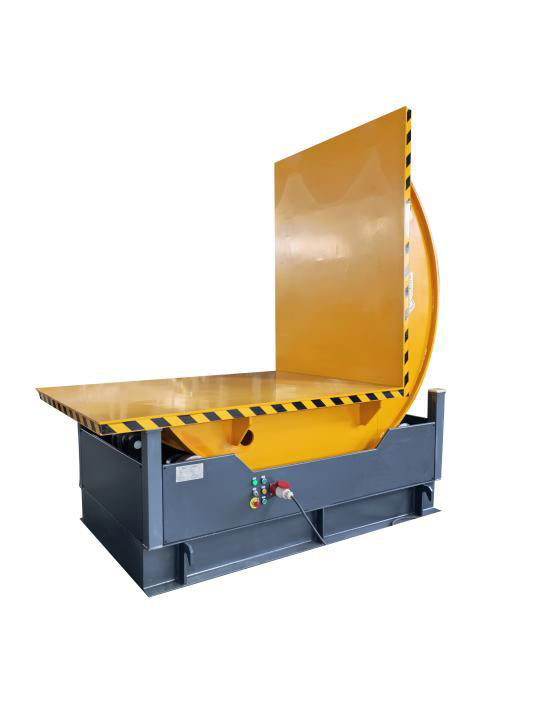
Mechanical versus hydraulic: how to choose
The two drives suit different plants, and the choice follows the load and duty rather than capacity alone. Mechanical upenders use a VFD-driven drive train with soft start and soft stop, which protects both the load and the drivetrain, and they suit repetitive, defined cycles in production environments. Hydraulic upenders rotate smoothly under high torque and suit the heaviest loads and plants already running hydraulic maintenance, with the hydraulic system cushioning the turn. Both reach fifty tonnes and both stop at any angle, so the decision rests on maintenance preference, cycle profile and the plant’s existing service capability rather than a capacity ceiling.
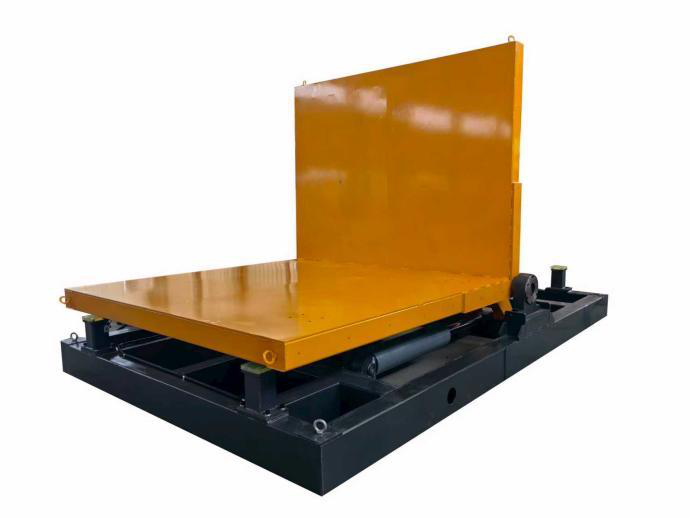
The dimensions and controls, in detail
Standard 90° machines accept tilt envelopes of 500–2000 mm on each side and cylindrical loads of 500–2000 mm diameter with web width within 2000 mm, with installed power from 1 to 22 kW depending on load; the 180° tilter handles 500–2000 × 5000–2000 × 100–1000 mm loads, and the fully enclosed version is built for 800–1500 × 800–1500 × 800–2000 mm. Every machine runs a PLC with a touchscreen HMI storing recipe parameters for quick product change, and wireless control lets the operator run the cycle from a safe position rather than at the frame. Loads outside the standard envelopes are engineered to the customer’s drawings, with the frame, clamping and voltage matched to the actual product.
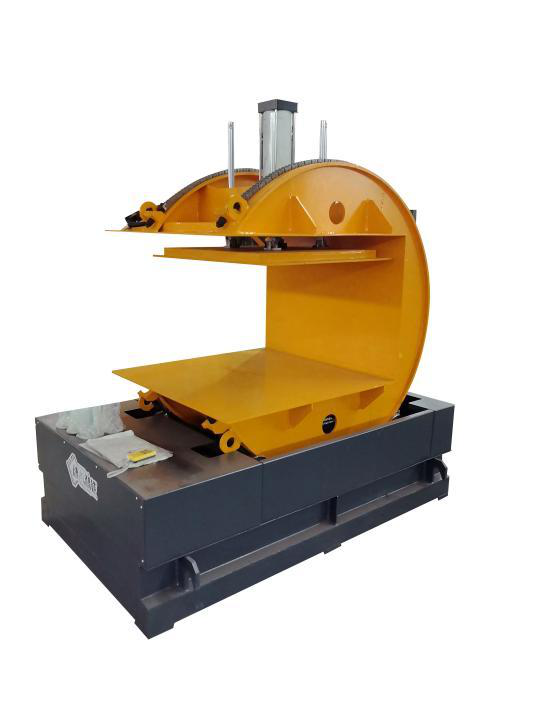
Safety engineered into the frame
The value of a purpose-built upender is measured most clearly against the rigging it replaces, and safety is the first specification rather than an extra. The load is positively clamped before rotation, the operator runs the cycle wirelessly from outside the working area, emergency stops are fitted at the frame and controls, and the fully enclosed 180° machine adds interlocked safety doors so a cycle cannot run with a door open. Soft start and stop prevent the load swinging at the ends of rotation, which is what damages both product and drivetrain on abrupt turns, and the rigid welded frame is designed for the stated capacity cycle after cycle rather than a single proof load. As with other SunAura Packaging Machines equipment, guarding and emergency circuits are verified at commissioning and should never be bypassed to speed a turn.
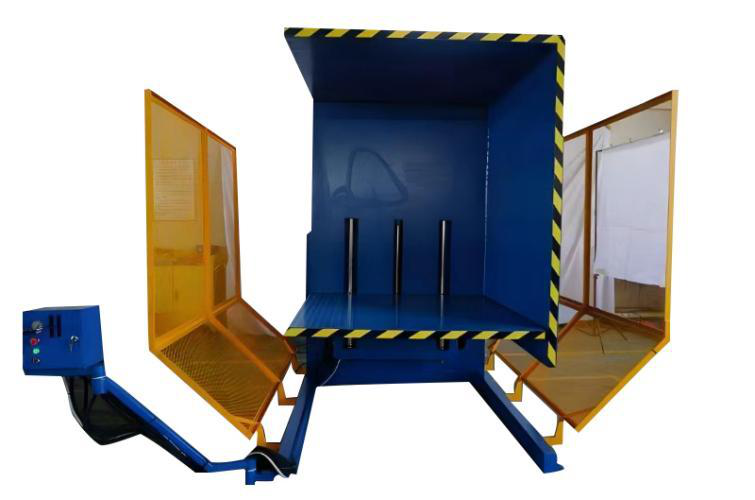
Inline integration and the wider line
While many upenders work as standalone cells in warehouses and die shops, the machines are built inline-ready, connecting with roller conveyors and upstream or downstream equipment in complete handling systems, particularly at metal service centres and stamping plants where coils move continuously. SunAura Packaging Machines can integrate an upender with the conveyors, coil handling and end-of-line equipment it already supplies, following the layout principles in its guide to conveyors and product handling systems, and it supports both standalone and integrated installations with installation guidance, spare parts and direct after-sales service.
A practical turning scenario
The operation the range replaces is best seen on a metal service centre floor, where coils arrive by truck and feed a slitting or stamping line. A fifteen-tonne steel coil comes in with its eye horizontal on a flat rack; the line needs it standing with its eye vertical on the uncoiler. Previously, workers would rig the coil with chains and a forklift, easing it upright while someone guided it by hand — a slow manoeuvre with the load swinging over the floor and the outcome depending on the driver. With a hydraulic 90° upender, the coil is placed on the horizontal platen, clamped positively and rotated through ninety degrees in roughly forty seconds under smooth hydraulic torque, the operator running the cycle wirelessly from well clear. At the end of the turn the coil is released standing, exactly where the uncoiler needs it, and the machine is ready for the next.
A different scenario plays out at a die-casting or injection plant, where moulds weighing several tonnes must be inverted for maintenance or turned on their side for storage. The 180° tilter handles these with pneumatic or hydraulic clamping, stopping at any angle so maintenance can access a face, and the enclosed version gives a fully guarded cycle for the smaller moulds and pallet exchanges that happen repeatedly through a shift. In each case the cycle is identical and repeatable, which is what rigging can never be.
Where these machines are installed
The range serves a defined set of industries, and the launch follows where SunAura Packaging Machines has already built machines to order. Metal service centres, steel and aluminium mills and coil processors turn coils as a routine part of handling; stamping, fabrication and automotive component plants turn dies, blanks and welded structures; injection moulding and die-casting plants turn moulds and castings; warehouses and distributors use upenders for pallet exchange under loads that cannot be set down; and heavy machinery manufacturers turn fabrications, cylinders and assemblies between horizontal machining and vertical installation. The cylindrical-load specification on the 90° machines exists precisely for the coils and rolled products that dominate the first group, while the flat-platen clamping suits the dies, moulds and pallet loads of the others.
For plants running mixed, unpredictable loads — a jobbing fabricator, a port handling service — the same machine covers the envelope because it clamps by the load’s actual position rather than a fixed fixture, and the recipe storage holds clamping and cycle parameters for the products turned repeatedly. High-volume plants, by contrast, integrate the upender into a conveyorised coil or pallet flow and run it as one station in a continuous system.
Maintenance, service and delivery
The machines are built for heavy cycles and simple service. The mechanical drivetrains run under VFD control with soft start and stop, which is the main protection against shock loading and premature wear, and the hydraulic systems use standard cylinders and power units familiar to any maintenance department. Routine service concentrates on the clamping surfaces, the rotation bearings or drivetrain, the hydraulic condition where fitted, and the safety devices — emergency stops, interlocks and wireless controls — which are tested on a schedule because they protect the operator during the turn. SunAura Packaging Machines supplies installation guidance, spare parts and direct after-sales service, and standard configurations can be delivered faster than fully custom machines, with non-standard envelopes engineered to customer drawings in parallel. As with its other equipment, the company verifies guarding and emergency circuits at commissioning rather than leave them to the installer.
Why standardise the range now
SunAura Packaging Machines’ decision to formalise machines it previously built only to order reflects what the company sees across enquiries: plants are replacing improvised turning operations not for speed alone but because the safety and liability position has changed, and because buyers want verified capacities and documented specifications rather than a one-off fabricated frame. A standardised range gives them published dimensions and cycles, a defined safety design and quicker delivery, while retaining custom engineering for the loads that fall outside standard envelopes. It also lets buyers compare configurations against their actual load data with confidence that the stated capacity is factory-verified, rather than inferred from frame size. For plants that have tolerated forklift turning because a purpose-built machine seemed bespoke and slow to procure, the launch removes that objection.
What to provide when ordering
Specifying an upender is straightforward once the load is described, and SunAura Packaging Machines requests a short set of inputs rather than a technical questionnaire. Buyers should provide the heaviest and largest loads to be turned — including the pallet or fixture weight — the dimensions and shape, whether cylindrical or flat, the starting and ending orientation, the expected number of cycles per day, and the floor space and voltage available. Photographs or drawings of the actual loads help confirm the clamping arrangement, which is the part most often customised. With those details the company confirms the model or designs a custom frame, indicates the cycle time for the real load and quotes a complete machine, and it can advise whether a standalone cell or an inline, conveyorised arrangement suits the operation. Plants unsure of their envelope can discuss their typical loads directly with the applications engineers, who will size conservatively against the heaviest case rather than the average.
Frequently asked questions
What capacity do I need?
Specify by your heaviest actual load plus the fixture or pallet, not an average; the range covers three to fifty tonnes and custom designs beyond standard envelopes.
Mechanical or hydraulic?
Both reach fifty tonnes and stop at any angle; choose mechanical for defined repetitive cycles and hydraulic for smooth high-torque turning, guided by your maintenance capability.
Can it handle non-standard load sizes?
Yes. Frames, clamping, voltage and orientation are engineered to your product drawings and plant layout.
How is the operator protected?
Positive clamping, wireless control from outside the working area, emergency stops and, on the enclosed model, interlocked doors, all verified at commissioning.
Conclusion
SunAura Packaging Machines’ new upender and tilter range gives plants handling coils, moulds and heavy loads a purpose-built, standardised alternative to forklift rigging, with mechanical and hydraulic drives, wireless control, verified capacities to fifty tonnes and custom engineering for non-standard products. The machines protect both people and product, turn a dangerous improvised operation into a repeatable cycle and work standalone or inline within a wider handling system. SunAura Packaging Machines is now accepting orders against standard specifications and customer-specific envelopes.
If you need to turn heavy loads safely, contact SunAura Packaging Machines’ applications engineers with your load dimensions, weight and preferred orientation, or review the four machines in the products hub. SunAura Packaging Machines will confirm the model or a custom frame against these inputs, with the clamping designed around the actual load and the guarding and emergency circuits verified at commissioning. Standard configurations can now be delivered faster than fully bespoke machines, while non-standard envelopes are engineered to customer drawings in parallel, and the company supports both standalone cells and inline conveyorised installations with parts and direct service.

James oversees the engineering architecture for full end-of-line projects: defining machine sequence, conveyor layout, line balance, footprint and expansion capacity before individual machines are ordered. He reviews customer specifications, production rates and facility constraints, and signs off on the engineering drawings and acceptance tests. His articles take the system-level view a procurement manager needs.
See Full Bio ›