

Qingdao, China — SunAura Packaging Machines has expanded its factory testing and commissioning bay in Huangdao District, Qingdao, dedicating additional floor space to factory acceptance testing of complete turn-key end-of-line packaging lines before they are dismantled for export. The enlarged bay lets the company run fully integrated lines — case erecting, packing, sealing and robotic palletizing — as a single connected system for extended trials, rather than testing machines individually and integrating them for the first time on the customer’s floor.
The investment responds to a shift in what export customers order. Where buyers once purchased standalone case sealers or wrappers, a growing share now request complete, pre-balanced lines commissioned to a guaranteed throughput. “The risk in a turn-key line is integration, and integration risk should live in our factory, not the customer’s,” said a SunAura Packaging Machines project manager. “The expanded bay means we can build the whole line, run it under load, and prove the hand-offs before a single machine ships.”
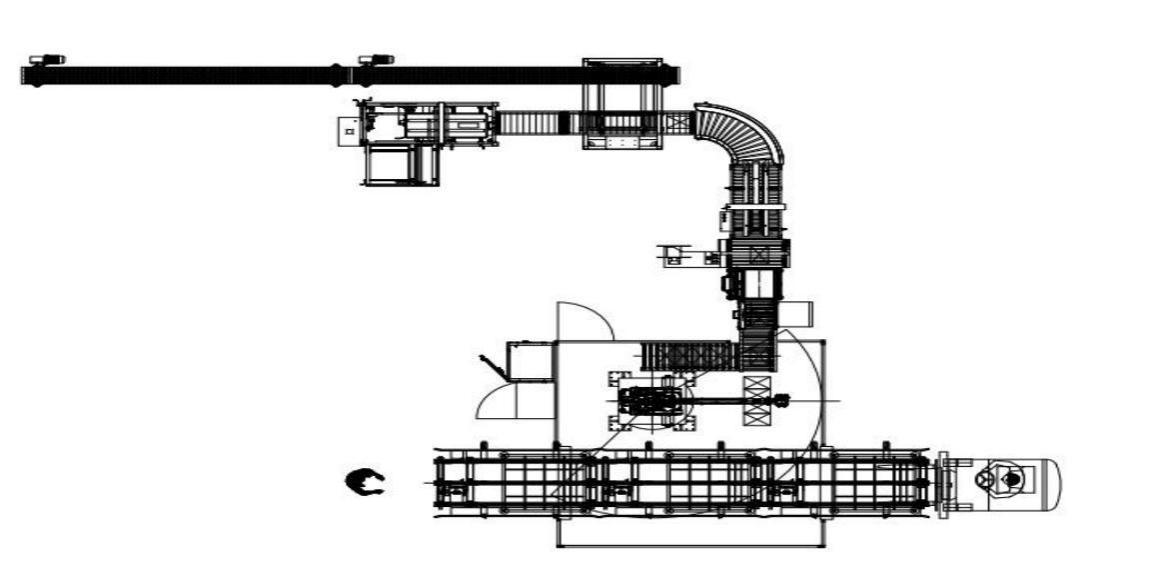
Why factory acceptance testing matters
A turn-key line is more than the sum of its machines. The individual units — an erector, a case packer, a sealer, a palletizer — may each work perfectly in isolation and still fail as a system if the conveyors between them are misjudged, if speeds are not balanced, or if control signals do not hand off cleanly. When those problems surface only after installation, they are expensive: the line is on the customer’s site, commissioning engineers are far from home, and every extra day delays production. Most integration problems are far cheaper to find and fix in the builder’s own bay.
Factory acceptance testing (FAT) exists to catch them. The line is assembled exactly as it will sit on the customer’s floor, connected to its controls and conveyors, and run against the agreed product and case range under load. The customer — present in person or reviewing recorded runs — sees the line achieve the contracted throughput before approving shipment. The expanded bay allows longer, more realistic trials and lets several projects progress in parallel rather than queuing for a single test area.
What a turn-key line trial actually proves
A meaningful FAT is not a five-minute demonstration of empty boxes. It runs the customer’s real product, real cases and real consumables where possible, and it tests the conditions that cause trouble in production. SunAura Packaging Machines’ trials focus on the points where integrated lines actually fail.
- The hand-offs. Cases must transfer cleanly from erector to packer, packer to sealer, sealer to palletizer without tipping, jamming or waiting. Conveyor heights, guide geometry and accumulation are proven here.
- Line balance. The slowest station sets the pace of the whole line. Trials confirm the machines are matched so product flows continuously rather than bunching or starving — the subject of our throughput analysis.
- Control integration. Start-stop logic, fault signalling and recovery across machines from different builders are tested as one system, including what happens when a single station stops.
- Changeovers and recovery. The line is changed between the customer’s products and deliberately stopped and restarted, to prove operators can recover without a technician present.
The objective is a line that arrives pre-proven, so on-site commissioning becomes installation and confirmation rather than open-ended debugging.
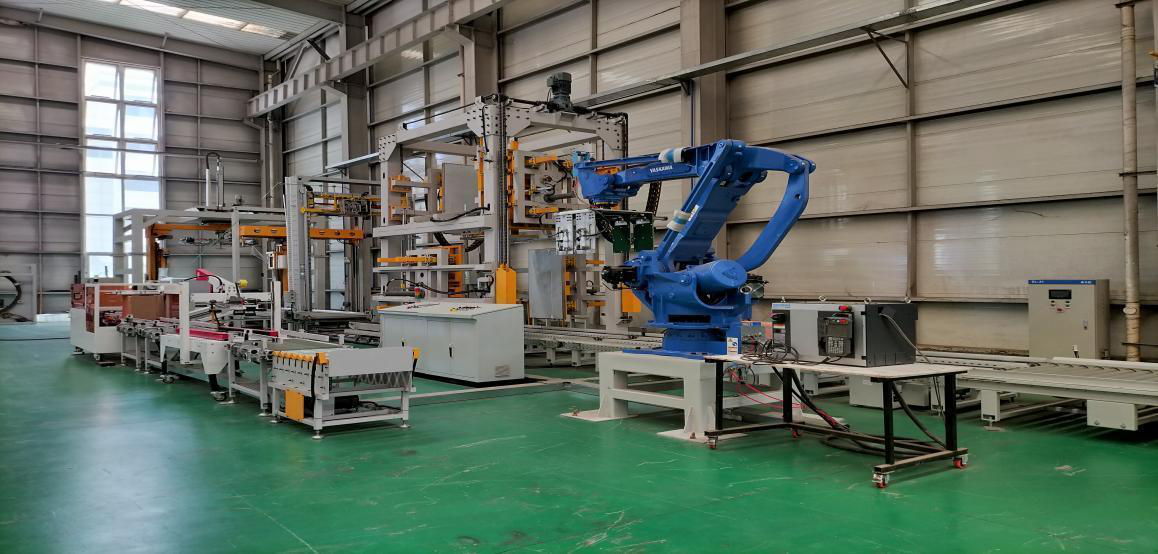
How the expanded bay is organised
The added space is laid out to mirror real factory conditions rather than a showroom. Full-size conveyors can be run at production lengths, cases and product can be staged in volume for sustained runs, and the completed line can be left assembled across multi-day trials without blocking machine assembly elsewhere. Dedicated power and compressed-air capacity support running the complete system under load, and the bay is served directly by the assembly and CNC areas, so any change part or adjustment identified during testing is produced quickly on site.
That vertical integration is central to how the company builds turn-key lines. Because SunAura Packaging Machines designs, machines, assembles and tests under one roof rather than trading in third-party equipment, the engineers who built the machines are the same people running the trials and the same people who later support the line. When a trial exposes a needed guide or bracket, it is made in the same factory rather than ordered from an outside supplier, which shortens the loop from finding a problem to confirming the fix.
Pre-shipment testing as standard practice
Beyond full turn-key lines, the company runs pre-shipment checks on individual machines as a matter of routine, cycling each unit and confirming its settings before crating. For integrated projects those checks extend to the multi-day FAT, with machines typically run through an extended soak to surface any issue that appears only after hours of operation. Heat processes, seal quality and tape or film handling are all checked with the consumables the line will actually use, since those variables cannot be judged from a stationary machine.
Cases for the trials are supplied to the same specification the customer will run — board grade, RSC style and tolerances — so the test reflects real conditions rather than ideal boxes. This is why SunAura Packaging Machines encourages buyers to finalise case specifications early and, where practical, to send their own cases and product for the FAT. A line proven against ideal samples can still surprise against real ones; proving it against the real input removes that gap.
What changes for the customer
For buyers, the practical effect is a shorter, more predictable installation and a clearer point of acceptance. Instead of a contract that is effectively proven during a stressful on-site commissioning, the line is approved in a documented FAT, with the throughput, case range and changeover times recorded. Discrepancies are resolved before export, when they are cheap to fix, and the on-site phase is reduced to positioning, connection and a confirmation run. For projects in remote locations — where flying in commissioning support is costly and slow — moving that risk to Qingdao is particularly valuable.
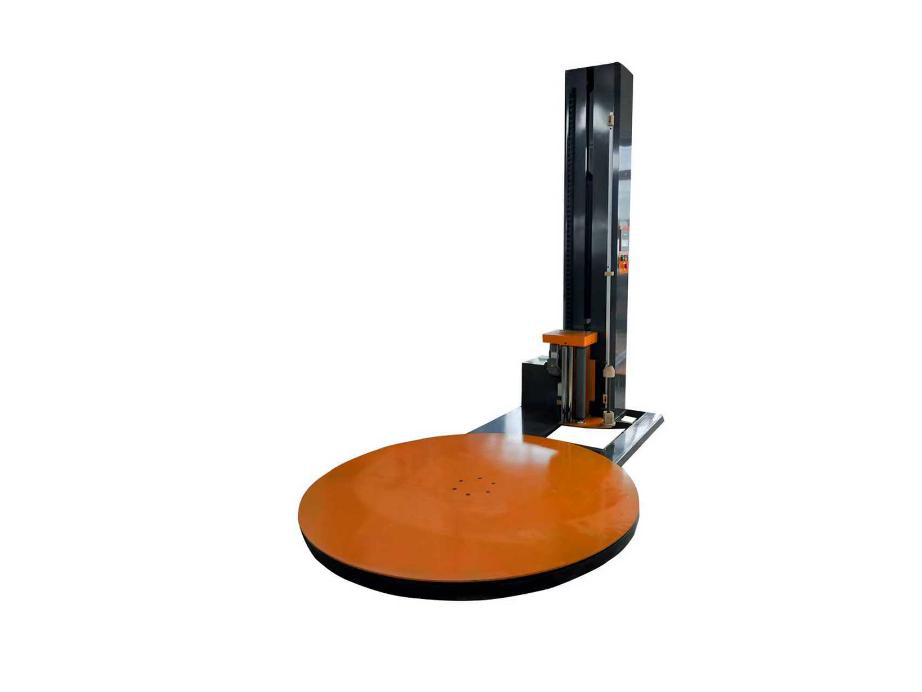
The approach also supports customers who are new to automation. Seeing the complete line run in the bay, and being trained on it before it ships, gives operators familiarity before the equipment arrives on their floor. Customers can review the components that make up these systems in the catalogue, from the integrated erect-pack-seal-palletize system to the robotic palletizing system, the turntable pallet wrapper and the robotic case packer.
Planning a turn-key project
The company notes that the benefits of pre-shipment testing depend on early information. Turn-key lines are sized and balanced against the customer’s product range, case specifications, target throughput, available floor space and future SKUs, and the FAT can only prove what has been defined. Customers who provide these details up front — and who finalise cases and consumables before the trial — receive a genuinely pre-proven line; those who leave them open lose much of the advantage. SunAura Packaging Machines’ engineers work through that specification before assembly, drawing on prior documented projects such as the bakery turn-key line case study, and weigh the build-vs-buy options in the in-house versus turn-key comparison.
Inside a documented FAT: a typical sequence
A factory acceptance trial follows a predictable sequence, and understanding it helps buyers plan what to send and what to attend. The steps below mirror how SunAura Packaging Machines runs integrated trials in the expanded bay.
- Mechanical assembly. Every machine and conveyor is positioned to the agreed layout, including guarding and services, so the line physically matches the customer’s floor plan.
- Control and signal checks. With the line empty, engineers verify start-stop logic, emergency stops, fault signalling and hand-offs across machines, including the behaviour when one station faults.
- Empty and dry runs. Cases are run without product to confirm opening, flap folding, sealing and transfer geometry before adding load.
- Loaded production runs. Using the customer’s real product and cases, the line is run at the contracted rate for a sustained period while throughput and any faults are logged.
- Changeover and recovery trials. The line is changed between products and deliberately stopped and restarted to prove operators can recover unaided.
- Punch-list and re-test. Any issue found is corrected in the bay and the affected section re-run before the customer is asked to approve.
Running these steps in order, with the loaded trial before approval, is what turns the FAT from a formality into genuine proof. Most of the value sits in steps four and five — the sustained, loaded and recovery runs that expose integration problems a short demo never will.
What the acceptance record contains
At the end of a successful trial SunAura Packaging Machines documents what was actually demonstrated, so both sides share a clear baseline. The record typically lists the case styles and board grades run, the product range tested, the sustained throughput achieved against the target, the consumables used (tape, film or strap), the changeover and recovery results, and any open items with their owners. Where the customer cannot attend in person, the runs are recorded and the same data provided for remote review and sign-off.
That documentation matters after installation as well. It gives the site team a reference for what “correct” looks like — the throughput and settings the line was proven to achieve — and it prevents disputes later about whether an observed issue originated in the build or in changed conditions on the floor. A line that is accepted against a written, loaded trial is far easier to support than one approved on an unrecorded demonstration.
After approval: shipping and site acceptance
Once the FAT is approved, the line is carefully marked, dismantled and crated for export, with the assembly positions recorded so reinstallation reproduces the proven layout. On site the work shifts from debugging to positioning, connecting services and a confirmation run: the same product and cases are passed through to verify the line performs as it did in Qingdao, after which the site acceptance is signed. Because the integration was already proven, the on-site phase is shorter and more predictable and the customer’s production start is less exposed to open-ended commissioning.
Spare parts, operator training material and the maintenance schedule are delivered alongside the line, and the same engineers who ran the FAT remain available for remote support. This continuity — from build through trial to after-sales — is one reason the company stresses vertical integration: the people who know exactly how the line was set up and tested are the people supporting it after it ships. Customers who have gone through the process typically point to the site confirmation run as the moment the value of the expanded bay becomes obvious: where a conventional project might involve days of on-site adjustment, the line reproduces its Qingdao results quickly because the integration questions were already answered and recorded. That reduction in uncertainty, as much as the saved commissioning days, is what pre-shipment testing is designed to deliver.
Capacity and next steps
The enlarged bay is already being used for current export projects, with the additional space allowing more factory acceptance trials to run concurrently as demand for integrated lines grows. SunAura Packaging Machines says it will continue to treat pre-shipment testing as core rather than optional, and is booking FAT schedules alongside machine production so that trials are planned into each project rather than fitted in at the end.
Manufacturers and co-packers planning a new end-of-line line — or replacing several ageing standalone machines with one balanced system — are invited to share their product and case range, target throughput and layout. SunAura Packaging Machines will scope the integrated line, specify the machine balance and change parts, and schedule a factory acceptance trial in the expanded Qingdao bay before anything ships. The company recommends bringing its engineers in while cases and layouts are still being finalised, since that is when small, low-cost changes prevent far larger problems later, and it will provide a written acceptance plan and trial schedule alongside the proposal so customers know exactly what will be proven before approval.

David leads our case sealing and cartoning engineering team. Over 14 years he has specified, installed and commissioned hundreds of random-size case sealers, top- and side-loading cartoners, and automatic case packers for food, household and industrial product lines. He writes buying guides and troubleshooting articles around seal quality, tape and hot-melt glue selection, and carton throughput limits.
See Full Bio ›