
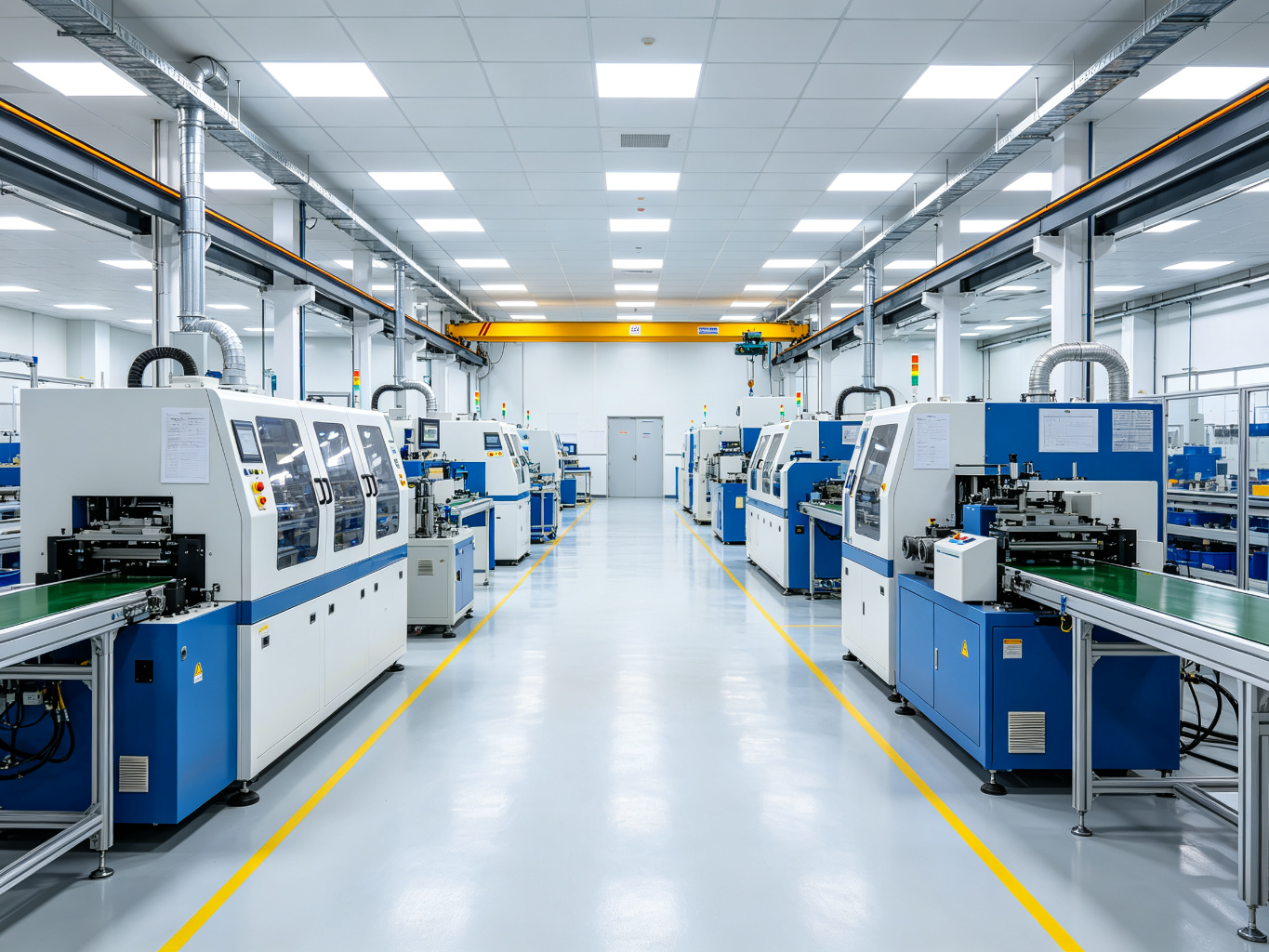
SunAura Packaging Machines will exhibit a working cross-section of its end-of-line and case-handling equipment at ALL4PACK Emballage Paris, the packaging and intralogistics show that returns to Paris-Nord Villepinte in November 2026. The company will use the French show, one of the busiest European meeting points for packaging engineers and brand owners, to demonstrate how case erection, sealing, case packing, strapping, palletising and stretch wrapping can be supplied as a single integrated line rather than as a collection of stand-alone machines.
SunAura Packaging Machines has been exhibiting at European packaging events for several years, and the Paris stand follows earlier appearances at shows in the Gulf, Southeast Asia and the Americas. The company builds its machines at a 48,000 m² manufacturing facility in China and sells directly into the European market with CE documentation, local commissioning and a regional spare-parts service. “A lot of European buyers already know they can buy well-built equipment from China. What they want to see in person is integration discipline — guarding, electrical standards, changeover logic, and one engineer who understands the whole line,” said a SunAura Packaging Machines export manager. “Paris is where we prove that.”
What visitors will see on the stand
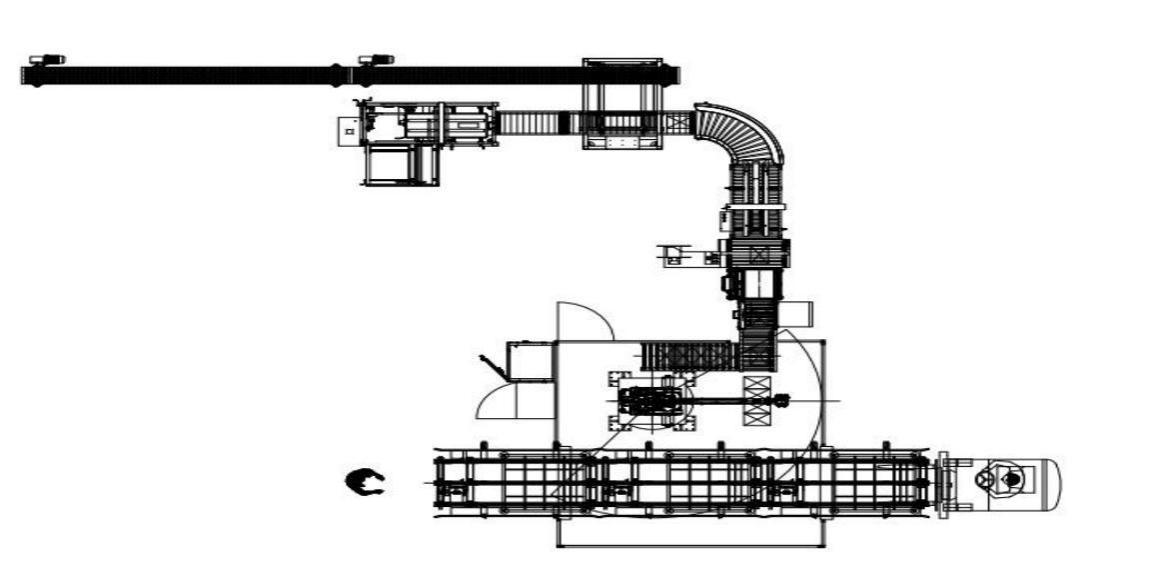
The stand will be organised around the flow of an end-of-line cell rather than a catalogue of isolated products. SunAura Packaging Machines plans to show live and video-based demonstrations of the following equipment groups:
- Case erection and bottom sealing. A servo-driven case erector from the K-series range, which forms RSC corrugated cases and seals the bottom flaps with tape or hot-melt adhesive at speeds from roughly 12 to 40 cases per minute depending on case size and blank quality.
- Case sealing and corner-edge sealing. Both uniform and random case sealers, including fold-and-seal models for e-commerce fulfilment and an L-type corner-edge unit that applies tape across the top and side seams for export loads.
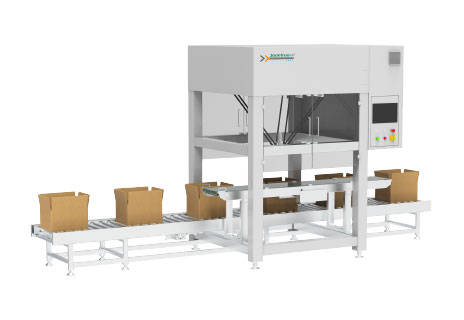
- Robotic case packing. A spider and a 2-axis pick-and-place case packing cell, including a solution that places flexible bags into cases for food and pet-food applications.
- Palletising. A collaborative palletising robot with a teach-pendant pattern editor, alongside a higher-payload robotic palletising cell for heavier cases.
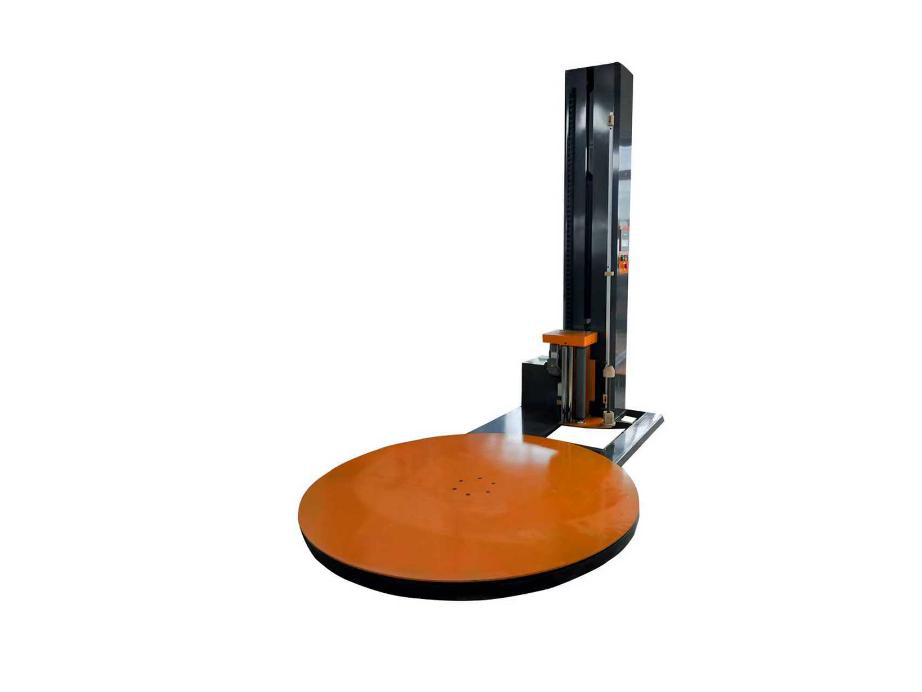
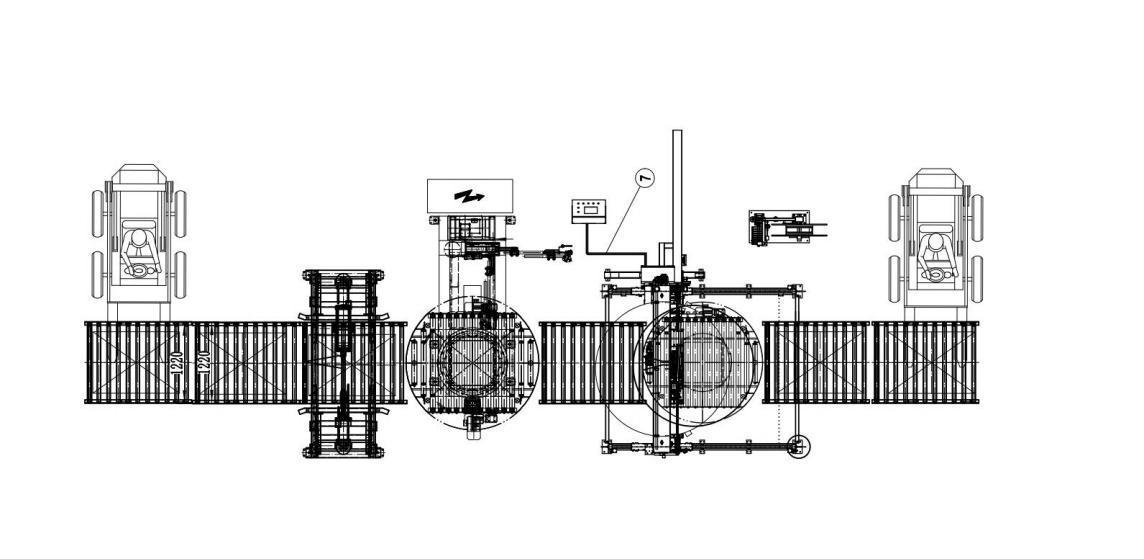
- Stretch wrapping and strapping. A turntable pallet wrapper and an inline rotary-arm wrapper, plus a pallet strapping station for loads that need banding before they are wrapped.
The integration message SunAura Packaging Machines is bringing to Europe
Buyers who assemble an end-of-line from several vendors usually discover the same set of problems late in the project: conveyors that do not handshake correctly, mismatched control voltages, guarding gaps between machines, and a finger-pointing exercise when the combined line fails to reach its rated throughput. SunAura Packaging Machines’ pitch in Paris is straightforward — engineer the entire cell as one project, FAT it as one cell, and ship it with one electrical and one safety package.
The integrated packaging lines SunAura Packaging Machines will display are built from the same machine families that appear in its online catalogue, so a visitor can move from the erector to the sealer to the palletiser on the stand and then find the same model in the documentation. “The worst thing you can do is show a machine at a trade show that doesn’t match what you actually deliver,” said the export manager. “Everything on the stand is a real production model with a real part number.”
Case handling in focus
European visitors are expected to spend most of their time on the case-handling section. Labour shortages in warehouses, the growth of mixed-SKU e-commerce orders and pressure to reduce corrugated usage have all pushed brand owners toward automatic case erection and sealing. SunAura Packaging Machines’ case erectors cover both pneumatic and servo formats, with the servo machines preferred for lines that run frequent changeovers because the flap-folding and squaring motions can be tuned from the HMI rather than by hand.
On the sealing side, the company will highlight the difference between a uniform sealer, which handles one case size at a time, and a random case sealer, which adjusts to mixed case heights on the fly — a configuration increasingly common in fulfilment centres. For export customers, the corner-edge sealers add an extra strip of tape that reinforces the seams when a load is double-stacked or travels a long sea distance.
Palletising and load containment
The Paris stand will also feature two routes to a stable pallet. For lower volumes and tighter floor space, the collaborative palletising robot can be deployed without a full safety fence, with speed and force limited by design. For higher volumes, the conventional robotic palletising cell handles heavier cases and faster cycle times behind guarding. Both feed into the stretch wrapping group, where SunAura Packaging Machines will show a turntable wrapper and explain when an inline rotary-arm wrapper becomes the better choice — principally for very light or unstable loads, or for lines that cannot tolerate a rotating load.
Engineers on the stand will carry load-containment calculations for visitors, walking through pre-stretch percentages, force-to-load targets and wrap patterns so that the wrapper is specified around the actual case weight and stacking height rather than a generic film setting.
CE, guarding and documentation
For the European market, machinery will be presented with the CE marking package that applies under the machinery rules, with the transition toward the new Machinery Regulation in mind. SunAura Packaging Machines will show examples of its electrical documentation, guard design, emergency-stop layout and risk assessment files. “European customers increasingly ask for the safety dossier before they ask for the price list,” said the export manager. “So we bring the dossier to the stand, not just the glossy brochure.”
Buyers evaluating the technology against their own lines can read the company’s notes on connecting machines in its end-of-line integration guide, which covers conveyor handshakes, control architecture and line balancing.
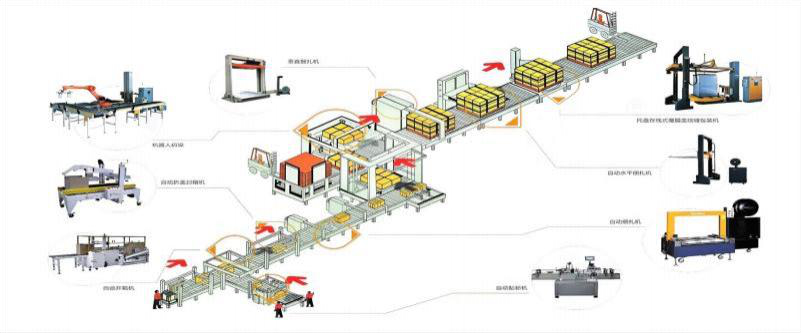
Models on display: from the erector to the wrapper
SunAura Packaging Machines has indicated which production models it will bring or feature on video, so visitors can plan their route around the stand. On the case-erection side, the medium-speed K20TK and the faster K40T servo erectors will be the reference machines, representing the range that runs from roughly 12 up to 40 cases per minute. For e-commerce and mixed-format work, the robotic erectors, including the 2-servo DKXM and 5-servo KXS models, will be shown as examples of how the case blank itself can be formed with a robotic arm rather than a fixed mechanical sequence.
In case sealing, the stand will show a semi-automatic FA500 for lower volumes and a fully automatic random sealer for mixed-SKU lines, alongside the L-type corner-edge sealer that adds side-seam reinforcement for export pallets. The case-packing section will feature the WS-1200 spider station and the ZX-500R 2-axis robotic case packer, both drawn from the case packing range, with the integrated bag-opening and sealing units also on display for food and pet-food packs that arrive as pre-made bags.
For the back of the cell, the strapping group will include an unmanned inline strapping machine and a through-eye pallet strapping machine, alongside the wrapping and strapping combination units that band and wrap a pallet in one position. Buyers specifying this part of the line can compare the formats in the strapping machine range, including horizontal and rotary pallet strappers for loads that cannot be banded from above.
Sustainability and film consumption on the agenda
European buyers in particular come to the show with questions about material reduction. SunAura Packaging Machines’ stand engineers will demonstrate the parameters that govern how much film a pallet actually consumes — pre-stretch percentage, force-to-load, and the number of top and bottom turns — and will explain why a machine with power pre-stretch often pays for itself in film alone within a year or two. The same logic applies to corrugated reduction: a correctly sized case with a high-ECT board can be lighter than a heavier board in an over-sized case, and a servo erector can form the lighter board reliably.
The company will also discuss machine compatibility with thinner and recycled-content stretch films, which can run differently from the thicker virgin films they replace. Rather than claiming universal compatibility, the stand team will ask visitors to bring a film specification and run the parameters through the wrapper settings, matching the engineering note published in its technical material on stretch-film consumption per pallet.
Factory acceptance and what happens after the order
A recurring question at European trade shows is how a Chinese-built machine is tested and commissioned. SunAura Packaging Machines uses an expanded testing bay at its Qingdao facility to run factory acceptance tests (FAT) on turn-key lines before shipment, using the buyer’s actual case blanks, film and product wherever the customer can supply them. The stand will show how a FAT is structured: line dry-run, case and pallet trials, a safety-dossier review, and a punch-list that is closed before the cell is dismantled for shipping.
On arrival in Europe, installation is followed by a site acceptance test (SAT), operator training and a scheduled follow-up. The electrical and safety documentation is supplied in the destination language, and spare parts are quoted as a recommended list so the plant is not left identifying critical components after a breakdown. Buyers who want to understand the project timeline end-to-end can refer to the integration guide, which describes how the machines handshake and how the commissioning sequence is planned.
Questions the stand team is ready to answer
- Can the line handle our current case sizes and our two planned sizes without a major changeover?
- Which case erector is right for our board grade and our warehouse humidity?
- Do we need a uniform or a random case sealer for our order mix?
- What is the difference in safety layout between a cobot and a fenced industrial palletiser?
- How much film will a pallet consume at our case weight and stacking height?
- What is the lead time, the FAT schedule, and the European service and spare-parts arrangement?
The SunAura Packaging Machines team will be joined by application engineers who handle the commercial quotation after the show, so a stand conversation can be converted into a documented layout and offer within a short period for visitors who bring complete data.
Who should arrange a meeting
SunAura Packaging Machines is encouraging visitors to book stand appointments in advance, particularly those with a live project. The most productive meetings tend to be with engineers who can bring case dimensions, target cases-per-minute, film or band specifications, pallet dimensions and ceiling height. With that information, the stand team can sketch a line layout, indicate which machine family fits and give a realistic lead time rather than a generic brochure quote.
Co-packers, food and beverage producers, household-chemical manufacturers, e-commerce fulfilment operators and export-oriented brands are all expected to find relevant equipment. The company will also be talking to potential service partners, having already expanded regional commissioning and spare-parts coverage across Latin America and Southeast Asia.
Visitors who arrive without prepared data are still welcome; the stand carries a sizing questionnaire and sample case and pallet boards, so even an early-stage buyer can leave with a shortlist of the machine families that fit their output and the approximate line footprint to discuss back at the plant. The goal of the show is not to close a deal on the floor but to establish the technical fit and the documentation package, both of which are reviewed before a formal quotation is issued.
Before and after the show
Visitors who cannot make it to Paris can review the full case handling and end-of-line range online, request a factory acceptance test schedule, or contact SunAura Packaging Machines for a remote layout review. The company publishes a steady stream of technical material on case sealers, erectors, palletisers, stretch wrapping and line integration, and its engineering team reviews RFQ documents and line drawings before providing a quotation.
SunAura Packaging Machines will publish the stand number and the daily demonstration schedule closer to the opening date. Visitors planning to attend ALL4PACK Emballage Paris 2026 are invited to request a meeting through the contact page, bringing their case and pallet data so the discussion can move directly to a workable layout.

Sarah evaluates packaging consumables against machine capability: film gauge and prestretch, PP versus PET and steel strapping, core width, tension settings and corner board use. Her articles connect film and band choice to machine settings, freight damage rates and total cost per pallet, rather than recommending the cheapest consumable on paper.
See Full Bio ›