
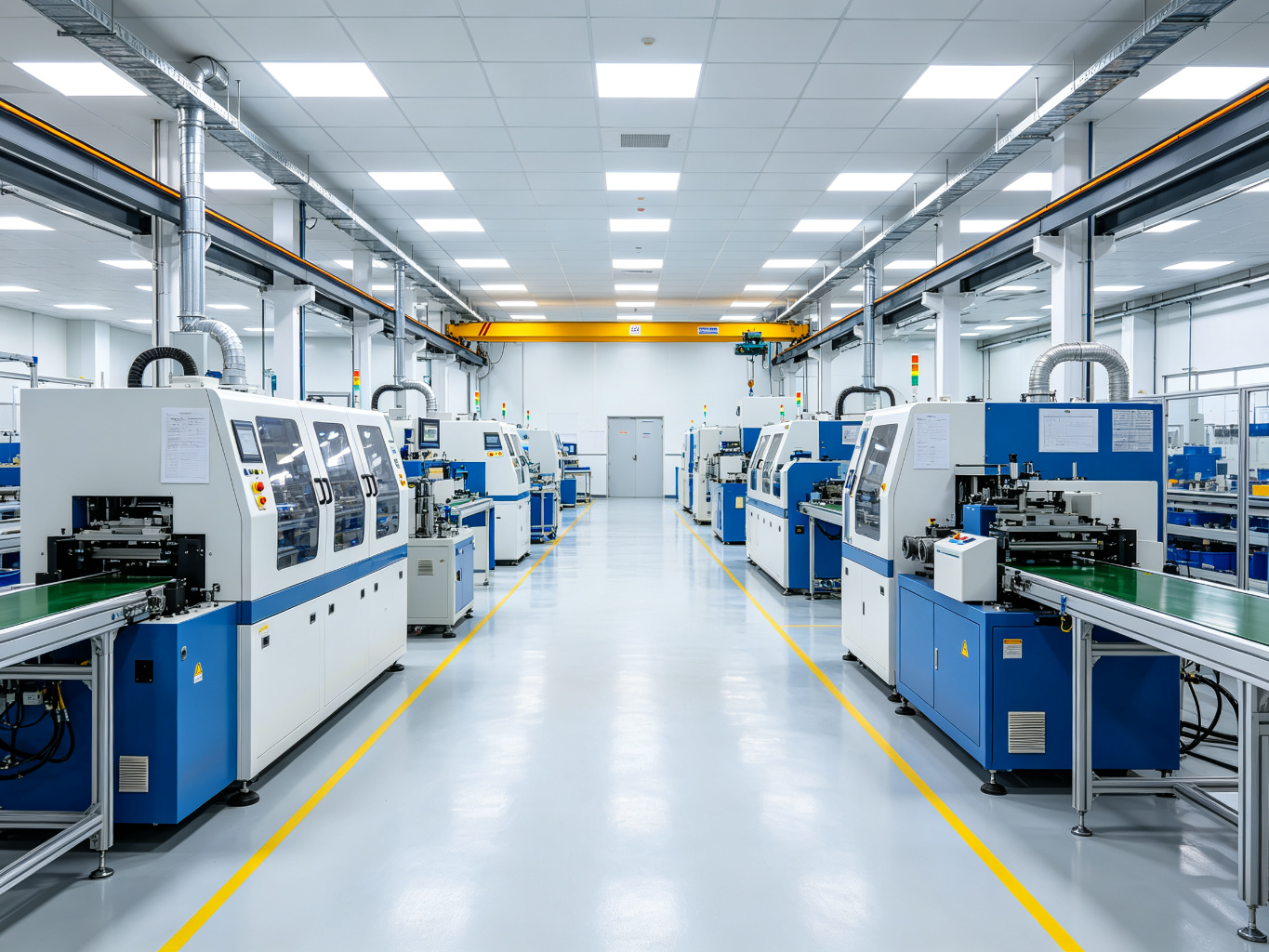
The Pallet Load Containment Decision Nobody Budgets For
Plant engineers spec a palletizer, a stretch wrapper, and a strapping machine in the same meeting, then discover at the end of the first trial run that the three were chosen by price tag, not by how the load actually survives transit. Freight claims, crushed corners, and shifted layers are rarely a product defect — they are a load-containment selection problem. The wrong method shows up as 1–3% of outbound pallets arriving damaged, which on a 20,000-pallet year is 200–600 unrecovered loads.
This guide is written for the buyer choosing between stretch wrapping, shrink hoods, and strapping with corner boards. We compare the three on the parameters that decide fit — load height and weight, stack stability, export vs domestic exposure, cycle time, and total cost per pallet — and end with a quote-ready checklist and the combinations that actually work.
1. The Three Load Containment Methods Compared
Each method addresses a different failure mode. Stretch wrap holds a stable column tight. Strapping and corner boards lock individual layers against horizontal shear. Shrink hoods seal the entire load against water, dust, and UV. Prices below are ex-works FOB China; domestic-built equivalents run 1.8x–3x.
| Method | How it works | Best load | Speed | Equipment price | Cost / pallet | Main limit |
|---|---|---|---|---|---|---|
| Stretch wrap (cast film) | Pre-stretched film spiraled around the pallet; turntable, rotary arm, or ring carriage | Stable column loads, up to ~2 m, 500–1,500 kg | 20–40 pallets/hour | $8,000–$45,000 | $0.6–$2.0 | Not weather-sealed; top layer can shear in transit |
| Stretch hood (top-sheet + wrap) | Pre-opened hood of PE film pulled over the load and tucked under the pallet | Odd-height, top-heavy, outdoor-stored loads | 30–60 pallets/hour | $45,000–$120,000 | $1.5–$4.0 | Higher film cost; needs hood film inventory |
| Shrink hood | Polyolefin or PE hood applied hot, shrinks tightly around the load on a cooling conveyor | Ocean export, long outdoor storage, irregular shapes | 60–120 pallets/hour | $60,000–$150,000+ | $2.5–$6.0 | Needs gas heat or IR tunnel; highest energy cost |
| Strapping + corner boards | Two to four PP/PET/steel straps through or around the pallet with cardboard or plastic edge protectors | Heavy, unstable, or high-value loads; glass, stone, reels | 40–120 pallets/hour | $6,000–$35,000 | $0.8–$3.0 | Not weather-sealed on its own; edge boards must be applied |
| Combined wrap + strap | Stretch wrapper with inline strapping arch and corner-board applicator | Mixed high-risk outbound loads, single operator | 20–35 pallets/hour | $55,000–$130,000 | $2.5–$5.5 | Larger footprint; needs tight line integration |
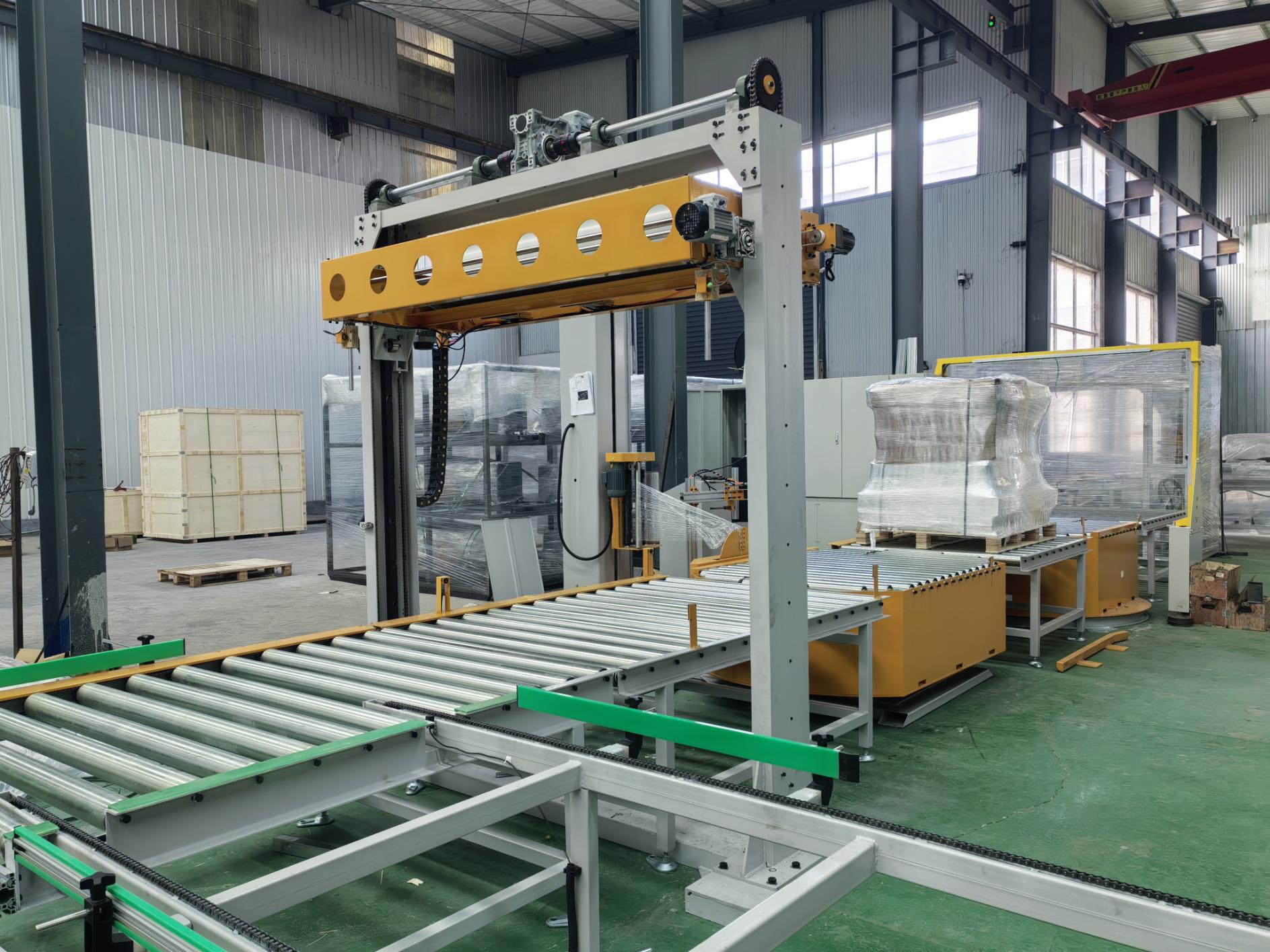
2. When Stretch Wrap Is Not Enough
Stretch wrap is the default because it is cheap and fast, but it fails predictably on three load types. Recognize them before you buy another roll of film.
Add strapping + corner boards when:
- Loads exceed 1,000 kg or are stacked from slippery sacks / bags.
- The top layer overhangs or is significantly narrower than the base.
- Loads travel by rail or bumpy road where lateral shear dominates.
- Product is high value and you cannot accept a 1% shift rate.
Switch to hood / shrink when:
- Loads sit outdoors for more than 48 hours before shipping.
- Ocean containers are not humidity-controlled.
- Cartons have exposed labels or paperboard that water will ruin.
- Odd shapes (bags, reels, drums) cannot hold a column under film alone.
3. The Wrapper Sub-Choice: Turntable, Rotary Arm, or Ring?
If stretch wrap is your primary method, the carriage type is the next decision. It is not a cosmetic difference — it sets your maximum pallet weight and your required aisle length.
| Carriage | Max load weight | Best for | Watch out |
|---|---|---|---|
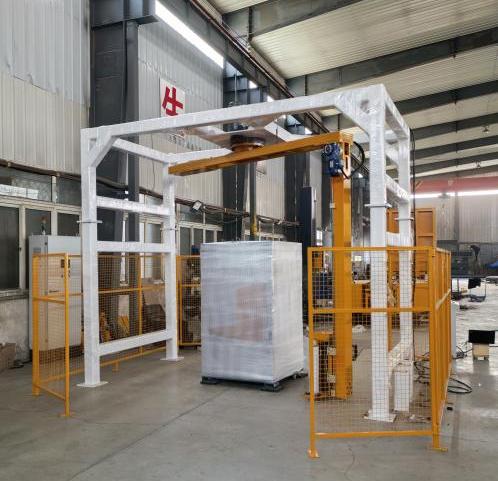
| Turntable | Up to 1,500 kg | Fixed loads, low to medium speed, lowest capital cost | Light or unstable loads spin — they need top platen hold-down |
| Rotary arm | 2,000 kg+ | Heavy, tall, or unstable loads; high-speed lines | Needs larger safety perimeter and fencing |
| Ring / orbital | Up to 1,500 kg | Long products, profiles, bundles; bottom wrap included | Not the right tool for standard square pallets |
4. Decision Framework: Match the Method to the Load
Run these checks in order. The first one that fails rules out the cheaper method.
4.1 What is the load profile?
Stable column of uniform cartons, under 1.8 m, domestic delivery — stretch wrap alone. Bags, drums, reels, or mixed heights — add corner boards and at least two straps. Anything exposed to rain, salt air, or outdoor storage — hood or shrink.
4.2 How heavy is the pallet?
Under 800 kg: turntable wrap is fine. 800–1,500 kg: specify a heavy-duty turntable with 2-ton capacity and top hold-down. Over 1,500 kg: rotary arm, because spinning the pallet on a turntable at that weight wears bearings and creates slip hazards.
4.3 What is your throughput?
Under 20 pallets/hour — a semi-automatic turntable with a film car is the lowest cost. 20–50 pallets/hour — automatic with photo-eye height detection and prestretch carriage. Over 50 pallets/hour — rotary arm or inline ring, and budget for an upstream palletizer tie-in.
4.4 Domestic vs export exposure
Domestic truckload, covered trailer — stretch wrap. Intermodal (truck + rail + ship) or 40-foot container stuffing — hood or shrink, because container condensation will wick into unprotected cartons. As a planning reference, Smithers and PMMI both track the shift toward combined containment systems as e-commerce and export volumes grow; the end-of-line equipment market continues to consolidate around integrated wrap+strap stations.
4.5 Floor space and budget
A standalone turntable wrapper needs roughly 2.5 × 3.5 m plus conveyor on both ends. A combined wrap+strap+corner-board line needs 6–9 m. If your packaging room cannot take that length, the alternative is a slower semi-auto station, not a smaller integrated one — integrated machines cannot be compressed.
5. The Quote-Ready Spec Checklist
Send these numbers to every supplier. If a vendor asks you to “start with the standard machine and adjust later,” they are selling from a catalog — and the adjustment will be your cost, not theirs.
- Pallet dimensions: min / max L × W × H, and whether pallets are EUR, GMA, or custom.
- Load weight: max gross, including the pallet.
- Load type: uniform cartons, bags, drums, reels, mixed heights, overhang.
- Throughput: pallets/hour average and peak, operating hours per shift.
- Exposure: covered trailer only, intermodal, or outdoor storage days.
- Film preference: cast vs blown, prestretch percentage (200–300% is standard now), and whether you want a top-sheet option.
- Strapping: PP vs PET vs steel, number of straps per pallet, through-arm vs over-the-top.
- Integration: upstream palletizer signal, conveyor height, emergency-stop chain, and whether the supplier offers a trial with your own load.
For the broader equipment procurement workflow, see our guide on writing a packaging machine RFP, and read the companion piece on strapping machine selection before comparing quotes.
6. Five Pitfalls That Repeat on Every Purchase
- Buying stretch wrap for a load type it cannot hold. Film holds a column; it does not glue layers together. If bags shift, film alone will never fix it — straps will.
- Under-specifying prestretch. A non-prestretched carriage uses 2–3x more film per pallet. The film car upgrade pays for itself in 6–12 months on volume lines.
- Ignoring corner boards. Straps without edge protectors crush carton corners and void the very containment you bought them for. Budget corner boards as a consumable line item.
- Sizing to nameplate speed. Spec at 80% of rated pallets/hour. Line balancing is covered in our end-of-line layout guide.
- Forgetting the film supply chain. Hood and shrink film run on narrow SKUs. If your local distributor cannot stock it, you are holding a 3-month inventory buffer. Confirm consumable availability before the machine order.
7. So, Which Method Should You Pick?
When to choose which — SunAura’s rule of thumb
- Pick turntable stretch wrap: stable column loads, under 1,500 kg, domestic covered delivery, under 40 pallets/hour.
- Pick rotary-arm wrap: loads over 1,500 kg, tall or unstable stacks, or throughput above 50 pallets/hour.
- Pick strapping + corner boards: slippery bags, drums, reels, rail intermodal, or high-value product that cannot shift.
- Pick shrink / stretch hood: ocean export, outdoor storage, or water-sensitive packaging.
- Pick combined wrap+strap: mixed risk on one line, single operator, and you have 6–9 m of floor space.
If you are choosing between a standalone wrapper and an integrated end-of-line, read our end-of-line system guide next — the wrapper is usually the last piece sized, not the first.
Frequently Asked Questions
What is the cheapest way to stabilize a pallet for shipping?
For stable column loads on domestic trucking, a semi-automatic turntable stretch wrapper runs $8,000–$15,000 and $0.60–$1.50 of cast film per pallet. It is the lowest cost per stabilized load in nearly every plant. Strapping and hood systems cost more per pallet and are reserved for loads film alone cannot hold.
Stretch wrap or shrink hood for export pallets?
Stretch hoods or shrink hoods for ocean freight and outdoor storage, because they seal against humidity and salt air. Stretch wrap alone leaves the top and bottom exposed to container condensation. For covered domestic trailers, stretch wrap is sufficient.
When do I need corner boards with strapping?
Whenever straps contact a carton edge directly. Without corner boards, the strap crushes the corner and the load can shift anyway. Corner boards are mandatory for carton loads and strongly recommended for bags, drums, and high-value goods.
How many wraps does a pallet need?
Two to three half-wrap layers at the top and bottom plus the spiral body is the baseline. A good automatic wrapper with photo-eye height detection applies the correct number automatically; semi-automatic operators under-wrap by 30% on average, which is why film savings often disappear on hand-fed machines.
What throughput justifies an automatic stretch wrapper?
Above 20 pallets/hour or more than one shift per day, an automatic wrapper with height photo-eye and prestretch carriage pays back through film savings and operator labor. Below that, a semi-automatic turntable is the lower capital choice. For troubleshooting once it runs, see our list of 15 common packaging machine fixes.

Michael designs automated palletizing stations and ties upstream case or bag flow to downstream stretch wrapping. His work spans conventional layer palletizers, robotic arm cells, conveyor routing, safety fencing and handover logic between machines. He writes about palletizer selection, load stability and how an end-of-line sequence should be balanced.
See Full Bio ›