
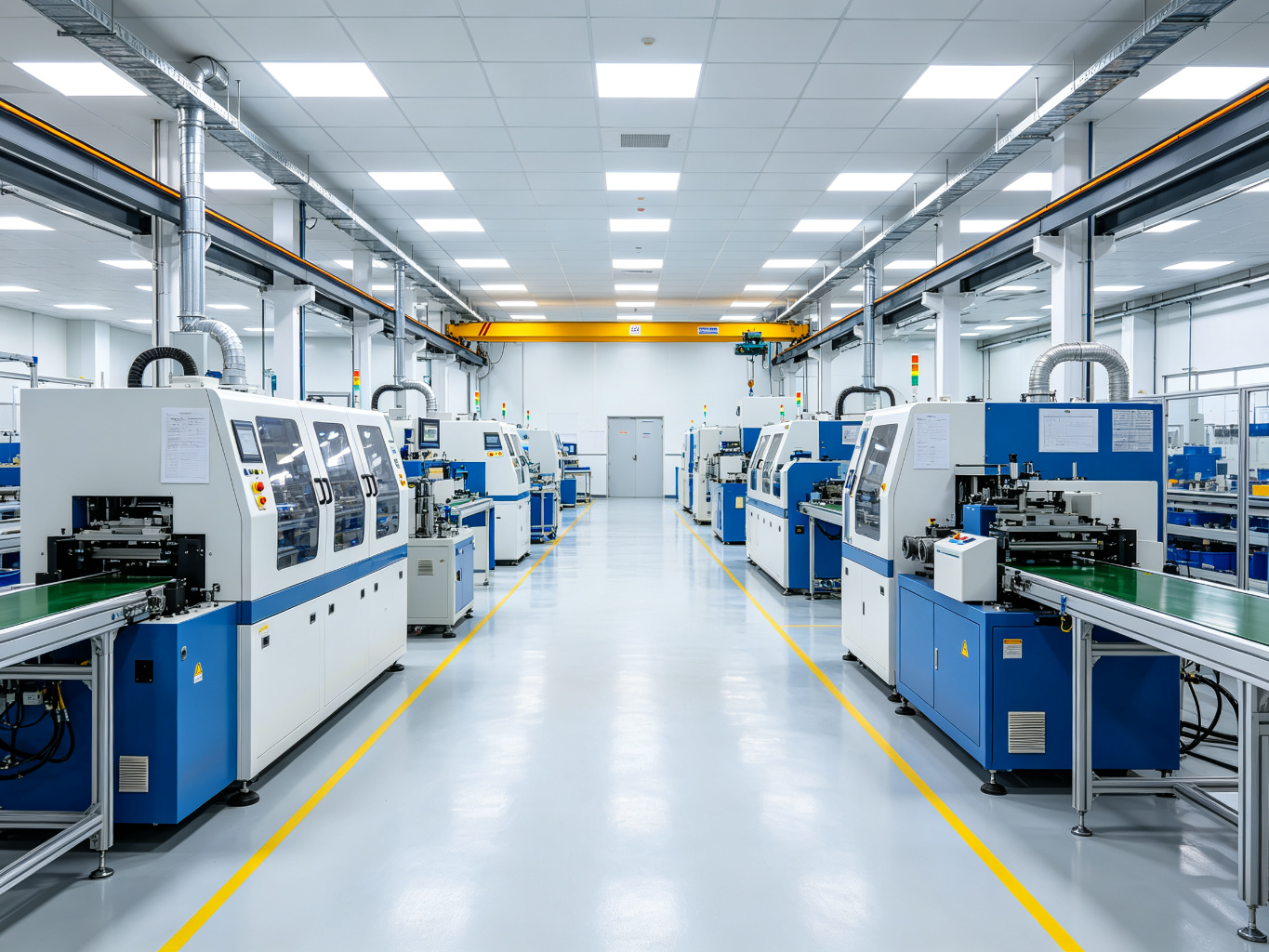
Stretch wrapping is the last step before a pallet leaves your dock — and the step most often blamed when pallets arrive leaning, film-broken, or product-shifted. This FAQ collects the questions plant managers, warehouse supervisors, and procurement engineers actually ask us about pallet stretch wrappers, film choice, load containment, and cost.
What is a pallet stretch wrapper?
A pallet stretch wrapper is a machine that pulls stretch film around a loaded pallet to unitize it — keeping cases stacked, preventing load shift during transport, and protecting against dust and moisture. The film is stretched as it comes off the roll so that it grips the load tightly; the machine either rotates the load on a turntable or moves a rotary arm around a stationary load.
Turntable vs rotary arm: which do I need?
Pick by load stability. A turntable wrapper spins the pallet; it is the lowest-cost option and works for stable loads under roughly 1,500 kg. If your load is light, tall, unstable, or prone to sliding on the pallet — stacked empty bags, empty bottles, stacked empty totes — the spin will tip it. In that case use a rotary arm wrapper, where the pallet stays still and the film arm orbits it. For very heavy or oversized loads (2,000 kg+, pallets over 1.8 m), step up to a large-turntable model with a reinforced table.
| Type | Best Load | Speed | Relative Cost |
|---|---|---|---|
| Turntable | Stable, <1,500 kg | 20–40 pallets/hr | Lowest |
| Rotary arm | Light, tall, unstable | 25–50 pallets/hr | Medium |
| Ring / orbital | Long products, coils, profile | Inline, high speed | High |
What does pre-stretch mean?
Pre-stretch is when the film is mechanically stretched — typically between two driven rollers — before it touches the load. A 200% pre-stretch means a film roll originally 500 mm wide becomes 1,500 mm of stretched film on the pallet. Pre-stretch cuts film consumption by half or more and is the single biggest lever on your film cost per pallet. Non-pre-stretch machines (film-only- tension) still exist but are almost never the right choice for a modern warehouse.
How much film should I use per pallet?
Industry rule of thumb: wrap 50% overlap on the body, 200% overlap on the top and bottom 200 mm (the “top and bottom wraps” that lock the load to the pallet). For a standard 1,200×1,000 mm pallet 1,500 mm tall, a well-set pre-stretch machine uses roughly 90–120 g of film per pallet. If you are using more than that, you are wasting film; less and you risk load containment. See our stretch film cost-per-pallet calculator for the exact math.
Why do my pallets still shift in transit?
Three causes, in order of frequency: (1) film tension set too low — the film is loose, not gripped; (2) top wrap not locked down — the top of the stack is free to move because the machine did not do enough overlap at the top; (3) pallet pattern itself is unstable — a stretch wrapper cannot save a bad case column pattern. Start by increasing top/bottom wraps, then dial tension up in 5% steps, and re-palletize the test load by hand to compare.
Do I need a top platen or top sheet?
A top platen (a powered plate that presses down on the load while wrapping) is worth it when loads are tall, light, or prone to blowing over during the turntable spin. A top-sheet dispenser (a separate dust/water cover film) matters when the load sits outdoors or in a rain-exposed container. You do not need either for normal indoor warehouse loads on stable pallets.
Is a semi-automatic wrapper enough?
If you wrap under ~30 pallets per hour and have an operator available to place the pallet and attach the film tail, a semi-automatic turntable wrapper is the right entry point. Above that — or when the wrapper is fed automatically by a conveyor and you want unattended cycles — step up to a fully automatic inline wrapper with automatic film cut and clamp.
What film thickness should I buy?
Standard machine-grade stretch film runs 17–23 μm. With good pre-stretch, a 17 μm film can replace older 23 μm hand-wrap because the pre-stretched yield is higher. Do not buy below 15 μm for pallet wrapping — it breaks on irregular load edges.
How much does a pallet stretch wrapper cost?
Indicative FOB China ranges: semi-automatic turntable units start around USD 3,000–6,000; fully automatic turntable wrappers with film clamp/cut run USD 12,000–25,000; rotary-arm and inline systems USD 25,000–60,000+. The payback vs hand wrapping typically lands at 6–18 months on labor and film savings — see our pallet wrapper vs manual cost comparison for the math.
Can stretch film be recycled?
Yes, LLDPE stretch film is a recyclable polyethylene. Most warehouses collect used film cores and off-cuts for baling and recycling. Biodegradable or plant-based stretch films exist but perform worse on load containment and are not yet recommended for long-haul transit.
How do I choose between SunAura pallet wrapper models?
Start with three inputs: maximum pallet weight and dimension, pallets per hour, and whether the load is stable enough to spin. Match those to a turntable, rotary arm, or large-table unit — the full range is listed on our pallet wrappers and stretch wrapping machines page. Send your spec sheet via the contact page and our engineers will confirm the right model and pre-stretch carriage for your load.

Michael designs automated palletizing stations and ties upstream case or bag flow to downstream stretch wrapping. His work spans conventional layer palletizers, robotic arm cells, conveyor routing, safety fencing and handover logic between machines. He writes about palletizer selection, load stability and how an end-of-line sequence should be balanced.
See Full Bio ›