
Introduction
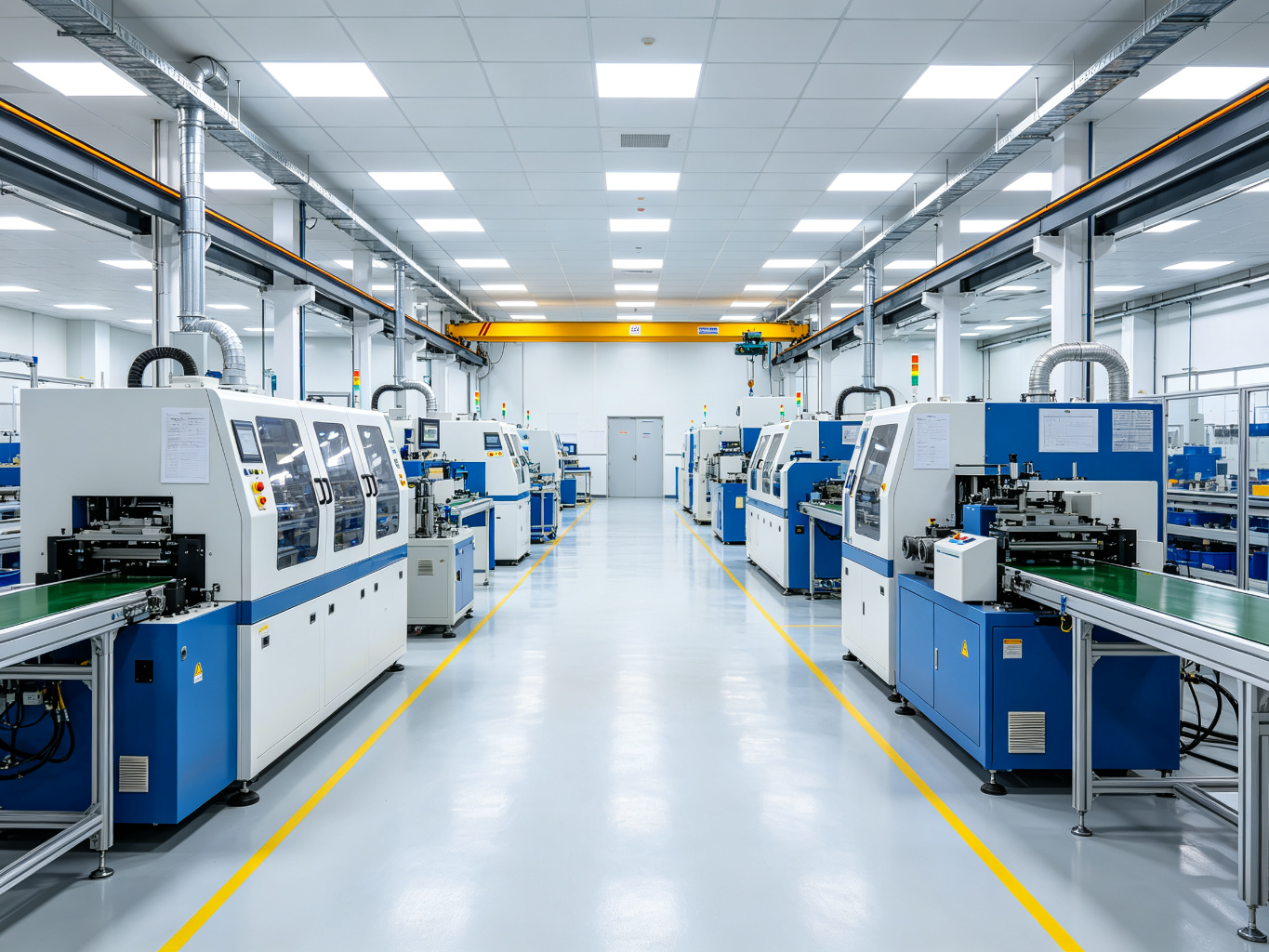
Specifying a complete end-of-line packaging line is one of the most consequential capital decisions a production manager can make. Get it right, and throughput climbs, labor drops, and quality stabilizes across shifts. Get it wrong, and you inherit bottlenecks, mismatched interfaces, and finger-pointing between vendors.
With 18+ years of end-of-line engineering and 100+ export markets, SunAura Packaging Machines has designed, built and commissioned turnkey packaging lines for food, beverage, pharma, cosmetics and logistics customers. This guide distills the selection framework we use with our own customers — so you can evaluate proposals on apples-to-apples terms and ask the right questions before you commit.
What Is an End-of-Line Packaging Line?
An end-of-line (EOL) packaging line is the series of automated machines that take finished products coming off production, combine them into cases, seal and label those cases, then group and palletize them for warehouse or shipment. It sits between your upstream processing/filling equipment and your shipping dock.
A well-engineered line doesn’t just move boxes — it balances throughput across every station, handles changeovers without production stoppages, and feeds data upstream for OEE tracking. Typical SunAura Packaging Machines configurations span 5–8 major modules connected by belt, roller or modular plastic belting conveyors.
Core Modules of a Complete Line
Every turnkey line is assembled from interchangeable modules. Below is the standard sequence — your configuration may add, remove or reorder stations based on product format and speed.
| Module | Function | Typical Speed Range | SunAura Packaging Machines Series |
|---|---|---|---|
| ① Case Erector | Forms and bottom-seals RSC cases on demand | 5–30 cases/min | BTK / CES / CER |
| ② Product Infeed & Packing | Collates products into cases (manual, pick-and-place, or robotic) | 30–120 products/min | TD / ZX / WS Series |
| ③ Case Sealer | Top-seals cases with tape or hot-melt glue | 10–40 cases/min | FX / CS Series |
| ④ Checkweigher & Labeler | Verifies case weight and applies shipping labels | 20–60 cases/min | Inline integration |
| ⑤ Strapping / Banding | Applies PP/PET bands for load stabilization | 1.5–4 straps/min | MH / KZB Series |
| ⑥ Palletizer | Stacks cases onto pallets in programmed patterns | 4–12 layers/hour | WP / CS / GS Series |
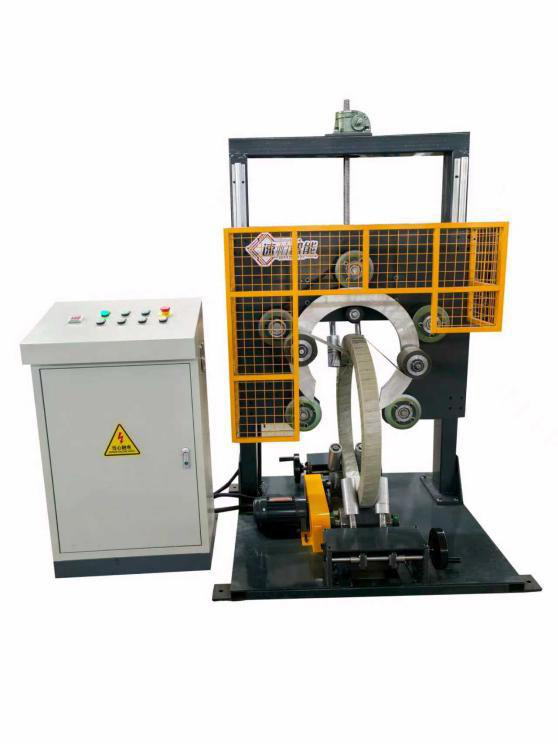
| ⑦ Stretch Wrapper | Wraps loaded pallets with stretch film | 20–40 pallets/hour | B26 / B30 / Rotary Ring |
How to Choose — Decision Checklist
Four inputs drive every line design. Get these right and the rest follows.
1. Throughput & Peak Load
Define your target cases per minute and your seasonal peak. A line sized to average throughput will bottleneck during your busiest month. Build in 15–20% headroom.
2. Product & Case Format
List every SKU, case size range, and changeover frequency. Multi-SKU lines need tool-free changeover and recipe-driven controls; single-SKU lines can be more specialized.
3. Footprint & Layout
Measure your available floor space in three dimensions — conveyors, lifts and tunnels all take room. A 48,000 m² factory like SunAura Packaging Machines’ can build full-size mockups before shipment.
4. Integration & Scalability
Will you add SKUs, upstream equipment or a second shift next year? Modular lines expand incrementally; monolithic designs lock you in.
SunAura Packaging Machines tip: Always ask your vendor for a 2D or 3D line layout proposal before quoting. If they can’t show you the flow on paper, they can’t engineer it on the floor.
Line Integration vs Piecemeal Buying
Many buyers price machines from three or four different vendors and bolt them together. It looks cheaper on paper — until you add integration engineering, conveyor interfaces, and the inevitable finger-pointing when two machines don’t handshake properly.
| Single-Vendor Turnkey Line | Multi-Vendor Piecemeal | |
|---|---|---|
| Responsibility | One accountable partner | Distributed across 3–4 vendors |
| Interface Engineering | Included, pre-tested | Extra cost, risk of mismatch |
| Commissioning Time | 7–14 days on site | 30–60 days integration |
| Warranty | Single 12-month warranty | Multiple policies, gaps possible |
| Spare Parts | One catalog, one PO | Multiple suppliers, lead times |
| Upfront Price | Slightly higher | Lower sticker, higher TCO |
Cost & Quote Factors
What drives the price of a turnkey end-of-line packaging line:
- Number of modules — every added station adds cost, conveyor length and controls complexity
- Automation level — manual packing stations cost far less than robotic cells, but labor scales with throughput
- Speed rating — higher bpm means sturdier frames, faster servos and more precision bearings
- CE/ISO certification & washdown ratings — food-grade stainless and IP65 enclosures add cost
- Line integration software — HMI, OEE tracking, MES connectivity are add-ons
- Spare-parts package & training — included in SunAura Packaging Machines’ standard turnkey quote
SunAura Packaging Machines Turnkey Solution
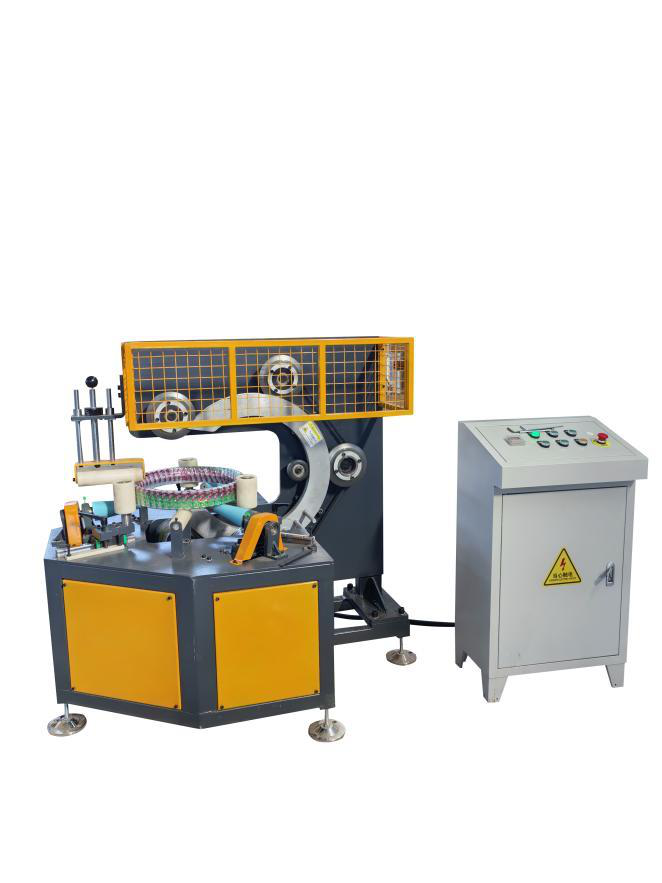
SunAura Packaging Machines designs, machines and assembles every module under one 48,000 m² roof in Qingdao — no subcontractors, no hand-offs. Every turnkey line goes through a 72-hour continuous running test in our factory before crating, so what arrives at your dock is proven, not theoretical.
What’s included in every SunAura Packaging Machines line:
- Full 2D/3D layout proposal within 24 working hours of inquiry
- CE-marked machines with matched speeds and interface conveyors
- Central HMI with recipe management and OEE data logging
- 72-hour pre-shipment run-off test with your actual product
- Installation supervision, operator training and bilingual manuals
- 12-month warranty from commissioning (18 months from shipment)
- Remote troubleshooting via VPN + step-by-step video guides
Standard lead times: 15–25 working days for standard machine combinations, 30–45 days for fully custom turnkey lines.
Explore our product range: Full End-of-Line Product Catalog
Industry Case Study
A Polish ready-meal producer commissioned SunAura Packaging Machines to integrate a frozen-food cartoning line with robotic case packing, case sealing and robotic palletizing. The challenge: sub-zero washdown environment, mixed-case patterns, and a 6-week installation window between production runs. SunAura Packaging Machines delivered a fully tested line, commissioned in 9 days, running at 45 cases/min across 12 SKUs with automatic changeover.
Other verified references include Mengniu, Yili and JD.com across dairy, e-commerce and FMCG segments in 100+ countries.
Frequently Asked Questions
How much does a complete end-of-line packaging line cost?
A basic semi-automatic line (erector → manual packer → sealer → pallet wrapper) starts at roughly $25,000–$40,000. A fully automatic turnkey line with robotic packing, palletizing and stretch wrapping typically ranges from $80,000 to $250,000+ depending on speed, number of modules and customization. As a direct Qingdao factory, SunAura Packaging Machines typically lands 30–40% below Tier-1 European or US OEM quotes for equivalent scope.
How long does it take to design and build a custom packaging line?
Standard machine combinations ship in 15–25 working days. Fully custom turnkey lines with engineered conveyors, robotic cells and MES integration typically take 30–45 working days from PO to shipment, plus 7–14 days for on-site commissioning. The engineering proposal — including layout, flow and technical parameters — is delivered within 24 working hours of your inquiry.
Should I buy from one vendor or piece together machines from different suppliers?
For any line beyond 2–3 machines, single-vendor turnkey almost always wins on total cost. Piecemeal buying saves 10–15% on sticker price but adds integration engineering, interface risk, extended commissioning time and multi-vendor warranty gaps. One accountable partner means one phone call for service and one spare-parts catalog. SunAura Packaging Machines’ customers typically report payback on the integration premium within the first 6 months of operation.
What information do I need to request a line quote?
To get an accurate quote, prepare: (1) product type and dimensions, (2) target throughput (units/min and cases/min), (3) case dimensions and corrugated grade, (4) pallet size and max load height, (5) available floor space and layout constraints, (6) upstream and downstream equipment interfaces, and (7) your power supply and environment (washdown, temperature, humidity). Send these to SunAura Packaging Machines and you’ll get a formal proposal within 24 working hours.
Can I expand or reconfigure the line later as my product range changes?
Yes — SunAura Packaging Machines designs lines to be modular and expandable. Standard conveyor interfaces, standardized electrical connectors and recipe-driven controls mean you can add a station, change case sizes or re-route flow without replacing the whole line. We engineer every proposal with future expansion in mind and document the expansion points in your line manual.
Conclusion & CTA
A well-engineered end-of-line packaging line pays for itself through labor savings, consistent quality and reduced downtime — but only if it’s specified around your product, your speed and your floor plan, not a generic catalog. SunAura Packaging Machines offers CE/ISO-certified turnkey lines with factory-direct pricing and a 72-hour pre-shipment test.
Request a free line layout and quote via the product page — our sales-engineer team responds within 24 working hours.
Related & Internal Links

David leads our case sealing and cartoning engineering team. Over 14 years he has specified, installed and commissioned hundreds of random-size case sealers, top- and side-loading cartoners, and automatic case packers for food, household and industrial product lines. He writes buying guides and troubleshooting articles around seal quality, tape and hot-melt glue selection, and carton throughput limits.
See Full Bio ›