
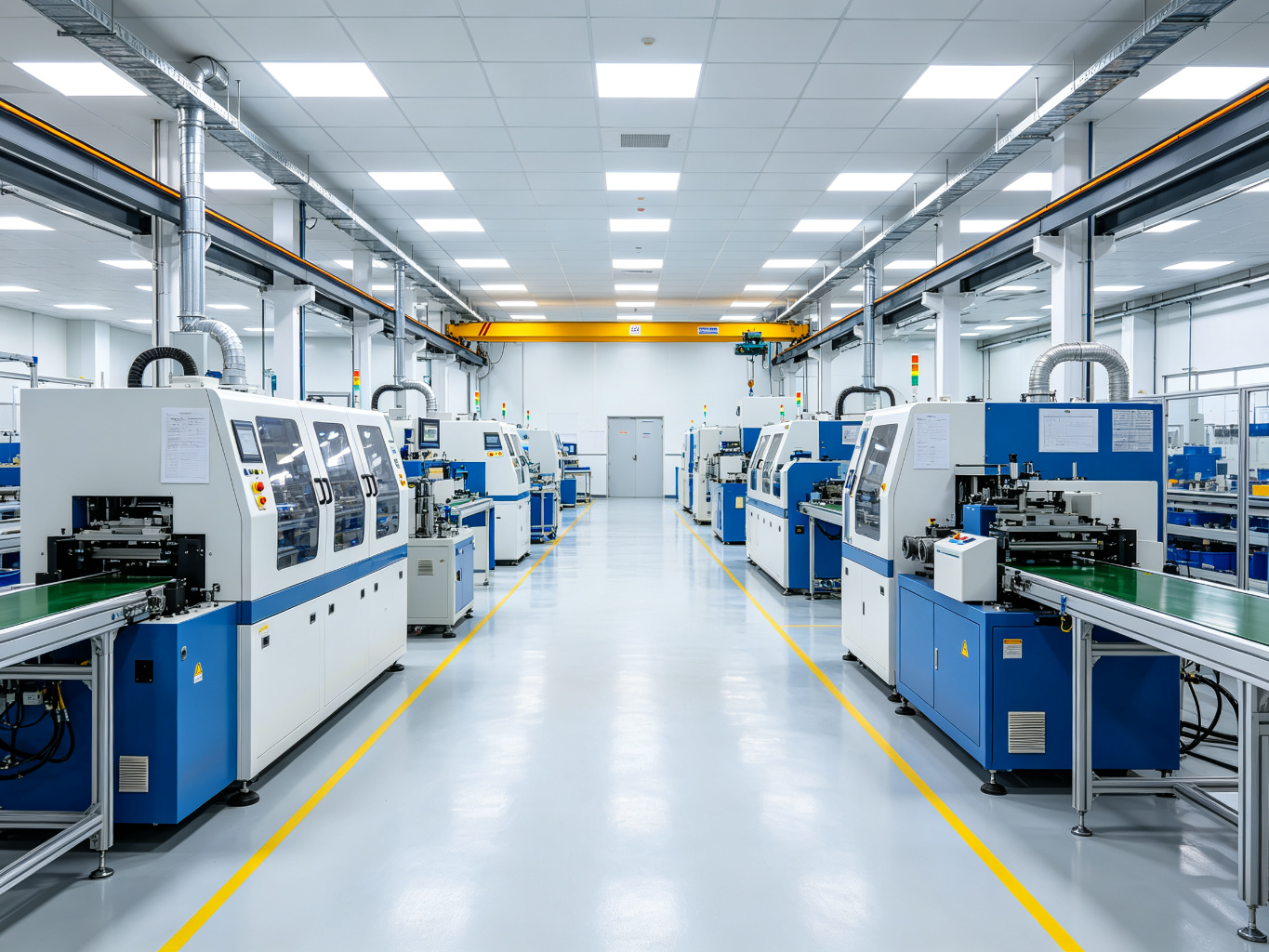
A case packer is the machine that takes individual products coming off your upstream flow and groups them into a corrugated case ready for sealing, shrink wrapping and palletizing. Get the choice right and the rest of your end-of-line runs quietly for years. Get it wrong and you buy a machine that jams on your odd-size pouch, needs a full shift to change over between SKUs, or sits half-idle because it was specced for twice your real output. This 2026 buying guide compares the three families you will actually be quoted — top-load case packers, side-load case packers, and robotic case packers, including gantry-style and articulated-arm variants — and shows you how to match each to your product, speed, case size and budget.
The case packer sits between your upstream product flow and your case sealer. It has to accept products in whatever orientation they arrive, group them into the pattern your case needs, and place them without crushing, denting or knocking them over. That sounds simple, but the gap between a 12-case-per-minute hand-load station and a 45-case-per-minute automatic packer is where most automation budgets are won or lost. Our job in this guide is to give you the engineering numbers — speed range, case envelope, robot payload, changeover time, footprint and 2026 market reference price bands — so that when a sales engineer says “we can handle that,” you know exactly what to ask next.
1. Buyer Segmentation: Which Case Packer Fits Your Operation
Before comparing machine families, benchmark yourself. A case packer is not a one-size purchase; the right machine depends on your daily output, the shape and weight of your product, the case sizes you run, the floor space you have, and how often you change over. The table below is a reader-fit check. Find the row that matches your plant, and that points you toward the family that is usually the commercial answer.
| Operation profile | Daily output | Product & case mix | Automation level | Usually the right family |
|---|---|---|---|---|
| Small brand / seasonal run | Under 2,000 cases/day | 1–2 SKUs, standard RSC cases | Low (hand-load or semi-auto) | Semi-automatic case packer or compact top-load |
| Mid-volume CPG / food | 2,000–8,000 cases/day | 3–8 SKUs, pouches, cartons, trays | Medium (automatic, recipe changeover) | Top-load or side-load case packer |
| High-volume single-SKU | 8,000–20,000 cases/day | 1–2 formats, bottles or flow-wrapped packs | High (continuous run) | Side-load or continuous-motion packer |
| Mixed-SKU / contract packing | Variable, 5–30 SKUs | Pouches, cartons, bottles, trays, irregular shapes | High (frequent changeover) | Robotic case packer (articulated arm) |
| Heavy / large products | Under 3,000 cases/day | Bulky cases, 15–30 kg load, hardware, building materials | Medium | Robotic gantry or heavy-duty top-load |
The single most under-rated row is the mixed-SKU one. Buyers in e-commerce fulfillment and contract packing often force a rigid top-load machine into a multi-SKU line, then spend 45 minutes on every changeover because the machine was never designed for it. If your SKU count is above four, weight flexibility on changeover usually matters more than peak cases-per-minute.
2. The Three Case Packer Types Compared Side by Side
Every automatic case packer does the same three things: it accumulates products, groups them into a pattern, and places the group into a case. The difference is how it places the group. Top-load drops products in from above. Side-load pushes a row of products in horizontally through the side of the case. Robotic packers use an arm to pick, orient and place — either a linear gantry-style arm or a six-axis articulated arm. The table below lays the principle, duty, capacity, speed, market reference price band, pros and limitations of each.
| Parameter | Top-load case packer | Side-load case packer | Robotic (gantry-style) | Robotic (articulated arm) |
|---|---|---|---|---|
| Principle | Products collated in flight, dropped into open case from above | Row of products pushed horizontally into case side | Linear gantry picks and lowers groups | 6-axis arm picks and places with full orientation control |
| Best duty | Pouches, flow-wrapped packs, cartons | Rigid bottles, jars, trays, multipacks | Heavy groups, large cases, steady runs | Mixed SKUs, irregular shapes, frequent changeover |
| Speed (cases/min) | 10–30 | 15–45 | 8–20 | 6–18 |
| Case size range | 200–500 mm L, 150–400 mm W | 150–400 mm L, 100–300 mm W | 300–700 mm L, wide format | Flexible, tool-dependent, 150–600 mm |
| Robot / group payload | Group up to 8–12 kg | Row up to 10–15 kg | 20–60 kg group | 5–80 kg per pick, tool-dependent |
| Changeover | 15–30 min mechanical | 20–40 min mechanical | 10–20 min | 2–5 min HMI recipe |
| Footprint (approx.) | 2.5 m × 2 m | 3 m × 2 m | 4 m × 3 m | 3.5 m × 3.5 m |
| Market reference price band (base machine) | $35,000–$75,000 | $55,000–$110,000 | $70,000–$150,000 | $60,000–$140,000 |
| Pros | Gentle on flexible packs, compact, lower cost | High speed on rigid products, stable case loading | Heavy payload, large cases, simple to maintain | Flexible, multi-SKU, quick recipe changeover |
| Limitations | Not for tall rigid bottles, lower peak speed | Poor on flexible pouches, slower changeover | Slower, less flexible on odd shapes, larger footprint | Lower peak speed, gripper tooling cost, needs fencing |
Top-Load Case Packers
Top-load machines accumulate products on a flighted infeed, group them into rows, and lower the whole group into an erected open case from above. They are the gentle option for flexible products that would topple or crush under a side pusher: stand-up pouches, flow-wrapped bars and bags, sachet multipacks, and shallow cartons. The trade-off is speed. A top-load packer is fundamentally an indexing machine, and indexing physics caps most standard units around 25–30 cases per minute. They are also the most compact and usually the lowest-priced automatic family, which is why they dominate mid-volume food and supplement plants.
Side-Load Case Packers
Side-load collates a row of rigid products and pushes them sideways into the case on a telescoping plunger. This is the workhorse for anything that stands up on its own: bottles, jars, cans, rigid trays and shrink multipacks. Because the push is horizontal and the products are rigid, side-loaders run faster than top-loaders — many push into the 35–45 cases-per-minute range on steady single-format runs. The weakness is flexible or unstable products: a pusher will topple a pouched product or bow a thin carton. If your product mix is mostly rigid and mostly one or two formats, side-load is the speed and reliability answer.
Robotic Case Packers: Gantry-Style vs Articulated Arm
Robotic packing splits into two sub-types that buyers often lump together. A gantry-style packer uses linear axes — usually X, Y and Z belt or ball-screw drives — to move a pick head on a rectangular path. It is essentially a very rigid, very strong linear robot. Gantry-style machines handle heavy groups and large cases well, they are simple to service, and their travel is predictable, but they are less flexible on orientation and they take floor space. An articulated-arm packer uses a six-axis industrial robot (the same arm you see on a palletizer) fitted with a vacuum, fork or multi-pick end-of-arm tool. It can pick a mixed orientation, rotate products, and switch between SKUs through an HMI recipe. It is slower per case than a dedicated side-loader, but it is the only family that genuinely adapts when your product mix changes. For how the robot and the rest of the line talk to each other, read our guide on connecting end-of-line machines.
3. Configuration-to-Application Matching
Once you have a shortlist of families, match the exact configuration to your product. The table below maps common products and conditions to the configuration that normally pays back fastest. Treat these as starting points, not a substitute for a test run with your own product and case.
| Your product / condition | Target speed | Case size & material | Environment | Recommended configuration |
|---|---|---|---|---|
| Stand-up pouches, snack bags | 10–20 cpm | RSC, 300–450 mm L, regular corrugated | Dry ambient | Top-load with belt collation, drop-in pattern |
| Rigid bottles / jars | 20–40 cpm | RSC or HSC, 250–400 mm L | Dry or washdown | Side-load with row pusher, spacer bar, corner protect |
| Cartons, cosmetic boxes | 12–25 cpm | HSC, 200–350 mm L, light corrugate | Clean / dust-controlled | Robotic articulated arm with gentle vacuum head |
| Flow-wrapped bars / multipacks | 25–45 cpm | RSC, 400–550 mm L | Dry ambient | Side-load or continuous-motion, high collation speed |
| Trays / open containers | 8–18 cpm | RSC, wide 400–600 mm L | Ambient or cold store | Gantry-style robotic with fork or comb gripper |
| Mixed SKUs, contract packing | 6–15 cpm | Variable case sizes, recipe-driven | Dry ambient | Articulated-arm robotic, quick tool change, HMI recipes |
| Frozen / cold-store product | 8–15 cpm | RSC, condensation-resistant board | 0 to -18 °C | Stainless washdown-rated side-load or robotic, heated seals |
A note on speed. The cases-per-minute figures above are realistic sustained rates, not catalog peak numbers. On any multi-SKU line, apply an 85–90% efficiency allowance to account for changeover, infeed gaps and the occasional reject. A machine rated at 30 cpm on the datasheet will reliably deliver about 25 cpm across a mixed shift. Size for the sustained number, not the headline number.
4. Price Tiers, TCO and Payback
All figures below are 2026 market reference ranges for the base machine with standard tooling, FOB a Chinese manufacturing port, and are shown as reference bands rather than a quote. Installed cost depends heavily on conveyor runs, guarding, electrical integration and your local rigging. Budget roughly 15–30% on top of the base machine for installation, commissioning and safety fencing.
• Entry / semi-automatic and compact top-load: $25,000–$45,000.
• Mid-range automatic top-load (10–25 cpm): $35,000–$75,000.
• Mid-to-high side-load (20–40 cpm): $55,000–$110,000.
• Robotic gantry-style (heavy cases): $70,000–$150,000.
• Robotic articulated-arm with custom EOAT: $60,000–$140,000.
Turn-key integration with infeed conveyor, case erector connection and guarding typically adds 20–35%. End-of-arm tooling for a robotic cell adds $4,000–$12,000 per tool. These are market reference ranges, not fixed transaction prices.
To build the total cost of ownership, add the items buyers most often forget. Installation and commissioning: 10–20% of machine price. Dedicated end-of-arm tooling or change parts: $3,000–$10,000 per size family. Consumables — vacuum pads, push pads, belts, sensors, lubrication: roughly $1,500–$4,000 per year on an automatic machine. Planned maintenance: budget one to two hours per week for cleaning and inspection, plus an annual service. Labor is where the payback lives: a hand-load station needs 1–2 operators per shift; an automatic packer needs a part-time attendant across the whole line.
Payback reasoning. Take a mid-volume food plant running three shifts. Replacing a two-operator hand-load station with a $65,000 automatic top-load packer removes roughly 5 FTE across three shifts. At a fully loaded labor cost of $14–$18 per hour, that is $150,000–$230,000 per year in avoided labor. Even after adding tooling, consumables and maintenance of around $8,000–$12,000 per year, the payback lands in the 9–14 month range on the base machine. A robotic multi-SKU cell at $90,000–$120,000 pays back a little slower on pure labor — 18–28 months — but its real return is in changeover time saved and fewer crushed-product rejects. If you are comparing suppliers by total landed cost rather than sticker price, our guide on buying packaging machinery from China walks through the hidden cost lines.
5. Identifying a Real Case Packer Supplier: OEM vs Assembler-Trader vs Dealer
When you request quotes, three types of seller will respond. Understanding which one you are talking to changes what you should demand before you pay a deposit.
Original OEM. The company designs, welds, wires and programs the machine in its own factory. It can modify the frame, change the servo layout, and deliver a custom infeed without subcontracting. This is the right choice when your product is unusual or you need the packer to tie into an existing line. Assembler-trader. This company buys standard modules — robot arm, conveyor, control panel — from third parties and bolts them together. It can be a good value on a standard configuration, but custom work and after-sales engineering depend on whoever made the modules. Dealer / reseller. A local or regional reseller who stocks a few standard models and marks them up. Convenient for quick delivery and local service, but limited on customization and often higher on price.
Whatever the seller type, verify these items in writing before you commit:
- Factory audit — a live video walkthrough of the welding, wiring and assembly floor, not a showroom.
- CE certificate issued by a notified body for the exact machine type, plus the EU declaration of conformity.
- Reference customers — two or more existing installations in your product category, with contact names you can call.
- Test-run video of the actual machine running your product and your case size, before shipment.
- English manual and spares list — exploded parts drawings, recommended spares, and a programmable-control program backup.
- PLC brand and robot brand disclosed — Siemens, Mitsubishi, Omron or equivalent controls; a named robot brand (ABB, Fanuc, KUKA or domestic equivalent) rather than an unbranded arm.
6. RFQ Checklist and Five Pitfalls to Avoid
When you send your request for quotation, answer these ten questions in writing. A supplier who hesitates on any of them will be a supplier you chase after installation.
- What is the sustained cases-per-minute on my exact product, not a catalog peak?
- What is the minimum and maximum case size, and what change parts are needed between them?
- How long does a size changeover take, and does it require tools or an engineer?
- What end-of-arm tooling or collation method handles my lightest and heaviest product?
- What is the machine footprint, height, and infeed/outfeed conveyor height?
- What utilities does it need — compressed air pressure and flow, electrical supply, vacuum?
- What is the warranty period and what does it cover (labor, parts, response time)?
- What is the lead time from deposit to shipment, and what is your on-time delivery record?
- Which robot and control brands are fitted, and do you provide the source program backup?
- What consumables and spare parts should I order with the machine for the first two years?
Five pitfalls that cost buyers real money:
- Sizing to peak speed. Buying a 40 cpm machine when your real demand is 18 cpm wastes capital and floor space. Size for sustained throughput with a 20% growth margin, not for the datasheet headline.
- Ignoring the infeed. A great packer starved by a badly aligned upstream conveyor is not a great packer. Specify the infeed spacing, laning and orientation as part of the order, not as an afterthought.
- Under-budgeting tooling. Robotic cells need a gripper per product family. If you run five products, budget five tools — that is $20,000–$50,000 most buyers forget until the quote arrives.
- Skimping on guarding and safety. A robotic cell needs interlocked fencing, light curtains or a safety scanner. Non-compliant guarding risks a CE rejection and a stop-order at commissioning. For the standards behind this, see our piece on packaging machine safety standards.
- Skipping the FAT (factory acceptance test). A video is good; your engineer on the factory floor running a full shift of your product is better. Never accept a machine that has not packed your actual case before shipping.
7. Scenario Conclusions
The right answer changes by industry. Here are the four scenarios you named, with the configuration that normally wins.
E-commerce warehouse / fulfillment. SKUs change weekly and cartons arrive in mixed orientations. An articulated-arm robotic case packer with a quick-change vacuum head and HMI recipes is the default. The lower peak speed is irrelevant when your bottleneck is changeover, not throughput. Pair it with a compact conveyor and you get a cell that reprograms in minutes.
Food and beverage (dry and cold). For rigid bottles and jars on a steady line, a side-load packer at 25–40 cpm gives the best cost per case. For pouches and flow-wrapped snacks, a top-load packer is gentler and cheaper. If you run frozen product, specify stainless construction and washdown-rated actuators regardless of family.
Building materials and hardware. Products are heavy, bulky and sometimes sharp — boxes of fasteners, bags of fittings, bundled strips. A gantry-style robotic packer or heavy-duty top-load with a comb or fork gripper handles the 15–30 kg groups without struggling. Rigid guarding and a reinforced infeed matter more than speed here.
Export container shipping. Cases that must survive a long sea voyage need tight, square loading and no protruding products that can shift in transit. A side-load or robotic packer that lays products in a controlled, interlocked pattern produces a stable case that bands and wraps cleanly downstream. For how the packed case then moves through sealing, shrink wrapping and palletizing, our 2026 end-of-line automation trends overview shows where this is heading.
Wherever you land, the packer should be specified as part of the line around it — case erector feeding in, case sealer and shrink wrapper out, conveyor tying the cells together. SunAura engineers packer cells with the adjoining end-of-line equipment as one integrated scope, so interfaces and responsibility are never blurred. Send us your case dimensions, product shapes and target cases-per-minute, and we will recommend the top-load, side-load or robotic configuration with a written reference price band within one working day. If a cell starts misbehaving after install, our troubleshooting guide covers the 15 most common packaging machine problems and how to fix them fast.
Frequently Asked Questions
Q: How much does an automatic case packer cost in 2026?
A: As market reference ranges, compact and semi-automatic units run $25,000–$45,000; automatic top-load packers run $35,000–$75,000; side-load packers run $55,000–$110,000; robotic gantry and articulated-arm cells run $60,000–$150,000. Integration, guarding and tooling add 20–35% on top.
Q: Top-load or side-load case packer — which do I need?
A: Top-load for flexible products that would topple under a pusher: pouches, flow-wrapped packs, shallow cartons. Side-load for rigid products that stand on their own: bottles, jars, trays, multipacks. If your mix is genuinely both, a robotic cell is the flexible middle ground.
Q: When does a robotic case packer beat a dedicated top- or side-loader?
A: When you run more than about four SKUs per week, need frequent size changes, or pack irregular shapes. A robotic cell loses on peak cases-per-minute but wins on 2–5 minute recipe changeovers and the ability to re-grip and re-orient products.
Q: How long does case packer changeover take?
A: Mechanical changeover on a top- or side-loader is typically 15–40 minutes with hand tools. Servo-driven recipe changeover on a robotic cell is usually 2–5 minutes on the HMI. If you change size more than twice a shift, pay for servo changeover.
Q: What payback should I expect from automating case packing?
A: A mid-volume three-shift operation replacing two hand-load operators typically sees payback in 9–14 months on a $50,000–$75,000 automatic machine. A multi-SKU robotic cell at $90,000–$120,000 pays back in roughly 18–28 months, with much of the return from saved changeover time and fewer crushed rejects.

David leads our case sealing and cartoning engineering team. Over 14 years he has specified, installed and commissioned hundreds of random-size case sealers, top- and side-loading cartoners, and automatic case packers for food, household and industrial product lines. He writes buying guides and troubleshooting articles around seal quality, tape and hot-melt glue selection, and carton throughput limits.
See Full Bio ›