
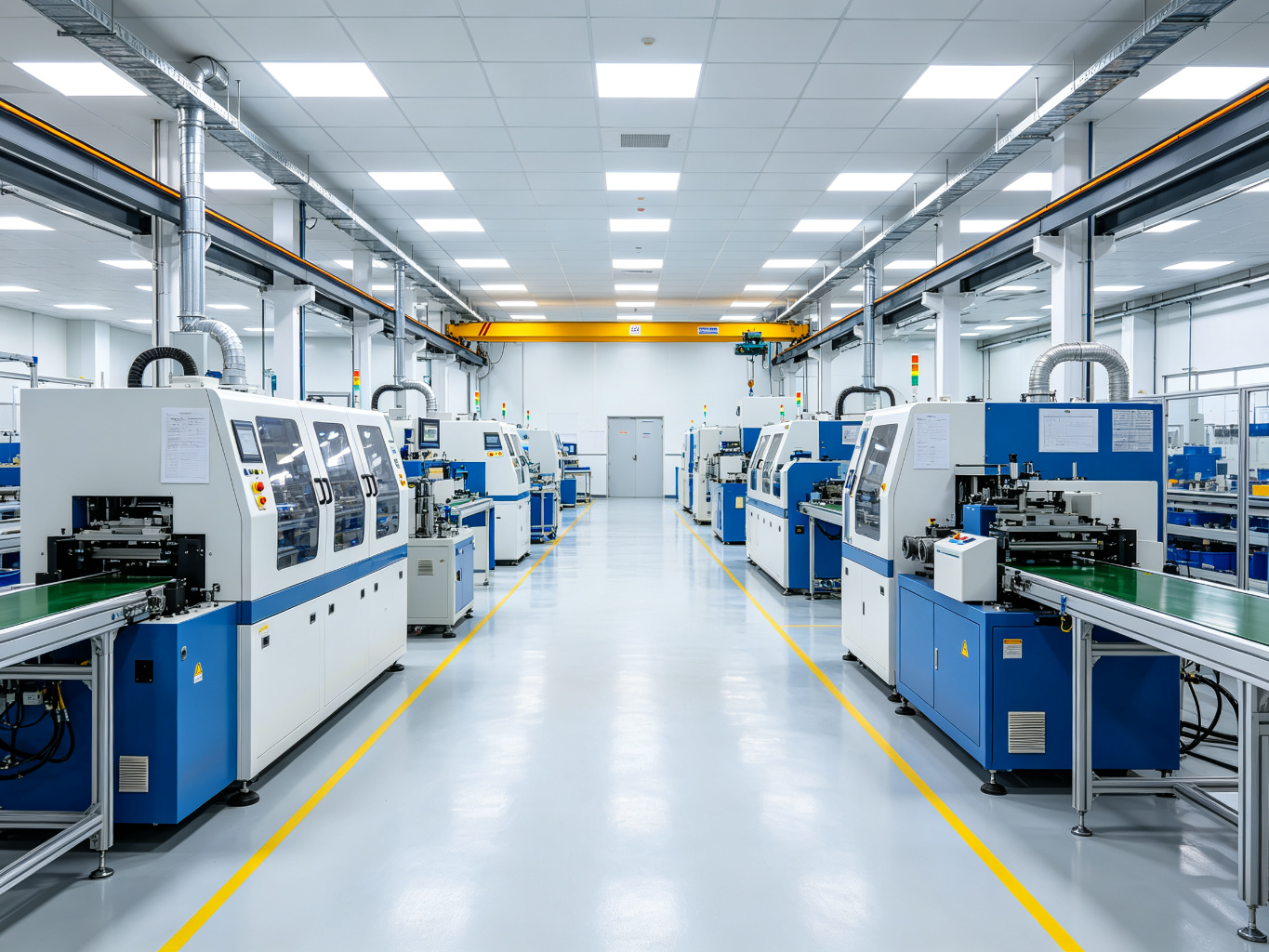
On a flow wrapper, the film roll is the one thing you know will run out. The product keeps arriving, the seal jaws keep turning, and at some point the web ends and the machine has to be fed again. A line that treats this as a surprise stops the whole process, re-threads from scratch, and loses ten minutes every roll. A line that treats it as a planned, repeatable procedure joins the new film to the old in a fraction of the time and is back to full speed before the infeed conveyor runs empty. The machine is the same in both cases. The difference is whether the roll change is a procedure or a panic.
This guide walks through the roll change and the splice on the wrappers in our range, from the compact SZ-180 to the servo-driven SZ-350. We cover how the film travels, how to load and thread a new roll, how to splice it to the running web, and how the change time adds up across a shift. The film widths and speeds are the rated figures of the machines; your own downtime has to be measured on the line.
How the film travels through the machine
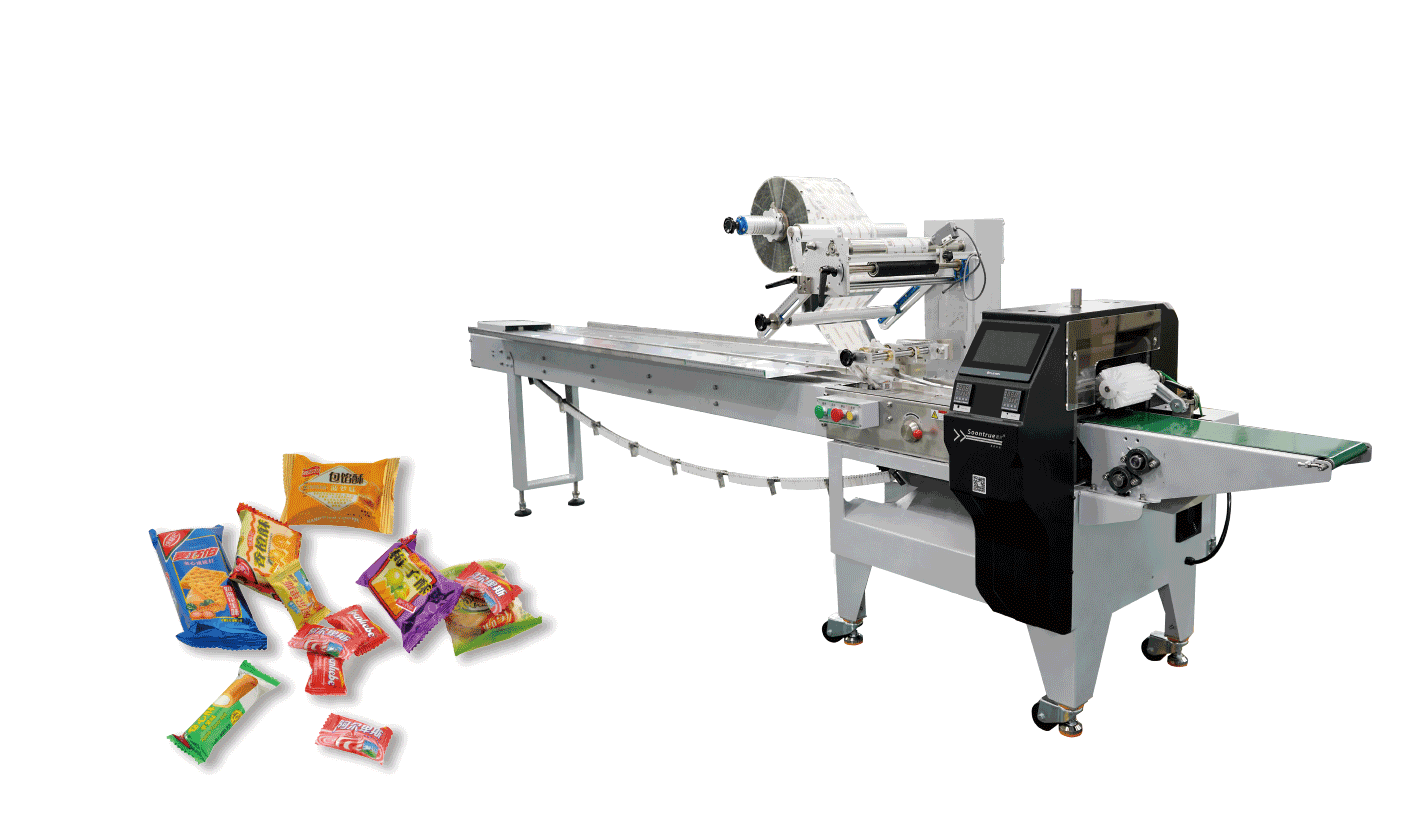
Before threading anything, it helps to know the path the film follows. The roll sits on an unwind shaft at the back of the machine. The web is pulled off the roll and passes over a series of guide rollers and a dancer arm, which is the spring-loaded roller that keeps the film at a constant tension and absorbs the stop-start of the feed. The web then reaches the forming collar, the funnel-shaped guide that folds the flat film into a tube around the product. After the collar, the folded film runs through the longitudinal seal, which welds the seam along the bottom, and then the rotating end-seal jaws, which both seal and cut each pack. Finally the finished pack leaves on the discharge belt.
The SZ-180 accepts film widths from 90 to 400 mm and runs a wide set of materials including PP, PVC, PE, PS, EVA, PET and laminated PVC films. The SZ-350 runs film up to 350 mm wide. The film width and the material have to match the forming collar and the seal temperature, which is why a change of film type is a bigger job than a straight change to a new roll of the same film.
| Machine | Film width | Speed | Working film types |
|---|---|---|---|
| SZ-180 | 90–400 mm | 30–150 packs/min | PP, PVC, PE, PS, EVA, PET |
| SZ-350 | 90–350 mm | 30–120 bags/min | PP, PE, laminated films |
Prepare the next roll before the current one ends
The fastest roll change is the one that does not catch the operator out. Watch the roll diameter as it falls and bring the next roll to the unwind station while the machine is still running. Confirm three things before the old roll ends: the new roll is the correct film width and printed pattern, the core fits the unwind shaft, and the film is wound in the direction that feeds the printed side outward. A roll loaded with the film wound the wrong way has to be reversed after the machine is already stopped, which is a common and avoidable delay.
For printed film, find the registration marks, the small printed squares the sensor reads to place the cut in the same position on every pack. Have the new roll oriented so those marks will line up with the sensor once the web is threaded. A printed-film change always takes longer than a plain-film change because the registration has to be re-set, so allow for that in the schedule rather than budgeting plain-film time.
Loading and threading a fresh roll
When the old roll ends, stop the machine and lock it out. Lift the new roll onto the unwind shaft, push the core fully home and tighten the core lock so the roll cannot slip on the shaft. Then thread the film along the same path every time: over the guide rollers, under and over the dancer arm, through the tracking guides, and over the forming collar. Pull enough film through the collar to fold it into the tube shape and feed the leading edge into the longitudinal seal and between the end-seal jaws.
- Seat the roll on the unwind shaft and lock the core.
- Thread over the guide rollers and through the dancer arm.
- Pass the web through the tracking guides.
- Feed it over the forming collar and fold into a tube.
- Pull the leading edge through the seal jaws.
- Close the machine, remove the lockout and jog the web forward.
The dancer arm is the part to watch while threading. It should sit in the middle of its travel when the film is at working tension, not hard against either stop. If it is at the top, the film is too loose and will wander; if it is at the bottom, the tension is too high and the film will stretch or pull the packs off length. Set the tension so the arm floats in the middle and can move both ways as the feed starts and stops.
The splice: joining new film without re-threading
A full re-thread is the slow option. The faster method is a splice, which joins the tail of the old film to the head of the new film so the joined web simply runs through the machine along the existing path. With a manual splice, the operator stops the machine at the end of the roll, lays the two webs flat and square, and joins them with a strip of specialised splicing tape across the full width, pressing out any air so the join is smooth. The joined web is then jogged forward and the machine carries the splice through the collar and jaws.
Two rules make a splice hold. The edges of the two webs must line up exactly, because an offset join pulls the web to one side and causes a wrinkle at the collar. And the splicing tape must be applied flat without wrinkles or folded corners, because a bump in the web will not pass cleanly through the seal jaws and will throw out a few packs. The packs that contain the splice itself are waste and should be removed as they come off the discharge belt, not boxed.
High-speed and large-format wrappers such as the SZ-3000 can be fitted with an automatic splice unit, which joins the running web to a pre-loaded roll at the press of a button without a full stop. The capital cost is higher, but on a line that changes rolls often the saved minutes pay it back; ask for the auto-splice option when the product mix means frequent film changes rather than long runs on one roll.
Re-setting registration and testing the first packs
After a printed-film change, the registration sensor has to find the eye-mark again. Jog the web until a mark sits under the sensor, then use the panel to set the cut position and run a few packs. Check the seal line falls in the same place on each pack and the printed image is centred. If the cut drifts, adjust the sensor position or the film length in small steps rather than large ones, because a big correction overshoots and starts the drift in the other direction.
Inspect the first five packs the same way every time. Check the longitudinal seam is fully sealed with no open channel, the end seals are square and cut cleanly, the pack is not scorched or shrunken, and the film runs flat with no wrinkle along the product. Only when five consecutive packs pass these checks should the machine be brought up to its running speed and the infeed loaded.
How the change time adds up across a shift
The reason a splice matters is arithmetic. Say a line runs a roll that lasts forty minutes and a full re-thread takes eight minutes, while a splice takes two. Across an eight-hour shift that is roughly twelve roll changes. Re-threading every time costs about 96 minutes of stopped time; splicing costs about 24. The same shift, the same machine, the same film gives back around 72 minutes of production purely from the join method. At a mid-range speed of 100 packs a minute, that is over 7,000 packs of recovered output.
| Method | Time per change | 12 changes in a shift | Approx. packs lost |
|---|---|---|---|
| Full re-thread | 8 min | 96 min | 9,600 |
| Manual splice | 2 min | 24 min | 2,400 |
Storing and handling the rolls
Film problems blamed on the machine often start in the store. Polyolefin and laminated films pick up moisture in a damp room, and a humid web seals poorly and gives a weak seam even when the jaw temperature is correct. Keep rolls in their original wrapping, standing off a cold floor, in a dry area away from direct sunlight, and move the roll to the line early enough to reach room temperature before it is fitted. A cold film unwound straight from a chilled store in winter will not behave the same as one that has sat by the line for a few hours.
Do not damage the core when moving rolls. A crushed core will not lock square on the unwind shaft, and the roll then turns with a slight wobble that pulls the web from side to side, a fault that looks like a tracking problem but is actually a mechanical one from the damaged core. Carry rolls rather than rolling them across the floor, and reject any roll whose edges are flattened or dented, because a damaged edge produces a wrinkle that runs through the whole reel.
Safety during the change
The end-seal jaws are hot and the web feed is driven, so lock the machine out before reaching into the collar or the jaw area. Keep the splicing knife retracted except when it is actually cutting, and never leave a loose blade on the frame above the film where it can fall into the web. When jogging the web to test a splice, use the inch button and keep hands clear; the jaws will close even in the jog mode. The first packs should be collected from the discharge belt rather than caught by hand as they leave the machine.
The faults a change introduces and how to read them
Most problems just after a roll change trace back to the threading or the splice rather than the machine itself. A wrinkle that starts at the collar means the web is entering the collar off square, so check the tracking guides and the splice alignment. A web that wanders side to side points to uneven tension or a dancer arm out of position. A seal that fails on the first packs but worked before the change usually means the new film is a different material or thickness and the seal temperature needs to be raised or lowered to match it. Work these in order — alignment, tension, then temperature — and the cause is usually found on the first two.
Keep a short record of each change: the film, the method, the time taken and any packs lost. Over a few weeks the record shows whether the lost time is in the threading, the registration or the splice, and that is where the training should go. The full wrapper range, including the reciprocating and large-format machines, is listed on the flow wrappers hub. Tell us your film width, material and how often you change rolls, and we will work out whether a manual splice or an automatic unit is the better fit for your change time.

Tom programs and commissions the control layer that links separate machines into a coordinated end-of-line: PLC logic, sensor placement, conveyor synchronization, speed matching, HMI screens, alarms and safety interlocks. His articles explain control architecture, signal handover between machines and how automation affects line reliability.
See Full Bio ›