
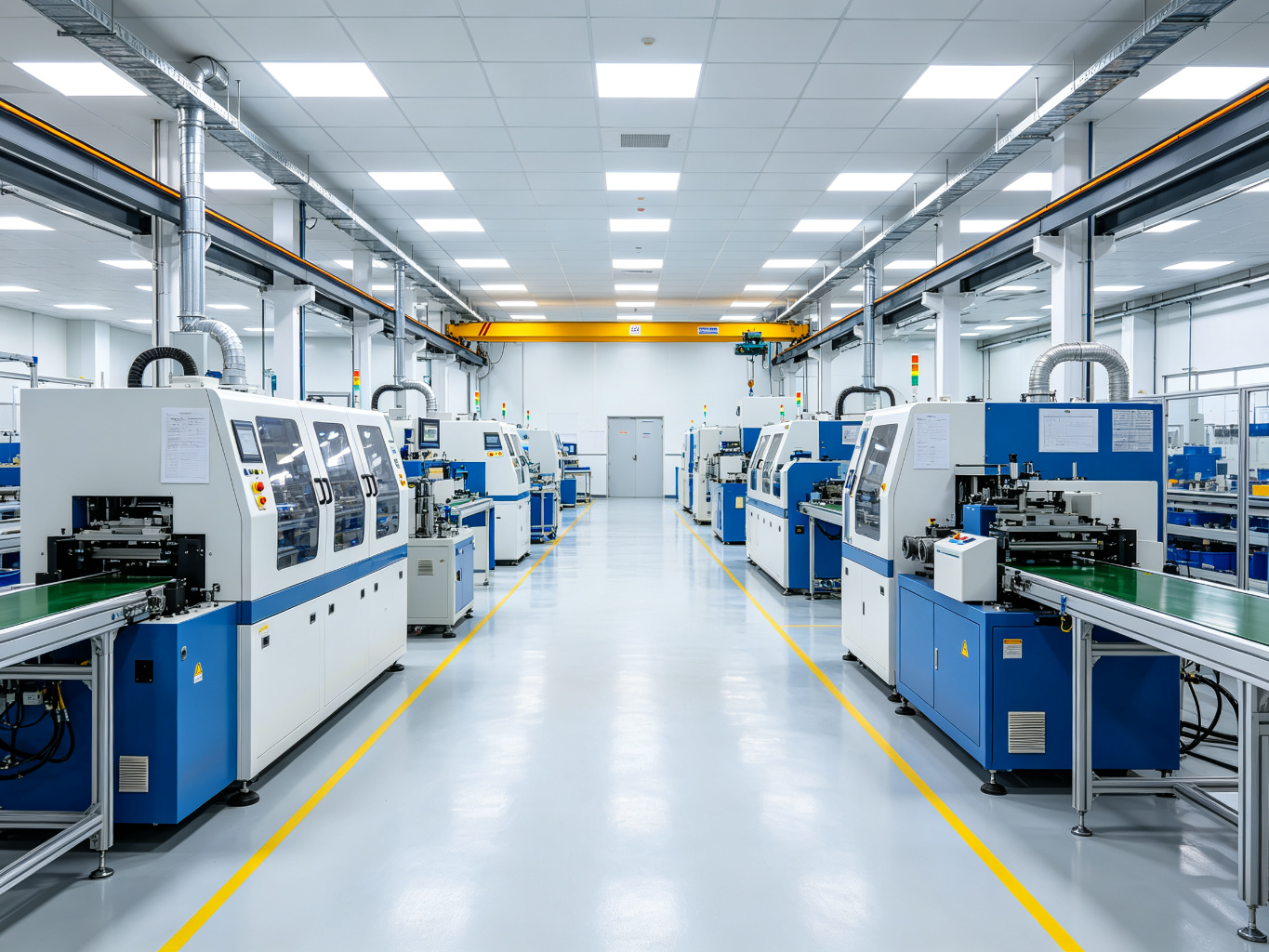
Best Vacuum Packaging Machine Manufacturer & Supplier: How to Choose in 2026
A differentiated procurement guide for buyers: which vacuum machine type fits your product, throughput, budget and production space; what each supplier tier actually delivers; and the numbers you should compare before you send an RFQ.
Vacuum packaging sounds like one product category, but the equipment behind it splits into five very different machine families. A single-chamber chamber sealer that a butcher shop buys for $2,500 will not solve the same problem as a continuous belt vacuum line running 1,200 packages per hour for a frozen-food exporter. Buying the wrong family of machine is the single most expensive mistake in this category, and it usually starts with a buyer searching “vacuum packaging machine manufacturer” and comparing sticker prices before deciding what machine type the job actually needs.
This guide is written from the buyer’s side. We separate the machine families, match each to a concrete product and throughput profile, lay out 2026 price bands and total cost of ownership, explain how to tell a real manufacturer from a trading reseller, and give you a parameter checklist to send with every inquiry. No generic claims about quality or reliability — the comparison below rests on measurable specifications, capacity ranges and budget tiers.
1. First Decision: Which Vacuum Machine Family Matches Your Product?
Before comparing manufacturers, lock the machine family. The table below compares the five families most commonly sold to food, hardware, textile and industrial buyers. Read it with your own package size, daily volume and product type in front of you.
| Machine Family | Principle | Typical Product / Load | Throughput Range | 2026 Price Band (FOB China) | Strengths | Limitations |
|---|---|---|---|---|---|---|
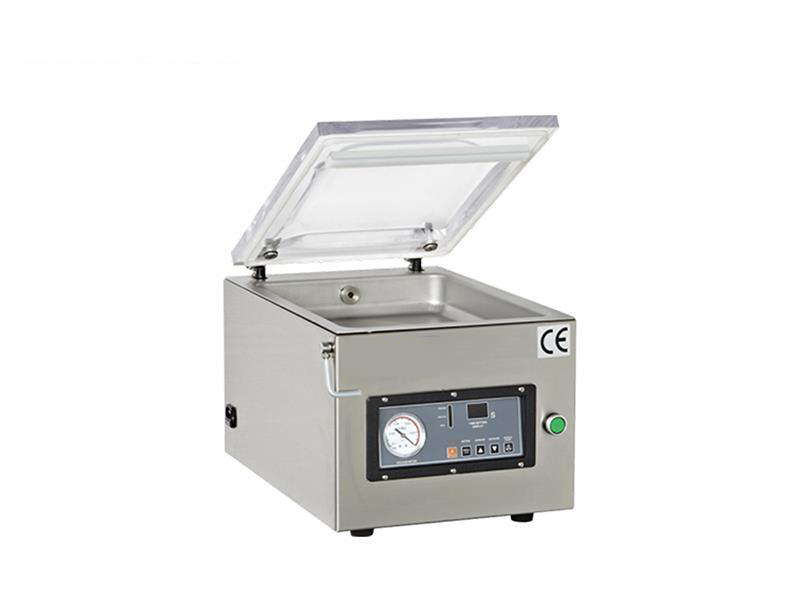
| Single-chamber sealer | Operator places bags inside one chamber; lid closes, air is drawn, bags seal | Meat, cheese, seafood, dry goods, small hardware; bag up to ~500×400 mm | 2–6 batches/hour; 100–300 packs/day | $2,500–$6,000 | Low entry cost, small footprint, simple maintenance, portable | Manual loading, not suited to high output, one chamber means idle time between cycles |
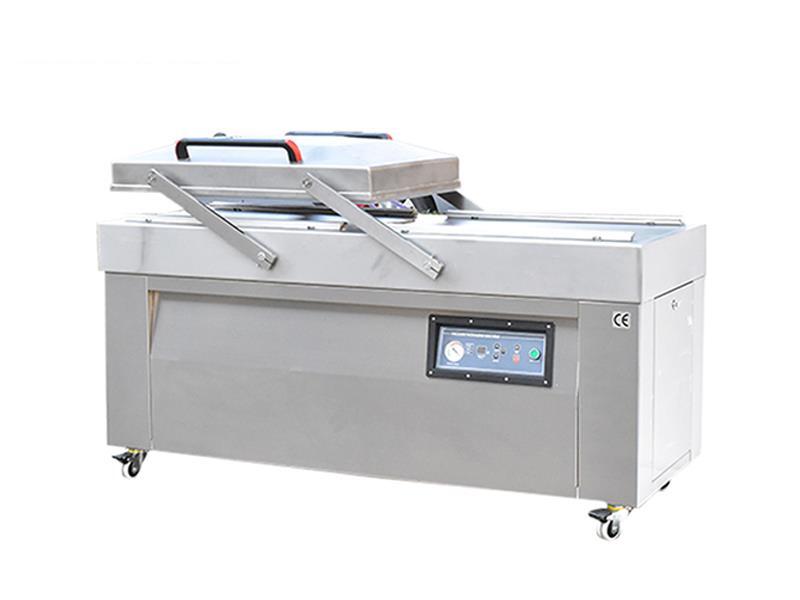
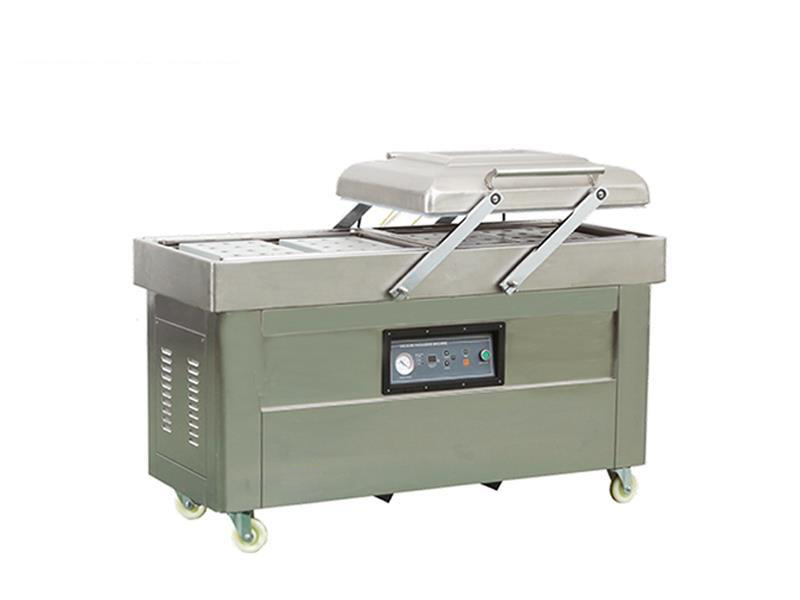
| Double-chamber sealer | Two chambers on a rotating swing frame; one seals while the other is loaded | Medium-volume food processors, spice and nut packers, seafood plants | 6–12 batches/hour; 300–800 packs/day | $5,500–$12,000 | Load-and-seal overlap cuts idle time; better labor output than single chamber | Needs two operators for full throughput; chamber size caps bag dimensions |
| Continuous belt vacuum line | Belt carries pre-filled bags under a moving vacuum hood; air extracted and sealed in line | Frozen food, pickles, snacks, poultry, large-format pouches; 800–1,500 packs/hour | 400–1,500 packs/hour; multi-shift plants | $28,000–$75,000 | Highest throughput in the chamber family; integrates with conveyors and check weighers | Large footprint, higher purchase cost, needs trained operators and regular pump service |
| Nozzle / external vacuum sealer | Suction nozzle inserts into the open bag; no chamber; bag sealed after extraction | Large bags, bulky hardware, textiles, foam, powder; products too big for a chamber | 100–400 packs/day | $1,800–$7,000 | Works on oversized bags; lower cost for bulky loads; semi-automatic variants available | Vacuum level less consistent than chamber machines; poor for oxygen-sensitive food; seal quality depends on bag mouth alignment |
| Vacuum skin packaging (VSP) machine | Product sits on a tray; top film is drawn down under vacuum and formed tightly around the product | Premium meat, seafood, cheese, ready meals; retail-facing presentation | 100–600 packs/hour | $35,000–$95,000+ | Best shelf-life and display appearance; film clings like a second skin; reduced drip | Requires matching tray and film; tooling for tray sizes; higher consumable cost |
If your daily volume sits between 300 and 800 packs, the double-chamber machine is almost always the correct answer. Below that, a single chamber pays for itself; above that, a continuous belt line stops being a luxury and becomes a labor necessity.
2. Scenario Decision Framework: Match the Machine to Your Operation
Use the conditions below instead of guessing. Go through each row and record your own answer before you contact any supplier.
Choose a Single Chamber When
- Daily output under 300 packs
- Bag length under 500 mm and bag width under 400 mm
- Production runs in short batches across many SKUs
- Floor space is under 2 m² and no fixed line can be installed
- Budget below $6,000 and one operator handles the whole station
Choose a Double Chamber When
- Daily output 300–800 packs across one or two shifts
- Two operators can share the loading and sealing rhythm
- You need throughput growth without jumping to a full inline line
- Product remains within the chamber’s bag and height limits
- Budget $5,500–$12,000 and payback under 18 months on labor savings
Choose a Continuous Belt Line When
- Output above 800 packs/day and climbing toward 1,500/hour
- Product flows in a steady line with upstream filling or weighing equipment
- You can dedicate 4–8 m of production floor space
- Consistent vacuum level and seal quality across long shifts matter
- Budget $28,000+ and you need integration with conveyors or check weighers
Choose Nozzle or VSP When
- Nozzle: product or bag is too large for any chamber; hardware, textiles, foam, powder
- VSP: retail presentation and extended shelf life are the selling point; premium meat/seafood/cheese
- VSP: you can standardize on one tray format and accept matching film costs
- Nozzle: consistent deep vacuum for food shelf life is not the primary requirement
3. Specification Comparison: The Parameters That Actually Change Performance
Two chamber machines can look identical on a showroom floor and differ in the parameters below. Ask every quoted supplier to fill these in on their proposal; if a supplier leaves a field blank, that usually means the specification is weaker than the market average.
| Parameter | What It Controls | Typical Range | Why It Matters in Selection |
|---|---|---|---|
| Chamber dimensions (L×W×H) | Maximum bag and product size per cycle | 400×400×120 mm to 800×600×200 mm | A chamber that is too short wastes cycles; too large cycles slower and costs more |
| Vacuum pump displacement | How fast air is removed; cycle time and final vacuum level | 20 m³/h (single chamber) to 100 m³/h (double/inline) | Undersized pumps cause long cycles on porous products and shallow final vacuum |
| Ultimate vacuum level | Residual air pressure inside the bag | -0.095 to -0.10 MPa | Food shelf life and oxidation prevention depend on a deep, consistent final vacuum |
| Seal bar length and width | Maximum seal length and seal strength | 400–1,000 mm length; 8–10 mm width | Narrow seal bars fail on heavy or oily bags; width should match bag film gauge |
| Gas-flush (MAP) capability | Injects modified atmosphere after vacuum extraction | Optional on chamber machines; standard on some VSP units | Needed for oxygen-sensitive foods that should not sit in a deep vacuum |
| Control system | Recipe storage, cycle repeatability, diagnostics | Basic timer relay to PLC with HMI and recipe memory | PLC machines hold settings across operators; relay machines drift between shifts |
| Machine material contact parts | Corrosion and washdown compliance | 304 stainless standard; 316 stainless for wet/salty environments | Meat, seafood and brine products require washdown-grade construction |
4. Price Bands and Total Cost of Ownership (2026)
The purchase price is roughly half of what you will spend over the first three years. Compare the full TCO: machine, pump wear, consumable bags, seal bars, labor and downtime.
| Machine Type | Purchase Price (FOB China) | Pump / Seal Bar Service (Year 1–3) | Estimated Annual Consumables | Labor per 1,000 Packs | Typical Payback vs Manual Method |
|---|---|---|---|---|---|
| Single chamber | $2,500–$6,000 | $300–$800 | $400–$1,200 | High (manual loading) | 12–24 months at low volume |
| Double chamber | $5,500–$12,000 | $600–$1,500 | $900–$2,500 | Medium (two-station rhythm) | 10–18 months |
| Continuous belt line | $28,000–$75,000 | $1,800–$4,000 | $2,500–$7,000 | Low (line-fed operation) | 12–24 months at high volume |
| Nozzle external sealer | $1,800–$7,000 | $200–$600 | $500–$1,800 | High per pack | Context-dependent; cost-justified mainly on oversized loads |
| Vacuum skin packaging | $35,000–$95,000+ | $2,500–$5,000 | $3,000–$9,000 (trays + film) | Low to medium | 18–30 months; driven by premium product margin |
5. Supplier Tiers: Manufacturer, Assembly Trader, Reseller
The procurement question is not “which brand sounds strongest” but “what tier is this supplier, and can I verify it?” Three tiers appear in the global market, with different risk profiles.
Tier 1: Original Manufacturer
Owns the fabrication workshop, builds the chamber frame and selects the pump and PLC. Holds spare wear parts in stock, issues a written warranty, and supplies engineering drawings and English manuals.
What to verify: factory video or site visit, component brand list (pump origin, PLC brand), reference customers in your region, spare parts stock policy.
Tier 2: Assembly / Trading Company
Buys chamber frames, pumps and seal heads from multiple sub-suppliers and assembles under its own name. Quality depends on which components it sources; after-sales capability varies widely.
What to verify: ask directly who manufactures the chamber and who supplies the pump; request photos of the pump nameplate; check warranty ownership if a sub-component fails.
Tier 3: Reseller / Local Agent
Buys finished machines from Tier 1 or 2 suppliers and resells locally, often with a mark-up and local service promise. Can be a good choice where on-site response matters more than factory pricing.
What to verify: who holds the spare parts stock locally, how many machines the reseller has actually installed, and whether the original manufacturer honors warranty abroad.
Red Flags During Vetting
- No clear answer on pump make or PLC brand
- Warranty shorter than 12 months on parts
- Spare parts lead time quoted at 4–6 weeks for common wear items
- No reference customer willing to be contacted
- Manuals available only in the supplier’s own language
6. RFQ Parameter Checklist: Send This With Every Inquiry
Send the list below to every shortlisted supplier. Comparing their replies side by side removes guesswork from the decision.
| # | Parameter to Ask For | Your Plant Value |
|---|---|---|
| 1 | Product type, package film gauge, bag dimensions and maximum product height | __________ |
| 2 | Required packs per hour and packs per shift; number of shifts | __________ |
| 3 | Required final vacuum level; is gas flush / MAP required? | __________ |
| 4 | Chamber dimensions and seal bar length on the proposed model | __________ |
| 5 | Pump brand, displacement (m³/h) and expected service interval | __________ |
| 6 | Contact material: 304 or 316 stainless; washdown rating | __________ |
| 7 | Control type: relay timer or PLC with recipe memory; language of HMI | __________ |
| 8 | Warranty length, what it covers, spare parts stock location and lead time | __________ |
| 9 | Electrical configuration: voltage, phase, plug standard for your country | __________ |
| 10 | Installed footprint, shipping dimensions and weight for freight planning | __________ |
7. Five Selection Mistakes That Cost Buyers Real Money
Mistake 1: Choosing a chamber that barely fits the current bag. If a chamber is sized to today’s largest bag with no spare width, any future SKU with thicker film or stacked product will not seal. Leave at least 50 mm of chamber width and 30 mm of height headroom.
Mistake 2: Buying throughput for a hypothetical peak week. A machine sized for the busiest week of the year sits idle the other 51 weeks. Size for the average daily shift, and plan a second chamber rather than over-buying one oversized line.
Mistake 3: Ignoring the pump. The pump is the heart of the machine. A cheap generic pump undercuts cycle time and ultimate vacuum; ask for the pump brand and displacement before you compare cabinet construction.
Mistake 4: Forgetting electrical and plumbing compatibility. A machine built for 220 V single phase will not run on a three-phase supply without a converter; a chamber without drainage will flood in meat processing. Specify your plant supply and washdown conditions at RFQ stage.
Mistake 5: Committing to proprietary bags or trays. Some suppliers tie buyers to their own bag or tray channel. Open-standard machines that run industry-available film and pouches keep consumable costs competitive for the life of the equipment.
8. Case Reference: Spice and Nut Processor in Vietnam
A processor in Binh Duong was sealing 450 packages per day on two single-chamber units, which tied up three operators and produced inconsistent seal quality on oily cashew bags. They evaluated single chamber, double chamber and continuous belt options before ordering a double-chamber machine with a 600 mm seal bar, 40 m³/h pump and 304 stainless contact parts.
| Metric | Before (2× Single Chamber) | After (Double Chamber, 90 days) |
|---|---|---|
| Packs per day | 450 | 720 |
| Operators at the station | 3 | 2 |
| Rejected seals per week | 21 | 4 |
| Average cycle per batch | 55 sec | 38 sec |
| Strap / consumable cost per pack | $0.082 | $0.067 |
The project paid back in about 14 months on labor and seal rejection savings alone. The buyer chose a double chamber rather than a belt line because their product mix changed weekly across fourteen SKUs, which kept a dedicated inline line inefficient.
9. How SunAura Fits the End-of-Line Setup
SunAura builds end-of-line packaging equipment from our Qingdao workshop, covering chamber vacuum sealers, case sealers, case erectors, strapping stations and stretch wrappers. We do not produce filling, capping or form-fill-seal equipment; those are separate engineering disciplines and we refer buyers to specialists rather than cover them superficially.
On vacuum packaging we supply single and double chamber models plus continuous belt lines, with pump and PLC brands declared up front in the proposal, common wear parts stocked in Qingdao and shipped same-day by courier, and a remote-diagnostic module available on PLC-controlled units. We also help buyers match the vacuum station to the rest of the end-of-line flow — case sealing, strapping and pallet wrapping that come after the sealed pouch.
If you are comparing adjacent equipment categories, our other selection guides may help: Best Strapping Machine Manufacturer & Supplier Guide, Best Shrink Wrapping Machine Manufacturer Guide, Best Case Sealer Manufacturer Guide, and 15 Common Packaging Machine Problems and Fixes. For broader planning, see our End-of-Line Layout Planning Guide.
Market context for budget planning: the global food packaging market continues to shift toward extended shelf-life packaging, with modified atmosphere and vacuum formats among the fastest-growing containment methods; refer to Statista’s worldwide packaging outlook, the industry data published by PMMI, the Association for Packaging and Processing Technologies, and the end-of-line materials analysis tracked by Smithers when building your own business case.
Send us your bag size, daily output and product type for a matched machine recommendation.
Request a vacuum packaging machine quote →
[email protected] · Qingdao, China
Frequently Asked Questions
Which vacuum packaging machine do I need for meat and seafood?
For daily volumes under 300 packs, a single chamber in 304 or 316 stainless covers the job. Between 300 and 800 packs a day, a double chamber with a washdown body and a deep vacuum pump handles meat, seafood and brine products. Above that range, move to a continuous belt vacuum line. Gas-flush capability should be discussed if your product oxidizes quickly outside a modified atmosphere.
What is the difference between chamber vacuum and external nozzle vacuum sealing?
A chamber machine places the whole bag inside an enclosed chamber and removes air evenly across the entire bag; this delivers a consistent, deep vacuum required for food shelf life. An external nozzle sealer draws air through a nozzle held at the bag mouth and is reserved for oversized bags or bulky goods such as hardware, textiles and foam, where product size prevents chamber use.
How many packs per hour does a double chamber vacuum sealer handle?
A standard double chamber with a 40–63 m³/h pump cycles in roughly 30–45 seconds per batch and typically sustains 6–12 batches per hour with two operators, translating to several hundred to just under a thousand packs per day, depending on how many bags fit inside the chamber per cycle.
How long should a vacuum packaging machine last?
The chamber frame and body run 8–12 years with normal maintenance. The vacuum pump is a service item: a quality pump rebuilds around every 3,000–5,000 operating hours, while seal bars and heating wires are replaced on a cycle-count basis, usually every several hundred thousand seals. Warranty on a well-built machine typically covers parts for 12–24 months.
Can a vacuum machine integrate with my existing end-of-line packaging?
Chamber machines often operate as standalone stations, while continuous belt vacuum lines connect to conveyors, check weighers, case sealers and strapping equipment. When you send the RFQ, describe the upstream and downstream equipment on the line so the supplier can define the conveyor interface, signal points and footprint in the proposal.

Kevin works on machine development for shrink bundling, shrink hoods and vacuum packaging. He tests film shrink ratios, tunnel heat zones, seal bar performance and chamber cycle times, and feeds that back into machine frame and conveyor design. He writes technical articles on shrink film selection, tunnel temperature balancing and vacuum packaging for industrial and food-adjacent secondary packs.
See Full Bio ›