

SunAura Packaging Machines has delivered and commissioned an automated bag-in-box case packing line for a bulk dairy and nutrition producer in western India, combining high-speed carton bag insertion, weighing and filling, bag closing and case sealing into one continuous line built around the customer’s export and domestic packs. The installation, handed over after on-site integration, trials with the customer’s actual powders and liners and operator training, replaces a process in which boxes were lined and filled largely by hand, with crews working around weighers and sealing stations that were not linked into a single flow.
The customer produces milk powder, dairy ingredients, nutritional and protein blends and similar bulk dry foods, packed in bag-in-box cartons for both domestic distribution and export across the Middle East, South Asia and Africa. As volumes and the export range grew, the manual lining and filling operation became the constraint: throughput depended on the crew and shift, liners were placed inconsistently, powder dust escaped during filling, and the time to pack each case limited the output of the filling equipment. The brief asked for a line that could place liners at the filler’s pace, keep the product contained and clean, close the bags and cases consistently, and handle the customer’s main case formats with short changeovers.
The scope of the line
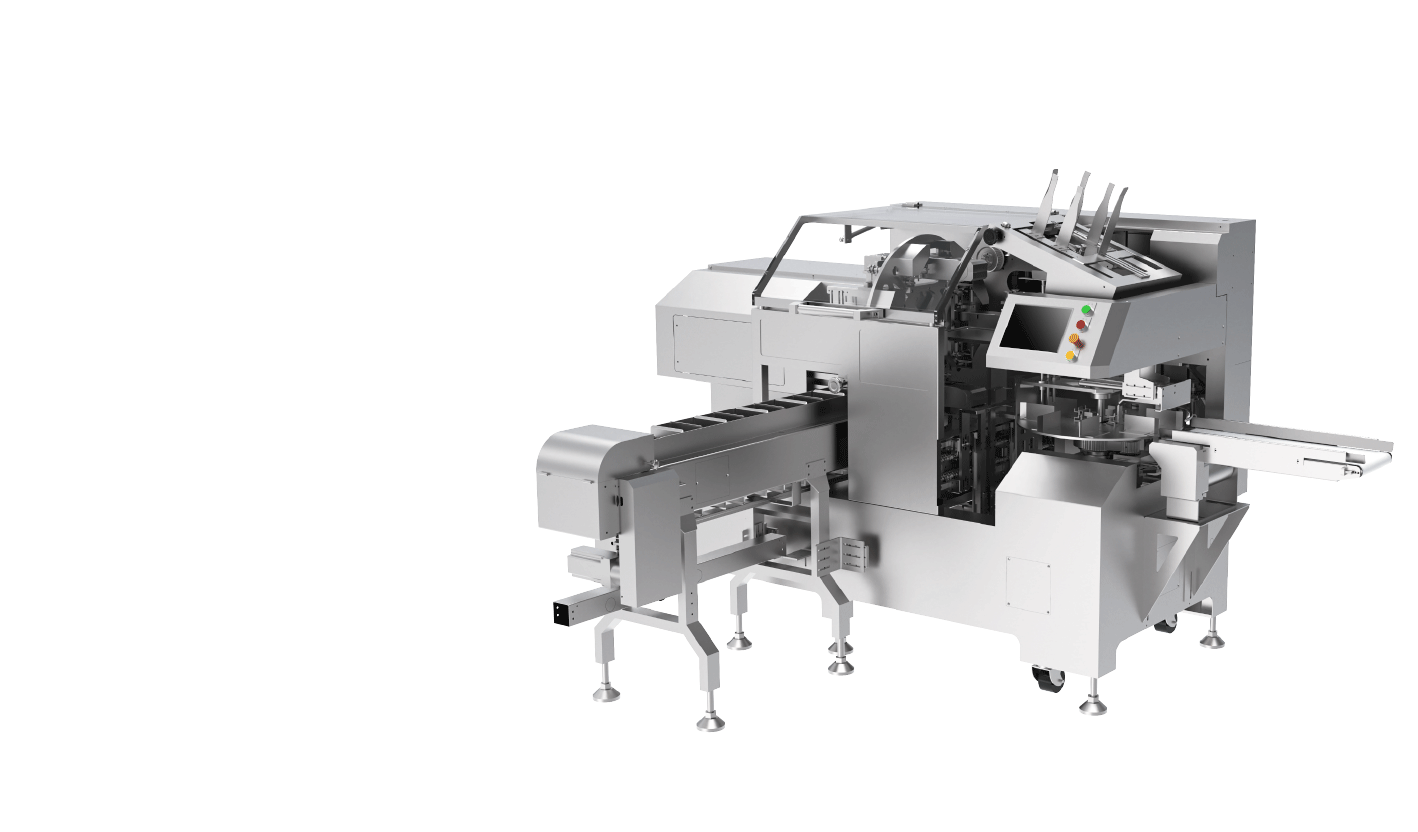
The installed line follows the bag-in-box sequence from empty case to sealed pack. Cases are erected and bottom-sealed at the head of the line and delivered to the bag inserting station, which places and cuffs a liner inside each box. The lined cases are then conveyed under the weighing and filling station, where powder is loaded into the bag with the liner containing dust and spillage. Once filled, the bags are closed, with air removed where the pack requires it, and the cases are sealed before moving to palletising. Every station is linked by powered conveyors and run to a common control speed, so a case progresses through the line without the batches and manual handling that had dominated the old operation.
High-speed insertion to keep pace with the filler
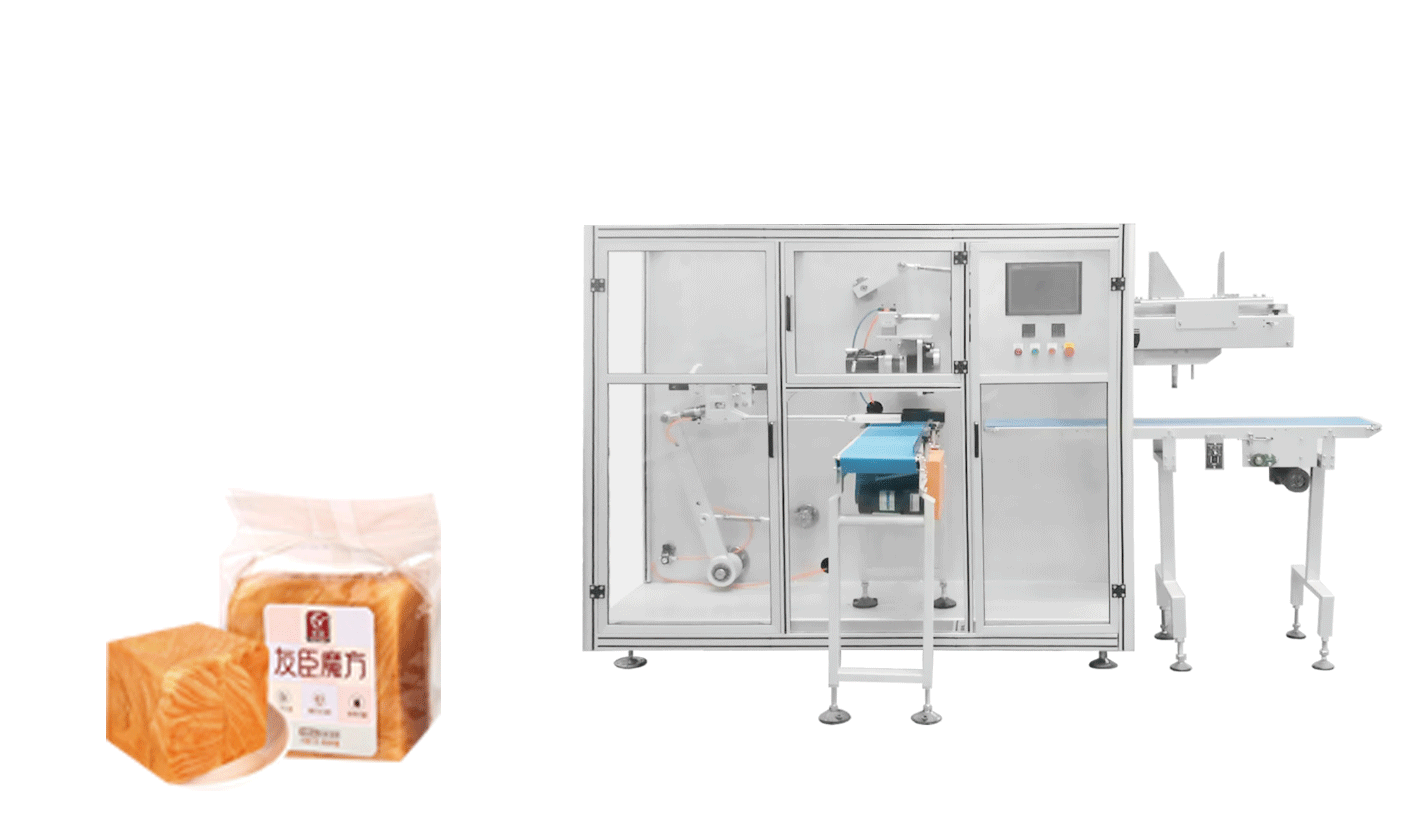
The critical station is the bag inserter, because it has to present a lined case every cycle without the missed or crooked picks that would stop the downstream weigher. The line uses a high-speed inserter of the TD100 high-speed bag inserter class, built around rapid pickup and positive bag opening, with the case erector and filling station integrated so that the supply of boxes and liners is continuous. The inserter works from the customer’s specified pre-made liners, which include the film structure required to protect dairy and nutrition powders from moisture, and it cuffs each bag over the case rim so the liner stays open and square during filling.
A large share of the engineering effort on this station went into the consumables. Powder products demand liners that open reliably and cuff cleanly, and the film gauge, slip additives and gusset style all affect how the machine picks and opens each bag. SunAura Packaging Machines’ team ran the acceptance programme on the customer’s actual liners rather than a convenient stock film, and tuned the pickup and opening to the specified gauge, because a bag that behaves differently from the trial film is the most predictable cause of missed picks after installation.
Filling, dust control and bag closing
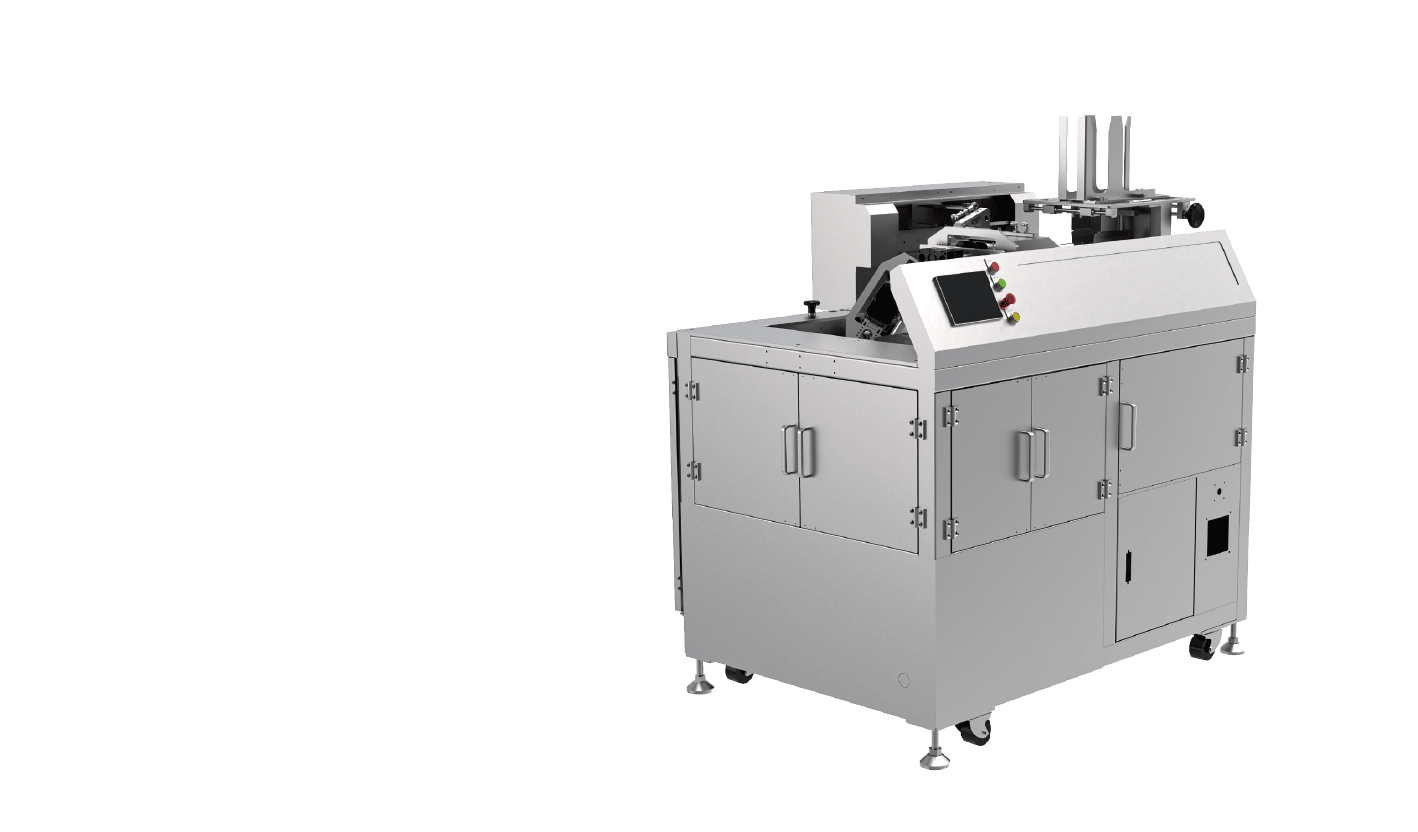
Lined cases pass under the weighing and filling station, where the powder is dosed into the bag. Keeping the liner cuffed and open during the fill contains the fine dust that dry dairy and protein products generate, which both keeps the pack and the case clean and stops powder reaching the case flaps where it would interfere with sealing. After filling, the bag is closed before the case is sealed; for packs that need the air removed to reduce bulk and protect the product, the line uses a vertical station with vacuum of the TD-200L vertical bag inserter with vacuum class, which evacuates the liner and closes it down around the powder. The choice between simple fold, heat seal and vacuum is set per product, with the program recalled for each format.
Where the line both places the liner and supports the loading action, an inserting packer of the TD-200A bag inserting packer class consolidates stations on the more compact parts of the range. The full process, including pre-made versus form-from-film liners, the different machine families and the bag and film specification, is set out in the technical guide to carton bag inserting and bag-in-box machines, which the project used as the basis for specifying the line.
Case sealing and the finished pack
Once the bag is closed, the case flaps are closed and the box is sealed, producing a stable bag-in-box pack ready for palletising and dispatch. The sealing station is specified to bond reliably on cases that have been handled in a dry but dusty filling environment, and the line confirms that the liner is tucked and clear of the flaps before closing, which prevents the bag being caught in the seal, a common fault when liners are oversized or not tucked by hand. Finished cases then move to palletising, with the load stabilised for the customer’s domestic and export distribution. For export packs that cross warm and humid climates, the moisture barrier in the liner and the integrity of the case seal are what protect the powder from caking and spoilage.
Engineering for food-grade operation
Dairy and nutrition production is a regulated, hygienic environment, and the line was specified for food-grade operation, with product-contact materials suited to dry food, guarding and surfaces that can be cleaned and do not hold powder residue, and dust control around the filling station. The film meets the relevant food-contact requirements for the customer’s markets, and the documentation supports the compliance and audit process that export suppliers work within. Building the hygienic and containment features into the line at the specification stage is cheaper than retrofitting guarding and extraction before an audit, and it gives the customer a pack that meets both domestic and destination-market expectations.
Acceptance, installation and training
Before shipment the line completed a factory-acceptance programme at SunAura Packaging Machines’ Qingdao works, run on the customer’s case formats and liners and with the filling, vacuum and sealing sequence verified for each product. On site, the work covered mechanical installation, integration with the customer’s existing filling and weighing equipment and downstream palletising, and trials under real production conditions with the actual powder. SunAura Packaging Machines’ commissioning engineers trained the operators and maintenance staff on format changeover, liner loading, the filling and closing sequence, routine servicing and fault recovery, and left documentation covering spares and maintenance. The line was handed over once it had held its throughput and pack quality over consecutive shifts across the full format range.
The moisture and barrier question for powder export
Dairy and nutrition powders are unforgiving about moisture. Even a small amount of water vapour reaching the product can cause caking, lumping, flavour changes and, in the worst case, spoilage, and a pack that crosses a warm, humid port or spends weeks in a container sees exactly the conditions that draw moisture through a weak liner. The bag is therefore the primary barrier, and its film structure is specified to the destination climate and shelf life. Ordinary single-layer polyethylene is adequate for short domestic distribution, but export and longer-life packs more often use co-extruded or laminated liners with a moisture-barrier layer, sometimes with the bag heat-sealed after filling and evacuated so that little headspace air remains. The case, by contrast, provides the mechanical strength and stacking performance; it is not relied on to keep moisture out.
This is why the inserter and the closing station matter as much as the filler. A liner placed crookedly, not cuffed during filling, or caught and punctured at the flaps defeats the barrier the film was chosen to provide, and a bag that is not properly sealed or evacuated leaves the powder exposed to the air inside the box. The automated line applies the same liner, the same closing sequence and the same case seal to every pack, and it checks that the bag is clear of the flaps before closing. Consistency here is the whole point: the barrier is only as good as the weakest pack in the shipment, and manual lining makes that weakest pack impossible to control.
Throughput and changeover across formats
For a producer serving both domestic and export accounts, the range of case formats is wider than a single-brand plant’s, and individual runs can be shorter, which puts a premium on quick changeover rather than only on peak speed. The line was specified around that campaign pattern. The inserter, filling and closing stations store recipes per product, recalling the liner, fill weight, vacuum and seal settings rather than having them dialled in by hand, and the physical change parts are kept to a minimum and stored on a dedicated board. A documented changeover procedure, confirmed during acceptance, sets out the sequence and the first-good-pack check, so the line is not released until a lined, filled and sealed case has been verified.
The throughput figures were recorded as sustained output over a production block across the main formats, not as the best minute of the trial, because that is the number the customer can plan against, including changeovers and the occasional stoppage. In operation the line comfortably covers current volumes with headroom for seasonal and export peaks, and it removes the intermediate queues that arose when lining, filling and sealing were separate manual steps. Shortening the time powder spends before it is sealed into its finished pack both protects the product and frees floor space around the filling area.
What the customer gains
The installation converts a manual, dust-producing packing operation into a repeatable line that places liners at the filler’s pace, contains the powder and closes and seals the pack consistently. For a dairy and nutrition exporter, that consistency protects against the costs that matter: moisture damage and caking when a liner is not properly placed or a case is not sealed, dust and spillage waste, and the throughput limit that manual lining places on the filling equipment. It also removes a repetitive and dusty task from the workforce and gives the customer a platform onto which additional case formats can be added through programs and, where needed, modest changes rather than a new line. Because the stations are linked and the recipes are stored, the knowledge of how to run each format no longer depends on a single experienced operator, which protects the customer as shifts and staff change.
The project is typical of the integrated, product-specific work that sits between SunAura Packaging Machines’ standard bag inserters and fully bespoke lines. Customers in food, dairy, ingredients, pet food and chemicals can review the equipment in the packaging machinery catalogue, and for layouts that combine insertion, filling, vacuum and sealing, the company builds custom bag-in-box lines through its custom packaging machine service.
About SunAura Packaging Machines
SunAura Packaging Machines, headquartered in Qingdao, Shandong, manufactures end-of-line packaging equipment for food, dairy, beverage, pharmaceutical, cosmetic, chemical and industrial customers worldwide, including carton bag inserters and bag-in-box systems, case erectors and sealers, cartoners, case packers, shrink and flow wrapping machines, strapping equipment, pallet wrappers and palletising robots, together with integrated turn-key lines. The company supports export customers from specification and factory acceptance through installation, training and after-sales service. Dairy, nutrition and bulk dry-food producers planning a bag-in-box line are invited to contact the applications team with their case and liner details, throughput and products.
By the SunAura Packaging Machines project and communications team. For details of this installation or to discuss a similar automated bag-in-box packing line, contact the applications engineering team in Qingdao.

James oversees the engineering architecture for full end-of-line projects: defining machine sequence, conveyor layout, line balance, footprint and expansion capacity before individual machines are ordered. He reviews customer specifications, production rates and facility constraints, and signs off on the engineering drawings and acceptance tests. His articles take the system-level view a procurement manager needs.
See Full Bio ›