

SunAura Packaging Machines has opened an expanded regional spare-parts and commissioning hub in Southeast Asia, the company announced this week, shortening lead times for parts and factory-acceptance support across a market where its installed base of case erectors, case sealers, strapping machines and complete end-of-line cells has grown steadily over the past three years. The hub consolidates inventory that was previously dispatched from the company’s Qingdao headquarters and adds locally based commissioning engineers trained on the full SunAura Packaging Machines range, from standalone sealing equipment to integrated wrapping, strapping and palletising systems.
The move is the second regional support expansion SunAura Packaging Machines has announced this year, following the reinforcement of its spare-parts and commissioning coverage across Latin America. Together, the two regions account for a growing share of the company’s export business, and both share a practical problem: packaging lines are capital equipment that run three shifts, and a line that waits two weeks for a seal head, a feed wheel or a control board is not a line that is producing. The new Southeast Asia hub is designed to close that gap by holding the parts that fail or wear in normal service close to the factories that need them.
What the hub will stock
The regional inventory is built around the components that SunAura Packaging Machines’ service records show are actually requested, rather than a generic catalogue of spares. For case sealing and erecting machines, that means tape-head assemblies, drive belts, feed rollers, photo-eyes and the wear parts in the folding and bottom-sealing sections. For strapping equipment, it means seal knives and heaters, feed wheels, track sections and tensioning components. For stretch wrapping and pallet cells, it means carriage parts, film-stretch assemblies and sensors. Control-system spares — inverters, PLC and HMI components, and the boards that handle line signalling — are also held regionally, because an electronic fault is the one failure that can stop an otherwise mechanical line outright.
“A customer running an e-commerce fulfilment line does not care where a part was manufactured when the line is down,” said a SunAura Packaging Machines service manager. “They care whether the part is on a shelf in the region and whether an engineer who knows the machine can fit it tomorrow. This hub is organised around that question.” The company is also publishing region-specific parts lists so maintenance teams can identify components by machine model rather than describing them over email, which reduces the single most common source of delay in spare-parts supply — ordering the wrong part.
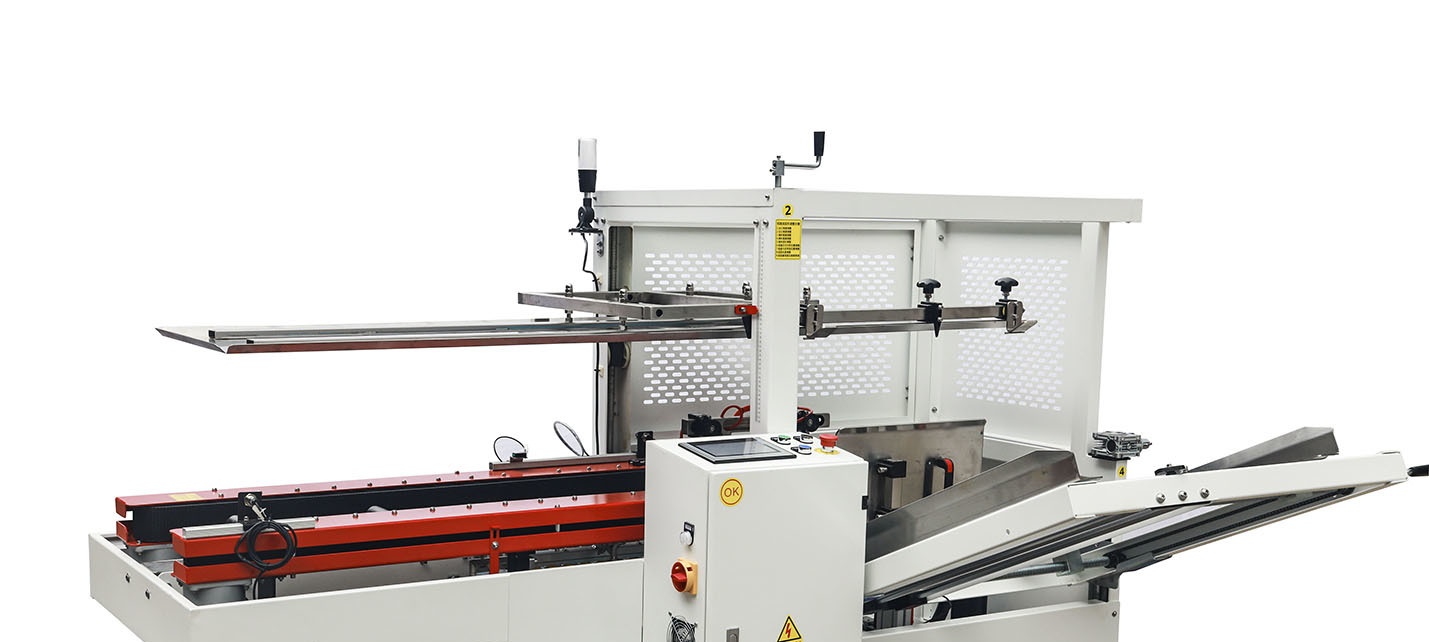
Local commissioning and factory-acceptance support
Beyond inventory, the hub adds commissioning engineers based in the region, which addresses a cost that buyers of imported lines have always absorbed: the travel and schedule associated with bringing a commissioning team from the factory. Installing a complete end-of-line cell is not finished when the containers arrive; the machines must be positioned, levelled, connected to power and air, run through dry cycles, commissioned with the customer’s actual cases and products, and signed off. Local engineers reduce the lead time before that work begins and make follow-up visits — for a second production line, a change in case format, or a scheduled audit — far quicker to arrange.
The engineers are trained on the same equipment SunAura Packaging Machines builds in Qingdao, including the machines that are most often integrated into regional projects: high-speed fold case sealers, unmanned strapping machines, and combined sealing-and-strapping cells. For turn-key projects, the company can now combine factory-built equipment, regional parts and local commissioning into a single support package rather than treating after-sales as a separate, ad-hoc conversation.
Why Southeast Asia, and why now
The region has become an important market for packaging automation for several converging reasons. Food, beverage, personal-care and household-goods manufacturers across Southeast Asia have expanded domestic production for large and growing populations, while export-oriented processors in several countries serve markets in North America, Europe and the Middle East that demand consistent, palletised, container-ready shipments. E-commerce fulfilment has grown particularly quickly, driving demand for random case sealers, automatic erectors and lines that handle mixed SKUs rather than a single uniform box. At the same time, labour availability for the repetitive work of manually forming, sealing and strapping cases has tightened, which shifts the economics toward machines that an operator supervises rather than manually works.
SunAura Packaging Machines’ installed base in the region now spans food and beverage plants, e-commerce distribution centres, household-goods factories and export processors. The company reports that many of these customers started with a single machine — a case sealer or a semi-automatic strapper — and later added erection, strapping, wrapping and palletising as the returns from automation became clear. The hub is a response to that installed base reaching the scale at which regional support, rather than long-distance support, is the level of service the equipment warrants.
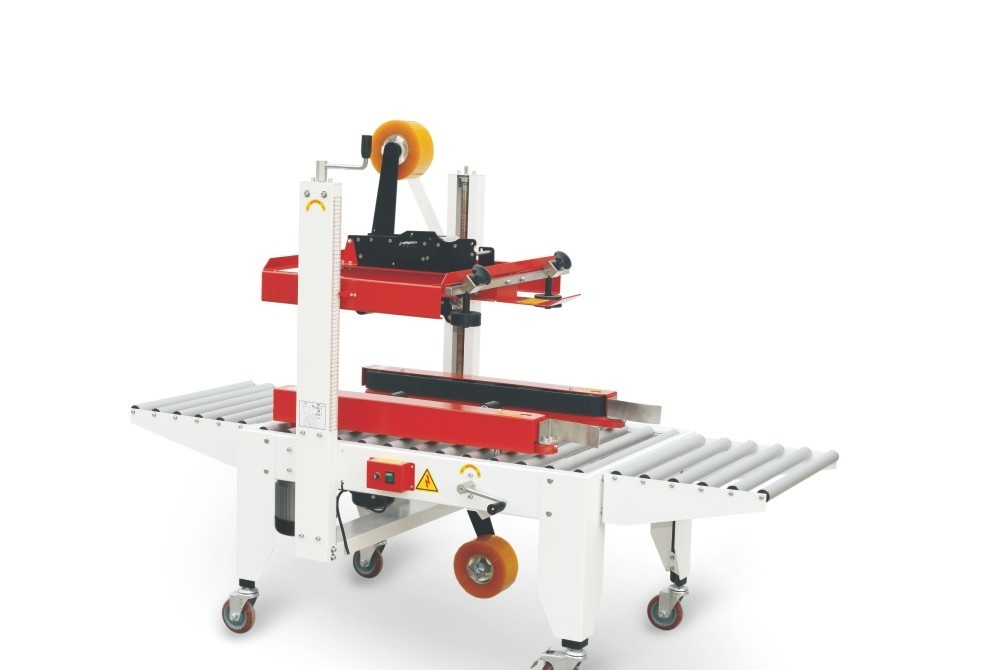
Preventive maintenance and the Help Center
The company is pairing the hub with wider use of its online Help Center, which publishes maintenance intervals, fault-resolution guidance and a ticketing system for the machines it supplies. The economics are straightforward: a scheduled maintenance visit that replaces a worn heater or feed roller before it fails costs a fraction of an emergency stop on a running line, and the parts for that scheduled work can be staged at the regional hub in advance. SunAura Packaging Machines is encouraging customers to move from reactive, breakdown-driven service — calling only when a machine stops — to a documented maintenance calendar aligned to their shift pattern and throughput.
For high-throughput cells, the company offers maintenance contracts in which engineers inspect the line at set intervals, check seal quality and tension calibration, verify safety devices and replace consumable wear parts before they cause downtime. The contracts are built around the actual duty of the line: a machine sealing a few hundred cases a shift has different requirements from one running continuously at high speed. Customers with existing machines can also use the hub to retrofit options that were not in the original specification, from additional guard packages to upgraded controls.
Spare-parts lead times, in practical terms
The clearest benefit of the hub is measured in time. Under the previous arrangement, a critical part could require identification, quotation, dispatch from Qingdao, export handling, international freight and customs clearance before it reached the plant — a timeline measured in days to weeks depending on the component and the destination. With common wear and critical spares held in the region, the target is dispatch on the same or next business day, with delivery to many markets in the region within days rather than weeks. Non-stocked or major components continue to be supplied from the factory, but the parts that cause the majority of unplanned stops are precisely the ones now held closest to customers.
The company stressed that the hub does not change how machines are built or supported technically; every machine is still manufactured and tested in Qingdao before shipment. What changes is the service layer around the equipment after installation — the speed of parts, the proximity of engineers, and the ease of scheduling the work that keeps a line running.
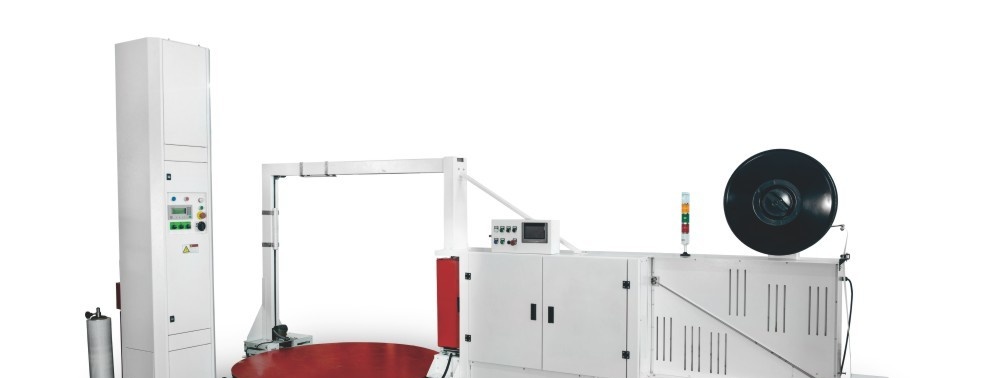
What customers should do now
SunAura Packaging Machines is advising customers in the region to take three steps. First, record the exact model and serial number of each machine and identify the wear parts specific to their duty, so a request can be matched to the shelf inventory immediately. Second, review the maintenance intervals in the Help Center and align a service calendar with the regional team, staging consumable parts before they are needed. Third, for planned expansions or new lines, involve the applications and commissioning team early so that installation, training and sign-off can be scheduled around the project rather than arranged after delivery.
For buyers evaluating packaging equipment, the hub also changes the after-sales calculation that should accompany any machine purchase: the relevant question is not only the price and speed of a case sealer, strapper or end-of-line cell, but whether the parts and the expertise to keep it running are available in the region. SunAura Packaging Machines’ regional support package — local inventory, local commissioning engineers, and a documented maintenance route — is now part of how the company quotes lines into Southeast Asia.
Operator training and the faults that should never leave the plant
Parts and engineers address the failures that reach the machine, but a large share of service calls are resolved faster than any part can ship because they are not mechanical failures at all. They are operational: a case format changed without the guides being reset, a tape head loaded incorrectly, a photo-eye blocked by dust or a loose flap, a strap coil fitted with the wrong orientation, or a machine left in a manual mode after a changeover. SunAura Packaging Machines’ regional engineers report that a meaningful proportion of early-life calls on newly installed lines fall into this category, and they decline sharply after the customer’s operators and maintenance staff have been trained on the actual machine.
For that reason the hub also organises training, delivered at commissioning and available as a follow-up, that covers three groups separately. Operators learn how to run the line, perform changeovers between case sizes, load consumables correctly, and respond to the alarms that mean a simple reset rather than a service call. Maintenance technicians learn how to diagnose faults from the controller, inspect and replace the wear parts now stocked regionally, and verify seal quality and strap tension. Supervisors learn how to read the line’s performance and when to schedule preventive work rather than waiting for a stop. The company finds that plants which invest in this training reduce both unplanned downtime and the number of parts ordered unnecessarily — a saving that, like the hub itself, compounds over the life of the equipment.
A regional example: the cost of a stopped line
The economics behind the hub are easiest to see in a concrete scenario. Consider an export-oriented food processor running a line that erects, packs, seals and straps cases of shelf-stable products at a rate measured in cases an hour across multiple shifts. When a sealing-machine component fails and no spare is held locally, the line stops while the part is identified, ordered and shipped. Even if the replacement arrives within a week — an optimistic timeline across borders — the lost production is counted in shifts, downstream orders are delayed, and in a peak season the shortfall can reach customers. By contrast, when the same wear part is held at the regional hub, a technician replaces it within hours and the line resumes, often before the production schedule is materially disturbed.
That arithmetic, repeated across an installed base, is what justifies holding inventory closer to customers. A seal head or control board on a shelf represents working capital; the same component in a container or held at the factory represents a line that is not running. SunAura Packaging Machines’ approach is to stock against its own service history — the parts that demonstrably fail in normal operation — rather than against a theoretical list, which keeps the inventory focused on the components that actually protect uptime.
Looking ahead
The company indicated that further regional support announcements are possible as installed bases in other export markets reach comparable scale, though it did not specify timelines or locations. The pattern is consistent across its expansions: parts and engineers follow the installed equipment, and service capacity is added where the volume of running machines justifies a local presence rather than where it is cheapest to place a warehouse.
For SunAura Packaging Machines, the Southeast Asia hub is both a service investment and a statement about how the company approaches export machinery — that a packaging line is a multi-year relationship rather than a single shipment, and that the value of the equipment is measured in uptime over that relationship. Customers and prospective buyers in the region can contact SunAura Packaging Machines’ support team for parts availability, maintenance planning and commissioning schedules, and review the supported equipment in the products hub.

Michael designs automated palletizing stations and ties upstream case or bag flow to downstream stretch wrapping. His work spans conventional layer palletizers, robotic arm cells, conveyor routing, safety fencing and handover logic between machines. He writes about palletizer selection, load stability and how an end-of-line sequence should be balanced.
See Full Bio ›