

“Servo-driven” has become one of the most loaded words in packaging-machinery sales literature. Every machine claims to be servo, but the term means very different things on a one-axis trim wrapper versus a five-axis full-servo cartoner. For purchasing managers deciding whether to pay the servo premium, the real question is narrower and more useful: where do servo axes actually earn their keep on end-of-line equipment — case packers, cartoners and palletizers — how do you select the servo components, and what payback do you get? This guide from SunAura Packaging Machines answers all three, grounded in how we spec flow wrappers, cartoners, and end-of-line machines for our customers.
What a servo-driven machine actually is
A traditional mechanical machine uses a main motor and a network of gears, cams, chains, and shafts to coordinate every motion. Change a product size, and a mechanic swaps cams and re-times shafts by hand. A servo-driven machine replaces many of those mechanical linkages with individual servo motors — each with its own drive, feedback encoder, and motion controller — that are electronically coordinated. The motions that used to be a machinist’s art become parameters in the HMI.
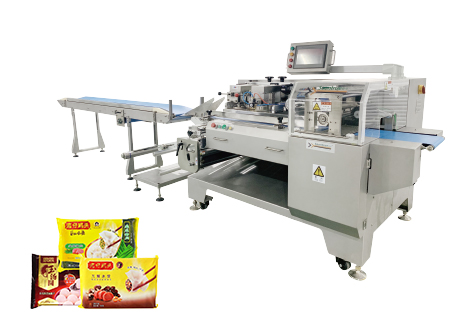
The critical distinction is the number of axes. A “1-servo” or “2-servo” wrapper typically adds servo control to the film puller and carriage while keeping a mechanical main drive. A “3-servo” or “5-servo” machine controls the infeed, film, sealing, and discharge independently. A “full-servo” or “7-servo” reciprocating machine coordinates end-seal, cross-seal, infeed, and discharge fully electronically. More axes means more flexibility — and a higher price. The buying skill is matching the axis count to your actual needs, not buying the maximum axis count on offer.
The benefits that justify the premium
Servo axes earn their keep in five measurable ways:
- Speed with control. Servo axes accelerate and decelerate precisely, letting machines reach higher cycle rates without the vibration and shock of mechanical drives. A well-tuned full-servo wrapper seals cleanly at speeds that make mechanical machines jam.
- Repeatability. An encoder holds position to fractions of a millimeter cycle after cycle. The same seal dwell, the same film length, the same product pitch — pack after pack, shift after shift. That consistency reduces giveaway, rejects, and customer complaints.
- One-touch changeover. When recipes are stored in the HMI, changing from one SKU to another is a button press: servo positions, speeds, and seal profiles recall automatically. What took 30–45 minutes of mechanical adjustment can drop to 5–10 minutes.
- Flexibility across SKUs. Because motions are software-defined, the same machine handles a wider range of product sizes and shapes without dedicated mechanical change parts. That matters enormously for co-packers and multi-SKU brands.
- Energy and maintenance. Servo motors draw power only when moving and remove the wear parts — cams, chains, timed shafts — that demand periodic replacement and re-timing. Uptime improves and energy use often drops versus a mechanically driven equivalent.
The combination of these benefits is why high-speed, multi-SKU lines almost always choose servo architecture, and why our own SW-60E full-servo reciprocating wrapper and SZ-580 5-servo flow wrapper are built around distributed servo axes.
Component selection: how to choose the servo parts
Not all servo packages are equal, and the component choices determine whether the promised speed actually holds up. When comparing servo machines, look past the word “servo” and ask these specific questions:
- Motor and drive brand. Recognized, globally supported servo brands mean spare parts, firmware, and engineers you can actually reach. An anonymous off-brand servo is a future downtime risk. Ask which brand is fitted and where regional support exists.
- Motor sizing and margin. Motors should be sized with 20–30% margin above peak load, not barely adequate. An undersized servo runs hot, faults, and shortens its life. Ask about the duty cycle and peak torque rating.
- Feedback resolution. Encoder resolution determines position accuracy. Higher resolution buys tighter registration and cleaner seals — important for pre-printed film and close tolerance products.
- Gearbox and transmission. Servo axes still need precise, low-backlash gearboxes and belts. Cheap transmissions negate an expensive motor.
- Controller and programming. A modern motion controller with coordinated electronic cams lets the machine adapt quickly. Confirm the HMI stores recipes and exposes fault diagnostics rather than hiding them.
These same principles apply beyond flow wrappers. A servo cartoner such as the ZH-250P automatic servo cartoning machine uses servo axes to control carton erection, product insertion, and closing with repeatable precision — the component selection logic is identical even though the motion is different.
Where servos pay off — and where they are overkill
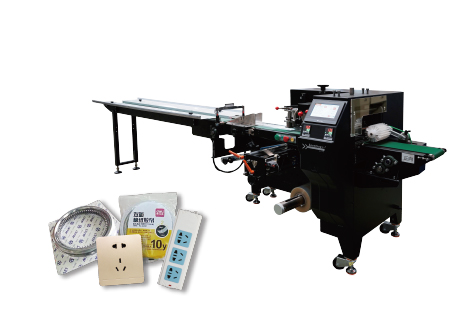
The servo premium is not always justified. A single-SKU line running one product all day on a machine sized for exactly that product may never recover the extra cost, because it never changes over and never pushes speed. In that case a well-built intermittent or partially servo machine is the rational buy.
Servos pay off strongly when:
- You run many SKUs and change over frequently — changeover time is the biggest saving.
- You need high speed with consistent seal quality on difficult products or films.
- You expect product evolution over the machine’s life, so software flexibility protects your capital.
- Uptime is expensive enough that reduced maintenance and diagnostics justify the premium.
- You serve contract-packaging or private-label customers whose product mix changes every season, where the machine that adapts fastest wins the order.
If you are evaluating whether a servo machine fits your product mix, our guide on selecting a horizontal flow wrapper for food and cosmetic production walks through matching servo count to SKU complexity.
The ROI analysis: does the premium pay back?
Model the servo decision against four cost streams. Take a multi-SKU packaging line running 2 shifts, with 8 SKUs and an average of one changeover per shift.
| ROI factor | Mechanical / basic machine | Full-servo machine |
|---|---|---|
| Capital premium (indicative) | Baseline | +25–40% |
| Changeover time | 35 min × 2/day × 250 days = 292 h/yr | 8 min × 2/day × 250 days = 67 h/yr |
| Recovered production labor (@$36/h) | Baseline | 225 h saved × $36 ≈ $8,100/yr |
| Downtime & rejected packs | Higher jams & re-timing | Lower; typical 3–6% throughput gain |
| Maintenance (wear cams, re-timing) | Higher recurring cost | Lower over 5 years |
Run a simple payback. Suppose the servo premium is USD 12,000 and the annual benefit from changeover labor, extra throughput, and reduced maintenance is USD 9,000–14,000. The payback lands in 10–16 months — comfortably within the machine’s life. Even on a conservative benefit estimate, a multi-SKU, high-changeover line pays the servo premium back well before the first major service interval. On a single-SKU line, the same math may not close, which is why matching the architecture to your operating pattern matters more than chasing the most axes.
For a broader view of how servo automation fits into the five-year economics of a line, our analysis of total cost in packaging operations uses the same loading approach. Remember that the biggest hidden cost of an underspecified mechanical machine is rarely the maintenance bill — it is the lost throughput and the product a faster, more flexible servo line could have run but could not.
Servo vs pneumatic vs mechanical: know the three families
To select well, it helps to separate the three actuator technologies you will see quoted, because they are often mixed up in sales materials. Pure mechanical machines use cams and gears and are cheap but slow to change. Pneumatic machines use air cylinders for motion — low cost and simple, but imprecise, noisy, air-hungry, and difficult to control at high speed. Servo machines use closed-loop electric motors with position feedback, giving the precision and programmability the other two cannot match. Many modern machines are hybrids: pneumatics for simple up-and-down motions, servos for the motions that matter — film pull, seal timing, product pitch. When a supplier says “servo-driven,” ask exactly which axes are servo and which are pneumatic or mechanical, so you are not paying a full-servo price for a hybrid.
This distinction matters because pneumatic cylinders wear seals, consume compressed air continuously, and cannot easily be repositioned between recipes. A motion that “should be servo” but is done pneumatically will show up as slow, imprecise changeovers and recurring air leaks. Inspect the machine layout and ask for an axis list: which movements are servo, which are pneumatic, and why the designer chose that split.
Energy, cleanliness, and the modern production line
Two quieter benefits of servo architecture are increasingly decisive in regulated and cost-conscious plants. First, energy: servo motors draw torque and current only when they are actively moving, and regenerative drives can recover energy during deceleration. A mechanically driven machine with a constantly running main motor and belt drives often wastes energy as heat and friction. Over a ten-year operating life, the energy gap on a multi-shift line is real money.
Second, cleanliness and consistency. Servo machines have fewer exposed lubricated wear parts, simpler guarding, and smoother motion that reduces product dust and film shedding — a genuine advantage in food and cosmetic environments where airborne dust and oil are problems. The same closed-loop accuracy that improves seals also reduces film giveaway and product over-pack, which compounds the material saving every pack. These benefits are harder to put in a spreadsheet than changeover minutes, but they accumulate steadily across every cycle.
Programming and support: the capability behind the cabinet
A servo machine is only as flexible as the engineers who can reprogram it. Before you buy, confirm how recipes are edited on the HMI: can your own technician create a new SKU recipe in minutes, or does every change require a factory engineer on a plane? A well-designed servo machine exposes positions, speeds, seal temperatures, and dwell times as clear, named parameters. A poorly designed one buries them in low-level code. Ask for a demo of creating a new recipe and adjusting a seal profile, and confirm the motion controller brand is one your maintenance team can source parts and training for.
Remote diagnostics close the loop. Modern servo machines can upload fault logs and performance data so the supplier can diagnose a fault before a technician travels, cutting mean time to repair dramatically. This is also where a defined spare-parts strategy matters: servo drives and motors are not consumables, but sensors, belts, and seals are. Build the servo buying decision around a five-year support picture, not just the cabinet you see on the floor.
When you compare proposals, ask each supplier to list the servo brand, motor frame size, encoder resolution, and the controller model in writing. This single request separates vendors who genuinely build servo machines from those who bolt a motor onto a mechanical drive and call it “servo.” A supplier who answers these specifics confidently is one whose machine you can support for a decade; one who deflects the question is selling marketing, not engineering.
Common servo-selection mistakes
Three errors waste the servo investment. First, buying the highest axis count without needing the changeover flexibility, and then amortizing an expensive machine that never changes over. Second, trusting the word “servo” without confirming motor/drive brand, sizing margin, and encoder resolution — a cheap servo is worse than a good mechanical drive. Third, ignoring programming support: a servo machine is only as flexible as the team that can re-program it, so confirm recipe editing is simple and documented. SunAura Packaging Machines specifies named servo brands, sized with margin, and trains customers to edit recipes themselves, so the flexibility you paid for is actually usable.
Conclusion: buy servos where changeover and speed matter
Servo-driven packaging machines are not universally better — they are a targeted upgrade. They pay for themselves on multi-SKU, high-speed, fast-changeover lines through shorter changeovers, higher effective speed, repeatable seals, and lower maintenance. On a single-SKU dedicated line, the premium may not return. The buying discipline is to confirm the component brand and sizing, model the changeover and throughput savings honestly, and match the axis count to your product mix. SunAura Packaging Machines builds servo flow wrappers, cartoners, and end-of-line equipment around recognized servo components and helps customers size the right axis count for their SKU reality. To discuss servo configuration for your products, request a servo-machine consultation with SunAura Packaging Machines, or use our RFQ checklist to put the component and sizing questions into your next quotation.

Sarah evaluates packaging consumables against machine capability: film gauge and prestretch, PP versus PET and steel strapping, core width, tension settings and corner board use. Her articles connect film and band choice to machine settings, freight damage rates and total cost per pallet, rather than recommending the cheapest consumable on paper.
See Full Bio ›