
A pallet stretch wrapper looks like a simple machine: a load spins on a turntable while film wraps around it. Yet the difference between a wrapper that uses 90 grams of film per pallet and one that uses 250, or between a load that survives an ocean container and one that arrives with shifted boxes, is decided by machine type, pre-stretch ratio, film choice, and how the top and bottom are secured. This guide compares the three mainstream designs — turntable, rotary arm, and orbital/ring — with real speed ranges, load limits, price bands, and the questions to ask your supplier before ordering.
SHORT ANSWER
Stable, static loads under ~2,000 kg at up to ~35 pallets/hour: a turntable wrapper at $9,000–$28,000. Light or unstable loads that cannot spin, or 40+ pallets/hour: a rotary arm wrapper at $35,000–$90,000+. Long, odd-shaped, or cold-room loads: orbital/ring wrappers at $40,000–$120,000+. The cheapest mistake is not buying the wrong machine — it is buying one without powered pre-stretch, which wastes film every single shift.
1. Which buyer are you?
Stretch wrappers are matched to load weight, load stability, and pallets per hour (PPH). Estimate your tier before comparing brochures.
| Buyer tier | Throughput | Load type | Typical budget |
|---|---|---|---|
| Low (warehouse, manual) | 5–20 PPH | Stable loads, under 1,200 kg | $9,000–$18,000 |
| Mid (distribution, 1–2 shifts) | 20–45 PPH | Mixed loads, up to 1,800 kg, variable heights | $18,000–$45,000 |
| High (DC, food, export) | 45–120+ PPH | Heavy, unstable, or cold-room loads; line integration | $45,000–$120,000+ |
2. The three machine types, side by side
The structural choice drives everything else: how heavy a load you can wrap, whether it can spin, and how fast the line runs.
| Type | How it works | Best for | Speed / load | Price band | Main limitation |
|---|---|---|---|---|---|
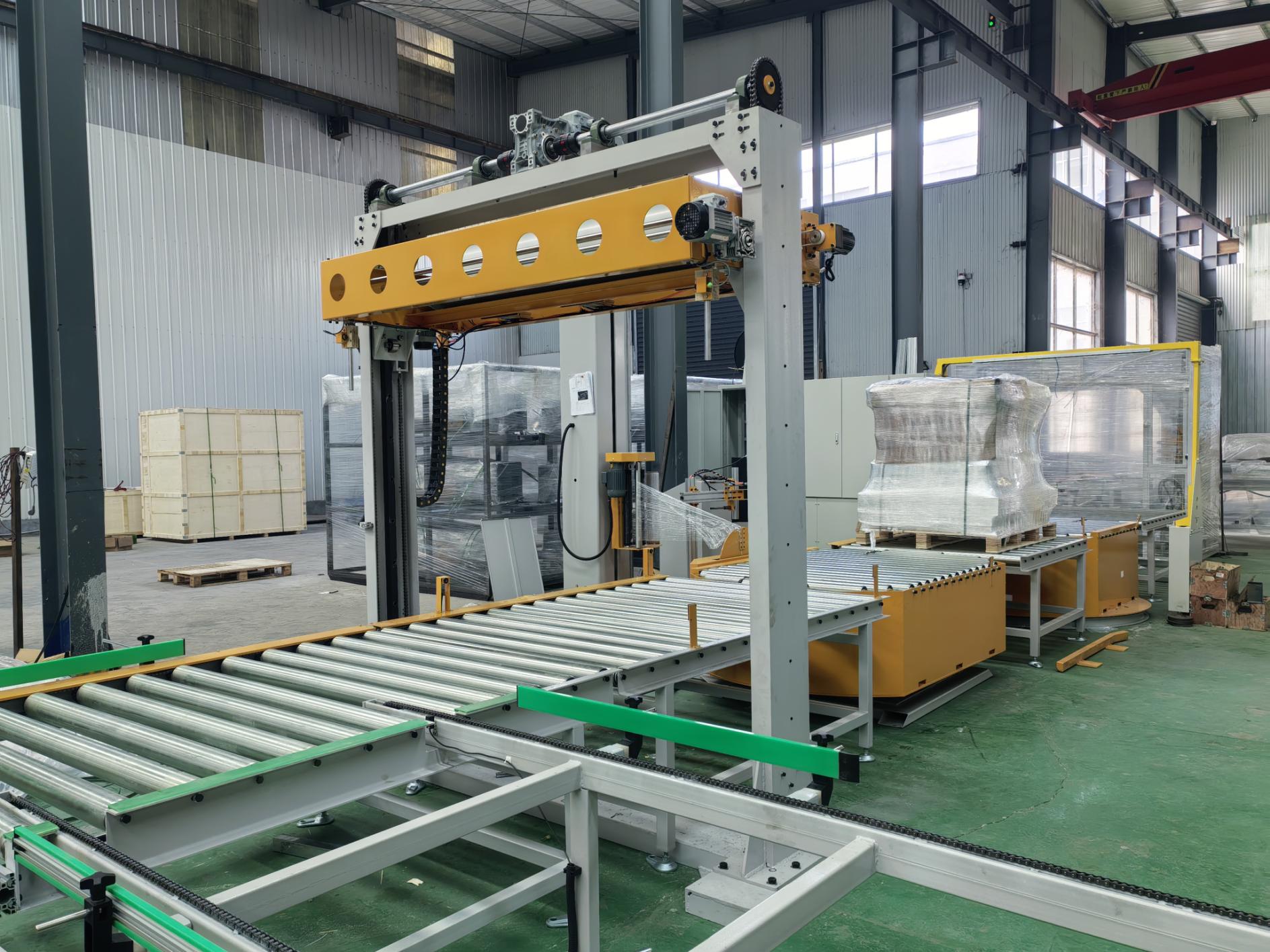
| Turntable wrapper | Pallet sits on a rotating disk; film carriage rises and lowers on a fixed mast. | Stable, square loads; warehouses and light DCs. | Up to ~35–40 PPH; load 1,000–2,000 kg. | $9,000–$28,000 | Spinning unstable or very tall loads can shift; heavy loads stress bearings. |
| Rotary arm wrapper | Load stays still; a film arm rotates around it on a fixed overhead track. | Light, fluffy, unstable, or tall loads; high-speed DCs. | Up to ~60–120 PPH; load weight limited only by conveyor. | $35,000–$90,000+ | Heavier capital; needs floor space for the arm track; requires precise mast alignment. |
| Orbital / ring wrapper | Film ring orbits horizontally around a long product or a pallet on a through-conveyor. | Long loads (lumber, doors, coils), odd shapes, cold rooms. | Product-dependent; medium throughput. | $40,000–$120,000+ | Niche; overkill for standard square pallets. |
3. Film and pre-stretch: where the real money is saved
Machine type decides throughput; film and pre-stretch decide your operating cost. A good wrapper at 250–300% pre-stretch can cut film cost by half compared with a basic stretch.
| Option | Pros | Cons | Best fit |
|---|---|---|---|
| Cast hand/extended-core film, no pre-stretch | Cheapest machine, simple. | 200–300 g film per pallet; poor containment; wasteful. | Seasonal peaks, under 10 PPH only. |
| Turntable with driven pre-stretch carriage (200–300%) | Stretches film before it hits the load; big film savings; repeatable tension. | Higher machine price; needs film that can actually stretch. | Most DCs and export lines. |
| Blown (high-strength) film | Stronger at thinner gauges; better for sharp edges. | Noisier, less puncture-resistance than premium cast on light loads. | Heavy or sharp-edged loads. |
| Recycled / recyclable-content film | Meets retailer sustainability asks. | Consistency varies by batch; verify stretch performance; see what actually works in 2026. | EU / UK / corporate ESG targets. |
4. Configuration matching: tell your supplier these numbers
| Parameter | What to specify | Why it matters |
|---|---|---|
| Load W × L × H range and weight | Min/max pallet size and gross weight. | Sets turntable diameter, load capacity, and mast height. |
| Pallets per hour (PPH) | Peak sustained, not average. | Determines turntable vs rotary arm vs dual-station. |
| Load stability | Square boxes, bags, loose parts, coils. | Unstable loads force rotary arm, not turntable. |
| Film width and gauge | 500 mm vs 450 mm; 17–23 micron cast. | Film carriage and roll holder must match your consumables. |
| Top platen / bottom wrap / rim wrapping | Needed for tall or light loads. | Top pressure plate stops loads lifting off the turntable. |
| Environment | Ambient, freezer, dust, outdoor canopy. | Drives motor rating, IP, and stainless components. |
5. Price bands and total cost of ownership
Reference FOB-China bands in 2026; final price depends on mast height, conveyor integration, guarding, and controls.
| Configuration | Machine price | Typical film use / pallet | Best value when |
|---|---|---|---|
| Semi-auto turntable, no pre-stretch | $9,000–$16,000 | 200–300 g | Low volume, seasonal peaks. |
| Auto turntable with driven pre-stretch | $16,000–$28,000 | 90–140 g | Most standard distribution lines. |
| Fully automatic rotary arm | $35,000–$90,000 | 80–130 g | Unstable loads, high PPH, cold rooms. |
| Orbital / ring wrapper | $40,000–$120,000+ | Product-dependent | Long or odd-shaped loads only. |
Payback math: film at $3/kg, 100 pallets/day. A no-pre-stretch machine using 250 g vs a pre-stretch machine at 110 g saves roughly $42/day in film alone — about $10,000–$12,000/year — before counting fewer load-damage claims. That difference often pays back a $10,000 machine upgrade in under 14 months. For vendor vetting, see our pallet wrapping machine manufacturer guide; for the sourcing process itself, our buying from China guide covers lead times and inspection.
6. The 10 questions to ask before you order
- What pre-stretch ratio does your carriage actually deliver on my film — 200%, 250%, or 300%?
- What is the maximum load weight, pallet size, and load height for the standard mast?
- Does the turntable/arm reach my required PPH on my tallest load, not brochure speed?
- Is top platen, bottom wrap, and photo-eye height detection included or an add-on?
- How is the load squared and aligned before wrapping (conveyor taper, side guides)?
- What film width and core size does the holder accept, and can it be changed later?
- What guarding and safety (light curtains, e-stops, fence) comes standard for CE?
- How does it integrate with my conveyor and upstream palletizer signals?
- Which wear parts (belt, rollers, brake) need replacement, and what is the local stock?
- Can you send a video of my load type running before shipment?
Put these into a proper spec sheet with our packaging machine RFP template.
7. Five common buying mistakes
8. Scene-by-scene recommendation
| Your situation | Recommended wrapper |
|---|---|
| Stable square-box loads, 20–40 PPH, domestic shipping | Automatic turntable with 250% driven pre-stretch, ~$16,000–$28,000. |
| Light, unstable, or tall loads; ocean export; 40+ PPH | Rotary arm wrapper with top platen and conveyor integration. |
| Long products: lumber, doors, panels, coils | Orbital / ring wrapper on a through-conveyor. |
| Freezer / cold-room loads | Rotary arm (load cannot spin easily), with stainless chain and low-temp film. |
| Temporary peak season, under 15 PPH | Semi-automatic turntable now; upgrade to pre-stretch automation when volume stabilizes. |
Once the wrapper is running, keep it that way with our preventive maintenance checklist and 15 common machine problems. For how the wrapper hands off to downstream loading, see the end-of-line integration guide.
Frequently asked questions
How much does a pallet stretch wrapping machine cost in 2026?
Semi-automatic turntables run $9,000–$16,000; automatic turntables with driven pre-stretch $16,000–$28,000; fully automatic rotary arm wrappers $35,000–$90,000+; orbital/ring wrappers $40,000–$120,000+, before conveyor integration and guarding.
Turntable or rotary arm stretch wrapper — which do I need?
Use a turntable for stable, square loads under roughly 2,000 kg and 40 pallets/hour. Use a rotary arm when loads are light, unstable, tall, or cannot spin, or when throughput exceeds 40–60 pallets/hour.
What pre-stretch ratio should I look for?
Look for a driven carriage delivering at least 200–250% pre-stretch on cast film. It reduces grams of film per pallet by roughly half and usually pays back within a year on multi-shift lines.
How many pallets per hour can a stretch wrapper handle?
Semi-automatic turntables handle 15–25 pallets/hour depending on operator loading; automatic turntables up to ~35–40; rotary arm wrappers range from 45 to over 100 pallets/hour with automatic conveyor loading.
Can a stretch wrapper be integrated with a palletizer and conveyor?
Yes. Plan conveyor height, photo-eye signals, load squaring, safety fencing, and reject stations at quoting; the wrapper must talk to upstream palletizer and downstream transport logic. See our end-of-line integration guide.

Sarah evaluates packaging consumables against machine capability: film gauge and prestretch, PP versus PET and steel strapping, core width, tension settings and corner board use. Her articles connect film and band choice to machine settings, freight damage rates and total cost per pallet, rather than recommending the cheapest consumable on paper.
See Full Bio ›