
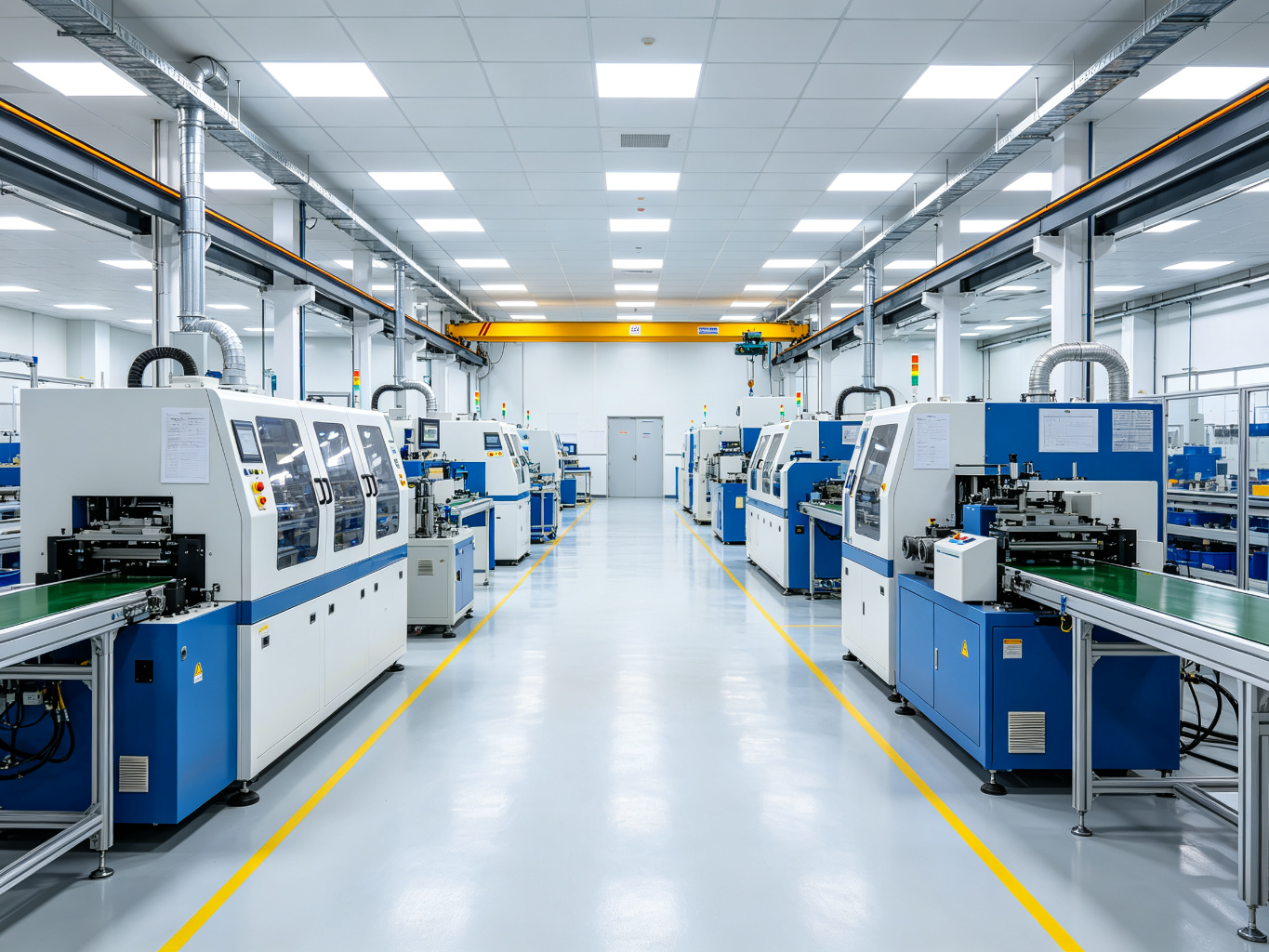
TL;DR. A semi-automatic case sealer runs $1,800–$6,000 for plants under 500 boxes/hour; a fully automatic inline sealer runs $12,000–$45,000 for 1,000–3,000 boxes/hour; and a random-case, automatic-size-adjusting (adaptive) sealer runs $35,000–$90,000 for mixed-SKU e-commerce lines. Choose semi-automatic if you have one operator per station and under 500 cph; choose inline automatic if you feed a case packer or palletizer; choose adaptive only if you run more than three different box sizes per shift.
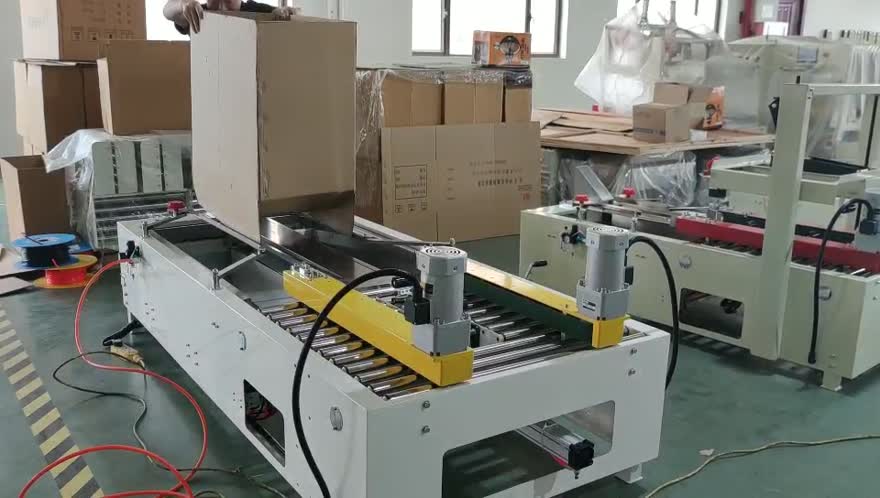
Why the case sealer is the most under-specified machine on your line
The case sealer is the last machine that touches the box before it hits the pallet. If it leaks tape, misses a flap, or crushes a weak RSC (regular slotted container), the failure shows up downstream as a damaged pallet, a rejected load, or a customer complaint — not at the sealer itself. Buyers routinely pick a sealer on price alone and then spend the next two years chasing tape blowouts, flap misalignment, and compressed-air bills they never budgeted for.
PMMI’s 2025 Operations and Technology Survey found that 38% of end-of-line downtime events trace back to case sealing and case erecting, more than palletizing and labeling combined. PMMI attributes this to undersized tape heads, mismatched tape width, and operators who treat the sealer as a consumable rather than a process machine.
Three machine categories, three buyer profiles
Case sealers fall into three structural families. They are not interchangeable, and the right one depends on your boxes per hour, box-size variety, and how much labor you want to spend.
| Type | Typical speed | Box size range | Operator required | Price band (2026) | Best fit |
|---|---|---|---|---|---|
| Semi-automatic table-top | 5–15 cpm | Fixed or narrow range | 1 per station | $1,800–$6,000 | Job shops, SKU-lite warehouses, under 500 cph |
| Fully automatic inline (fixed size) | 15–50 cpm (900–3,000 cph) | One or two set sizes | 0 (integrated) | $12,000–$45,000 | Dedicated production lines feeding a case packer or palletizer |
| Adaptive / random-size automatic | 15–40 cpm | Wide range, auto-adjusts | 0 | $35,000–$90,000 | E-commerce, 3PL, mixed-SKU fulfillment |
The price bands above reflect typical 2026 street prices for machines built in China and South Korea sold into North America and Europe; European-built units from companies like industry suppliers tracked by Smithers run 1.5–2.5× higher. Treat these as planning numbers, not quotes.
Tape vs. hot melt: the first decision most buyers get wrong
Case sealers close the box one of two ways: pressure-sensitive tape (BOPP or PVC) or hot-melt adhesive. The choice is driven by box strength, line speed, and downstream labeling, not by which option your supplier stocks.
Pressure-sensitive tape
- Pros: No warm-up, no glue pot, easy tape changeover, works in cold storage down to –18°C if you use freezer-grade tape.
- Cons: Tape cost runs $0.01–$0.03 per case for BOPP, and up to $0.06 for reinforced water-activated tape; flaps must be clean and square.
- Best for: Standard RSC boxes, e-commerce, lines under 30 cpm, cold-chain applications.
Hot-melt glue
- Pros: Faster at high speeds (40+ cpm), stronger seal on heavy or irregular boxes, tamper-evident, lower per-case consumable cost at high volume.
- Cons: 15–30 minute warm-up, weekly nozzle cleaning, energy draw 2–4 kW, glue must be matched to board temperature and humidity.
- Best for: Heavy industrial boxes, 30+ cpm dedicated lines, export loads that survive container vibration.
Smithers’ 2024 report on adhesive packaging materials notes that water-activated tape (WAT) is regaining share in e-commerce because it is tamper-evident and prints directly, but it requires a WAT-compatible head and a wetting system — not a retrofit on a BOPP machine. Smithers on packaging materials.
Sizing the machine: five parameters to confirm before you ask for a quote
Suppliers will send a one-page spec sheet that looks identical across brands. The real differences hide in five parameters. Get these in writing before you compare quotes.
- Minimum and maximum box L×W×H in millimeters. Measure your actual smallest and largest box, including overhang for the product inside. Add 10 mm clearance on each dimension.
- Flap style. RSC (regular slotted), HSC (half slotted), or full-overlap? Bottom-fold vs. top-fold? A machine tuned for RSC will jam on a full-overlap box.
- Case weight. Heavy cases (25 kg+) need powered side belts, not friction rollers. Light e-commerce boxes (under 1 kg) need gentle infeed to avoid flap crushing.
- Throughput in cases per minute, not boxes per hour. Suppliers quote theoretical max; ask for sustained throughput at 80% duty cycle with your actual boxes.
- Air consumption. Pneumatic flap folders use 30–80 L/min at 6 bar. If your plant air is undersized, the sealer will be the machine that trips first.
Decision framework: which type fits your operation
Pick semi-automatic if…
- You run under 500 boxes per hour.
- You already have an operator at the case-packing station who can fold flaps by hand.
- Your box sizes change weekly, not hourly.
- Your budget is under $8,000 and you cannot justify a 12-week lead time.
Pick fixed-size automatic inline if…
- You run 800–3,000 boxes per hour on a dedicated product line.
- You feed the sealer from a case erector or robotic case packer and want zero manual intervention.
- You have two or fewer box sizes per shift and can accept a 15–30 minute changeover.
- You need to integrate with a palletizer or stretch wrapper downstream.
Pick adaptive / random-size if…
- You run more than three box sizes per shift, typical of e-commerce and 3PL.
- You cannot afford to stop the line to change guides.
- Your labor cost justifies the $35,000+ price tag — typically only when an operator would otherwise spend 2+ hours per shift on changeover.
Total cost of ownership: the number buyers forget
PMMI’s TCO benchmarking guidance for end-of-line equipment suggests budgeting 1.6–2.2× the purchase price over five years for consumables, maintenance, and downtime. For a $20,000 inline sealer, that is another $12,000–$24,000 you should plan for.
| Cost line | Semi-auto | Inline auto | Adaptive auto |
|---|---|---|---|
| Purchase price | $1,800–$6,000 | $12,000–$45,000 | $35,000–$90,000 |
| Annual tape/glue consumables | $1,500–$4,000 | $6,000–$18,000 | $8,000–$25,000 |
| Annual maintenance & parts | $300–$800 | $1,500–$4,000 | $3,000–$8,000 |
| Labor per year | 1 FTE × shift | 0.1 FTE (oversight) | 0.1 FTE |
| Typical payback vs. manual sealing | n/a | 18–30 months | 24–40 months |
Five mistakes that show up six months after install
- Buying the cheapest tape head. A $200 tape head that jams once per shift costs more in downtime than a $1,200 head that runs for three years.
- Ignoring box compression strength. Sealing pressure that is fine on a 32 ECT box will crush a 200# test export box. Ask for adjustable pressure.
- No side-belt drive on heavy cases. Friction rollers slip on wet or over-packed boxes. Powered side belts are non-negotiable above 15 kg.
- Under-sizing the compressor. Pneumatic flap folders draw spikes; a 20 L tank is not enough.
- Buying adaptive when you only have two box sizes. You will pay $50,000 for a feature you never use. A fixed-size machine with quick-change guides is 40% cheaper.
What to ask the supplier before you issue a PO
- What is the sustained throughput at 80% duty cycle with my actual box samples?
- Can you send a test video of my box size running on your floor?
- What is the lead time for tape heads, drive belts, and photo-eyes? Are they in stock locally?
- What is the warranty — 12 months parts only, or 24 months with labor?
- Do you have a reference customer in my industry within 200 km?
- What is the changeover time between my smallest and largest box?
- What is the noise level in dB(A)? Will it meet OSHA 85 dB(A) without hearing protection?
- What communication protocol does the machine speak — Ethernet/IP, PROFINET, or just dry contacts?
- What is the mean time between failures (MTBF) you will put in writing?
- Do you provide a spares list priced for the first two years?
SunAura’s recommendation by scenario
For an e-commerce fulfillment center shipping 200–800 orders per hour across 10+ box sizes, an adaptive random-case sealer with a top-and-bottom tape head is the right call — the changeover labor savings pay back the premium in under three years. For a food or beverage plant running one SKU on a dedicated line at 1,200 cph, a fixed-size inline hot-melt sealer integrated with the case packer is the most reliable choice. For a job shop or contract packer under 300 cph, a $3,000 semi-automatic table-top sealer is the rational starting point; upgrade when you can measure a payback.
If you want a sizing worksheet for your own box range and throughput, contact our applications engineers with your smallest and largest L×W×H and your boxes-per-hour target — we will send back a recommended configuration and budget band within one business day.
Frequently asked questions

David leads our case sealing and cartoning engineering team. Over 14 years he has specified, installed and commissioned hundreds of random-size case sealers, top- and side-loading cartoners, and automatic case packers for food, household and industrial product lines. He writes buying guides and troubleshooting articles around seal quality, tape and hot-melt glue selection, and carton throughput limits.
See Full Bio ›