

TL;DR. This technical note explains why a strap that looked tight when the machine released the bundle can be loose by the time the load reaches the warehouse or the truck. It covers band elastic recovery and creep, how the load settles and compresses after strapping, pallet and board deflection, seal joint efficiency, temperature effects, and the checks that tell you whether a loose strap comes from band choice, tension setting or the load itself. It stays within case bundling and pallet unitizing with PP and PET band, and does not cover stretch film wrapping, shrink hooding or upstream case forming.
By Sarah Liu, Materials Engineer — Film & Strapping Technology. Sarah works through band grade, tension behavior and unitizing load performance for case bundling and pallet securing.
A strap does not hold a load by being pulled tight for one second. It holds the load over hours and days of storage, handling and transit, against a load that keeps shifting and settling after the seal is made. When straps loosen, the usual first suspect is the machine tension setting, but a large share of loose-band problems trace to how the band relaxes, how the load compresses, and how efficiently the seal joint keeps the tension. The strapping machines lineup covers the case bundling and pallet unitizing hardware; this note focuses on the material and load behavior behind the tension number.
What happens in the first minutes after the seal
When the tensioner pulls the band tight and the seal head joins the ends, the band is stretched to a tension set on the machine. The bundle or pallet at that moment is pressed together by that tension. Over the next minutes and hours, three things reduce the effective tension in the band. The band itself relaxes from its stretched state, the load settles into a tighter or different shape, and any give in the pallet or boards takes up part of the tension. The strap that remains tight at the sealing head may have lost a noticeable share of its hold by the time the load moves.
- Band relaxation: the stretched band slowly recovers part of its elongation, dropping tension even if the load does not move.
- Load settling: cases, bags or bundles shift, compress and interlock after being strapped, reducing the volume the band has to hold.
- Structure deflection: pallet decks, boards and dunnage flex under tension, giving the band slack to take up.
Separating these causes matters because the fix differs. Band relaxation points to band grade or tension setting; load settling points to layer pattern and dunnage; structure deflection points to pallet stiffness and strap placement. A loose strap blamed on weak machine tension may actually be a load that compressed 20 mm after sealing, which no tension increase on its own will cure.
Band elasticity, creep and what PP versus PET give up
Polypropylene (PP) and polyester (PET) band behave differently under sustained tension. PP stretches more readily and recovers some of that stretch elastically, but it also relaxes more over time, especially in warmth. PET is stiffer, holds tension longer and suits heavier loads, but it is less forgiving on sharp edges and can concentrate stress at contact points. The band’s elongation at break, its tension retention over time and its response to temperature are grade properties, not just a function of band width and thickness.
Creep is the slow, continued stretch of the band under a steady load. A band that creeps under the load tension elongates over time and leaves slack around the settling load. A grade band with controlled elongation handles creep better, but even a good band creeps more at elevated temperature. A warehouse or truck exposed to sun in summer raises band temperature, speeds relaxation and lowers holding tension; the same strap can hold securely in winter and loosen in a hot container. Matching band grade to load weight, climate and storage duration is part of sizing the unitizing system, not an afterthought.
Band width and thickness set the strength envelope, but they do not by themselves set tension retention. A wide thick band on a soft, settling load can still go slack because the load compressed; a narrow band on a rigid, stable load can hold well. The tension the machine applies has to sit between two limits: low enough not to crush the product or board, high enough to retain hold after relaxation and settling. Over-tensioning causes its own damage, discussed later in this note.
Load settling and compression after strapping
Most loads are not as rigid as they look when they first come off the line. Layered cases settle as flaps and board faces bed against each other. Bagged products shift and lean as the contents move. Bundles of profiles or components nest together under pressure. Once the band pulls these layers together, the load volume shrinks slightly, and the band that matched the original volume now has slack for that shrinkage. The stiffer and more interlocked the load pattern, the less it settles; a loosely stacked or irregular load can settle enough to turn a tight strap into a loose one.
Layer pattern affects how much settling to expect. Interlocked brick or pinwheel patterns lock cases to each other and resist vertical and horizontal shift; column stacks leave vertical seams that can slide. Bags need layer interleaving and often a top load or cover to keep the upper rows from leaning. For pallet loads, stretch film or corner boards may share the containment job with the straps, so the band does not carry the entire load stability on its own. The seal head and tension system guide covers how the tensioner and weld head deliver and hold band tension on the machine side.
Pallet, board and dunnage deflection
The band wraps the load and often passes under or around the pallet. A deck that flexes, boards that bend under strap pressure, or slip sheets and dunnage that compress all give the band a little extra length to loosen into. Light or worn pallets flex more under tension, so a strap that appears tight on a rigid block pallet can ride slack on a softer timber deck. Board compression at the strap line is another give point: a band pressed hard into a corrugated face crushes the board slightly, and as that board creeps under pressure the band settles looser.
Strap placement controls how much deflection matters. Bands that cross the pallet deck near support points, rather than spanning an open bay, pull against stiffer structure. Placing bands where the load is fullest and the pallet is best supported reduces the deck’s ability to flex under tension. Edge protectors spread the band pressure over a wider board area, preventing the strap from cutting into the corrugated face and limiting local board crush. On heavy export pallets, the strap path, pallet grade and dunnage are engineered together rather than chosen separately.
Seal joint efficiency: where tension actually escapes
The band may hold its tension well, but if the seal joint does not match band strength, tension releases at the joint. Seal joint efficiency compares the strength of the welded or joined band to the band’s nominal breaking strength. A clean friction-weld or hot-melt joint on the correct band grade holds a high share of band strength; a poorly heated, dirty or misaligned joint slips or parts at a fraction of that strength. A joint that slips slightly under load lets the band creep open over time, showing up as a loose strap even where the band material itself is sound.
- Band and seal match: the seal head type and temperature must suit the band material; mixing PP band with settings tuned for PET, or vice versa, weakens the joint.
- Joint cleanliness: film residue, dust or moisture on the band surface reduces weld grip; dirty band feeds into a weak seal.
- Joint alignment: overlapping ends must seat squarely in the seal chamber; a twisted or offset joint does not weld across the full band width.
- Joint inspection: periodic checks of seal appearance and a pull test confirm the joint is holding near band strength rather than slipping under load.
Joint efficiency is the reason band grade and machine setup are evaluated together. A stronger band on a weak joint does not deliver the strength on paper; the system is only as strong as the seal that retains it. Seal head maintenance, band feed alignment and weld temperature are covered in the tension system reference linked above.
Over-tensioning and the damage it causes
The instinct when straps loosen is to turn the tension up. That trades one problem for another. Excess tension crushes corrugated boards, indents product faces, bends pallet decks and pulls bands into sharp edges where they snap. On soft or packaged goods, over-tension deforms the pack before it improves containment. A strap that cuts into the board loses grip as the board crushes, so higher tension does not always mean a tighter long-term hold; it can mean faster local damage and a joint carrying more load than it was set for.
The right tension holds the layers together without deforming the product or the packaging. It is set against the lightest board in the load, the most delicate product face, and the band’s own tension range. On mixed loads, where a sturdy outer case sits beside a softer inner carton, the tension has to suit the weaker component. Edge protectors and a firm layer pattern often allow a secure hold at a lower strap tension than brute tightening, because the load stays shaped instead of shifting against the band.
Diagnosing a loose strap on the floor
When a load arrives with slack bands, work through the causes in order rather than raising tension first. Check whether the load settled or shifted: look for leaning layers, gaps between cases, or product that moved away from the band. Check the seal joint for a clean weld and any slip or partial weld. Check the pallet and board under the strap for flex or crush. Measure band temperature if the load sat in heat, and note the band grade and width against the load weight.
- Load settled and shifted: improve layer pattern, add dunnage or top restraint; the band cannot hold a load that keeps moving.
- Joint slipped or weak: review seal temperature, band cleanliness and alignment; retest joint strength.
- Pallet or board crushed under the strap: lower tension, add edge protection, move the band to a stiffer support point.
- Band relaxed in warmth: review band grade and tension retention for the storage climate and duration.
- Band snapped at an edge: add edge protection or switch to a band and width suited to sharp corners.
A tension check on a sample bundle, repeated after the load has sat for the period it would spend in storage, shows how much tension is retained over real time rather than at the sealing moment. That retained-tension number is the useful one for sizing band grade and tension setting; the instantaneous reading at the head only describes the moment of seal.
Matching the machine to the retention requirement
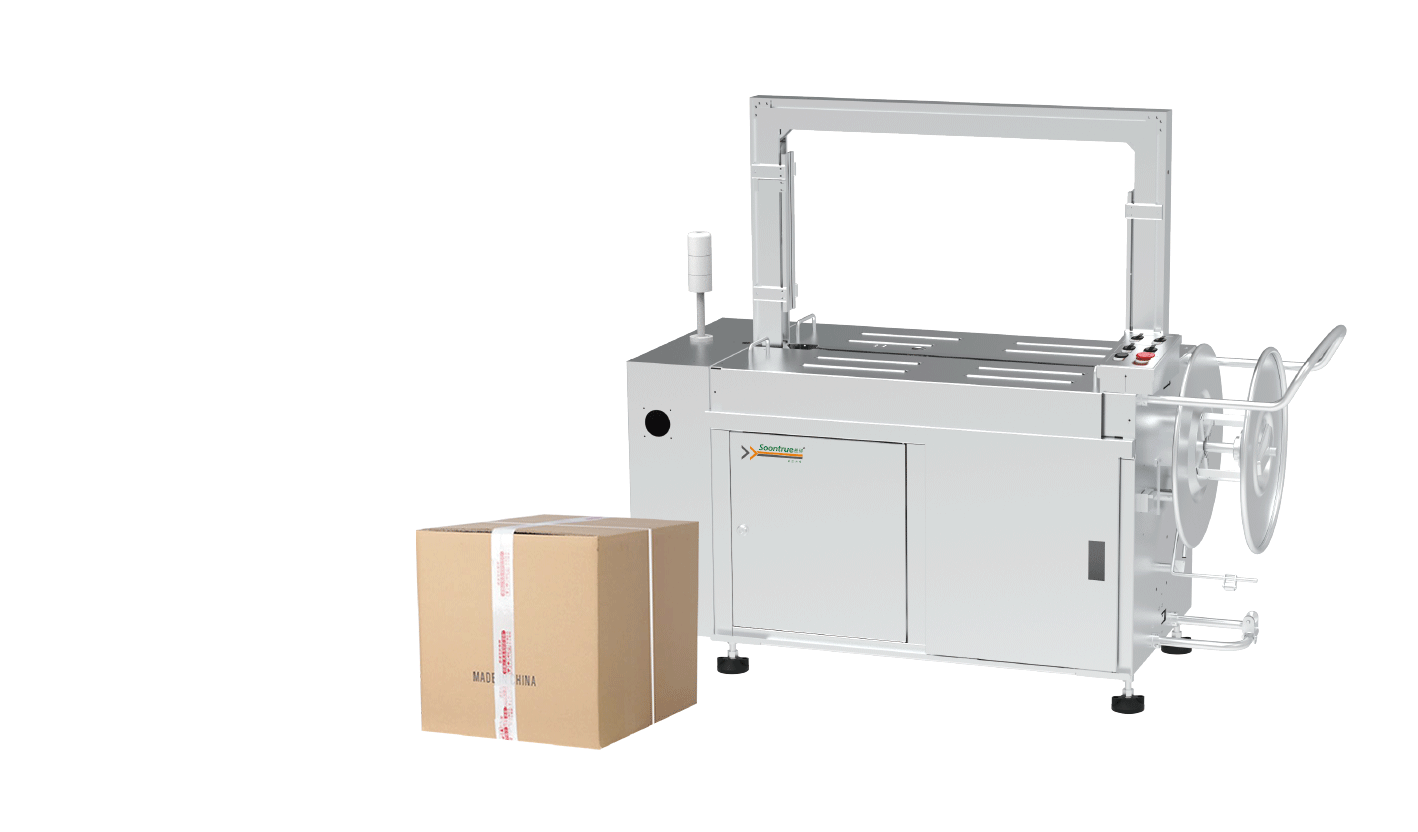
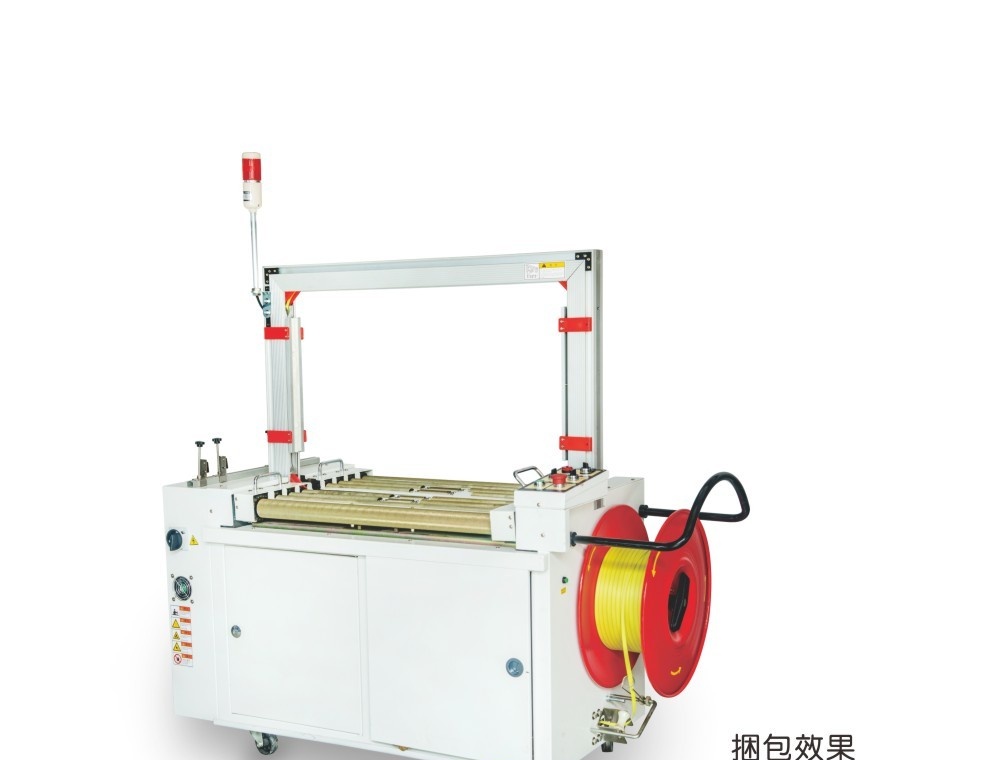
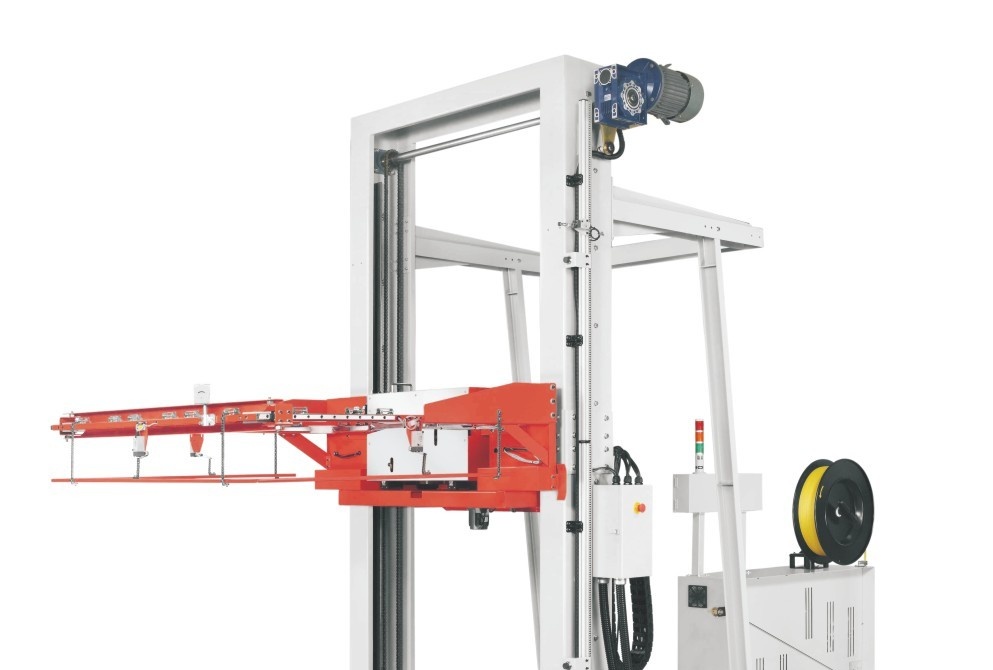
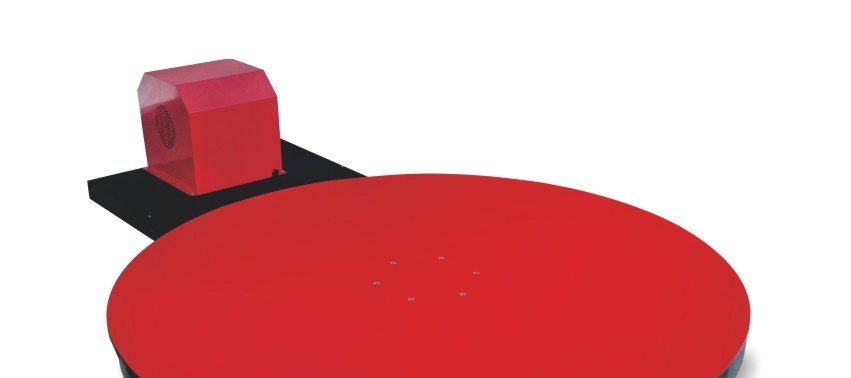
Case bundling and pallet unitizing use different machine formats, and the tension control that matters differs with them. Inline case strapping machines such as the KZ-102 fully automatic strapping machine and the automatic unmanned strapping machine apply band around bundled cases at line speed, where consistent tension per cycle and quick band feed matter. Pallet units such as the HE80A horizontal pallet strapping machine and the FR1800 rotary unit handle heavier loads where band grade, seal joint and strap path carry more of the containment load.
When specifying a machine for a new load, bring the product dimensions and weight, the pallet type, the expected storage time and climate, and the band grade planned for use. Those inputs determine whether a standard PP band at moderate tension suffices, or whether PET band, edge protection and a heavier pallet strap path are warranted. The strapping lineup on the product site lists the case bundling, unmanned inline and pallet unitizing formats with their load and band ranges, so the machine can be matched to the retention requirement before a line is built.
Loose straps are rarely a single-cause fault. They come from the band relaxing, the load settling, the structure flexing and the joint releasing, often in combination. Working through those causes on sample loads, and measuring retained tension after a realistic settling period, gives a tension and band choice that holds through storage and transit rather than looking right for the first minute after sealing.

Sarah evaluates packaging consumables against machine capability: film gauge and prestretch, PP versus PET and steel strapping, core width, tension settings and corner board use. Her articles connect film and band choice to machine settings, freight damage rates and total cost per pallet, rather than recommending the cheapest consumable on paper.
See Full Bio ›