
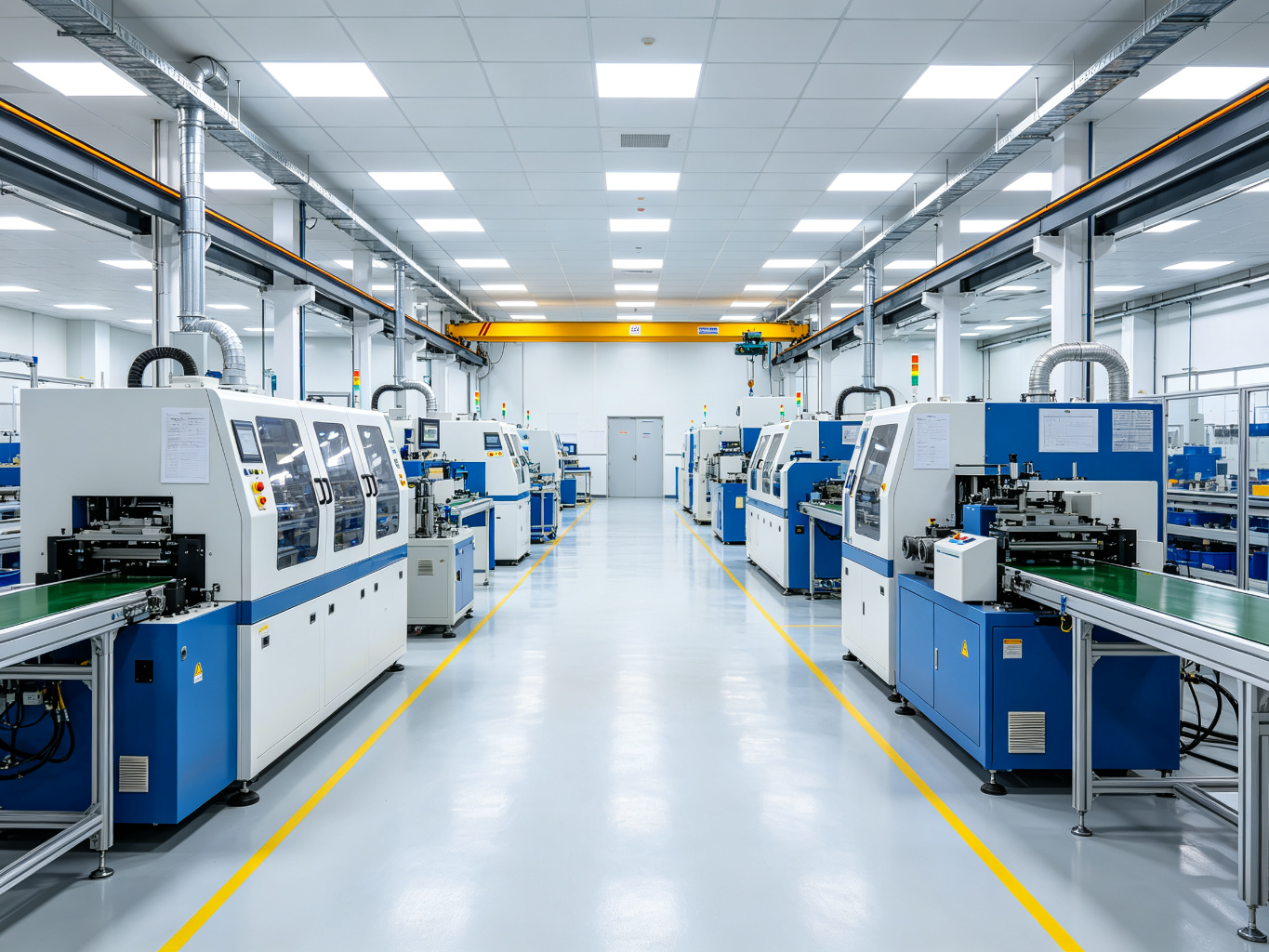
“How much does an end-of-line packaging line cost?” is the question plant managers ask most often, and the answer is never a single number. A line that erects cases, packs them, seals them, conveys them, palletizes them and stretch-wraps them for dispatch can be built for anywhere from under USD 50,000 to over USD 800,000 depending on speed, automation level, guarding, integration scope and where you buy it. This guide lays out the 2026 budget bands for semi-automatic, automated and robotic end-of-line configurations, walks through what drives the price up or down, and shows how to think about labor-replacement payback so you can write a realistic RFQ rather than guessing.
What does a complete end-of-line packaging line actually include?
Before you price anything, define the workflow. A complete end-of-line typically runs seven stations in sequence. Skipping or combining stations is where most budget mistakes happen.
| Station | What it does | Typical equipment |
|---|---|---|
| 1. Case erect | Pulls flat blanks, squares them, seals bottom flaps | Semi-auto case sealer/erector, automatic vertical erector, hot-melt erector |
| 2. Pack / load | Places products into the case or wraps blank around them | Manual pack bench, drop packer, side-load packer, wraparound packer, robotic pick-and-place |
| 3. Case seal | Closes top flaps, applies tape or hot glue | Uniform or random case sealer, hot-melt sealer |
| 4. Convey | Moves cases between stations, accumulates, indexes | Slat, belt, chain or modular belt conveyor; accumulation table; right-angle transfer |
| 5. Palletize | Stacks cases onto pallets in a defined pattern | Manual palletizing, semi-auto palletizer, gantry palletizer, robotic palletizer |
| 6. Pallet wrap | Stretch-films or shrink-wraps the load for transport | Semi-auto turntable wrapper, rotary-arm wrapper, orbital wrapper, stretch-hood |
| 7. Dispatch | Labeling, checkweighing, scanning, strapping, load out | Print-and-apply labeler, checkweigher, barcode scanner, strapper |
According to PMMI’s 2026 State of the Industry report, the U.S. packaging machinery market reached an estimated USD 11.7 billion in shipment value in 2025, with food accounting for roughly 44%. The report’s central finding for buyers is that case erecting, packing and sealing are now converging into integrated cells rather than being bought as standalone machines, and robotic palletizing is moving into plants that used to staff those stations manually. That convergence changes how you should price: buying seven standalone machines and integrating them yourself usually costs more than buying one engineered cell from a single vendor, because the integration engineering is hidden in the package price.
What budget bands should I plan for — semi-automatic, automated, robotic?
The numbers below are 2026 market reference ranges in USD, FOB a Chinese CE-certified builder unless noted. They are not quotes. Installed prices in North America or Western Europe typically run 40–80% higher once you add duty, freight, integrator, guarding and local commissioning.
| Configuration | Typical speed | What is included | FOB China reference band (USD) | Installed NA/EU reference band (USD) |
|---|---|---|---|---|
| Semi-automatic line | 5–12 cases/min | Semi-auto case erector + manual pack bench + semi-auto case sealer + gravity roller conveyor + semi-auto turntable stretch wrapper | $35,000–$75,000 | $70,000–$140,000 |
| Automated (mechanized) line | 15–30 cases/min | Automatic vertical erector + drop or side-load packer + random case sealer + powered conveyor with accumulation + gantry or low-level in-line palletizer + semi-auto or automatic stretch wrapper | $120,000–$280,000 | $220,000–$480,000 |
| Robotic / high-integration line | 30–80 cases/min | Servo erector or wraparound packer + robotic pick-and-place infeed + automatic top-seal + integrated conveyor + 4- or 6-axis robotic palletizer with vision + rotary-arm or orbital stretch wrapper + print-and-apply | $350,000–$750,000+ | $600,000–$1.3M+ |
What actually drives the price up or down?
When two vendors quote you two wildly different numbers for what sounds like the same line, the difference usually lives in six line items. Ask each vendor to break out these six before you compare totals.
1. Speed and duty cycle. A 15 cpm line is not half the price of a 30 cpm line; it is roughly 60–70% of the price, because faster machines need servo drives, heavier frames and faster vision systems. Specify the speed you actually need and add 20–30% margin — do not buy to the vendor’s maximum rated throughput.
2. Automation level at the pack station. Manual packing is the cheapest station on earth until you price the labor. A robotic pick-and-place cell adds USD 80,000–200,000 to the line but removes one to two operators per shift. If your fully loaded warehouse labor cost is USD 45,000–65,000 per operator per year, the math usually favors the robot on two shifts.
3. Materials and guarding. Mild steel painted frame is cheapest. Stainless-steel contact parts for food or pharma add 15–30%. Full safety guarding with light curtains, interlocked doors and safety PLC to PLd / PLe (ISO 13849) adds 10–20% and is non-negotiable for CE. Skipping guarding to save money is a false economy — a CE review will make you redo it.
4. Conveyor and accumulation. Buyers forget that conveyor is often 15–25% of line cost. Powered belt or modular belt conveyor runs USD 800–2,000 per meter installed; accumulation tables, right-angle transfers and lifts add more. A short conveyor run with no buffer will jam at every changeover. Build in at least one case of accumulation between pack and seal, and between seal and palletize.
5. Integration and controls. A single-vendor engineered cell includes the PLC program, HMI, safety circuit and interlocks. If you buy machines from three different vendors and hire an integrator, integration engineering typically adds USD 25,000–80,000 on top of the machine prices. Specify a common protocol (PROFINET, EtherNet/IP or Modbus TCP) and require each vendor to provide electrical drawings before shipment.
6. Installation, commissioning, spares and training. Installation on site is usually 8–15% of machine price. A two-year wear-parts kit costs USD 3,000–10,000. Operator training on site is USD 1,500–3,500 per day plus travel. Add these to the comparison, not the fine print.
How does the labor-replacement math work for payback?
End-of-line automation pays back by replacing repetitive handling labor. Use this rough model and plug in your own numbers. A semi-automatic line typically needs 1.5–2 operators (one packer, one spotter, sometimes a palletizer). A mechanized automated line typically needs 0.5–1 operator (tending, not packing). A robotic line typically needs 0.25–0.5 operator across an 8-hour shift.
At a fully loaded U.S. warehouse labor cost of roughly USD 45,000–65,000 per operator per year (wages plus benefits, payroll tax and workers’ comp), replacing two operators on two shifts saves USD 180,000–260,000 per year. A USD 250,000 mechanized line pays back in roughly 12–18 months on that basis. A USD 500,000 robotic cell pays back in roughly 24–36 months. On a single shift, payback roughly doubles. This is why Persistence Market Research notes that labor pressure is the single most-cited reason buyers pull the trigger on end-of-line automation, and why semi-automatic lines remain the fastest-growing entry point for smaller plants that cannot yet justify a full robotic cell.
Do not forget to subtract operating cost. A servo-driven line consumes roughly 3–8 kW of electricity; at USD 0.10–0.15 per kWh that is USD 2,000–6,000 per year. Stretch film on an automatic wrapper uses 15–30% less film than manual wrap because of pre-stretch, which is a small but real saving. Maintenance contracts on robotic cells run USD 3,000–8,000 per year. Net these out before you quote the payback to finance.
How should a small, mid-size or growing plant budget?
There is no right single budget. The right budget is the one that matches your output today and your growth over the next three years without stranding capacity you cannot use.
| Plant size / growth stage | Daily cases | Recommended configuration | Budget range (FOB China, USD) |
|---|---|---|---|
| Small, startup, seasonal | Under 1,000 | Semi-automatic: manual pack bench, semi-auto erector/sealer, gravity conveyor, turntable wrapper | $35,000–$75,000 |
| Mid-size, steady two-shift | 1,500–5,000 | Mechanized: automatic erector, drop packer, random sealer, powered conveyor with accumulation, low-level palletizer, automatic wrapper | $120,000–$280,000 |
| High-volume, multi-SKU | 8,000–25,000 | Robotic: wraparound packer with robotic infeed, robotic palletizer, rotary-arm wrapper, vision-guided, recipe-based changeover | $350,000–$750,000+ |
| Growing fast, expect 2× volume in 24 months | Today 2,000, tomorrow 4,000+ | Buy the next tier up: specify a machine sized for future volume, but defer the robotic pack station to a later expansion | $180,000–$350,000 now, with expansion budget reserved |
Three-tier supplier identification
Where you buy changes the price by 30–60% for equivalent performance. Recognize the three supplier tiers before you compare quotes.
Tier 1 — Original equipment manufacturer. Designs and builds the line in its own workshop. Verify: factory audit video or in-person visit; CE certificate from a notified body; reference customers in your country; recorded test run of your product; English manual and numbered spares list; recognized controls (Siemens / Mitsubishi / Omron PLC, SMC / Festo pneumatics, Nordson glue system). Highest price, cleanest warranty.
Tier 2 — System integrator / assembler. Buys modules from sub-suppliers and engineers the cell. Usually credible, but ask who builds the palletizer, the wrapper and the controls. Price is 15–30% below Tier 1.
Tier 3 — Reseller / trader. Marks up someone else’s machine, often with no in-house engineering. Spot it when they cannot answer blank-tolerance questions, cannot send a test-run video with your product, and quote in hours rather than after a technical call. Risk: nobody owns the integration when something fails.
RFQ checklist: 10 questions and 5 pitfalls
The 10 questions to put on every RFQ:
- What is the guaranteed sustained throughput on my exact product and case size, not your demo product?
- What is the case size range the line handles without change parts, and how long does a changeover take?
- What is included in the price — conveyor length, guarding, safety PLC, HMI, controls, installation, commissioning, spares, training?
- What protocol do you use (PROFINET / EtherNet/IP / Modbus TCP), and will you provide electrical drawings before shipment?
- What is the CE / UL / EMC certification status, and which notified body issued it?
- What is the lead time from deposit to EXW, and what is the payment schedule?
- What is the warranty period, and what is the response time for a spare parts order to my country?
- Can I visit the factory or receive a recorded FAT with my product before shipment?
- What is the recommended two-year wear-parts list and price?
- Do you supply on-site commissioning and operator training, or is that remote only?
Five pitfalls to avoid:
- Comparing quotes that include different scope. One vendor includes 6 meters of conveyor and guarding; another includes neither. Force every vendor to fill the same scope sheet.
- Buying to today’s product mix, not tomorrow’s. If you will add a pouch or a new case size next year, specify the size range now — retrofitting costs more than buying up front.
- Forgetting conveyor and accumulation in the budget. A line with no buffer jams at every changeover. Budget 15–25% of machine cost for conveyor.
- Skipping FAT on your own product. “We run the same thing” is not evidence. Insist on a recorded factory acceptance test with your actual product and cases.
- Neglecting spares and training in the operating budget. A line that is down for two weeks waiting for a sensor costs more than the sensor itself. Order the wear-parts kit up front.
Which configuration fits which scenario?
E-commerce fulfillment warehouse. Long-tail SKUs and weekly case-size changes mean changeover flexibility beats raw speed. A semi-automatic or mechanized line with a compact footprint and quick size changeover is usually the right call; a high-speed robotic wraparound cell is overkill unless you are doing multi-thousand-case-per-day volume.
Food plant. Food-grade stainless contact parts, IP-rated guarding, hot-melt sealing for shelf-ready cases and a robotic palletizer are worth the premium. PMMI notes that food remains the largest end market for packaging machinery at roughly 44% of U.S. shipments; hygiene compliance and traceability requirements will only tighten.
Building materials and hardware. Loads are heavy (20–40 kg) and case sizes are large. Specify a heavy-duty case erector, a side-load or drop packer rated for board weight, a reinforced conveyor and a robust palletizer. Stretch film should be pre-stretched to control film cost on tall loads.
Export container shipping. Cases travel weeks on a vessel through humidity and vibration. Hot-melt sealed cases, a fully automatic stretch wrapper with top-sheet and corner protection, and a stable pallet pattern pay off in lower damage claims. The wraparound format’s square, tight load improves container cube utilization.
For the engineering detail on how stations should talk to each other, see our guide on connecting end-of-line machines into one line. Before you send the RFQ, use our packaging machine RFP template and checklist. To understand why manual stations are being replaced in 2026, read our end-of-line automation trends overview. If you are evaluating Chinese suppliers directly, our notes on buying packaging machinery from China cover the documentation and verification steps. Once the line is running, keep our preventive maintenance checklist on the wall to protect the investment.
Frequently asked questions
How much does a complete end-of-line packaging line cost in 2026?
A semi-automatic line (erector, manual pack, sealer, conveyor, semi-auto wrapper) runs roughly USD 35,000–75,000 FOB China. A mechanized automated line at 15–30 cases/min runs USD 120,000–280,000 FOB. A high-speed robotic line at 30–80 cases/min runs USD 350,000–750,000+ FOB. Installed in North America or Western Europe, add 40–80% for duty, freight, integration, guarding and commissioning.
What is the fastest way to estimate payback for end-of-line automation?
Multiply the number of operators you remove per shift by the number of shifts by your fully loaded annual labor cost per operator, then subtract electricity, maintenance and film savings. A line that replaces two operators on two shifts saves USD 180,000–260,000 per year and typically pays back in 12–24 months on a USD 200,000–300,000 mechanized line.
Should I buy a semi-automatic line now or jump to a robotic cell?
If you run under 1,500 cases per day and expect growth under 50% in two years, buy semi-automatic or mechanized. If you run over 5,000 cases per day, staff two or more packing shifts, or have high operator turnover, the robotic cell usually pays for itself. Buy the next tier up on speed, but defer the robotic pack station if volume has not arrived yet.
What is usually missing from a cheap end-of-line quote?
Conveyor length, safety guarding to CE PLd/PLe, the safety PLC and light curtains, installation and commissioning on site, a two-year wear-parts kit, and English training. These typically add 20–35% to the apparent price. Always force vendors to fill the same scope sheet before comparing totals.
What questions should I ask the supplier before I release a deposit?
Ask for the guaranteed sustained speed on your product, the case size range without change parts, CE certification from a notified body, a recorded factory acceptance test with your product, electrical drawings before shipment, spare parts lead time to your country, and on-site commissioning and training terms. Vague answers on any of these are a reason to keep comparing.

Ryan translates customer product, package and production data into a machine configuration and quotation: package format review, throughput estimation, machine type selection, optional equipment, spare parts, lead time and payback calculations. His articles help overseas buyers prepare a complete application brief and understand how configuration choices change price and output.
See Full Bio ›