

SunAura Packaging Machines has commissioned an automated end-of-line packaging system for a bottled water and beverage producer in Nigeria, the company announced, handling case erection, packing, sealing and pallet wrapping for the plant’s range of bottled water and soft drinks distributed across the country. The line replaces manual case handling at the end of a filling operation that runs long shifts to serve a fast-growing urban market, and it was supplied with regional parts coverage and on-site commissioning and training.
The installation is SunAura Packaging Machines’ latest beverage-industry project in West Africa, where demand for packaged drinks continues to expand with urban populations and where producers are steadily automating the case handling that once bounded their output. For the Nigerian customer, the objectives were to keep the filling lines running, reduce the heavy manual labour at packing and present stable, wrapped pallets for distribution over long road routes.
The market and the production challenge
Bottled water and soft drinks are among the most consistently demanded packaged products in West Africa’s growing cities, but the economics of a beverage plant are decided at the end of the line rather than at the filler. Filled bottles are grouped into cases — often returnable plastic crates or corrugated cartons depending on the market — and these must be formed, packed, closed and moved onto pallets quickly enough that the filler never waits. Where this work is manual, the plant’s rate is set by how fast a team can handle cases, the work is hard and repetitive, and output varies between shifts. During the hottest months, when demand peaks, those limits cost sales the plant cannot recover.
The customer therefore specified an end-of-line matched to its filling rate and to the local conditions: equipment robust enough for long running hours, simple to operate and maintain, and supported with parts held regionally rather than shipped at need. As on other SunAura Packaging Machines projects in the region, reliability in a demanding environment and fast recovery from a stoppage were weighted as heavily as the headline speed.
Case erection and automatic packing
The line begins with automatic case erection and bottom sealing, in which corrugated blanks are pulled from a magazine, opened and sealed before they reach the packing station. A machine in the class of the medium-speed pneumatic case erector and bottom sealer suits this application: it forms cases steadily at the filler’s rate, with the pneumatic folding and sealing suited to the plant’s compressed-air supply and the case formats the market uses. Automatic erection removes the bottleneck of hand-forming cartons and presents every case square and consistently sealed, which is what allows the downstream packing to run without interruption.
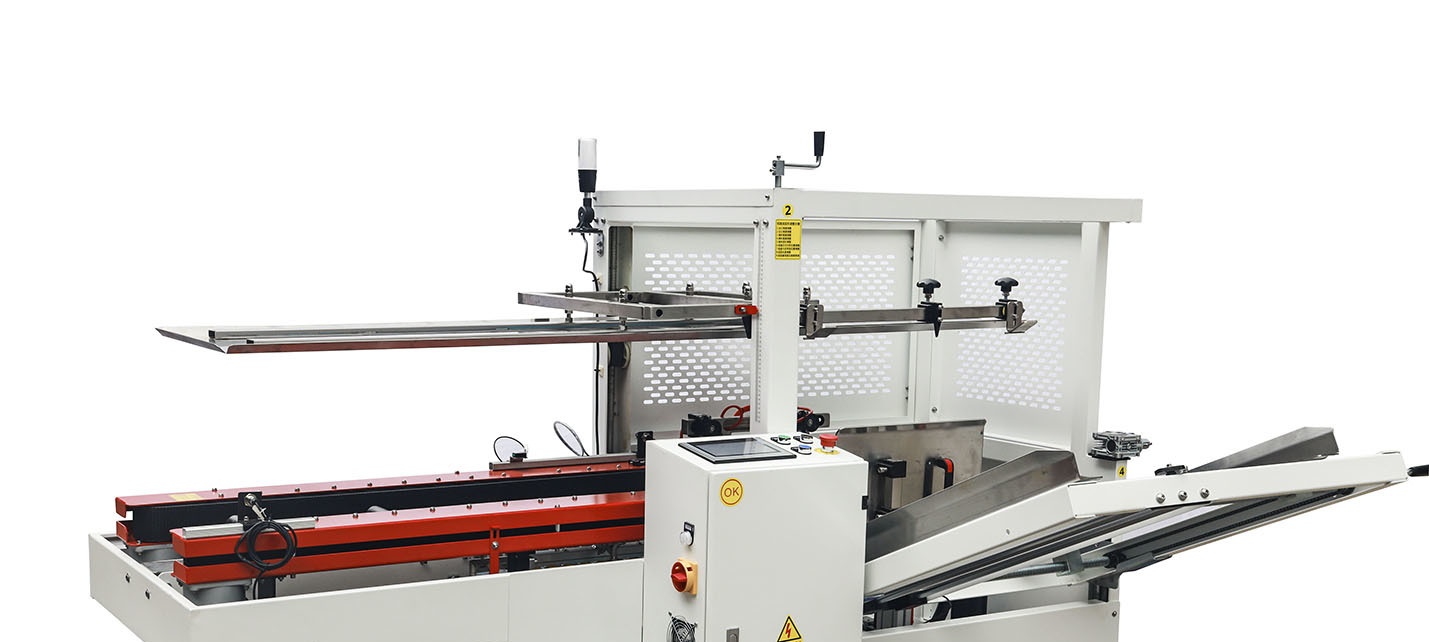
Filled bottles are then grouped and placed into the cases, with the line laid out so the filler, packing and sealing run as one continuous flow. Accumulation between the stations absorbs short pauses — a blank refill, a tape change — without stopping the filler, the same balancing principle described in SunAura Packaging Machines’ guide to conveyors and product handling systems. For a beverage filler, that protection matters more than at a dry goods plant, because stopping and restarting filling creates waste and lost production rather than a simple pause.
Sealing and securing the cases
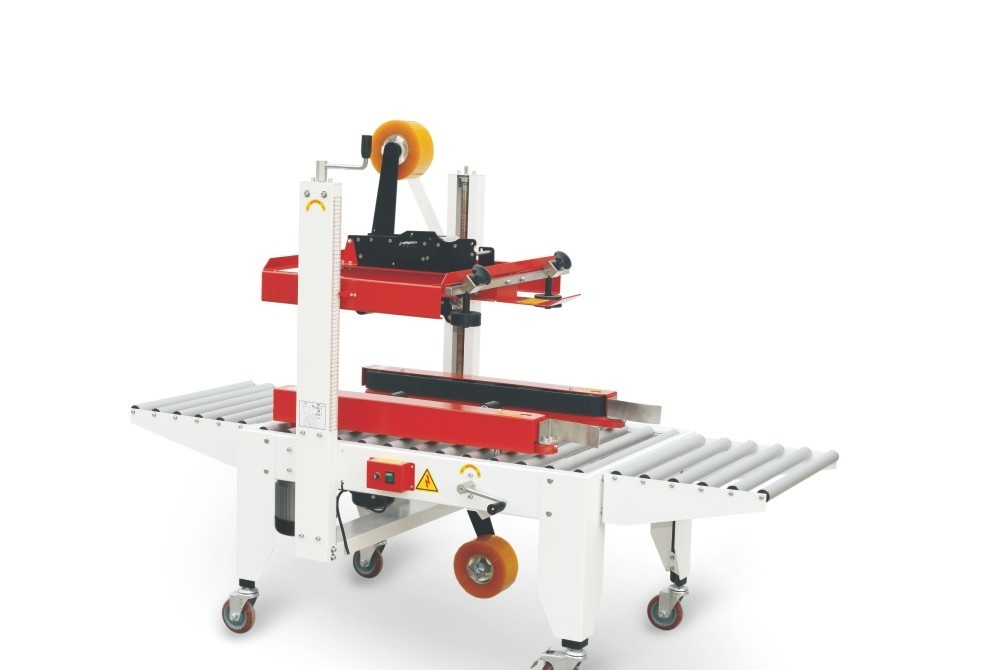
Packed cases are closed and sealed on an automatic case sealer, which folds the top flaps and applies tape consistently at the line’s running rate. Automatic sealing suits the dense, heavy cases of bottles and removes the variability of hand taping, producing cases that survive long distribution routes without opening. The machine was specified for the customer’s full case range and set with the local consumables, so the plant is not dependent on a single tape source. For loads going over particularly rough routes, the layout also allows strapping at a machine in the class of the automatic unmanned strapping machine, giving the pallet a positive hold.
Palletising and wrapping for distribution
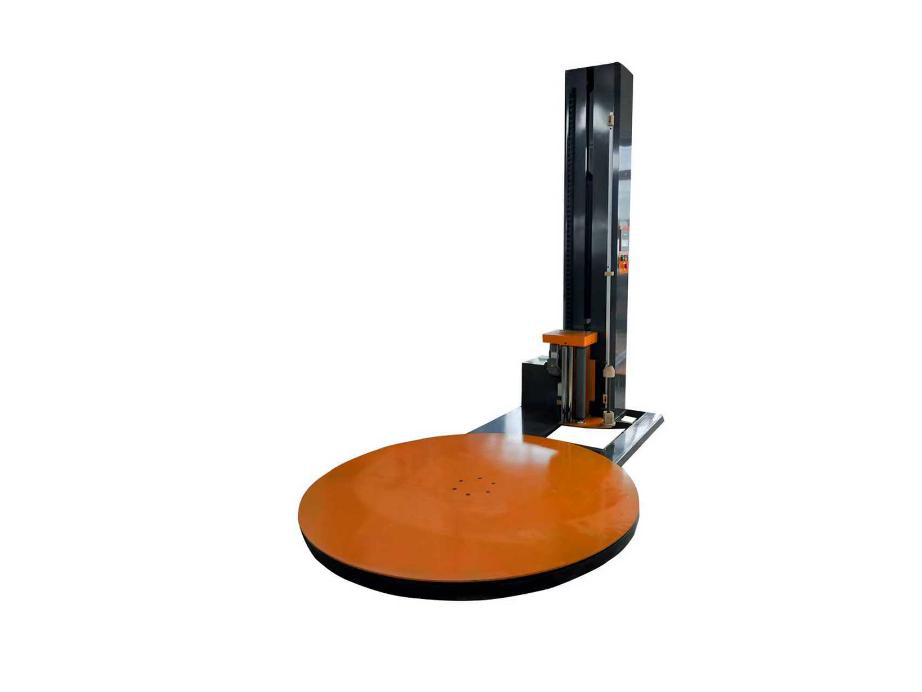
Sealed cases are palletised and stretch-wrapped before they leave the plant, and this stage is where the loaded pallets are prepared for Nigeria’s long road distribution. The pallet wrapper holds cases to the pallet with film tension and overlaps set for a heavy load and reinforced at the base and top, so the pallet stays intact over uneven routes and repeated handling. The patterns and film settings were confirmed during commissioning with the customer’s actual cases, and operators were trained to adjust them when formats change. For export or the longest routes, SunAura Packaging Machines advised on the additional moisture protection, distinguishing stretch film for stability from the barrier methods in its export packaging guidance.
Commissioning, training and regional support
SunAura Packaging Machines commissioned the line with the customer’s cases and bottles and trained operators and maintenance staff separately — operators on running and consumables, technicians on fault diagnosis and the wear parts held in the region. The company’s West Africa parts coverage underpins the support, which matters for a plant running long shifts through the peak season. The customer also has access to the online Help Center for maintenance intervals and fault resolution between service visits, keeping routine issues inside the plant where they are fastest to resolve.
SunAura Packaging Machines reports that the line reached its planned rate during commissioning and that the improvements most visible to the customer were the steady throughput at the filler, the protected cases over distribution and the reduction in the heavy manual handling the end-of-line previously required. The plant has since been running the line through its regular long shifts.
Why African beverage producers keep automating
The Nigerian project fits a broader pattern across the continent. As urban populations grow and packaged drinks displace informal supply, beverage producers are investing in filling and, increasingly, in the end-of-line equipment that lets the filler run at its real capacity, automating work that is difficult to staff at the required rate. The producers that specify robust, regionally supported equipment — rather than the cheapest quotation — are the ones whose lines keep running through the peak, and SunAura Packaging Machines’ regional projects in water, beverages and food show how that approach translates into installed, supported lines. The company continues to expand its parts and commissioning coverage across West and East Africa.
A throughput scenario, in practical terms
The change the line made is clearest in a concrete picture of a working day. Imagine the plant running bottled water through the morning, with cases formed, packed and sealed continuously while the filler runs at its steady rate, and switching to a soft-drink format after lunch with different case counts. On the first product, blanks are erected and bottom-sealed automatically, bottles are grouped and placed without a team carrying cases by hand, and sealed cartons move to the pallet wrapper, where each finished pallet is wrapped to a stored setting and moved out for loading. When the format changes, the operators adjust the guides, change the tape or blank stock and recall the recipe, a changeover measured against a documented standard rather than the judgement of whoever is on shift.
The contrast with the previous manual arrangement is where the return appears, and it sharpens during the hot-season peak. Hand packing bounded output by the number of people at the end of the line and varied between shifts, and the plant could not sustain the rate its filler allowed. The automated line sets the pace by machine, produces cases that are sealed and wrapped identically regardless of shift, and uses people to supervise and supply rather than to carry. As with other beverage lines, the saving is counted both in reduced labour and in the fewer damaged cases, more predictable distribution and protected peak-season sales automation adds on top.
Maintenance planning and protecting uptime
A line running long shifts is reliable when it follows a short, scheduled maintenance routine rather than running until a fault stops it, and the seasonal demand makes preparation before the peak especially valuable. The practical work concentrates on the parts that move and meet the cases: the belts and rollers on the conveyors, the folding and taping components on the erector and sealer, and the film carriage and turntable on the wrapper. These are inspected before the peak, common wear parts are replaced ahead of failure, and consumables such as tape and film are stocked so a change of format does not interrupt production.
Because regional parts coverage holds the relevant wear and critical components, the plant can stage parts before the peak and recover quickly from an unplanned stop rather than wait on international freight during its most valuable weeks. SunAura Packaging Machines encourages high-demand producers to schedule a pre-season inspection, in which engineers verify sealing, check the safety devices and confirm the full range of formats runs as it did at commissioning. The online Help Center supports the plant’s own technicians with fault resolution between visits, keeping more issues inside the factory where they are fastest to resolve.
Packaging material and local sourcing
Beyond labour and throughput, the line also changed how the plant manages its packaging materials. Cases that are formed and sealed consistently use tape and blanks more efficiently than hand work, where waste and re-sealed cartons quietly consume stock, and the pallets wrapped to stored settings use a repeatable amount of film rather than varying by operator. Over a year of long shifts, those differences accumulate into measurable material savings alongside the labour the line removes. The plant also works with local suppliers for blanks and consumables, keeping the line running without dependence on imported spares, while the machine-specific wear parts are held regionally by SunAura Packaging Machines.
As regional regulations and customers increasingly ask for reduced and recyclable secondary packaging, the equipment also positions the plant to use thinner-gauge film and lighter case formats where the load still carries safely, provided the settings are reconfirmed for the new materials. As with other SunAura Packaging Machines lines, the company advises confirming any material change against the wrapper and sealer rather than assuming a machine will run a new film at the same settings.
Frequently asked questions
Can the line handle both cartons and returnable crates?
The end-of-line is configured for the formats the plant actually runs; corrugated cartons use erectors and sealers, while returnable crate systems use different handling, and the configuration is confirmed at specification.
What protects the filler from downstream stoppages?
Accumulation between the packing, sealing and palletising stations absorbs short pauses, so the filler keeps running through blank refills, tape changes and pallet swaps.
How are beverage pallets secured for rough roads?
Cases are wrapped with reinforced tension at the base and top, and strapping can be added where routes demand a positive hold, with patterns confirmed on the customer’s cases.
What support is available after installation?
Regional parts coverage, on-site commissioning and training, and the online Help Center support both operators and technicians, particularly through the demand peak. In practice, the plant stages the wear parts and consumables it will need before the hot season, so a routine failure does not become a freight delay, and SunAura Packaging Machines’ engineers can be scheduled for a pre-season inspection to confirm every format runs as it did at commissioning.
Conclusion
The Nigerian beverage line shows how a high-demand filling operation can be matched with automatic case erection, packing, sealing and pallet wrapping, specified for long running hours and supported regionally with parts and engineers. For West African producers, the combination protects the filler, secures cases over demanding routes and removes the manual handling that once set the plant’s pace. SunAura Packaging Machines continues to supply and commission such end-of-line systems across the region.
If you bottle water or beverages and need an end-of-line matched to your filler and distribution routes, contact SunAura Packaging Machines’ applications engineers with your case formats and filling rate, or explore the machines in the products hub, including the automatic carton sealers and the full range of beverage end-of-line equipment.

Michael designs automated palletizing stations and ties upstream case or bag flow to downstream stretch wrapping. His work spans conventional layer palletizers, robotic arm cells, conveyor routing, safety fencing and handover logic between machines. He writes about palletizer selection, load stability and how an end-of-line sequence should be balanced.
See Full Bio ›