

If you have ever stood in the packing area of a food-service distributor, a hospital laundry or a catering butcher, you have seen them: boxes of thin polyethylene gloves, opened and restocked every day. Disposable gloves are one of those consumables whose demand is easy to underestimate until you run the numbers — every restaurant, hotel, clinic, salon, bakery and food-processing plant works through them, and in many markets they are imported in containers rather than made locally. For a converter with access to PE film and a steady regional customer base, a glove making machine is among the simpler production businesses to enter: a single machine, one operator, a consumable that sells by the carton, and a product that does not spoil or go out of fashion. SunAura Packaging Machines supplies a full range of disposable glove machines, from entry-level single-layer models to ultra-high-speed lines reaching 500 gloves per minute, and this guide explains how to choose between them.
The decision looks straightforward from a catalogue — every machine seals and cuts film into gloves — but the differences in output, layer configuration, material compatibility and control are substantial, and buying on price alone tends to produce a machine that cannot match its quoted rate on real film. We will cover how a glove machine actually works, what single-layer and double-layer mean for output, how to read a speed specification honestly, and which materials and glove formats each model handles. We will then work through the model range, tooling and changeover, utilities and staffing, and the economics of the business, ending with a selection checklist and FAQ. If you are planning glove production, the sections below follow the same logic our applications engineers use when sizing a line for a customer.
How a disposable glove machine works
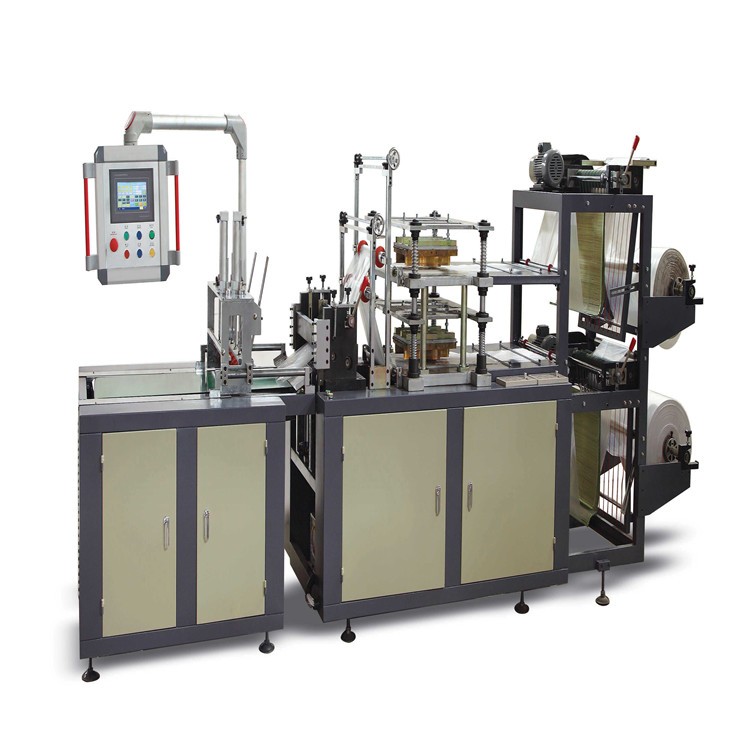
The process is, at heart, a heat-sealing and die-cutting operation carried out on a moving web of film. Roll stock — HDPE, LDPE, CPE or TPE film, commonly between 0.008 and 0.02 mm thick — is unwound and fed through the machine, folded and guided into position, and passed through a sealing station carrying a hand-shaped die. The die applies heat and pressure to weld the outline of the glove, after which the glove is cut or separated from the web, counted and stacked at the outfeed, while the scrap skeleton of film is wound or drawn away. Finished gloves are then batched into set counts — for example, 100 pieces per box — and packed for sale. The whole sequence runs automatically once the film is threaded and the recipe set, which is why a modern machine needs only one operator to watch the line, replenish rolls and pack output.
The component that defines the glove is the sealing die, a shaped metal tool in the outline of a hand; the banner image below shows a finished glove alongside one of these dies and the machines on a factory floor. Dies are made for a given glove size and cuff style, and custom shapes — different finger proportions, embossed patterns, special sizes — are produced as order-specific tooling. This matters commercially: the glove market includes standard food-service gloves, longer-cuff gloves for processing and cleaning, and thicker CPE/TPE gloves for heavier work, and a converter can run several of them by changing the die and settings rather than buying a separate machine per product.

Single-layer versus double-layer output
The single most important configuration choice is whether the machine runs single-layer or double-layer film. A single-layer machine processes one web and produces one glove per sealing cycle. A double-layer machine feeds two webs together — or a folded web — and seals and cuts two gloves at once, doubling the number of finished gloves for essentially the same machine cycle. Because the glove is a thin, symmetrical product, the two layers separate cleanly after cutting, and the operator simply stacks the doubled output. For high-volume converters, double-layer production is the standard choice: it roughly halves the labour and machine time per glove and is the reason the fastest machines in the range are specified as double or dual-layer lines.
Double-layer is not universally the right answer, however. Entry-level and smaller converters, or those running many short jobs across different materials, sometimes prefer a single-layer machine for its simpler threading, lower cost and easier handling of thicker or stiffer films. Long-cuff and specialty gloves may also be run single-layer depending on the format. The choice should follow the product mix and order sizes: a converter supplying a few large customers with standard gloves wants double-layer capacity, while one building a mixed regional business may start single-layer and add a faster machine as volumes grow.
Reading the speed specification honestly
Glove machines are rated in pieces per minute, and the figures span the full range of the market — from around 100 pieces per minute on entry and single-layer models to 400–500 pieces per minute on ultra-high-speed double-layer lines. As with any quoted rate, the catalogue number is a maximum under controlled conditions, and real output depends on the material, the glove size, the operator and how consistently the line runs. Thin, well-behaved LDPE at a standard size runs closest to the rated figure; thicker CPE and TPE, long cuffs and frequent size changes all reduce the average. The honest way to plan capacity is to take the rated range, assume the lower end for difficult materials and account for roll changes, breaks and packing time, then compare the result against the daily volume the business needs.
It is also worth being precise about what the piece count includes on double-layer machines — the quoted pieces per minute are finished gloves, with both layers counted, which is why a double-layer line’s figures look roughly twice a single-layer machine’s at a comparable cycle rate. SunAura Packaging Machines confirms the expected output for a customer’s specific film and glove size rather than quoting a single headline number, and substantial machines can be demonstrated or factory-accepted with the converter’s own material, the same pre-shipment verification used for the company’s end-of-line equipment.

Materials: HDPE, LDPE, CPE, TPE and biodegradable films
Glove performance follows the film, and the material is specified by the glove’s intended use rather than by price alone. HDPE and LDPE are the standard polyethylene films: they are cheap, seal easily and make the light gloves used across food service and household applications. CPE — cast polyethylene — is softer, stronger and less prone to tearing, suiting gloves that get harder wear, while TPE gloves offer a closer, more elastic fit for medical and precision work. Film thickness across the range typically runs from 0.008 to 0.02 mm, with thicker gauges used for heavy-duty gloves. The machine’s sealing temperature and handling settings change with each material, which is why models store recipes and why the specification confirms which films a given machine runs.
Biodegradable and compostable films are the growing part of the market, driven by single-use-plastics rules and by buyers wanting alternatives to conventional PE, and the range includes machines compatible with these materials. Converters planning to offer biodegradable gloves should confirm this at the ordering stage, because the films can seal and behave differently from standard PE and the machine must be set up for them. As with other packaging, the regulatory position on biodegradable claims varies by market, so buyers verify the film’s certification rather than rely on a supplier’s description.
The model range, from entry level to ultra-high speed
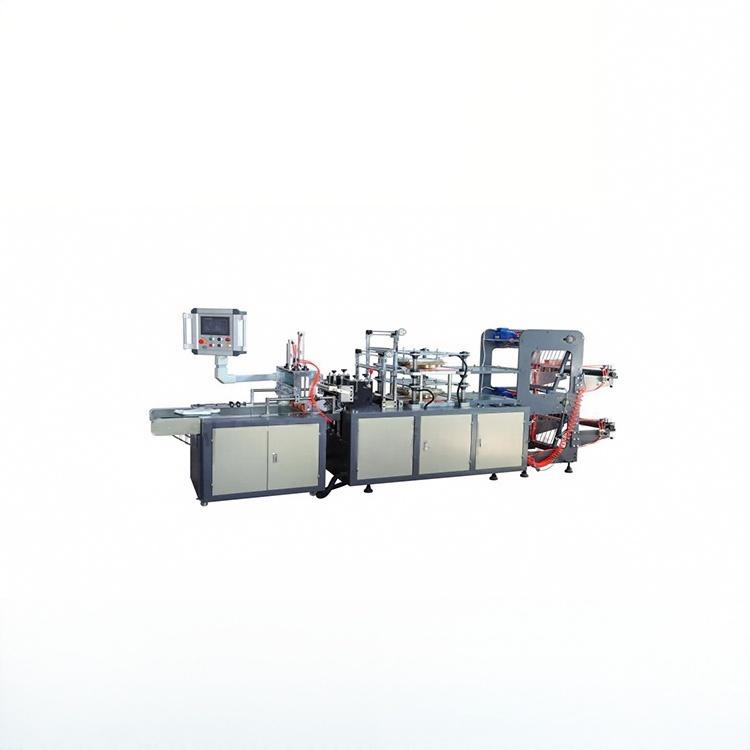
SunAura Packaging Machines’ glove machines form a ladder matched to different scales of production, and the right entry point follows the converter’s target volume and customer base rather than the largest number on the page.
At the entry and mid-range, the UW-WG500 PE glove machine suits converters starting production and running standard single-layer gloves, while the Model 600 single-layer machine and its high-speed double-layer version cover moderate output at roughly 100–140 pieces per minute. The HC-500A is a high-speed single-layer machine rated at 120–180 pieces per minute with PLC and touchscreen control, suited to high-volume standard production, and the HC-500S is a fully configured double-layer, full-servo machine at 350–400 pieces per minute for converters supplying large customers. At the top of the range, the HC-500H is an ultra-high-speed line producing 400–500 PE, CPE or TPE gloves per minute, fully automatic with one operator, and aimed at dedicated high-volume glove manufacturers.
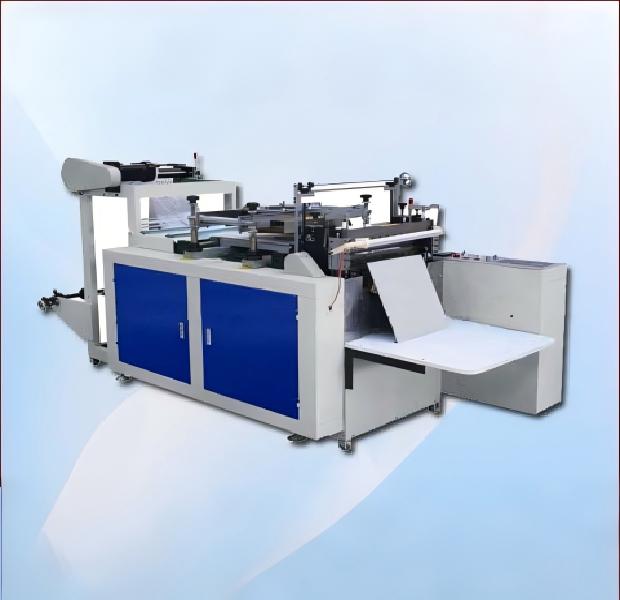
Specialty configurations cover the formats outside the standard food-service glove. The UW-LG1000 long-cuff machine makes the extended gloves used in processing and cleaning, the UW-CPE600 dual-unwind machine handles double-layer CPE production, and the UW-WG500II is the double-layer counterpart to the entry model. A general-purpose disposable glove making machine rounds out the range for converters wanting a flexible standard line. Where a converter’s range is unusual — special sizes, embossing, mixed materials — SunAura Packaging Machines configures the machine and tooling to order rather than force a catalogue fit.
Tooling, sizes and changeover
Glove sizes are set by the die and the web width, and the HC-500H, for example, accommodates glove lengths of roughly 200–450 mm and widths of 240–320 mm, covering the common small, medium and large formats. Changing size means fitting the corresponding die, adjusting the film guides and fold, and recalling the stored recipe, with the time depending on how much of the film path must be reset. Converters running a stable range of standard sizes change quickly; those adding genuinely new shapes order additional dies, which are made to the glove’s dimensions. Because the dies and sealing surfaces are the parts that work hardest, they are also the tooling most carefully maintained, since a worn or contaminated seal produces gloves that leak or tear at the cuff.
Controls, counting and packing the gloves
Modern glove machines are run from a PLC with a touchscreen HMI, from which the operator sets speed, sealing temperature and the batch count, monitors faults and recalls recipes. Automatic counting is one of the features that matters most commercially: gloves are sold by fixed counts, typically 100 per dispenser box, and a machine that batches accurately removes the manual counting that otherwise absorbs labour and creates disputes. The counted stacks move to the packing table, where they are boxed and cartoned; high-volume converters sometimes connect this to a case sealing and palletising end-of-line — the same equipment described in the products hub — so a large plant can move from film to export pallet with minimal handling.
Utilities, floor space and staffing
Glove machines are modest in their utility requirements compared with full end-of-line systems: power is commonly 220 V single-phase at 50 Hz for the mid-range, with 380 V three-phase on the fastest machines, and main motor power around 1.5–2.2 kW; the process uses no compressed air on most models, which keeps installation simple. The machines occupy a compact footprint — the HC-500H, a large machine, measures roughly 2700 × 1100 × 1500 mm and weighs around 600 kg — though the layout must leave room for film rolls, the scrap web and the packing table. Labour is the key saving: a modern line runs with one operator threading film, monitoring seals and packing output, versus the several people manual or semi-manual production requires. The site requirements for power and floor are confirmed before delivery, following the same documentation approach SunAura Packaging Machines uses for its packaging lines.
The economics of glove production
The business case rests on a simple spread: the cost of film and machine time per glove against the price per carton, with labour and scrap the main variables within the converter’s control. Film is the dominant variable cost, so buying well and minimising waste — the scrap skeleton, start-up waste, badly sealed runs — matters more than small differences in machine price, and a machine that holds its seals and counts accurately protects margin in a way a cheap machine that produces waste does not. Output is the other side of the calculation: a double-layer machine at several hundred gloves per minute produces enough volume in a shift to supply a regional market, and the labour saved versus manual production typically drives the payback, which converters work out from their own wage rates and target price. SunAura Packaging Machines supplies the speed and consumption data needed for the calculation rather than a generic return figure.
Two practical points protect the investment. First, match the machine to the order book: a small converter buying an ultra-high-speed line it cannot keep fed loses the utilisation the machine needs, while a large converter buying entry-level equipment cannot meet its volumes. Second, plan the consumables and spares — film, sealing surfaces and the common wear parts — so the line is not stopped on a freight delay, the same principle behind regional parts coverage across SunAura Packaging Machines’ equipment.
Glove machine selection checklist
- List the glove formats: sizes, cuff length, material and thickness for each customer.
- Decide single-layer or double-layer from the volume and order sizes.
- Take the lower end of the speed range for difficult materials and frequent changes.
- Confirm the machine runs HDPE, LDPE, CPE, TPE or biodegradable film as required.
- Check the glove length and width the machine and dies accommodate.
- Specify PLC control, automatic counting and the batch size you sell in.
- Verify voltage and phase, and reserve space for rolls, scrap and packing.
- Plan dies for each size and stage wear parts and film before production starts.
- For large plants, plan case sealing and palletising of the cartoned gloves.
Frequently asked questions
What is the difference between single- and double-layer machines?
A single-layer machine makes one glove per sealing cycle; a double-layer machine feeds two webs and makes two gloves per cycle, roughly doubling output for the same machine time and halving labour per glove.
How many gloves can a machine make per minute?
Rates run from around 100 pieces per minute on entry and single-layer models to 400–500 per minute on ultra-high-speed double-layer lines. Real output depends on material, size and changeover frequency.
Which films can glove machines process?
HDPE and LDPE for standard gloves, CPE for softer, stronger gloves, TPE for closer-fitting gloves, and biodegradable films on machines configured for them, with film typically 0.008–0.02 mm thick.
How are different glove sizes produced?
Size is set by the hand-shaped sealing die and the web width; changing size means fitting the die, adjusting the guides and recalling the stored recipe, with additional dies ordered for new sizes.
How many people does a machine require?
A modern automatic line runs with one operator, who threads film, monitors sealing and packs the counted gloves, compared with several people under manual production.
Can the boxed gloves be packed and palletised automatically?
Yes. High-volume plants connect the glove machine to case sealing, strapping and palletising equipment, moving from film to finished pallet with minimal manual handling.
Conclusion
A disposable glove line is a heat-sealing and die-cutting business built around a few well-defined choices: single or double layers, a material from standard PE through CPE and TPE to biodegradable film, and a speed matched to the converter’s order book. Specified honestly — with the lower end of the rate assumed for difficult films, accurate counting and the right dies and spares in place — a glove machine turns low-cost film into a steady, repeatable consumable with one operator and a short, clear payback. SunAura Packaging Machines supplies the full range, from entry machines to 500-piece-per-minute lines, and configures specialty formats to order.
If you are planning disposable glove production, contact SunAura Packaging Machines with your target output, glove sizes and films, and our applications engineers will recommend the machine and tooling. Request a quote or browse the full glove machine range, including the ultra-high-speed HC-500H and the double-layer models for high-volume supply.

Kevin works on machine development for shrink bundling, shrink hoods and vacuum packaging. He tests film shrink ratios, tunnel heat zones, seal bar performance and chamber cycle times, and feeds that back into machine frame and conveyor design. He writes technical articles on shrink film selection, tunnel temperature balancing and vacuum packaging for industrial and food-adjacent secondary packs.
See Full Bio ›