

Walk into the packaging hall of a lubricant blender, an agrochemical formulator or a specialty chemical plant and the loads look nothing like the light cartons of a food line. There are rigid jerrycans that dent a case on impact, drums that weigh two hundred kilograms each, filled bottles that must be grouped into trays, and containers whose contents impose their own rules — flammability, corrosiveness, foaming, or the simple fact that a spill is hazardous. The end-of-line equipment for these products is specified around the container and the substance rather than around a generic case rate, and the projects that run well are the ones where pallet stability, secondary containment and regulatory handling were considered before the first machine was ordered. SunAura Packaging Machines supplies end-of-line systems for chemical-industry customers, and the principles below are the ones our applications engineers apply to these lines.
This guide explains how chemical, lubricant and agrochemical products are packaged at the end of the line. We will cover the container types and why they drive the layout, the shrink and tray-pack systems that group bottles and jerrycans, the case packing used where products are boxed, the strapping and wrapping that secure loads, and the pallet handling that moves drums and heavy packs. We will address the safety and regulatory considerations — hazardous areas, spill control, segregation and load certification — along with the practical questions of stability in storage and export. If you package liquids or solids in cans, bottles, jerrycans, drums or sacks, the sections below follow the logic of a properly specified chemical end-of-line.
The containers, and why they decide the line
Chemical packaging is defined by its primary containers, which vary more widely than in almost any other industry. Small bottles and cans hold lubricants, additives and consumer chemicals; rigid plastic jerrycans of 5, 10, 20 or 25 litres hold oils, coolants and liquid fertilisers; drums of around 200 litres and intermediate bulk containers hold bulk product; sacks and bags hold powders, granules and solid chemicals. Each has a different weight, geometry and handling behaviour, and many plants run several of them across a week. A line designed around a single container rarely suits the full range, so the first specification step is to list every container, its filled weight, its pallet pattern and its destination — domestic warehouse, export container, or dangerous-goods transport.
Filled weight is the parameter that most often surprises buyers. A 25-litre jerrycan of oil weighs roughly 23 kilograms; a packed layer of them is a heavy, rigid load; a full drum cannot be handled manually at all. Conveyors, packers and palletising must be built for these weights, and accumulation sections must carry dense loads without wear. Rigid containers also have their own stability characteristics — jerrycans with handles and uneven profiles do not stack like cartons, drums need positive location on pallets — which is why handling is engineered to the container rather than adapted from a light case line.
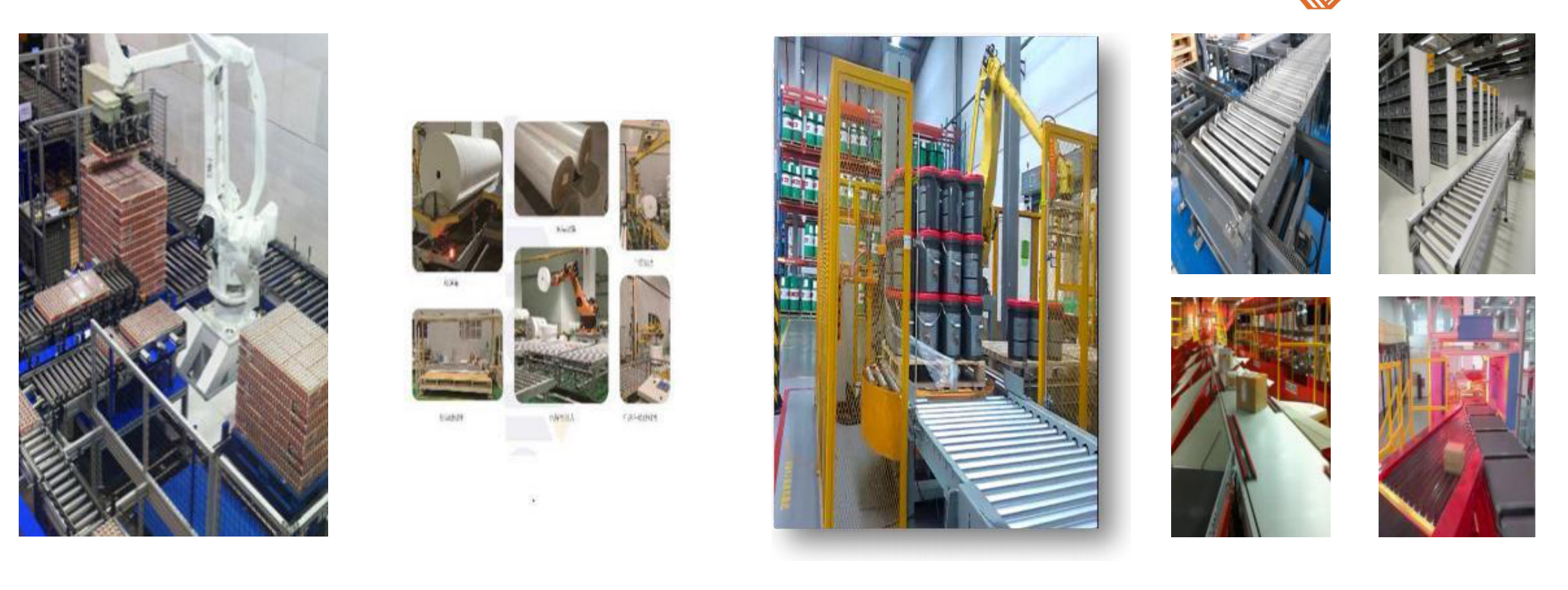
Grouping bottles and jerrycans: trays and shrink packs
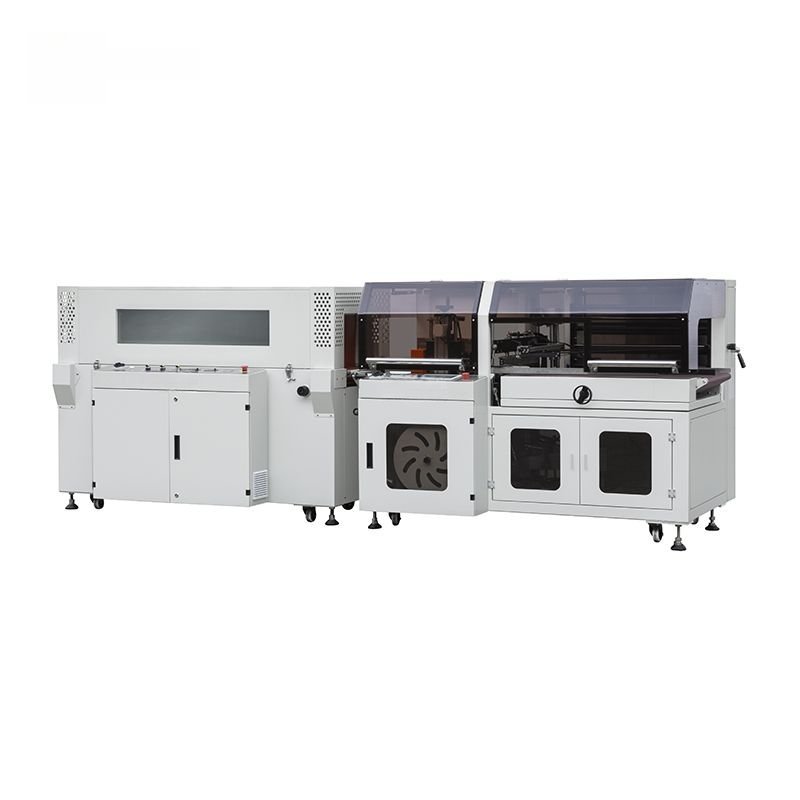
A large share of chemical secondary packaging is not a corrugated case at all but a tray-and-shrink pack or a pure shrink bundle. Bottles and jerrycans are grouped into a set pattern — for example, a layer of containers on a shallow board tray — and the group is shrink-wrapped into a rigid, stable pack that can be palletised. Shrink bundling without a tray is also used for sturdy containers where film alone holds the group, saving board. These packs suit the dense, rigid nature of filled containers and are common in lubricant and agrochemical plants because they present the product visibly while holding it firmly for distribution.
The equipment behind these packs combines collation, a wrapper and a heat tunnel. Side-seal and sleeve wrappers enclose the grouped containers in film before the tunnel shrinks it tight; machines such as the BTH-550 side-seal shrink wrapper and the BTX-6040 sleeve wrapper handle these collation applications, with the tunnel specified to deliver the heat and dwell time the film and pack require. For chemical packs the tunnel’s control matters: film must shrink fully without distorting plastic containers, and the settings are stored per format so changeovers repeat correctly. Tray forming and loading are integrated upstream so containers arrive at the wrapper grouped and oriented.
Case packing for boxed chemical products
Smaller containers, cans and dry goods are packed into corrugated cases like other products, though the cases and packing equipment are specified for the weight and for any regulatory marking required. Robotic case packing is particularly well suited to chemical lines because it handles varied containers and pack patterns with recipe changeovers rather than mechanical retooling, and it keeps operators away from repetitive lifting of dense packs. The ZX-500R robotic case packer and spider stations such as the WS-1200 spider case packing station pick containers and place them into cases at the line’s rate, while integrated cells combine erection, packing and sealing. Where products are supplied in bags or sacks, bag-in-box and liner systems protect both product and case using machines such as the BM500A carton bag inserting machine.
For heavier cases and rigid containers, the packing station must be matched to the downstream palletising, with accumulation between them so a pallet change does not stop the filling line. This balancing principle — the same one applied in our guide to conveyors and product handling systems — matters even more on chemical lines, where stopping a filling or blending operation can create waste and cleaning work rather than a simple pause.
Strapping and wrapping for heavy loads
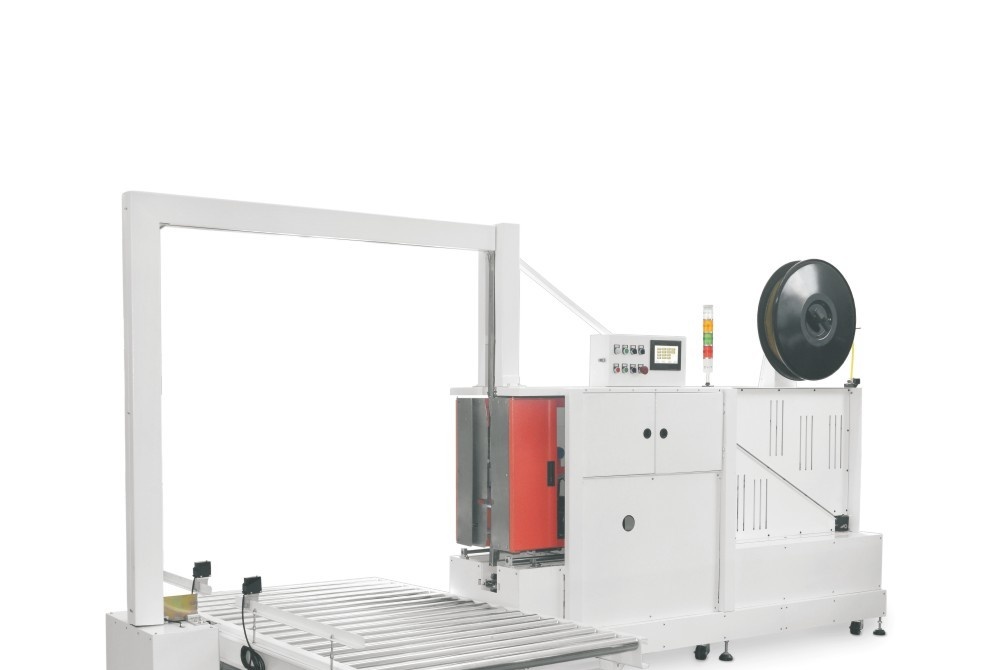
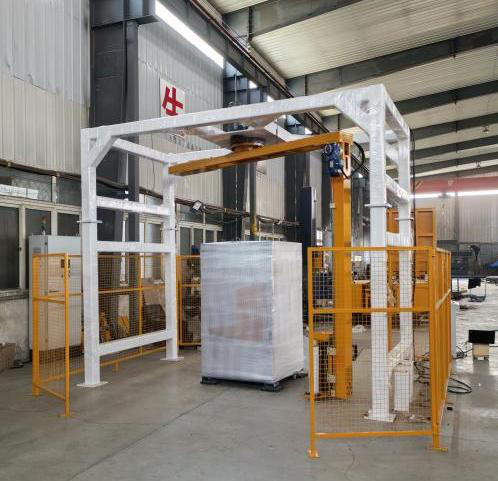
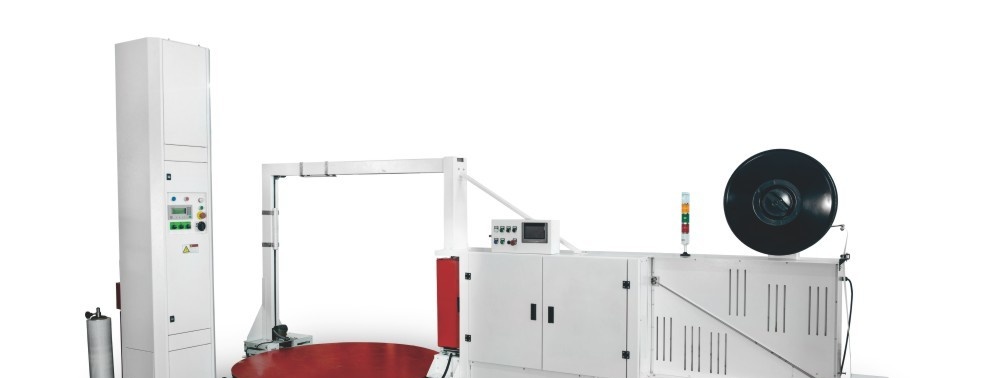
Once packs and cases are palletised, the load must be secured for storage and transport, and heavy chemical pallets demand particular attention. Stretch wrapping holds containers to the pallet, with the film tension, overlap and reinforcement set for a dense, possibly slippery load; rotary-arm machines wrap without rotating unstable or very heavy pallets, while turntable wrappers suit moderate, stable loads. Strapping adds a positive hold where stretch alone is insufficient — for export, for tall stacks of rigid containers, or where pallets are handled roughly. The automatic unmanned strapping machine secures heavy pallets consistently, and combined cells such as the fully automatic wrapping and strapping system apply both in one sequence, which is the typical specification for export-bound chemical loads.
Load stability is not merely a matter of avoiding film breakage. A pallet of jerrycans that shifts in a trailer is both a safety hazard and a regulatory failure, and export shipments may need the load to meet containment standards with documented pallet patterns. Working out the pallet pattern, the number of containers per layer and the required film or strap from the container dimensions — rather than wrapping by habit — produces pallets that stay intact, and it lets the plant confirm how product will be presented to customers and to dangerous-goods procedures.
Pallet handling, drums and IBCs
At the heaviest end, drums, IBCs and full pallets move on chain and heavy roller conveyors, turntables and transfer equipment rather than on standard case conveyors. These systems transport drums to filling, storage and dispatch, position them for wrapping and handle complete pallets through the warehouse. Automated handling here removes the manual movement of loads that no individual should lift, and it integrates with the plant’s forklift and storage arrangements. Integrated logistics systems such as the warehouse automated packaging system connect the end-of-line to distribution, while upenders and tilters handle any loads that must be reoriented. Because these systems carry such weight, floor and utility requirements — covered in our site utilities guide — must be confirmed early.
Safety and regulatory considerations
Chemical packaging carries a safety layer that food packaging does not, and the end-of-line must be specified with it in mind. Where flammable products are handled, the relevant area classification governs electrical equipment and may require machines built to explosion-protected standards; controls, drives and heaters in such areas cannot be treated as ordinary industrial equipment. Corrosive products call for suitable construction and for secondary containment that catches leaks, and spills must be contained and cleaned without reaching drains. Dangerous-goods transport imposes marking, documentation, packaging compatibility and load-securing rules, with the pack and pallet designed to meet them rather than adjusted at the carrier’s insistence.
Several practical measures follow from this. Lines are laid out to segregate incompatible products and to keep containment and washing facilities accessible; filled packs are checked for leaks and correct closure before they are palletised; operators are trained on the specific products and on emergency procedures; and the equipment’s guarding and e-stops are maintained to standard. Customers are responsible for the product-specific regulations in their markets, but SunAura Packaging Machines designs the equipment so that guarding, area protection and handling support compliance rather than complicate it. The same documentation discipline — machine drawings, load data and maintenance records — also supports customer and regulatory audits.
Storage, export and the environment
Chemical pallets often sit in storage before dispatch, sometimes outdoors or in humid conditions, and the secondary packaging must survive that as well as the journey. Stretch and shrink film protects against dust and moisture but is not a vapour barrier for long sea voyages; export loads may need barrier wrapping, desiccant and corrosion protection for any metal components, the methods detailed in our export packaging guide. Sustainability questions also arise: plants increasingly specify recyclable or reduced-gauge films and seek to recover packaging, provided load containment is not weakened, and the wrapper must be confirmed against the chosen material. As in other industries, film per pallet is a measurable cost, and correctly applied tension often allows less film rather than more.
Common chemical end-of-line mistakes
- Designing around one container and discovering the line cannot run jerrycans and bottles alike.
- Under-specifying conveyors and palletisers for dense, heavy filled loads.
- Using board cases where tray-and-shrink collation would hold rigid containers better and cheaper.
- Stopping the filling line for every pallet change because there is no accumulation.
- Wrapping heavy or unstable pallets on a turntable when a rotary-arm machine is required.
- Ignoring area classification and explosion protection for flammable products.
- Treating stretch film as sufficient for export without barriers and corrosion protection.
- Working out pallet patterns by habit rather than from container dimensions and containment rules.
Frequently asked questions
Can one line handle bottles, jerrycans and drums?
A single end-of-line can handle a defined range of smaller containers with recipe changeovers, but drums and IBCs generally need separate heavy handling equipment. The full container list is agreed at specification to determine what one line can cover.
Why are chemicals often shrink-packed rather than case-packed?
Rigid filled containers are dense and sturdy, so a tray-and-shrink or film bundle holds them securely while saving board and presenting the product. Cases remain typical for smaller containers, cans and dry goods.
What is needed for flammable or hazardous products?
The applicable area classification, suitably protected electrical equipment, secondary containment for spills, and dangerous-goods marking and documentation. These are specified at the outset rather than added to standard machines.
How are heavy pallets secured for export?
With a defined pallet pattern, stretch wrapping — often on a rotary-arm machine — and strapping where the load needs a positive hold, plus barrier and corrosion protection for sea voyages.
Can robotic packing handle our range of containers?
Yes. Robotic and spider stations pick varied containers using stored patterns and change over by recipe, suiting multi-format chemical plants, with the load and rate confirmed against the full product range.
Conclusion
A chemical, lubricant or agrochemical end-of-line is specified from the container and the substance: collation and shrink for rigid bottles and jerrycans, robotic case packing for boxed products, strapping and rotary-arm wrapping for heavy pallets, and dedicated handling for drums and IBCs. Laid out with accumulation to protect the filling operation and built to the safety, area-classification and dangerous-goods rules the products require, such a line handles dense, hazardous loads both safely and efficiently. Planned early and protected for storage and export, the end-of-line becomes a controlled, compliant step rather than a bottleneck.
If you package lubricants, agrochemicals, specialty chemicals or bulk solids and need an end-of-line matched to your containers, SunAura Packaging Machines can specify the collation, packing, wrapping, strapping and handling equipment as one system. Contact our applications team with your container list, filled weights and destinations, or review the relevant machines in the products hub, including the inline rotary-arm wrappers and the full range of shrink and pallet-securing equipment.

David leads our case sealing and cartoning engineering team. Over 14 years he has specified, installed and commissioned hundreds of random-size case sealers, top- and side-loading cartoners, and automatic case packers for food, household and industrial product lines. He writes buying guides and troubleshooting articles around seal quality, tape and hot-melt glue selection, and carton throughput limits.
See Full Bio ›