

When a packaging requirement falls outside the neat box of a catalogue machine, buyers face a decision that is more expensive to get wrong than almost any other equipment choice: do you force a standard machine to do a job it was not designed for, commission a modified version of a proven platform, or invest in a fully custom, engineered-to-order line? Searching for “custom packaging machine”, “non-standard packaging machinery manufacturer” or “bespoke case sealer / shrink wrapper for special product” returns hundreds of suppliers, but very few explain how the decision should actually be made — and many expensive failures start with a standard machine that was sold into an application it could never satisfy.
This article sets out how to decide between standard, modified and fully custom packaging machinery, what each option really costs in time and risk, and exactly what information you must supply to get an accurate quote. It is the companion piece to SunAura Packaging Machines’ custom packaging machine configurator and the real projects in our customer case studies.
First, understand the three levels of engineering
The words “custom” and “non-standard” are used loosely, but there are three meaningfully different levels, each with a different risk and lead time.
1. Standard (catalogue) machines
A standard machine is built to a fixed specification in series, with documented dimensions, speeds and changeover ranges. It is the fastest to supply, the easiest to support and — because the design is proven across many installations — the lowest risk. The correct question is never “is a standard machine cheaper?” (it always is) but “does a standard machine’s operating envelope contain my product, speed and layout?” If your product fits within a machine’s stated size, rate and material range, you should buy standard every time.
2. Modified / customised standard platforms
A modified machine starts with a proven standard frame and changes selected elements — a wider infeed, a taller shrink tunnel, a different sealing head, an extended conveyor, special guarding, or a control handshake to existing equipment. The core mechanics, control logic and safety architecture stay proven, while the parts that differ are engineered to your application. This is the most common and usually the best-value answer to a non-standard requirement, because it captures the reliability of a serial machine without forcing your product to fit an unsuitable envelope.
3. Fully engineered-to-order (custom) lines
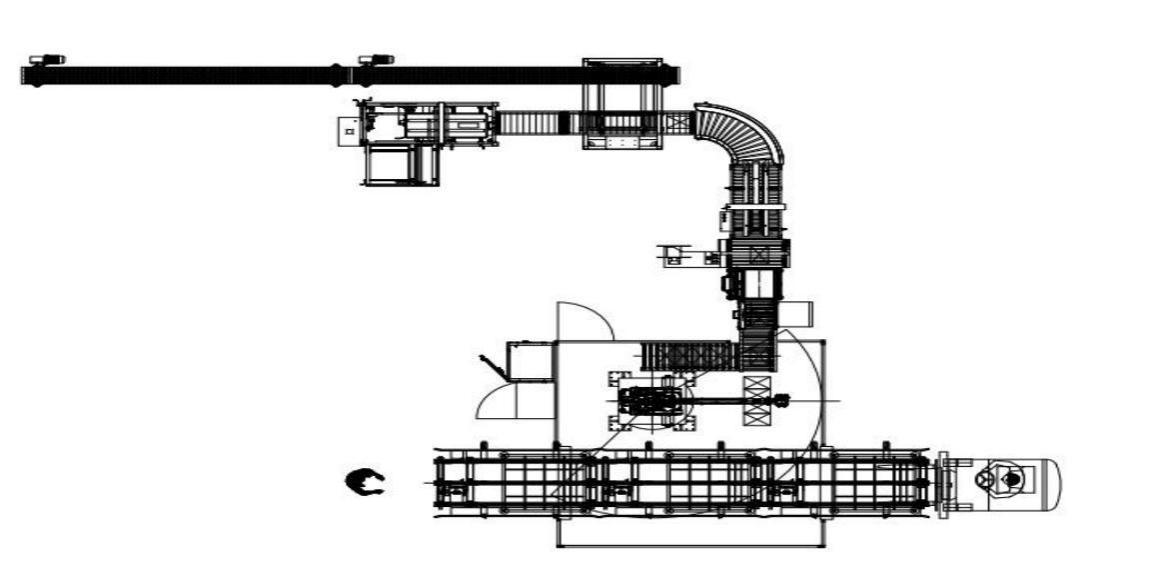
A fully custom line is designed largely around your product and layout — for example an unusual product geometry, an exceptionally high rate, a unique combination of processes, or integration into a building with severe space constraints. It carries the longest lead time and the greatest engineering effort, and it demands the most rigorous testing before shipment. It is justified only when neither a standard nor a modified platform can meet the requirement, or when the volume and value of production make the investment clearly worthwhile.
How to decide: the decision in five questions
You can usually place your requirement in one of the three levels by answering five questions honestly.
- Does your product fit a standard machine’s envelope? Compare your real product and pack dimensions, target packs per minute and packaging material against the catalogue ranges — not the headline maximum, but the sustained operating range. If yes, go standard.
- Which single element does not fit? If only the infeed width, tunnel height, conveyor length or guarding differs, a modified platform almost certainly solves it.
- Is the core process itself unusual, or just the dimensions? Unusual dimensions point to modification; a genuinely novel process or combination points to full custom engineering.
- What volume justifies the investment? A higher, more stable production volume supports more engineering; a short or uncertain product run favours the most flexible, least committed option.
- What are the layout and integration constraints? If the machine must connect to specific existing equipment or fit a constrained space, the integration work itself may be the custom element.
The hidden cost of forcing a standard machine
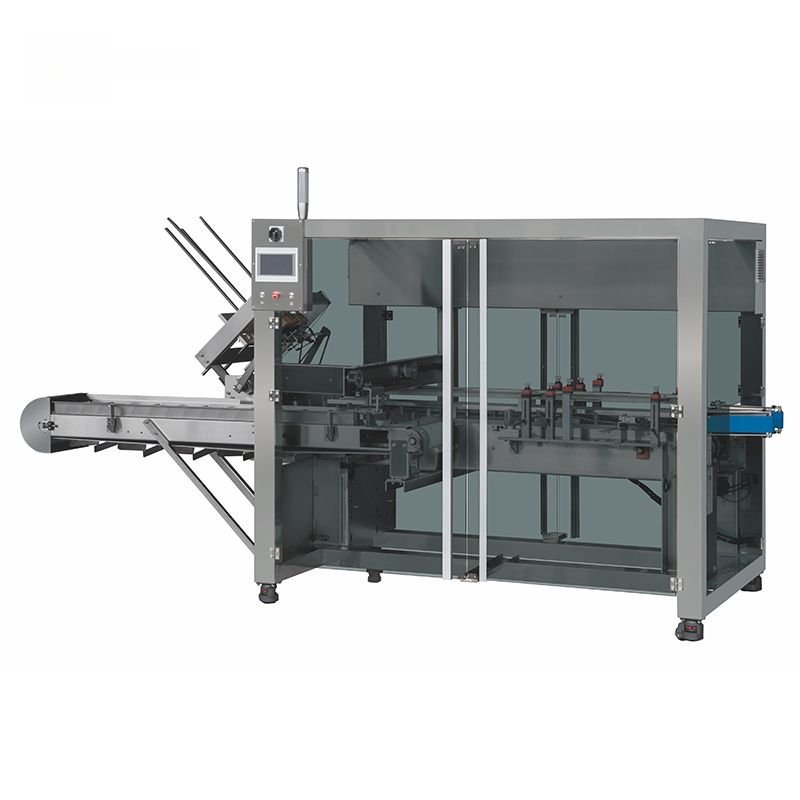
The most tempting — and most costly — shortcut is buying a standard machine that is marginally wrong and planning to “make it work”. In practice this shows up as chronic, low-grade losses: jams because the product barely clears the frame, weak seals because the sealing head is outside its ideal range, slow changeovers, and constant operator intervention. These losses rarely appear as a single dramatic failure, so they are easy to accept, but across months they cost far more than the incremental price of a correctly modified machine. This is a specific case of the broader principle in our analysis of total cost of ownership beyond initial price: the cheapest machine that does not actually do the job is the most expensive option.
The opposite error is over-specifying — paying for full custom engineering when a simple modification, or even a standard machine with a small accessory, would have met the need. A manufacturer genuinely acting in your interest will steer you down to the simplest level that works, not up to the most elaborate.
Lead times and what drives them
A standard machine can ship quickly because it is a known design. A modified platform adds engineering time for the changed elements, dimensional drawings and, usually, a build-and-test cycle with your product. A fully custom line adds concept design, detailed mechanical and controls engineering, manufacturing and a longer factory acceptance test. The single biggest influence on whether a non-standard project runs to schedule is how completely the requirement is defined up front — vague specifications cause design changes late in the build, which are the main source of delay. If a supplier promises a fully bespoke line in the same time as a catalogue unit without detailed engineering, that is a reason for caution rather than confidence.
What you must supply for an accurate custom quote
The quality of a non-standard quote is directly limited by the information you provide. Send the following and you will get a precise, comparable proposal; omit them and every supplier will quote different assumptions.
- Product and pack details — dimensions, weight, shape, and how the product behaves (fragile, sticky, unstable, hot from an upstream process).
- Packaging material — film type and thickness, carton specifications, tape or adhesive, band material, with samples where possible.
- Required throughput — real packs or cases per minute, including the variety of sizes and how often you change over.
- Layout constraints — available floor space, infeed and discharge directions, conveyor heights, and the equipment the machine must connect to.
- Utilities and environment — voltage, phase and frequency, compressed air, ambient conditions.
- Control and integration needs — handshake signals, any existing line or PLC to interface with, and labelling or coding requirements.
- Acceptance expectations — how the machine will be tested, including whether you will send product for a pre-shipment trial.
Our RFQ checklist for packaging machinery expands on each of these, and the method for calculating real throughput helps you set a rate you can defend.
Testing: the step that protects a custom investment
Because a modified or custom machine differs from the proven standard, it should be proven again before it ships. The strongest safeguard is a factory acceptance test using your actual product and film — many buyers send samples and watch the machine run at the agreed rate, confirm the seal or wrap quality, and verify the changeover before release. This catches the overwhelming majority of issues while the machine is still with the builder, where they are cheap to fix, rather than after installation on your floor. Ask what testing is included, whether the test will use your consumables, and what evidence (video, dimensional reports) you will receive if you cannot attend.
How to judge whether a manufacturer can really deliver custom work
Not every supplier that advertises bespoke machinery has genuine engineering capacity; some simply resell standard units. Look for evidence of in-house mechanical and controls engineering, the ability to produce dimensional drawings before manufacture, a documented process for testing with your product, and a track record of visibly different projects rather than identical catalogue photos. Our guide on judging a manufacturer’s real engineering capacity lists the concrete signals — including the questions a competent supplier will ask you before quoting.
Where modified and custom projects most often arise
Non-standard requirements cluster in a few areas, and seeing the pattern can help you place your own project:
- Beverage multipacks — sleeve shrink lines adapted for unusual bottle counts, voltages and family-pack sizes, such as the automatic sleeve shrink wrapper.
- Case erection and sealing — machines tailored to mailer boxes, mixed sizes or special closures, like the high-speed erector K30T and the fold case sealer FC500DS.
- Pallet stabilisation — wrappers engineered for very heavy, light or unstable loads, including the large turntable wrapper and the inline rotary-arm wrapper.
- Long or oversized products — extended side-seal and orbital systems such as the high-speed side sealer.
Three worked buyer scenarios
Seeing how the decision lands for real requirements is often clearer than the abstract rules.
Scenario one — the stable, single-format producer. A bakery running one case size at a steady rate, with product that fits a catalogue sealer and wrapper, should buy standard machines. There is no benefit to engineering, and the standard units are faster to deliver, cheaper and easiest to support.
Scenario two — the multi-format exporter. A beverage producer running several multipack counts at an unusual voltage, with a family-size bottle that exceeds the standard tunnel, is the classic modified-platform case. The core sleeve process is standard; only the infeed, tunnel and changeover logic change. A modified line delivers the flexibility without the cost and risk of a wholly bespoke design.
Scenario three — the genuinely novel application. A manufacturer with an unusual product geometry, a very high required rate, or a process that combines steps in a way no standard machine performs needs full engineering. Here the investment is justified by the absence of any standard alternative and the value of the production volume; the project should be matched with rigorous design review and acceptance testing.
Documentation you should expect to receive
A non-standard machine should arrive with more than the unit itself. Ask for general-arrangement and dimensional drawings before manufacture, electrical and pneumatic diagrams, an operating and maintenance manual, a declared spare-parts list with part numbers, and documentation of the control program and any safety assessment. For a modified machine, the documentation should make clear which elements are standard and which were changed, so that future maintenance — whether by your team or by a new engineer years later — can identify parts and understand the machine. The absence of drawings, or reluctance to provide them, is a warning that the supplier may not have genuinely engineered the machine. These documents also support the routine care covered in the maintenance schedule and the spare-parts strategy.
Payment, milestones and managing the project
Custom and modified projects are usually managed against milestones — design confirmation, manufacture, factory acceptance and installation — and it is reasonable for payments to align with them. The most important milestone from a buyer’s perspective is the pre-shipment acceptance test, because it is the last point at which issues are cheap to correct. Confirm in advance how changes to the specification will be handled once the build is under way: late changes are the main cause of delay on bespoke work, and a clear process for approving them protects both sides. Where the machine is part of a larger line, agree the interfaces and responsibilities at the start so that the integration work is not left ambiguous between suppliers.
Support after a custom machine is installed
A bespoke machine is only as good as its long-term support. Confirm what documentation, drawings and spare-parts lists are delivered, how remote diagnostics work, and who handles commissioning and operator training. Because modified machines contain both standard and custom elements, clear documentation of what changed is especially valuable for future maintenance. Plan the routine care from the start using the preventive maintenance schedule, and route any questions through the help and after-sales centre.
A sensible default path
If you take one thing from this guide, it is a default sequence: start by checking whether a standard machine genuinely fits; if it does not, ask for a modified proven platform before commissioning full custom engineering; and reserve a fully bespoke line for requirements that truly cannot be met any other way. Define the requirement completely, insist on a test with your product, and choose a supplier who engineers down to the simplest solution rather than up. SunAura Packaging Machines will recommend a standard unit where one fits, quote a modified platform for the majority of non-standard needs, and engineer a full line where the application demands it — you can begin from the custom machine configurator or browse the full product range.

David leads our case sealing and cartoning engineering team. Over 14 years he has specified, installed and commissioned hundreds of random-size case sealers, top- and side-loading cartoners, and automatic case packers for food, household and industrial product lines. He writes buying guides and troubleshooting articles around seal quality, tape and hot-melt glue selection, and carton throughput limits.
See Full Bio ›