

The single most expensive mistake a packaging buyer makes is confusing a trading company with a manufacturing engineering company. On a website, they look identical: a hero photo, a product catalog, a “factory” page, and a quote within 48 hours. The difference only shows up when your line stops on a Friday night and nobody can explain why. If you are about to buy packaging machine or a complete line, judging a supplier’s real engineering capacity is the highest-leverage skill you can develop. This guide from SunAura Packaging Machines tells you how to tell the engineers from the traders, the questions that expose the difference, and the verification steps that protect your capital.
The Core Distinction: Manufacturer vs Trader vs Integrator
There are three kinds of supplier in the packaging machinery world, and they sell themselves as the same thing. A real manufacturer designs, machines, welds, wires, and commissions its own equipment in its own workshop, owns the drawings and the control code, and carries the engineering liability. A trading company resells machines built by someone else, often under its own brand, and has no design ownership; it brokers and marks up. An integrator builds no machine itself but assembles others’ machines into a line, which can be perfectly legitimate if it truly owns the integration.
Traders are not dishonest; many are competent brokers. But they cannot redesign a frame for your product, cannot write you a custom recipe logic, and cannot debug a control fault at 2 a.m. because the code is not theirs. Your job is to find out which one you are talking to before you pay the deposit.
Signals of Real Engineering Capacity
Look for evidence of the work, not the brochure. Real capacity shows up in concrete, verifiable details:
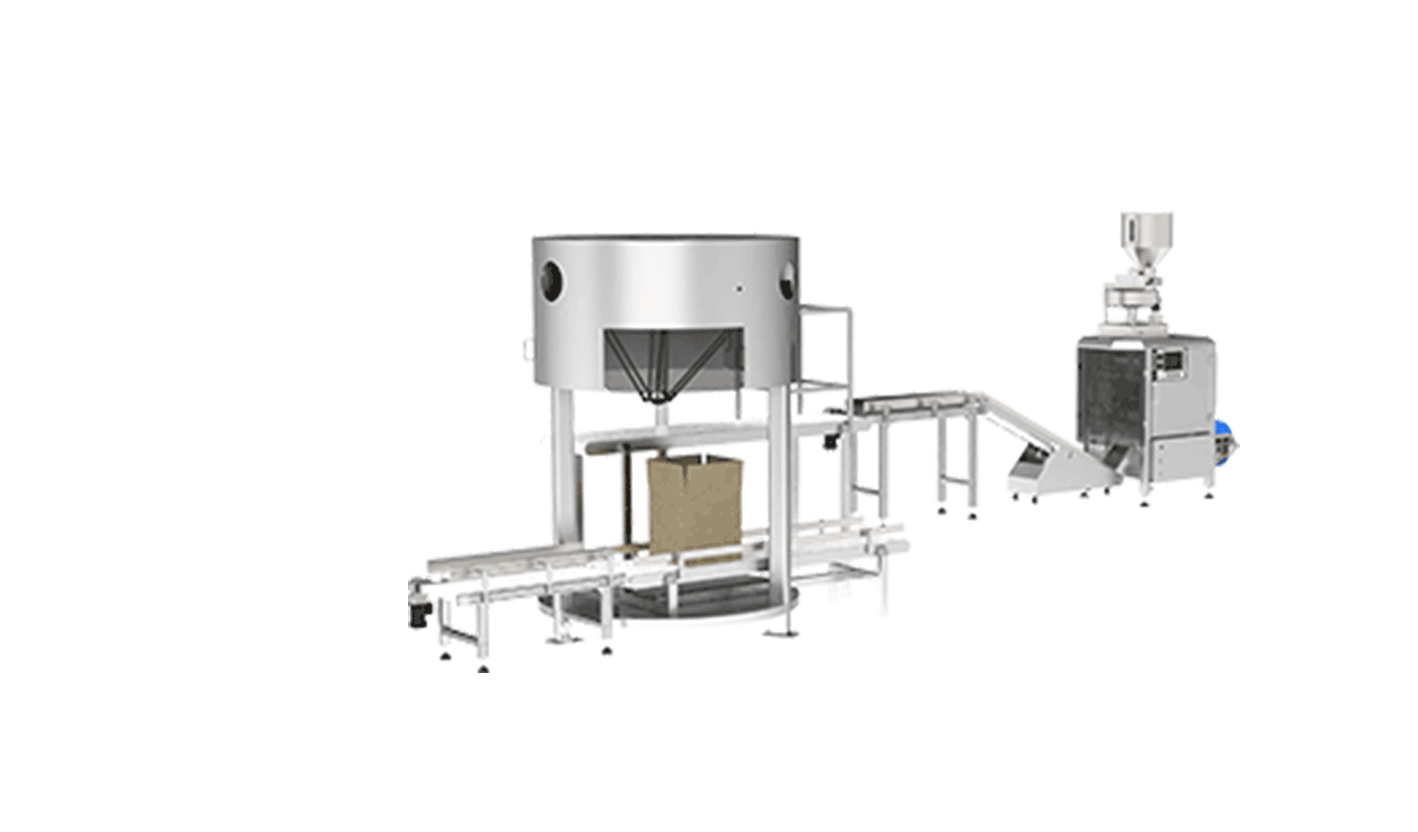
- An owned workshop with equipment you can see. CNC machining centers, welding bays, sheet metal work, an electrical assembly area, and a test floor where machines run under power. Ask for a live video walkthrough, not photos. Our own workshop display exists precisely so buyers can see the build floor before they buy.
- Engineers who answer technical questions in minutes, not days. Ask a specific question — “what servo drive do you use on the film pull?” — and time the answer. A real engineer knows off the top of their head; a trader goes to ask the factory and comes back with a vague answer two days later.
- Own control code and HMI. Ask whether the PLC program is original and whether they can modify it. If the answer is “we can’t change that, it’s generic,” they are reselling someone else’s machine.
- Original drawings and BOM. Real manufacturers produce a general arrangement drawing, electrical schematic, and bill of materials for every project. Traders cannot.
- Patents and certifications. Registered design patents, CE technical files, and industry certifications are hard to fake. Review them on our certifications and patents page as an example of what to request from any supplier.
Red Flags That Signal Thin Engineering
Equally important is knowing what to walk away from:
- “We can do everything” with no specialization. A supplier that sells flow wrappers, bottling lines, CNC machines, and textile equipment from one catalog is a trader, not a focused engineer.
- Quotes that arrive in hours with no product data sheet questions. Real engineers interrogate your product, film, speed, and floor space before they quote. A quote without questions is a price from a catalog.
- No factory acceptance test (FAT). A real manufacturer runs your machine on its test floor with your product before shipment. A trader ships from inventory and never sees it run.
- Vague after-sales promises. “We support it” with no spare-parts list, no response-time SLA, and no remote-diagnostics offer is a warning. Read our notes on spare parts management and downtime to see why this matters.
- Prices far below the market. Engineering and steel cost money. A price 30 percent below every comparable quote usually means a rebranded generic machine or a missing integration scope.
Commercial and Financial Signals
Engineering capacity also shows in the commercial structure of the deal. A real manufacturer quotes with manufacturing realism: a lead time tied to steel and electrical procurement, a payment schedule tied to milestones (design freeze, manufacturing, FAT, shipment), and warranty terms that match its own confidence. A trader quotes a short lead time that does not match the product, or demands full payment before shipment with no milestone gate. Ask about the milestone structure. A manufacturer is comfortable showing you progress — design review, steel cut, wiring, FAT — because it owns the process. A trader has nothing to show between deposit and delivery.
Also ask about export experience and installed base. How many machines are running in your region? Can they name a distributor or service partner near you? A manufacturer with a real installed base in your country has spare parts and local knowledge; a trader who has sold you the machine as an export has neither. This is a leading cause of “brand-new machine, zero support” horror stories. Verify the after-sales offer in writing, including spare-parts lead times and remote-diagnostic capability, before you sign.
Design Depth: Beyond the Brochure Specs
Two machines can carry identical brochure speeds and differ tenfold in usable design depth. Look at the details an engineer sweats: Are guards quick-release and tool-less? Are change parts on a labeled, numbered rack? Are lubrication points grouped and reachable? Does the HMI show live diagnostics, or just green lights? Is the electrical cabinet laid out with labeling, cable management, and accessible terminals? These are not cosmetic; they predict how fast your team can maintain and change over the machine for the next decade.
Ask to see the maintenance manual and a sample spare-parts list before purchase. A manufacturer can hand you both. A trader will offer to “send it later.” The manual is a window into how seriously the builder treats service, and a well-documented machine is one your own team can actually maintain instead of being locked into expensive call-outs. For the operational side, our guide on preventive maintenance for high-speed packaging equipment shows what good documentation enables.
The Control System Is the Deepest Test
The mechanical frame is easy to copy; the control system is not. Two wrappers can look identical in a photo yet differ completely in engineering depth. Ask the supplier to describe the control architecture: which PLC and HMI brand, how many servo axes are independently controlled, whether recipes are stored, whether there is an audit trail, and whether remote diagnostics (VPN or IoT gateway) is standard. A manufacturer with real engineering will walk you through this comfortably; a trader will deflect to a sales script.
This is where servo design separates serious builders from assemblers. Our analysis of servo-driven packaging machines and ROI explains why the servo architecture underneath the sheet metal is what determines throughput flexibility and long-term value. If the supplier cannot discuss servo count, tuning, or motion curves, they do not own the machine.
Verify with References and a Factory Visit
Marketing claims are cheap; references are expensive to fabricate. Ask for two or three existing customers in your industry, ideally at a similar scale, and speak to them directly. Ask the questions that matter: How long did commissioning take? How did the supplier respond when a fault occurred? Did the machine meet the quoted OEE? Would they buy from them again? A supplier with nothing to show you, or references that are all unrelated industries, is hiding something.
If the order is large, visit the factory. A real manufacturer welcomes the visit and walks you around the welding bay, electrical shop, and test floor. A trader will offer a “showroom” or a partner’s factory with uncomfortable logistics. In-person or live-video, the test floor is the courtroom: watch a machine actually run product, observe the operators, and judge the cleanliness and organization of the build shop. Disorganized floors build disorganized machines.
A Buyer’s Verification Checklist
| Capability | How to test it | Real manufacturer answer |
|---|---|---|
| In-house design | Ask for original GA drawing + schematic | Produces within days |
| Control ownership | Ask to modify a recipe feature | Confirms own PLC code |
| Workshop | Live video walkthrough | Shows welding + test floor |
| FAT capability | Request to run your product pre-ship | Offers a documented FAT |
| After-sales | Ask for SLA + spare list | Provides both in writing |
| References | Two comparable customers | Arranges calls quickly |
Run this checklist during the RFQ stage, alongside our fuller RFQ checklist for sourcing automatic packaging machinery. A supplier that passes on paper will pass on the floor; one that evades the questions will evade your support later.
Why Engineering Capacity Protects Your Line
A machine’s engineering depth shows up in its second decade, not its first. A well-designed machine has accessible spares, documented upgrades, and a manufacturer that can still support it. A traded generic machine becomes unrepairable when the trading company disappears or rebrands. When you invest in equipment that should run for ten years or more, you are buying a relationship, not a box. The cheapest up-front quote from a supplier you cannot verify is the most expensive machine you will ever own.
What a Wrong Choice Actually Costs
Consider a plant that bought a “packaging line” from a trader 15 percent below a real manufacturer’s quote. The machine arrived looking fine, but after six months a servo drive failed and the trader could not source a replacement because the generic machine’s parts were unbranded and undocumented. The line sat idle for eleven days while the trader waited on a factory overseas. Eleven days of downtime on a line worth $40,000 per day in output is $440,000 — more than the entire machine. When the plant then asked for a speed upgrade for a new SKU, the answer was “we cannot modify the control program,” so the line was stranded at its original speed.
Contrast that with a real manufacturer: the spare drive is on a known shelf, the control program can be modified, and the engineering team can dial in the new recipe remotely. The 15 percent price saving evaporated on the first failure. This is why engineering capacity is not a nice-to-have; it is downtime insurance, and it is bought before the first failure, not after.
The Buyer’s Decision Rule
After running the checklist, make one rule your own: if the supplier cannot show the workshop, the drawings, the control ownership, and a comparable reference, the price is irrelevant. A cheap machine with no support is a liability with a motor. A slightly dear machine from a verifiable engineer is a fifteen-year asset that protects your production schedule. In packaging machinery, the cheapest quote you cannot verify is the most expensive machine you will ever own.
How to Evaluate SunAura Packaging Machines’s Own Capacity
We make no special plea to trust our marketing; we invite verification. See the build floor on our workshop display, review the registered designs on our certifications and patents page, and judge the engineering behind products like the full-servo reciprocating wrapper and full-servo cartoner. If you are comparing suppliers, our team will happily answer the technical questions above on a call. Learn more about the company on our about us page, or contact SunAura Packaging Machines and ask the hard questions — the answers are the point of this guide.
Conclusion
Judging a packaging machinery manufacturer is really a test of evidence. Real engineering capacity leaves fingerprints: an owned workshop, original drawings and control code, a test floor, real references, and a willingness to answer technical questions under pressure. Traders look the same on a website but cannot survive those tests. Spend the time to verify before you deposit, and the supplier you finally choose will be the one that stands behind the machine for the decade it runs on your floor. That is the difference between a purchase order and a partnership.

Michael designs automated palletizing stations and ties upstream case or bag flow to downstream stretch wrapping. His work spans conventional layer palletizers, robotic arm cells, conveyor routing, safety fencing and handover logic between machines. He writes about palletizer selection, load stability and how an end-of-line sequence should be balanced.
See Full Bio ›