

Sourcing automatic packaging machinery is expensive to get wrong. A rushed request for quotation produces five quotes that look comparable but describe five different machines — different speeds, different film compatibility, different levels of automation, and very different total costs. By the time you discover the gaps, you are either renegotiating a contract you already signed or paying twice to fix a line that was mis-specified from day one. This complete RFQ checklist from SunAura Packaging Machines gives purchasing managers and project engineers the exact structure to request quotes that are genuinely comparable, technically accurate, and commercially clear. Use it before you send the first message to any packaging-machinery supplier.
Why the RFQ itself decides the project
Suppliers quote to the information you give them. If your RFQ says “we need a fast packing machine,” every supplier will guess at the fastest machine they sell and price it accordingly — sometimes oversized, sometimes undersized. A precise RFQ does the opposite: it forces every bidder to design to the same specification, so when quotes come back, the differences are real differences in engineering, components, and service — not differences in how well each vendor guessed your needs. The hours you spend writing the RFQ come back many times over in cleaner comparisons, fewer surprises, and a line that actually meets your throughput on day one.
Treat the RFQ as a living technical document, not a formality. The best RFQs include measurable numbers, drawings or samples, and explicit assumptions you are making, so a supplier can confirm or correct them rather than guess.
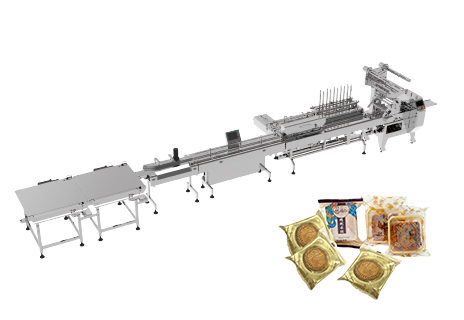
Section 1: Describe your product and packaging completely
This is the most important section, and the one buyers rush. A supplier cannot select the right machine without a complete picture of what it must handle. Provide, for every SKU you expect to run:
- Product name, shape, dimensions (length × width × height), and weight — including the largest, smallest, and heaviest variants.
- Product state: ambient, frozen, hot, oily, dusty, wet, fragile, or rigid. Each changes the contact materials and guarding.
- Primary packaging already applied: is the product loose, on a tray, already in a carton, or in a flow pack?
- The final pack format you want: pillow bag, pouch, carton, tray, shrink bundle, or case.
- Packaging materials: film type and gauge, carton blank specification, liner requirements, barrier or modified-atmosphere needs.
- Print or registration requirements: pre-printed film, labels, barcode placement.
If you can ship physical product samples or a 3D drawing, do it. A sample box or dummy carton removes an entire class of misunderstandings about pocket size and feeding. SunAura Packaging Machines regularly asks for samples before quoting precisely because a 5 mm dimension error changes the forming tooling.
Section 2: State your throughput and operating reality
Numbers here separate a realistic quote from a fantasy one. Provide:
- Required packs-per-minute (or boxes-per-minute), and the demand peak versus average.
- Number of shifts per day and days per week the line will run.
- Planned growth over the next 3–5 years, so the supplier can recommend headroom.
- Expected efficiency / OEE target, so rated speed is de-rated to a sustainable figure.
- Upstream and downstream interfaces: what feeds the machine (hand, feeder, another line) and what it discharges into (case packer, palletizer, shrink tunnel).
Be explicit about bottlenecks. If the upstream process can only supply 60 ppm, a 200 ppm wrapper is wasted capital. This is the same throughput-reality discipline we cover in our guide to calculating the real throughput of automatic packaging equipment. Also state your expected product-mix ratio: a line that runs one hero SKU at high speed all day is a different machine from one that switches between ten SKUs across short runs, and the second case rewards recipe storage and fast changeover far more than raw top speed.
Section 3: Facility, utilities, and environment
A machine that fits on paper will not fit in your plant. Give every supplier:
- Footprint and height constraints, and whether the machine must navigate through doorways, lifts, or corners during installation.
- Electrical supply: voltage, phase, frequency, and available amperage. Voltage mismatches are a classic project delay.
- Compressed air supply: pressure and available flow in liters per minute.
- Environment: washdown frequency, dust, humidity, temperature range, and any explosion-protection (ATEX) zones if applicable.
- Floor loading and whether the area can accept vibration from high-speed equipment.
Section 4: Technical and automation requirements
This section tells suppliers how much machine you actually want. Specify:
- Desired level of automation: semi-automatic, automatic, or fully integrated turnkey line.
- Control system preference: PLC brand, HMI language, recipe storage, and whether the line must connect to your MES or data system.
- Servo vs motorized mechanics: if you need fast changeover across many SKUs, say so, so suppliers price servo axes accordingly (see our servo-driven packaging machine ROI analysis for what that premium buys).
- Changeover expectations: target time between SKUs and number of recipes.
- Safety: required guarding standard and whether the line must meet CE or another regional directive.
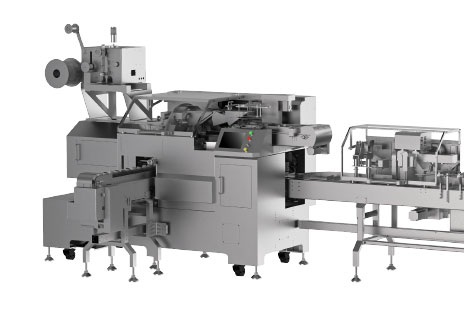
Section 5: Compliance, documentation, and standards
For food, pharma, and cosmetic buyers this section is non-negotiable. Ask every supplier to confirm and document:
- CE conformity and the relevant declarations; for regulated industries, food-contact material certificates.
- Whether the design supports GMP, washdown, and clean-in-place requirements.
- Electrical schematics, pneumatic diagrams, and operation manuals delivered with the machine, and in which language.
- Spare-parts list with part numbers, recommended stock, and lead times.
A supplier that hesitates to provide documentation up front will be worse to deal with after the sale. You can compare SunAura Packaging Machines’s own certifications and patents as a baseline for what a serious supplier documents.
Section 6: Commercial and logistics terms
To compare prices fairly, force every quote onto the same commercial basis. Specify the Incoterm you want (for example, FOB or CIF to your port), the required delivery term, and payment schedule. Ask each supplier to break the price into:
| Quotation component | What you want confirmed |
|---|---|
| Machine base price | Model, configuration, included options |
| Tooling / change parts | Which SKU tooling is included vs extra |
| Conveyors and infeed | Length, drives, guards included |
| Installation & commissioning | Travel, days, who pays what |
| Training | Number of operators and engineers trained |
| Spare parts package | Recommended first-year spares list |
| Shipping & insurance | Incoterm and destination port |
Comparing a “machine only” quote against a “turnkey” quote is a classic apples-to-oranges mistake. Force the breakdown and the gap becomes obvious. The same logic applies whether you are buying a single cartoner like the ZH-250P automatic servo cartoning machine or a complete end-of-line shrink cell such as the BTX-6040 sleeve shrink wrapping machine.
Section 7: After-sales, warranty, and support
The machine you buy is a ten-year relationship. Specify and ask about:
- Warranty duration and what it covers (labor, parts, remote support).
- Remote diagnostics capability and response-time commitment.
- Local or regional service presence and typical spares lead time.
- Whether a critical-spares recommendation is included, and how to manage it (see our guide to spare-parts and downtime management principles).
Buyers who weight only the purchase price routinely discover that a cheap machine with long spares lead times costs more in lost production than the premium they avoided.
Section 8: Vendor qualification questions
Beyond the machine, ask every supplier to prove they can deliver:
- How many machines of this exact model have run for how long, and can you visit a reference site?
- Factory acceptance testing (FAT) protocol — what will be tested, and can you attend?
- Engineering team depth: who will design your line, and how is integration handled?
- Project timeline from order acceptance to delivery, with milestones.
A supplier that refuses reference checks or a defined FAT is telling you something about its confidence. Ask, too, how the supplier handles design changes after order: a reputable partner will treat your RFQ as the baseline and quote any deviation explicitly rather than quietly substituting components. For the full picture on judging engineering capability, our buyers’ guide on evaluating packaging-machinery investments complements this checklist.
Evaluating the quotes you receive
Once comparable quotes come back, resist choosing on sticker price alone. Build a small comparison matrix that normalizes each offer to the same basis: same speed, same tooling scope, same included options, same Incoterm. A quote that looks 15% cheaper often shrinks to parity once you add the tooling, conveyor, and commissioning its competitor included as standard. Then weight the non-price factors — service response, spares lead time, reference customers, and engineering depth — because those determine your uptime for the next decade.
A practical weighting for most plants is roughly 50% technical fit and total cost over five years, 30% commercial terms and delivery, and 20% supplier capability and after-sales support. Under that weighting, a marginally more expensive machine from a supplier with proven references and local spares almost always outscores the cheapest anonymous bid. This is the same long-horizon thinking that underpins our analysis of total-cost comparisons for packaging equipment: purchase price is only the first year of a ten-year relationship.
A worked example: a mid-size bakery RFQ
Imagine a bakery packing five bread SKUs at 90 ppm on two shifts. A weak RFQ would say “automatic bread packing machine, fast.” A strong one specifies: five SKUs with lengths 220–380 mm, up to 180 g each, ambient, already baked and sealed into a flow pack by an upstream wrapper; required 90 packs per minute sustained at 80% efficiency; 380 V three-phase, compressed air at 0.6 MPa; a washdown-friendly stainless frame; recipe-driven changeover under 10 minutes; CE declaration; and a CIF quote to a specified port with a defined spares list and two-year warranty. Every supplier now prices the same machine, and the buyer can compare the cartoner model, servo count, and conveyor scope directly. That level of detail is what turns five vague proposals into a decision.
Common RFQ mistakes to avoid
Three errors recur in nearly every weak RFQ. First, describing only the hero SKU and ignoring the awkward, slow-running, or unusual product that will actually drive the design. Second, asking for maximum speed without a required efficiency, which invites over-rated, over-priced machines. Third, leaving automation level and tooling scope vague, so “the” quote means different things to different bidders. Fixing those three points alone makes your quotes far more comparable. If you are pairing a new machine with an existing line, also read our notes on selecting a horizontal flow wrapper — the infeed and integration questions there should also appear in your RFQ.
Timeline, milestones, and what to ask for in the proposal
Finally, ask every supplier to present a written project timeline rather than a vague “8–10 weeks.” A professional quotation breaks the order-to-delivery journey into visible milestones: engineering design freeze, component procurement, build and assembly, factory acceptance testing with your product, packing and shipping, installation, and site acceptance testing. Each milestone should carry a date and a deliverable you can verify. This protects you in two ways: it exposes suppliers who under-design by showing how much time they allow for testing, and it gives you a fair basis to compare real delivery commitments against optimistic marketing promises. SunAura Packaging Machines includes this milestone plan in every formal proposal so the customer knows exactly when each phase happens and what will be tested before shipment.
Conclusion: send a checklist, not a wish list
A strong RFQ turns buying packaging machinery from a guessing game into a comparison. By describing every SKU, your throughput reality, facility limits, automation level, compliance needs, and commercial terms in measurable detail, you force suppliers to quote the same machine — and then the decision becomes about engineering quality, service, and total value rather than guesswork. The extra time invested up front pays back during commissioning, when a well-specified line runs on day one instead of weeks of troubleshooting. SunAura Packaging Machines helps customers refine their RFQs before quoting, because a well-written specification saves time on both sides and produces a line that fits on day one. When you are ready to send yours, request a quote and engineering review from SunAura Packaging Machines, or explore our packaging line solutions to see the equipment categories your RFQ should cover.

James oversees the engineering architecture for full end-of-line projects: defining machine sequence, conveyor layout, line balance, footprint and expansion capacity before individual machines are ordered. He reviews customer specifications, production rates and facility constraints, and signs off on the engineering drawings and acceptance tests. His articles take the system-level view a procurement manager needs.
See Full Bio ›