
Case erectors take flat corrugated blanks, open and square the box, fold the bottom flaps and seal the base — delivering a ready-to-fill carton by hand or straight into a robotic case packer and conveyor line.
A case erector (carton erector) is the machine that turns a stack of flattened corrugated boxes into open, bottom-sealed cartons. It picks one blank from the magazine, uses suction cups to open it, squares the box against a mandrel, folds the four bottom flaps, and then either staples or tapes the base before discharging it onto the conveyor. The result is a steady stream of boxes that a packer — human or robot — can fill without first wrestling with the blank.
La gama SunAura Packaging Machines is built around the K20, K30 and K40 platforms and is split by the sealing method and by the drive. The K20 series covers low and medium speeds with stapling, tape and hot-melt bottom sealing options (K20TJ, K20TDS, K20TX, K20TK, K20TH); the K30 series is aimed at e-commerce and higher throughput (K30TDS, K30T); the K40T is the high-speed frame. In parallel we offer dedicated servo and pneumatic erectors in low-, medium- and high-speed variants, plus the fully robotic DKXM-500, KXS400 and AIS400 case erectors that pick and erect irregular or frequently changing blanks without a changeover mandrel.
Choosing an erector is mostly a question of how fast the line is and how often the blank changes. A fixed-size food line running one box for a shift is the natural home for a tape or hot-melt servo erector. A 3PL or e-commerce line that changes box sizes constantly is usually better served by a robotic erector, where changeover is a recipe rather than a mechanical swap.
22 models across K-series bottom sealers and robotic pick-and-place erectors. Blank size, sealing method (tape, staple, hot melt) and speed are listed on each page.
| Modelo | Configuración / aplicación típica | ||
|---|---|---|---|
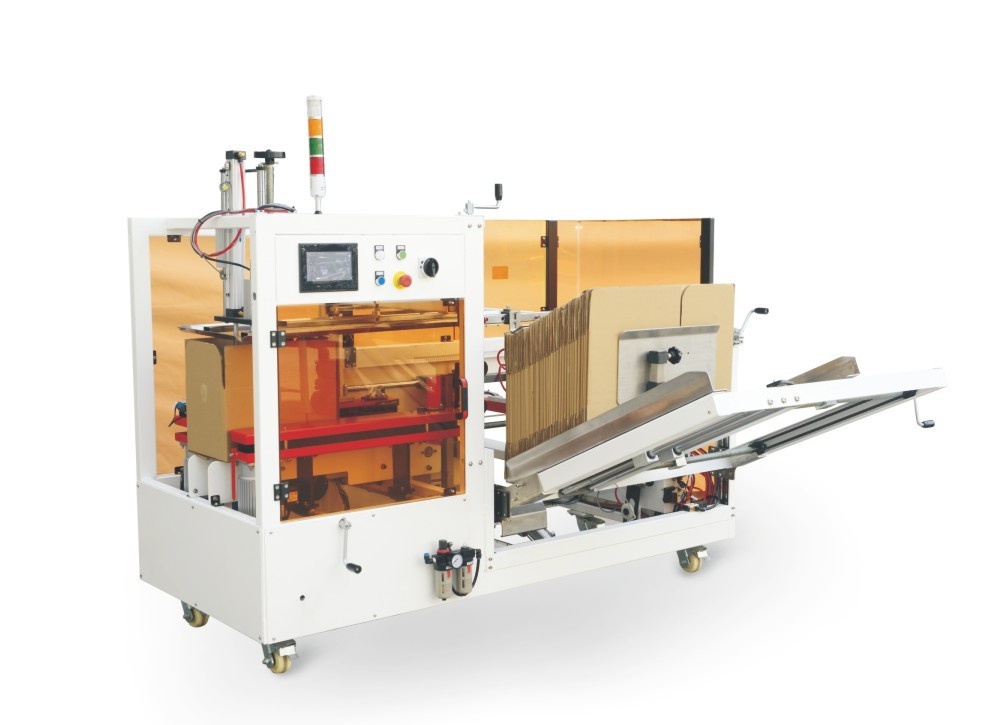 |
K20TJ | Stapling Carton Erector & Bottom Sealer K20TJ | Ver máquina → |
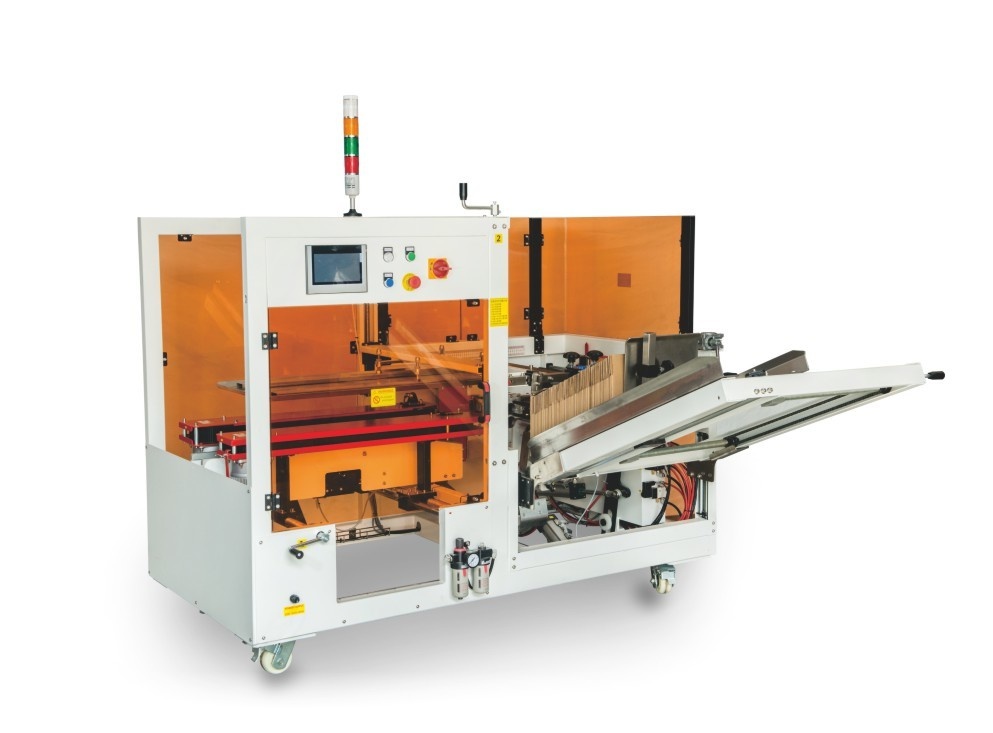 |
K20TDS | E-commerce Carton Erector & Bottom Sealer K20TDS | Ver máquina → |
|
K20TX | Low-Speed Carton Erector & Bottom Sealer K20TX | Ver máquina → |
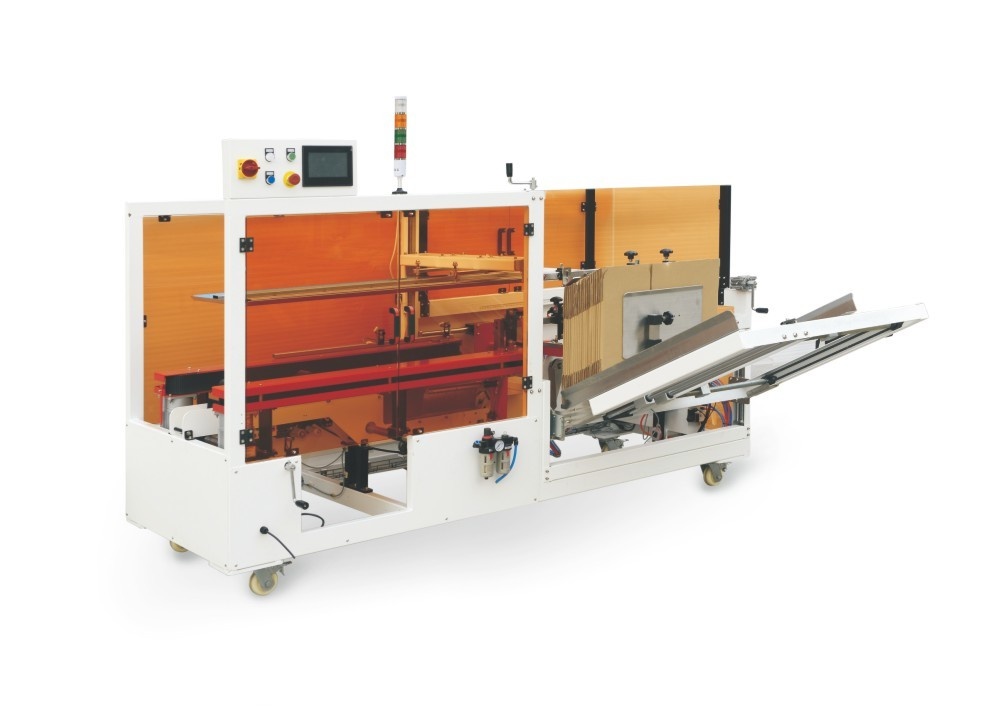 |
K20TK | Medium-Speed Carton Erector & Bottom Sealer K20TK | Ver máquina → |
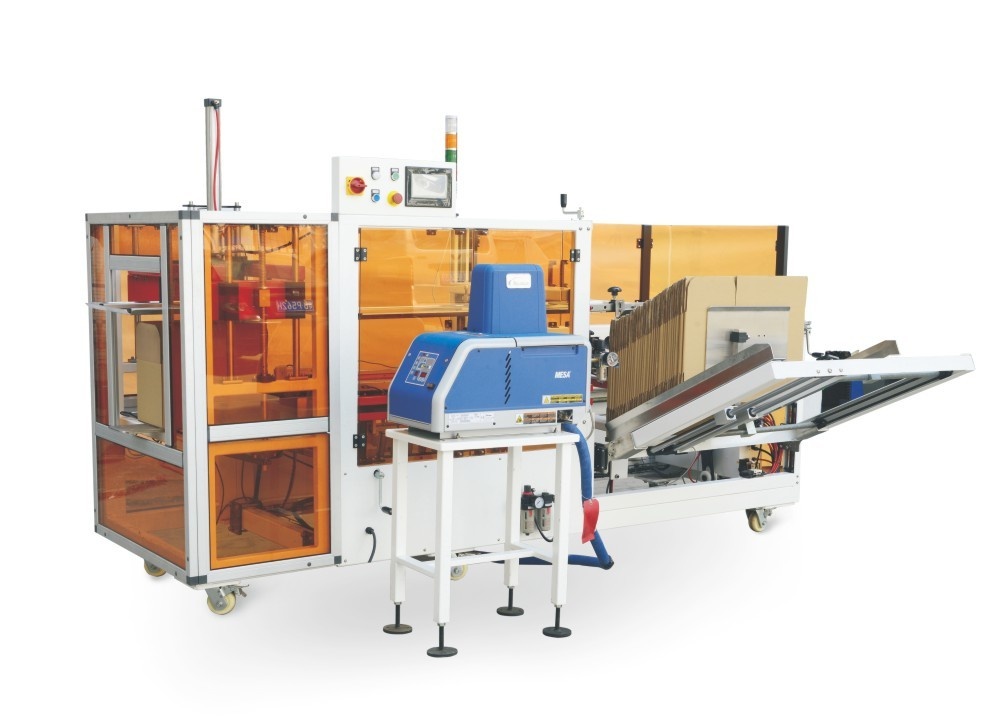 |
K20TH | Hot-Melt Carton Erector & Bottom Sealer K20TH | Ver máquina → |
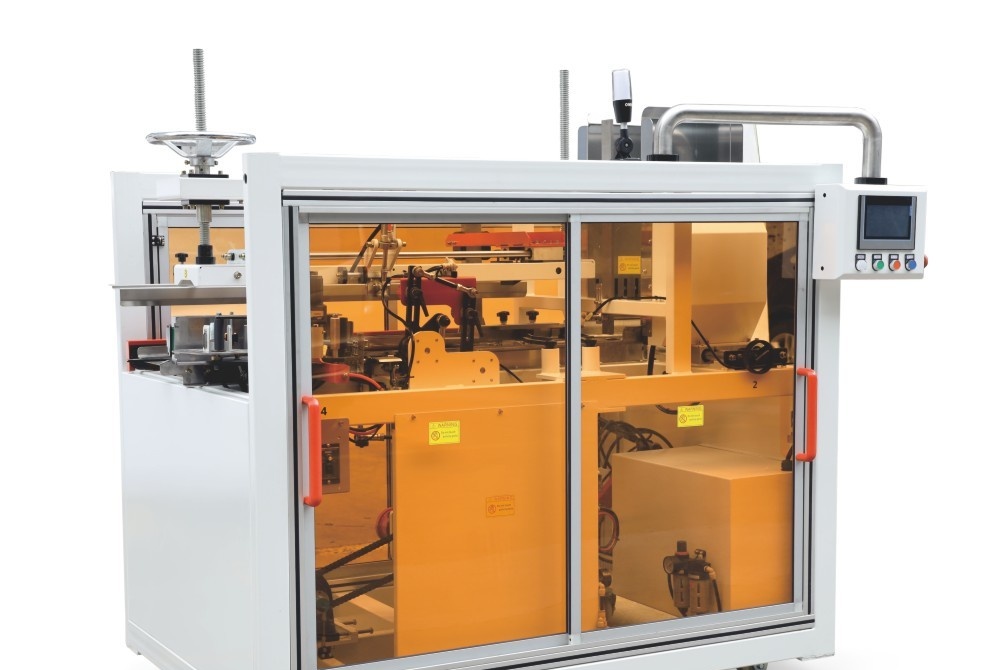 |
K30TDS | High-Speed E-commerce Carton Erector & Bottom Sealer K30TDS | Ver máquina → |
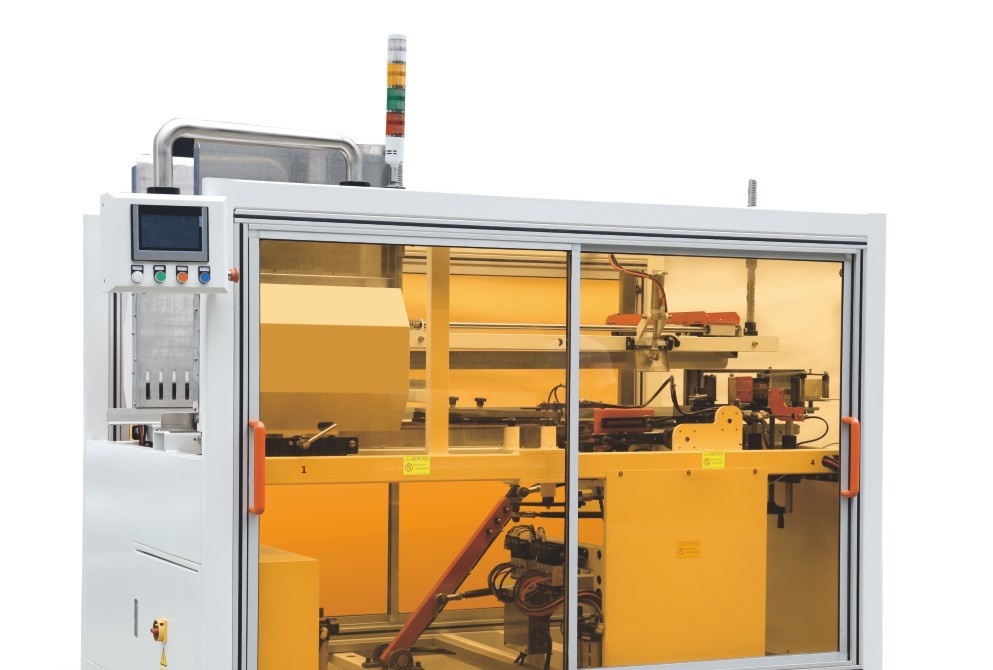 |
K30T | High-Speed Carton Erector & Bottom Sealer K30T | Ver máquina → |
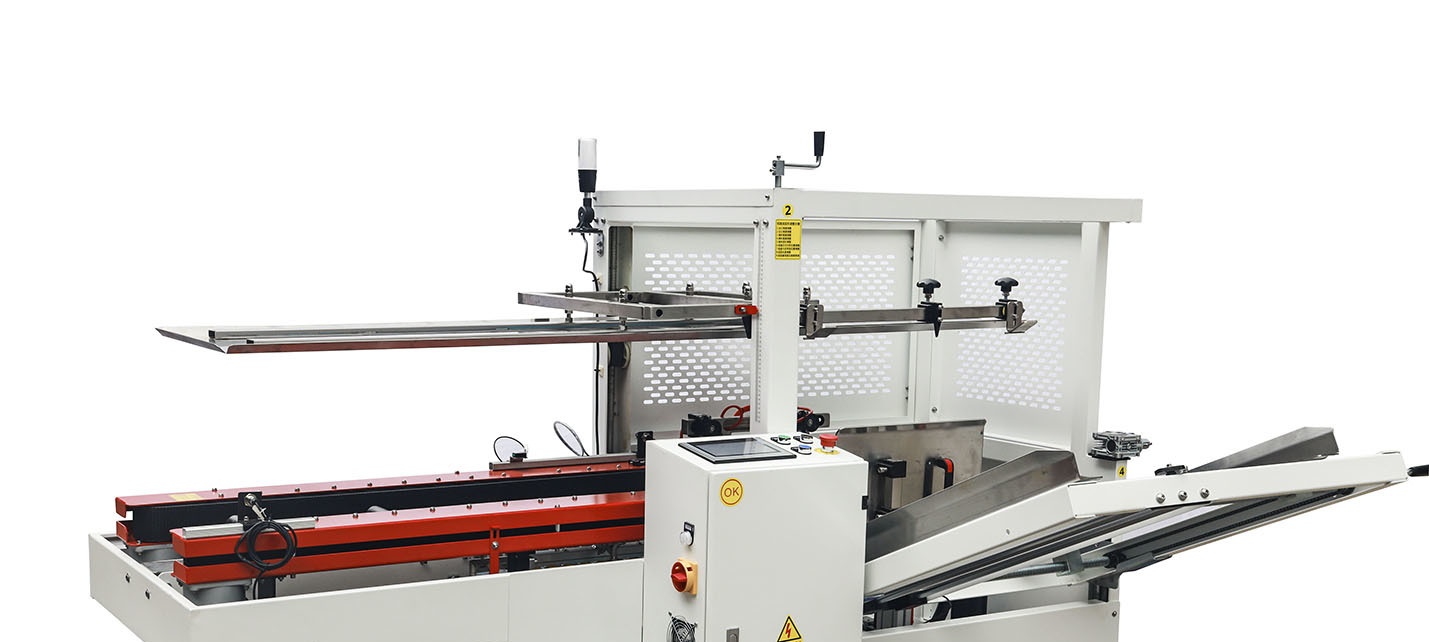 |
— | High-Speed Servo Carton Erector & Bottom Sealer | Ver máquina → |
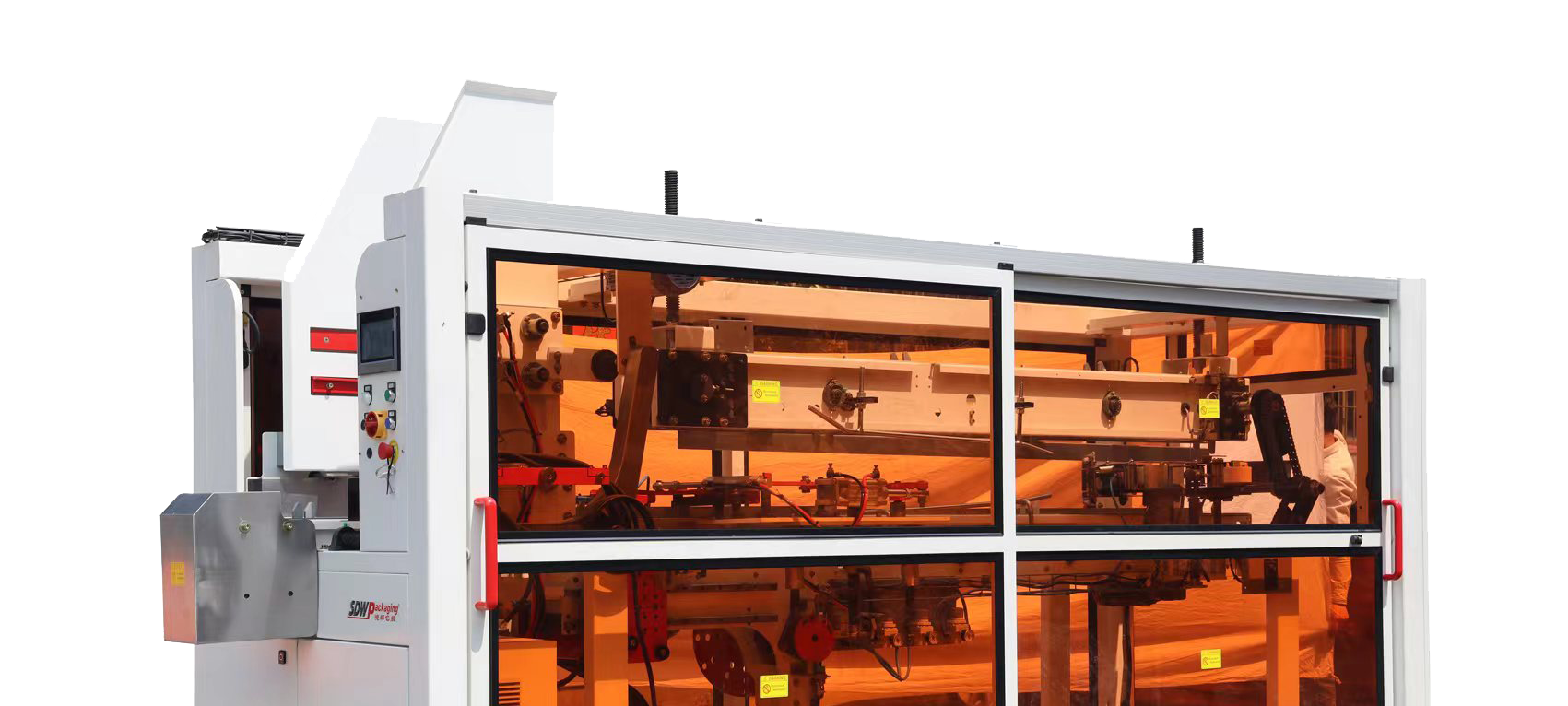 |
K40T | High-Speed Carton Erector & Bottom Sealer K40T | Ver máquina → |
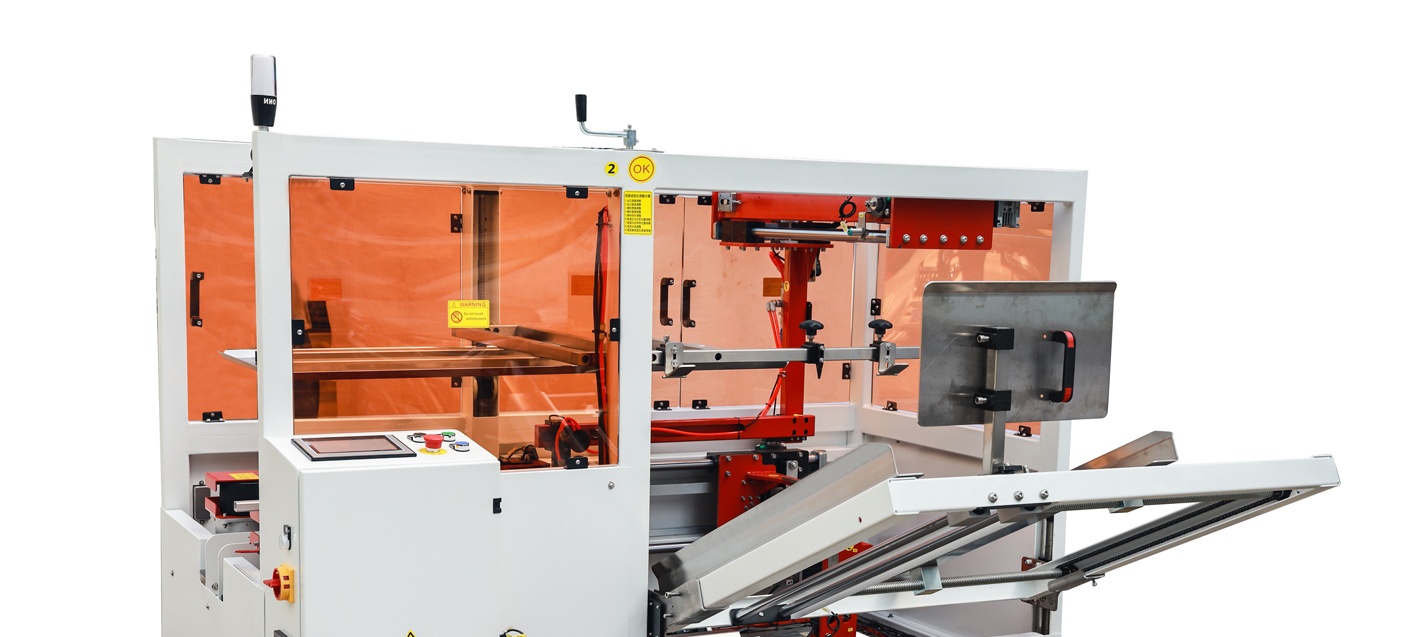 |
— | Servo Carton Erector & Bottom Sealer | Ver máquina → |
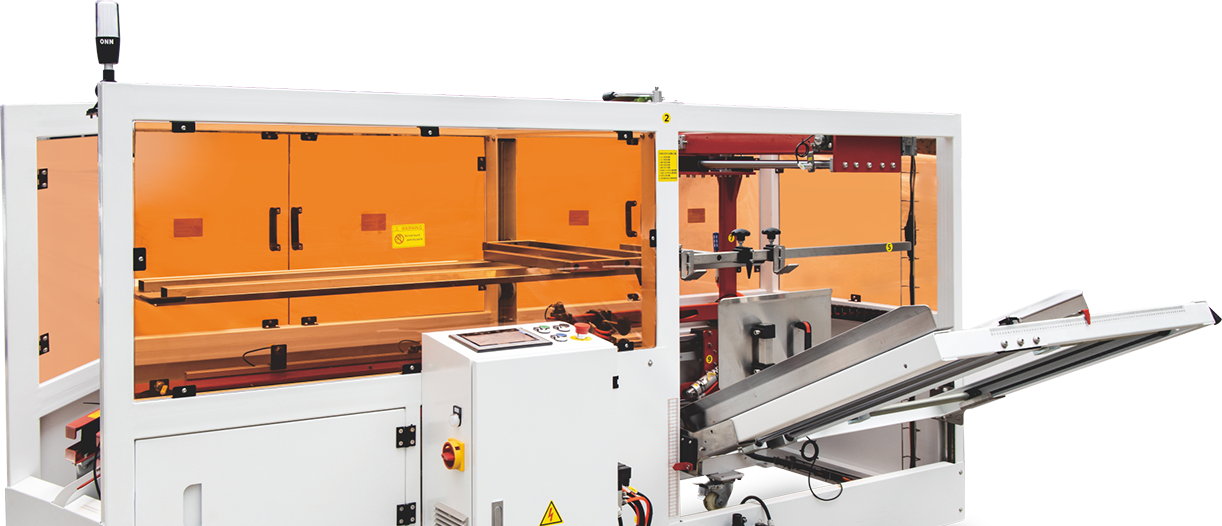 |
— | Servo Carton Erector & Bottom Sealer | Ver máquina → |
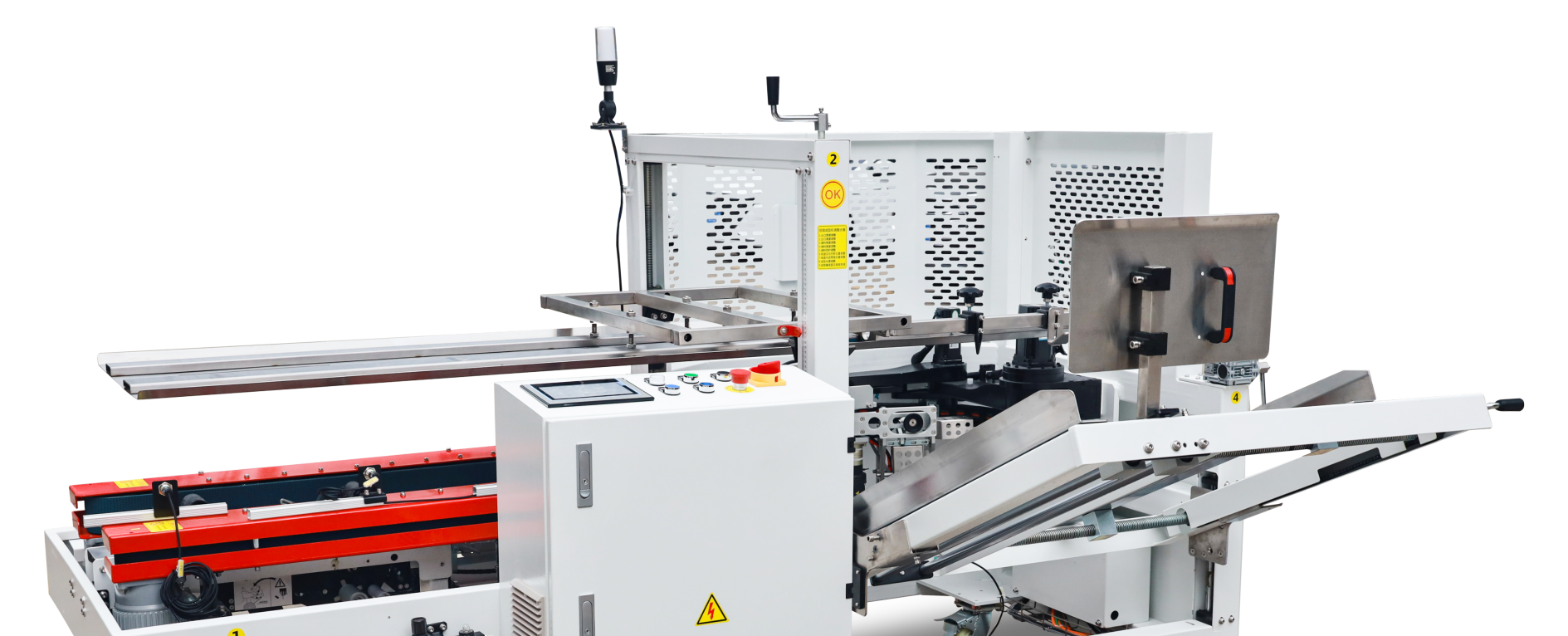 |
— | High-Speed Robotic Carton Erector & Bottom Sealer | Ver máquina → |
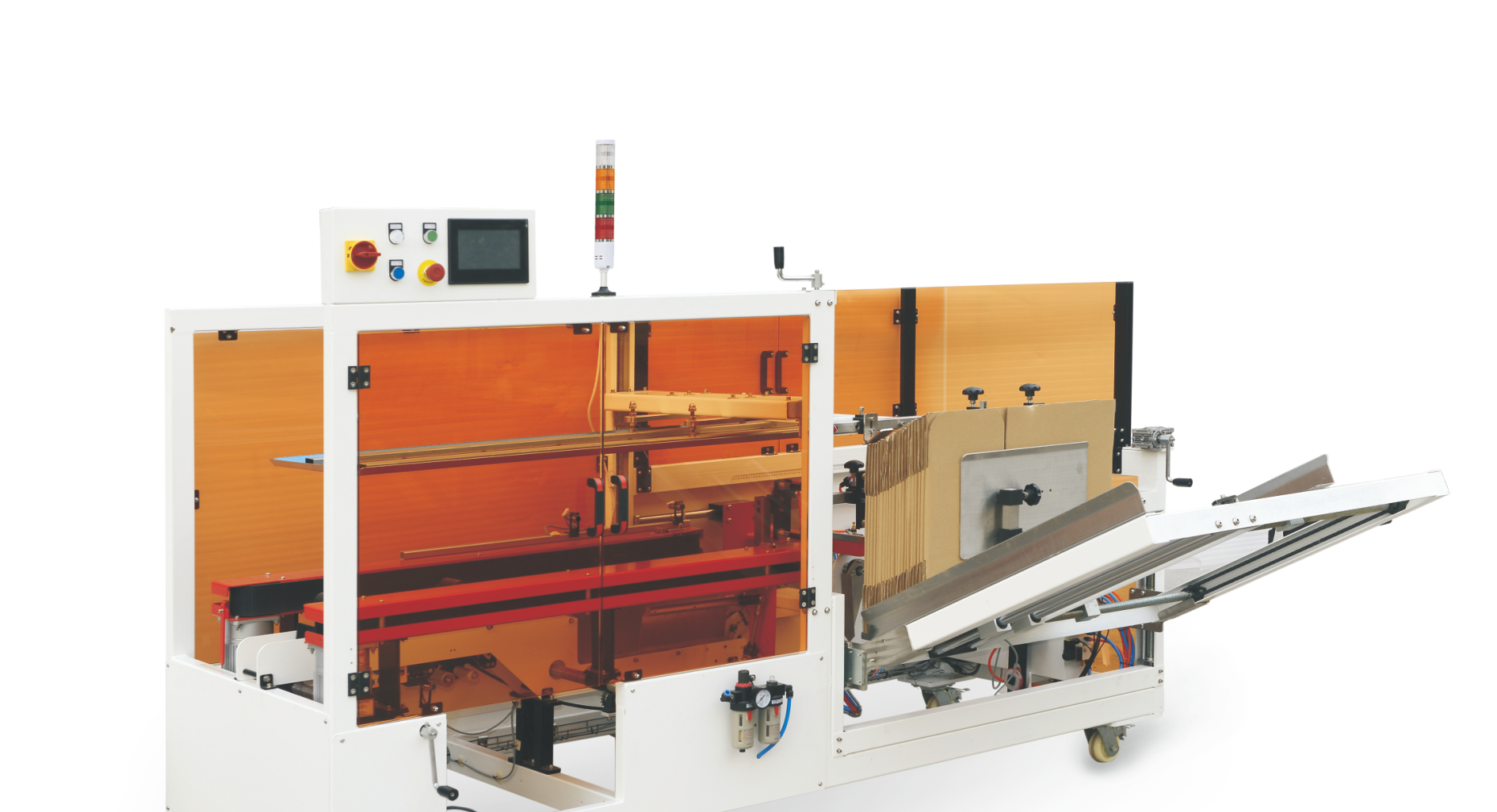 |
— | Medium-Speed Pneumatic Carton Erector & Bottom Sealer | Ver máquina → |
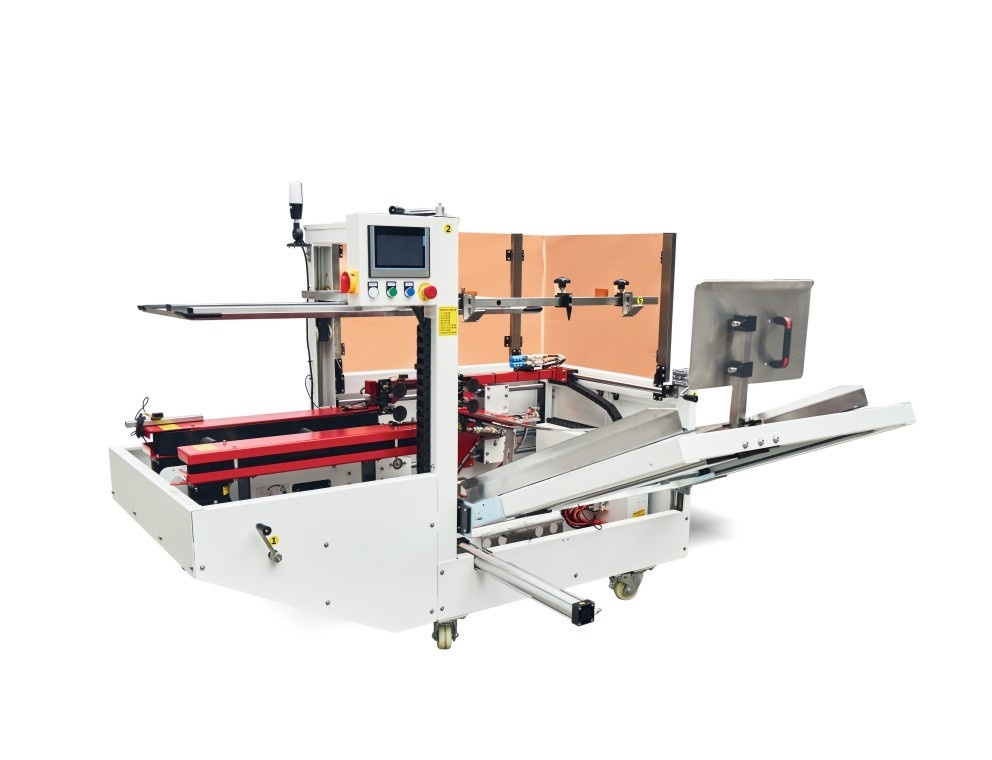 |
— | Low-Speed Pneumatic Carton Erector & Bottom Sealer | Ver máquina → |
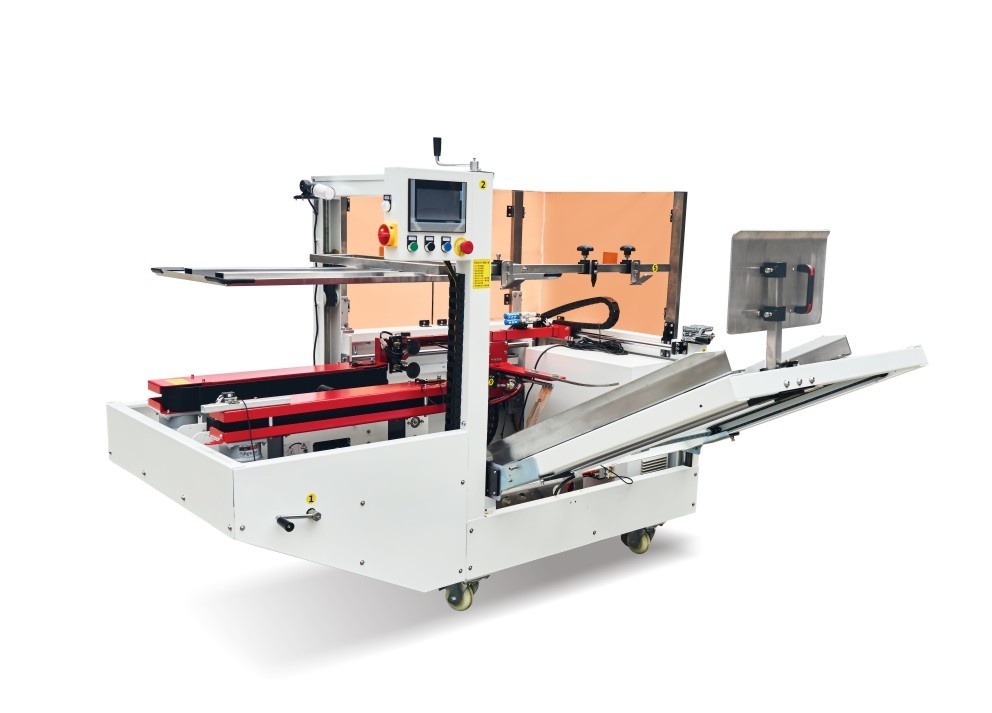 |
— | Low-Speed Servo Carton Erector & Bottom Sealer | Ver máquina → |
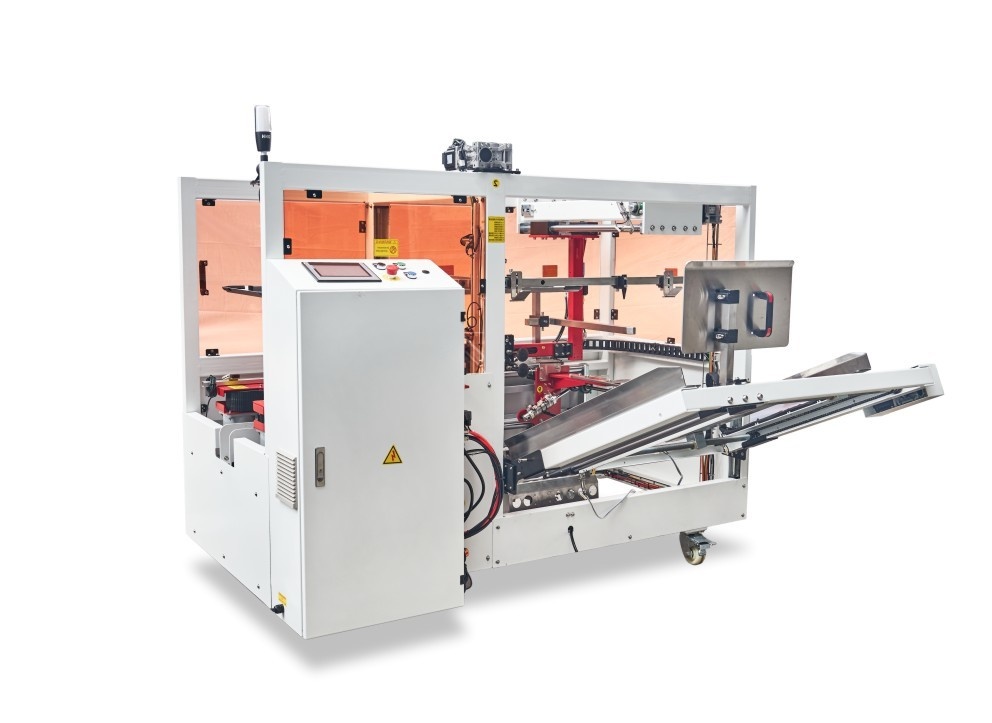 |
— | Low-Speed Servo Carton Erector & Bottom Sealer | Ver máquina → |
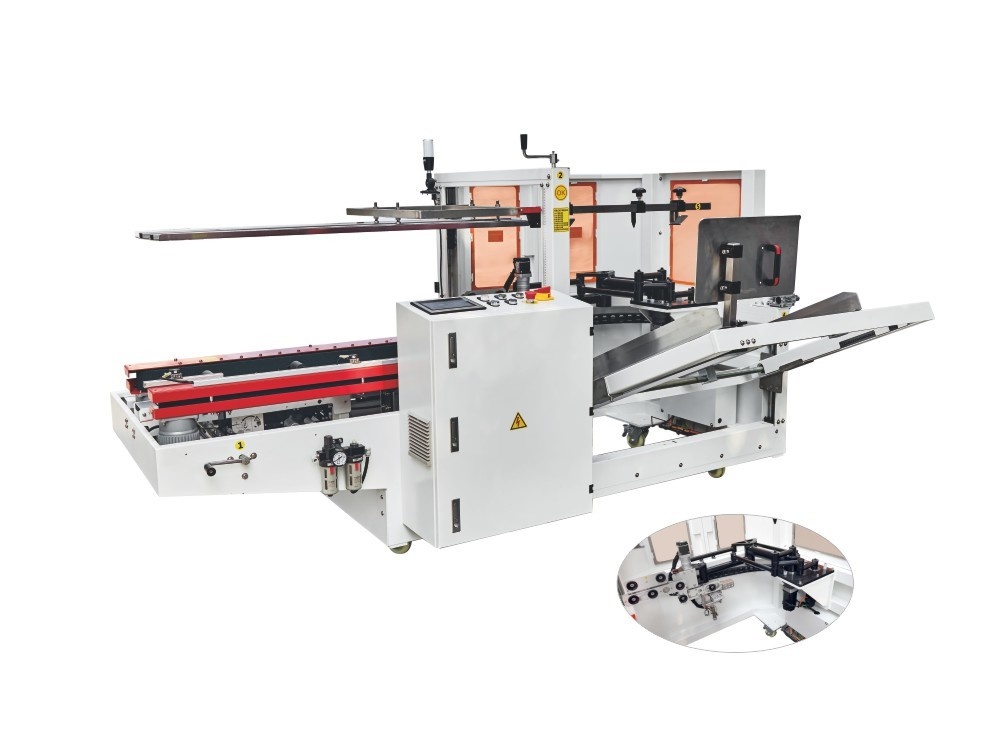 |
— | High-Speed Robotic Carton Erector & Bottom Sealer | Ver máquina → |
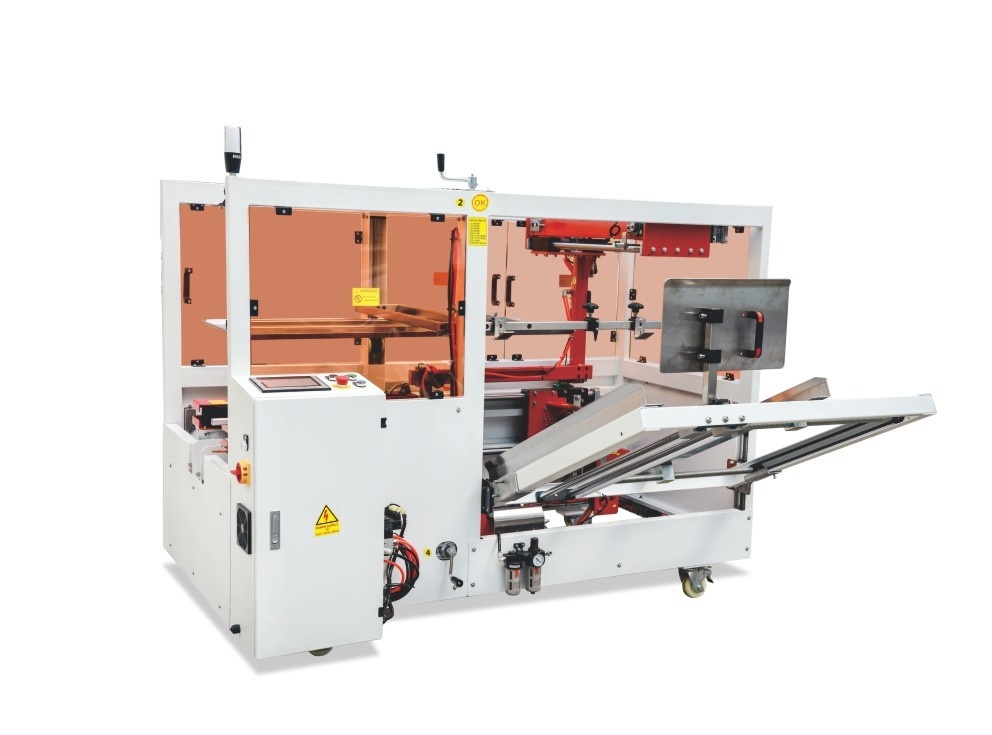 |
— | Low-Speed Servo Carton Erector & Bottom Sealer | Ver máquina → |
| Modelo | Configuración / aplicación típica | ||
|---|---|---|---|
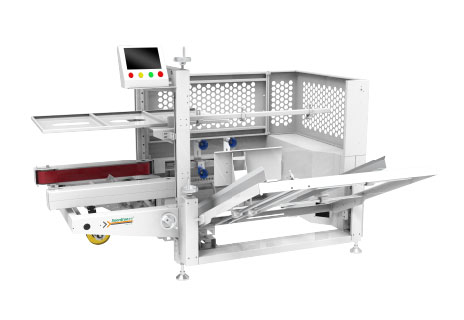 |
DKXM-500 / L-650 | Encajadora robótica de 2 servos | Ver máquina → |
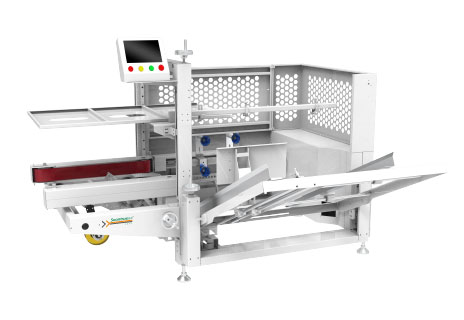 |
KXS400/M500/L650 | Encajadora robótica de 5 servos | Ver máquina → |
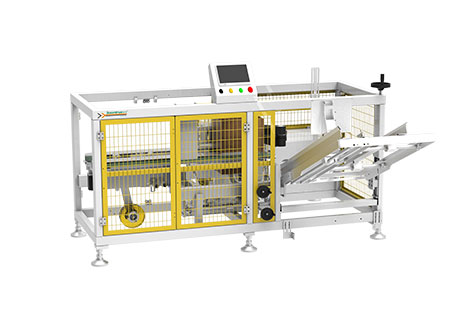 |
AIS400/M500/L600 | Robotic Case Erector | Ver máquina → |
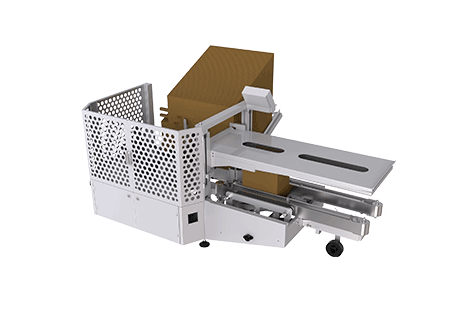 |
— | Encajadora robótica servo | Ver máquina → |
Match the machine to the blank, the seal, and the line speed — in that order.
The magazine, suction cups and mandrel are sized to the blank. Give us the open-box L×W×H and the flute (B/C/E flute). Light e-commerce board and heavy double-wall board are different jobs mechanically.
The K20TJ staples, the TDS/TX/TK tape, and the K20TH applies hot melt. Tape is the cheapest and most common; hot melt gives the most rigid, tamper-evident base; staples are used where the product demands it.
An erector should keep ahead of the packer without producing a queue. K20 is low-to-mid speed, K30 is the workhorse, K40 is for continuous high-speed lines. Size it to the next machine’s true rate.
Running one SKU for a shift suits a mandrel erector. High-mix lines with many box sizes are better on a servo or robotic erector that changes size from the HMI with little or no tooling change.
Decide whether the box is presented to an operator, an indexing conveyor, or a robot. The DKXM, KXS and AIS robotic erectors are designed to hand the box straight to a robotic case packer without a set-position chute.
Side-loading and vertical magazines have different footprints and run times. If the line is unattended for long periods, a larger magazine (or a second blank stack) matters more than headline speed.
If you are already sealing by hand, an erector is usually the next automation step after the case sealer has proven the box design and tape.
Should I buy a case erector or keep erecting boxes by hand?
Hand erecting is usually the first place a busy line loses time. As a rough guide, once a person is spending most of the shift opening and taping boxes, or the box quality is inconsistent, a bottom-sealing erector removes that labour and feeds a square, repeatable carton to the packer.
What is the difference between a servo and a pneumatic erector?
A pneumatic erector uses air cylinders for the fold and seal motions and is economical and simple for a single box size at steady speed. A servo erector uses motors, which gives controlled motion, repeatable timing at high speed, and much faster changeover between box sizes from the touch screen.
When is a robotic case erector the better choice?
Robotic pick-and-place erectors (DKXM, KXS, AIS) earn their keep when the blank changes often, when boxes are irregular, or where the same robot must pick a blank and then present it to the case packer. They remove the fixed mandrel and most mechanical changeover.
Can the erector use hot melt instead of tape?
Yes. The K20TH is the hot-melt variant and the hot-melt process can be specified on other frames. Hot melt creates a rigid base and a tamper-evident seal, which is valued in pharma and export; it requires glue that is matched to the board and a short set time.
How fast will my line run?
That depends on the frame and seal method — K20 covers the lower speeds, K30 the e-commerce/mid range and K40 the high-speed end. Rather than quote a single headline number, we size the erector to the machine after it and your box dimensions, so the cell never starves or over-produces.
What is a case erector machine?
A case erector (also called a carton erector or box erector machine) opens flat corrugated blanks, squares the box, folds the bottom flaps and seals the base with tape, staples or hot melt. It turns a stack of flattened boxes into a continuous flow of ready-to-fill cartons for a packer, an operator or a robotic case packer.
How does a case erector work?
The magazine feeds one blank; suction cups pull it open; the box is squared against a mandrel; the four bottom flaps fold in; the base is taped, stapled or hot-melt sealed; and the erected case is discharged onto the conveyor. Robotic case erectors replace the fixed mandrel with servo-driven pick-and-place arms so changeover between box sizes is done from the HMI.
What is the difference between a carton erector and a box erector?
In most factories the terms mean the same machine: carton erector, box erector, case erector and case erecting machine are interchangeable names for a bottom-sealing blank former. The real choice is not the name, but the seal method (tape / staple / hot melt), the drive (pneumatic / servo / robotic) and the speed your line requires.
Share the flat blank dimensions, flute, seal method and required boxes per minute. We will specify the K-series, servo or robotic erector that matches — and confirm the line layout with the packer and sealer.
Buyers often search for “carton erector”, “case erector” and “box erector” as if they were three different machines. In practice, for shipping-case applications, they are the same equipment. The real choice is not the name on the enquiry — it is the seal method (tape, hot-melt or staple), the drive (pneumatic or servo), and the line speed. If you are comparing these terms, read our detailed guide on carton erector vs case erector vs box erector before you request a quote.
| Seal method | Best for | Speed | Notes |
|---|---|---|---|
| Tape | E-commerce, food, beverage | Up to 20 boxes/min | Audit-friendly, visible, easy to change |
| Hot-melt glue | Pharma, export, high speed | Up to 35 boxes/min | Rigid base, tamper-evident, needs glue control |
| Staple | Heavy industrial, construction | Up to 15 boxes/min | Not food-contact, punctures the box |
A fixed-size case erector is tuned to one box dimension. It is cheaper and faster on that one size, but any new box means mechanical changeover — 30 to 90 minutes of downtime. A random-size servo erector reads the blank and adjusts automatically from the HMI, with recipe changeover in 5 to 10 minutes. If you run a single SKU at high volume, fixed-size wins on price. If you are an e-commerce DC or a co-packer running 20+ box sizes, random-size servo is the only practical choice. This is one of the most common buyer mistakes: buying a cheap fixed-size erector and then losing hours every week on changeover.
Case erectors are not off-the-shelf. Standard models ship in 4 to 6 weeks; custom configurations take 8 to 12 weeks. Ask the supplier for the lead time in writing before you commit. Confirm what wear parts are stocked locally — suction cups, tape rolls, drive belts — so a 2-day stoppage does not become a 3-week wait for a part from overseas. SunAura stocks common wear parts at our China factory and ships them within 48 hours.
Utilice esta matriz de decisión de ingeniería para asociar el tamaño de su caja, objetivo de velocidad y presupuesto de mano de obra a la configuración de máquina adecuada.
| Production Scenario | Cases / Shift | Rango de tamaño de caja | Recommended Model | Key Features Required | Budget Tier |
|---|---|---|---|---|---|
| Taller pequeño / startup (línea de embalaje manual) | 200-600 | Small cartons (L<300mm) | Encajadora manual o plegadora semiautomática | Baja inversión, controles simples, 1 operario | $5k-$15k |
| Fábrica mediana, tiradas por lotes multi-SKU | 600-1,500 | Medium cartons (L 200-500mm) | 2-servo robotic (DKXM-500) | Recipe memory, quick changeover, bottom tape | $15k-$35k |
| Planta de CPG / alimentación de alto volumen, 24/7 | 1,500-4,000 | Mediano-grande (L 280-650mm) | 5-servo robotic (KXS400/M500/L650) | 5-axis servo, auto magazine refill, CE guarding | $35k-$70k |
| E-commerce fulfillment center | 4,000-10,000 | Random-size / mixed | Encajadora de tamaño aleatorio + selladora automática | Formado de tamaño aleatorio, sellado de cajas en línea, impresión de código de barras | $70k-$150k |
| Industrial pesado / piezas de automoción | 500-2,000 | Grande / pesado-duty (L up to 800mm) | Encajadora robótica para servicio pesado | Bastidor reforzado, opción hot-melt, cinta base W60mm | $40k-$80k |
| Pharma / cleanroom | 300-1,000 | Small sterile cartons | Stainless-steel washdown case erector | Bastidor 304SS, bandas conformes FDA, IP65 | $50k-$100k |
| Cadena de frío / alimentos congelados | 1,000-3,000 | Medium freezer-rated cases | Low-temp version (sealed electronics) | Protecciones calefactadas, lubricantes para frío, IP54 | $45k-$85k |
| Parameter | 2-Servo (DKXM-500) | 5-Servo (KXS400) | Robotic (AIS400) | Random-Size |
|---|---|---|---|---|
| Max cases/min | 25 | 30 | 20 | 15 |
| Rango de longitud de caja | 200-500mm | 175-650mm | 280-600mm | 150-700mm (auto) |
| Rango de ancho de caja | 150-400mm | 85-500mm | 180-450mm | 100-500mm (auto) |
| Rango de altura de caja | 150-400mm | 150-500mm | 150-450mm | 100-600mm (auto) |
| Changeover time | 3-5 min (recipe) | 1-2 min (recipe + auto) | 3-5 min (recipe) | <30 sec (auto-size) |
| Magazine capacity | 120-180 blanks | 200-300 blanks | 150-200 blanks | 250-400 blanks |
| Footprint (LxW) | 2.6 x 2.0 m | 2.4-2.9 x 2.0-2.1 m | 2.5 x 2.0 m | 3.5 x 2.5 m |
| Power | 2.0 kW | 2.0 kW | 1.8 kW | 3.5 kW |
| Air pressure | 0.6 MPa | 0.6 MPa | 0.5 MPa | 0.7 MPa |
| Best for | Volumen medio, tamaño fijo | High-volume, multi-SKU | Budget mid-volume | E-commerce random |
Utilizamos cookies para gestionar el sitio, analizar el tráfico y atender sus solicitudes. Puede aceptar todas las cookies o gestionar sus opciones. Consulte nuestra Política de privacidad y Política de cookies.