
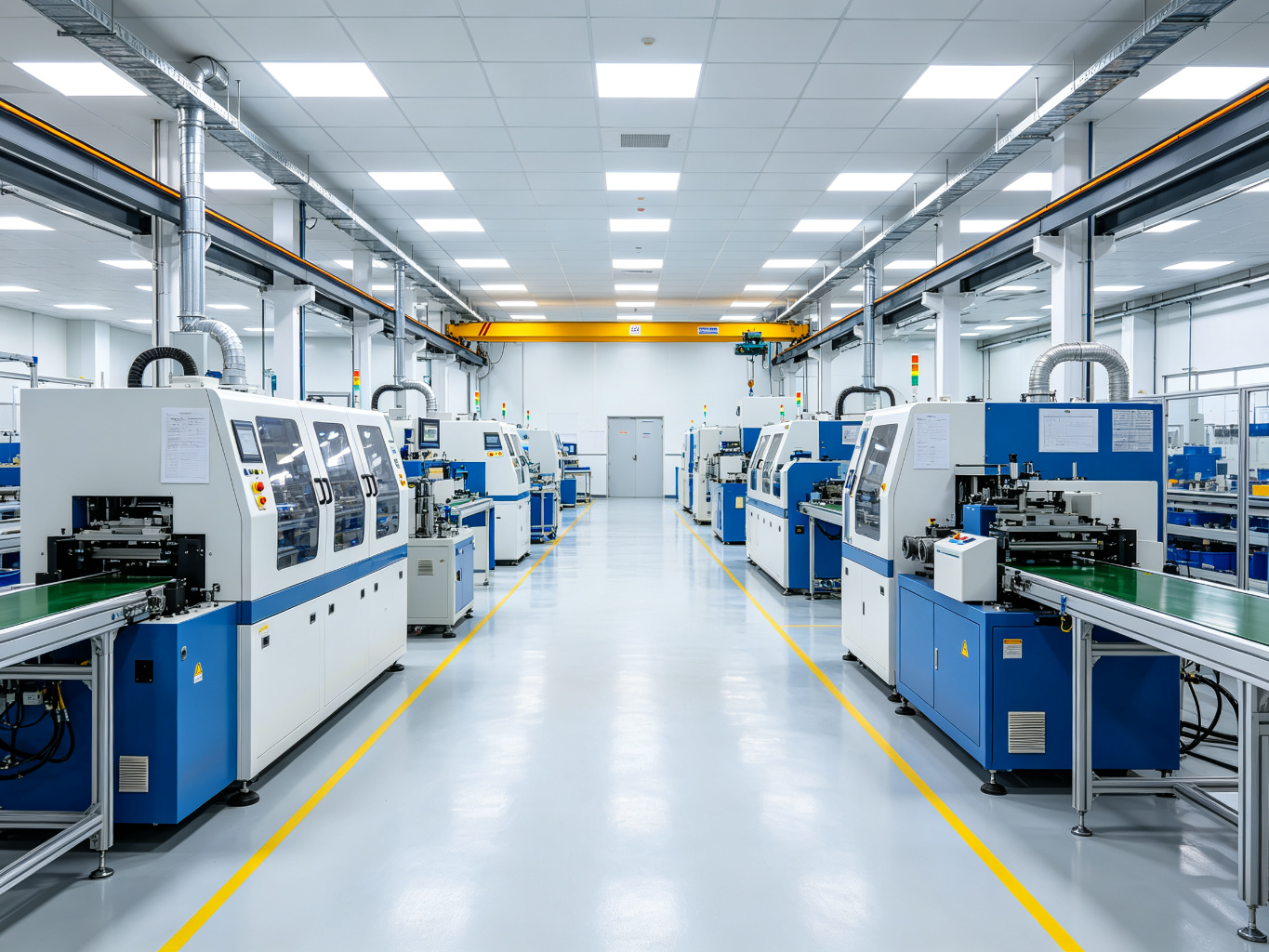
TL;DR. When buyers shop a stretch wrapper, most comparisons stop at the machine standing next to the pallet: a turntable that spins the load, or a rotary arm that walks the film around it. A newer option changes the layout instead of the load. A self-propelled mobile stretch robot rolls up to a pallet, wraps it in place, then drives to the next one. The load never rotates, no fixed foundation or conveyor tie-in is required, and one robot can serve several packing stations across a shift. That flexibility carries a trade-off: a single mobile robot wraps fewer pallets per hour than an inline fixed wrapper, and it depends on a flat, navigable floor and a charging routine. This guide walks through the buyer segments that weigh a mobile robot against a fixed machine, the three deployment forms most often compared, a configuration matrix that maps load, throughput and floor conditions to a form, how each works and where it fails, the three supplier tiers, the five-year cost of ownership, the ten questions to put in a specification, the five pitfalls we see repeat on installed sites, and the scenario fit for high-speed lines, cold stores, irregular loads and low-volume warehouses. Figures below are planning ranges for discussion, not quoted cycle times or final prices; actual performance follows your pallet dimensions, weight, stability, floor condition and reference installation.
By Ryan Huang, Wrap Systems and End-of-Line Automation Specialist. Ryan has spent 12 years commissioning turntable wrappers, rotary-arm cells, palletizing lines and mobile stretch robots across CPG, beverage distribution, cold storage and third-party logistics warehouses, and has audited wrap patterns, film consumption and containment performance on more than 120 end-of-line installations.
What a mobile robotic stretch wrapper is, and how it differs from a fixed wrapper
A stretch wrapper applies a stretch film around a unit load so the pallet, cases and contents hold together through handling, trailer transit and storage. The film is stretched as it leaves the roll, tensioned against the load, and wound in layers from the bottom to the top. The machine that does this can be fixed in one spot or free to move.
A fixed wrapper occupies a defined position on the line. A turntable wrapper puts the pallet on a rotating deck; the deck turns while the film carriage moves up and down a mast. A rotary-arm wrapper leaves the pallet still and swings a film carriage on a horizontal arm around the load. Both are tied to that position: a pallet reaches them by conveyor, forklift or pallet jack, and the machine waits for the next load at the same spot.
A mobile stretch robot takes the film carriage and mast onto a self-propelled chassis. The robot drives to the pallet, positions itself around or beside it, and walks its own chassis in a circle around the load while the mast raises and lowers the film. The pallet stays on the floor where it was built. When the wrap cycle finishes, the robot releases the film, cuts or ties it, and navigates to the next pallet. Some models follow a magnetic tape or QR-code path; others use laser navigation that maps the floor once and updates as barriers move. A few smaller units are driven to each load manually by an operator who starts the cycle.
The core engineering question is therefore not only which wrapping mechanism to buy, but whether the wrapping station should be a fixed position on the line or a flexible asset that moves between loads. That question comes up most often when the warehouse has several packing areas, irregular load shapes, cold-room floors that are hard to trench, or a line that changes product mix week to week. We see buyers default to a fixed wrapper because that is what the last site had, then discover a mobile robot would have served the temporary peak and the off-line packing bench the fixed machine cannot reach.
Before comparing forms, fix the load facts every wrapper depends on: pallet footprint and maximum height, gross weight, how stable the cases are on the deck, whether the load overhangs or has sharp corners, the pallets-per-hour rate the station must hold on average and at peak, how many shifts run, the floor condition under and around the load, and any cold, damp, dusty or washdown condition around the wrapping point. Those facts narrow the form the same way case dimensions narrow a sealer choice.
Buyer segments that weigh a mobile robot against a fixed wrapper
Not every site should buy a fixed inline wrapper, and not every product flow suits a roaming robot. The buyers who come to us for this decision split into four broad segments, and the right form and supplier tier follow the segment rather than a single best machine.
High-volume regular-product production lines
These plants run a steady stream of similar pallets through multiple shifts at a predictable pallets-per-hour rate. The load rarely changes shape, and the wrapping point sits between packing and palletizing or stretch hooding on a controlled flow. For this segment, a fixed turntable or rotary-arm wrapper tied into the conveyor usually gives the most wrap cycles per hour, the most repeatable film pattern, and the lowest film cost per pallet over a long run. A mobile robot here adds a moving asset whose cycle rate cannot match an inline machine, and whose navigation has to clear the same busy line every hour.
Multi-station warehouses and mixed-SKU fulfillment
Here pallets are built at several benches or docks, product mix changes daily, and the load shapes range from uniform cases to loose bundles and awkward packs. A single fixed wrapper would force every pallet to travel to one station, while a mobile robot can wrap at the bench where the pallet was built, then move to the next bench or dock as the queue changes. This segment values route flexibility, quick recipe recall for different load heights, and the ability to shift the robot between areas during the shift over a single maximum wrap speed.
Cold storage, chilled and damp environments
Freezer and chill floors change both the machine and the film. Condensation, low temperature and occasional washdown affect bearings, seals, electronics and film behavior. A fixed wrapper in a cold room still needs its own space, foundation and service access inside the chilled envelope. A mobile robot can be parked and charged outside the cold room and driven in to wrap a batch, which keeps electronics and charging hardware out of the cold for most of the shift. The buyer here should ask about enclosure rating, lubricants rated for the temperature, battery performance at chill or freezer condition, and how the machine cleans down.
Low-to-medium volume, seasonal and co-pack sites
Smaller plants, seasonal producers and co-packers run fewer shifts, wider SKU variety and lower steady throughput. They often weigh a manual stretch or simple semi-automatic station against an automated fixed wrapper or a mobile robot. For this segment, a fixed machine that waits idle between peaks can be hard to justify on payback, while a mobile robot that can be rented, leased or shared across lines spreads the cost over several tasks. The payback case rests on labor saved at the wrap bench and consistent containment, not on peak cycle rate.
Three deployment forms buyers compare
Most stretch wrapping decisions land on one of three forms: a fixed turntable wrapper, a fixed rotary-arm wrapper, or a self-propelled mobile robot. Some sites combine two, for example an inline rotary arm on the main line and a mobile robot for off-line heavy or irregular loads. The table below compares them on the loads they suit, the throughput they hold, the floor and layout they need, the changeover effort and a planning price position before conveyor integration, guarding, film and installation.
| Form | Best-fit loads | Planning throughput | Layout and floor needs | Changeover | Planning price position |
|---|---|---|---|---|---|
| Fixed turntable | Stable, square pallets that can rotate; moderate weight and height | About 20–50 pallets per hour per station | Fixed position, level deck area, pallet reach by conveyor or truck; deck bears full load weight | Recipe change for height and layers; film carriage shared across formats | Low to mid five figures, machine only |
| Fixed rotary arm | Heavy, tall or unstable loads that should not rotate; inline high-rate cells | About 30–60 pallets per hour per station | Fixed position with arm sweep radius kept clear; load held still during wrap | Recipe change; arm and carriage stay fixed; guides adjusted per load | Mid five figures, machine only |
| Self-propelled mobile robot | Irregular, heavy or tall loads that stay put; multi-bench and off-line wrapping; cold-room batch work | About 10–30 pallets per hour per robot, depending on travel between loads | Flat, smooth, navigable floor; no trench or foundation; charging bay and clear travel routes required | Recipe recalled per load; robot re-routed between stations; no fixed layout tie-in | Mid to high five figures to purchase; lease or subscription options common |
The form does not follow preference. It follows the load, the rate and the floor. A stable square pallet on a fast line usually belongs on a turntable. A tall or top-heavy load that would tip while spinning usually belongs on a rotary arm or a mobile robot that keeps the load still. A pallet built at a remote bench with no conveyor reach is a candidate for the mobile robot. Mixing the form and the flow is where missed wraps, damaged corners and idle machines start.
Configuration matrix: load, throughput, floor and SKU fit
The table below maps the conditions a site reports to the form that usually fits. These are starting points for the specification; the supplier should confirm against a reference installation that handles a similar load.
| Condition reported | Turntable fixed | Rotary arm fixed | Mobile robot |
|---|---|---|---|
| Stable square pallet, moderate weight, steady inline rate | Preferred | Works, usually higher cost than needed | Underused unless multi-station demand exists |
| Heavy, tall or top-heavy load that must not rotate | Not recommended; rotation risks tipping | Preferred fixed option | Preferred when load stays off-line or moves between benches |
| High-rate continuous line, hundreds of pallets per shift | Suitable at moderate rate | Preferred inline option | Not suitable as the sole high-rate inline machine |
| Several packing benches or docks, mixed mix, no conveyor to one station | Not suited; pallet must reach fixed deck | Not suited for remote benches | Preferred flexible option |
| Cold or chill room where fixed equipment and charging should stay outside | Possible but ties machine inside the cold envelope | Possible but ties machine inside the cold envelope | Preferred for batch wraps with outside charging |
| Uneven floor, thresholds, ramps or loose deck plates | Level deck required | Level fixed position required | Requires flat navigable floor; thresholds and ramps restrict routes |
| Frequent SKU and load-height change, recipe-driven wrap | Recipe change works | Recipe change works | Recipe recall plus route change between loads |
| Leased warehouse, temporary peak or co-pack contract of fixed length | Fixed install harder to relocate | Fixed install harder to relocate | Preferred; relocatable and often available to lease |
Two conditions push a buyer away from a mobile robot early in the exercise. The first is a true high-rate inline flow where pallets must be wrapped without stopping between stations; a roaming robot cannot keep that pace as the sole machine. The second is a floor the robot cannot navigate: expansion joints that catch wheels, thresholds between rooms, ramps, loose mats, or slopes that exceed the robot’s rated grade. A robot that has to stop and wait for a clear path gives back most of the flexibility it was bought for.
How each form works, and where it fails
Fixed turntable wrapper
The pallet is placed on a rotating deck, centered under the film mast. The deck turns through a set number of rotations per layer while the carriage feeds stretched film from the bottom anchor to the top. Pre-stretch rollers in the carriage pull the film to a controlled elongation before it reaches the load, which lowers film consumption per wrap. The operator or an automatic dispenser sets the bottom and top coverage, the number of overlap wraps, and any reinforced base or top band.
The turntable is the simplest and usually the lowest-cost fixed form. It suits stable, regular pallets that can safely rotate, and it is easy to service because the mechanism stays in one accessible spot. It fails on loads that are tall, top-heavy, loosely stacked or prone to shifting: once the deck spins, an unstable layer can walk toward the edge or tip. It also carries the full pallet weight on the deck bearing and drive, so very heavy loads need a rated deck. We see turntables undersized on bearing capacity when a buyer sizes the machine on film width rather than gross pallet weight.
Fixed rotary-arm wrapper
The load stays stationary on a conveyor or stand-off position. A horizontal arm carries the film carriage in a circle around the pallet while the mast raises and lowers the film. Because the load does not move, the arm form tolerates tall, heavy or unstable pallets that would risk tipping on a deck. Inline cells can feed loads to the arm position automatically and discharge them without an operator.
The arm form needs a clear sweep radius around the load: nothing stored or standing inside that circle while the arm runs. It is more expensive than a turntable for the same load size, and the arm drive, bearings and telescoping mechanism carry wear that the simpler deck does not. It fails where the site cannot keep the sweep area clear, or where loads vary so widely in height that the arm and mast have to be re-guided often. Safety fencing or light curtains guard the sweep, and that guard footprint counts in the layout.
Self-propelled mobile stretch robot
The robot carries its own mast, film carriage, battery and drive chassis. It navigates to the pallet, centers itself relative to the load, anchors the film at the base, and walks the chassis around the pallet in programmed loops while the mast feeds film upward. After the top band, it cuts or ties the film, releases, and routes to the next pallet or the charging bay. Navigation ranges from tape or QR-code guidance to laser SLAM that builds a map of the floor. Some models use manual positioning: an operator drives the robot to the load and starts the cycle, which lowers navigation cost but keeps a person in the loop.
The mobile robot’s strength is deployment freedom. No foundation, no trench, no conveyor tie-in. It wraps where the pallet sits, works off-line heavy or awkward loads the inline station cannot handle, and can move between packing areas, docks and cold rooms over the day. It can be leased for a seasonal peak and returned when the contract ends.
Its failure points are specific and worth testing before purchase. The robot wraps one pallet at a time and must travel between them, so pallets-per-hour falls as travel distance grows. Floor condition limits the route: cracks, joints, thresholds and wet patches can stop wheels or sensors. Battery charge has to fit the shift; a robot that spends an hour charging mid-shift is not covering the queue. Navigation maps have to be updated when racks, pallets or barriers move, and sensors have to read through shrink wrap, mist and cold-room condensation. Film roll changes, film tail handling and occasional jam clearing still need a person nearby unless the cell is set up for autonomous roll exchange.
Supplier tiers buyers can source from
Wrappers and mobile robots are sold through three broad tiers, and the right tier follows the site’s integration needs, product range and after-sales expectation.
Equipment manufacturer. A wrapper or robot maker sells its own standard or adapted machines, with its own controls, mast, carriage and navigation system. This tier suits regular load forms and sites that can install and service the machine with local support. Manufacturers usually keep the clearest spare-parts lineage and the most direct technical line to the engineering team. Lead time on a standard model is shorter than a custom build, but adaptation to an unusual load may be limited to the options the manufacturer already offers.
System integrator. An integrator designs the wrapping point into the end-of-line flow: conveyor feeding, centering, guard placement, safety interlocks, handoff to palletizing or dispatch, and the software that records wrap recipes and throughput. This tier suits greenfield lines, mixed-product cells, cold-room layouts and sites that need the wrapper to talk to the line control system. The integrator may specify machines from several makers and owns the cell’s performance as a whole. Cost is higher, but the responsibility for fit, cycle rate and containment sits with one party.
Local distributor, rental fleet or broker. Distributors carry standard machines and service parts for the local market; rental and lease fleets supply mobile robots and occasional wrappers for seasonal peaks, co-pack contracts or trials. This tier suits low-volume sites, temporary demand and buyers who want to test a mobile robot on their own floor before purchasing. The buyer should still confirm machine age, maintenance record, included spare parts, film compatibility and the service response time in their area, because a leased robot that is down for a week costs the wrap bench more than the monthly rate saves.
Five-year cost of ownership: purchase, film, labor, floor and service
The sticker price is the easiest number to compare and the least representative of what the wrapper costs to run. On a five-year view, film consumption, labor at the wrap point, floor and installation, maintenance and downtime usually matter as much as the machine itself.
Purchase or lease. A fixed turntable sits in the low-to-mid five figures as a machine only; a fixed rotary arm sits in the mid five figures; a mobile robot sits in the mid-to-high five figures to buy, with lease or subscription terms that lower the upfront outlay. Those bands exclude conveyor integration, guarding, foundation work, film starter stock and installation. A leased robot trades a higher total over five years for lower upfront cost and flexibility to return or change unit count.
Film consumption. Stretch film is the recurring line item that most often surprises buyers. Pre-stretch ratio, gauge, number of wraps and top and bottom coverage set how much film leaves the roll per pallet. A well-tuned pre-stretch carriage reduces film per wrap, while a loose or over-tensioned pattern wastes film or damages cases. The mobile robot and fixed forms can use comparable film, but the robot’s film path and roll handling should be checked against the film gauge the site currently buys. Film market movement and recycled-content rules affect this line year to year, which is why film cost per pallet, not per roll, belongs in the own-cost model.
Labor. A fixed inline wrapper can run with minimal operator attention once fed; a turntable still needs a pallet placed and often a film tail attended. A mobile robot reduces wrapping labor at each bench, but roll changes, charging, jam clearing and route maintenance remain. Count the hours a person spends at the wrap station today, then count what each form still requires across a shift, including breaks and shift changeover.
Floor and installation. Fixed machines need a level position, electrical supply, guarding clearances and often conveyor or stand-off work. A mobile robot removes foundation and trench work but needs a charging bay, navigable routes and a floor that stays clear. In a leased or cold room, avoiding a fixed build can be a measurable saving; in a busy permanent plant, the robot’s travel lanes may take floor area the line would otherwise use for storage.
Service and downtime. Bearings, pre-stretch rollers, seals, belts, batteries and sensors wear at a rate set by shifts and environment. Cold and damp accelerate seal and battery wear. Spare-parts availability and local service response affect how long a machine waits after a fault. A robot that shares a fleet across several sites can be swapped out faster than a fixed machine that has to be repaired in place, which is one reason rental fleets appeal to peak-season buyers.
When comparing a fixed machine against a mobile robot, build the five-year model on film per pallet, labor hours, floor and installation, service response and downtime, not only on the purchase price. The end-of-line automation payback guide walks through how to stage those costs by region and line rate.
Ten questions to put in the specification
These questions separate a machine that looks right on a showroom floor from one that holds up on your loads. Put the answers in the request for quotation, and ask the supplier to tie each answer to a reference installation.
- What are the exact pallet footprint, maximum height and gross weight for every SKU in the range, including future additions, and how much does the load overhang the deck?
- How stable is the load on the pallet: do cases shift when rotated, are layers loose or top-heavy, and are there sharp corners or stretchable film surfaces?
- What pallets-per-hour rate must the station hold on average and at peak, across how many shifts, and are pallets fed automatically, by conveyor, or placed manually?
- Can the load safely rotate on a turntable, or does it need to stay stationary through the wrap cycle?
- What is the floor condition under and around the wrap point: levelness, expansion joints, thresholds, ramps, slopes, moisture, and any cold-room or washdown rating required?
- For a mobile robot, what navigation method is used, how are routes and maps updated when racks or barriers move, and what obstacles or surfaces stop the unit?
- What wrap recipes are required by load height and stability, and are recipes recalled from the HMI or robot controller for repeatable film pattern?
- What film gauge, pre-stretch ratio, base wrap, top band and top and bottom coverage does the supplier recommend, and what film consumption per pallet does that give?
- What are the power and charging arrangements: charge time per shift, battery type and expected life at the operating temperature, and where does the unit park and charge?
- What are the wear parts, their expected life, part numbers, lead times, local service response, and is purchase, lease or a rental fleet available for a trial or peak period?
Five pitfalls we see repeat on installed sites
One: benchmarking a mobile robot against inline fixed-machine speed. A roaming robot cannot match a conveyor-fed rotary arm on continuous high-rate output. If the line’s need is hundreds of pallets an hour without waiting, the robot is the wrong sole machine; it belongs on off-line, multi-bench or irregular-load work instead.
Two: assuming any floor will navigate. Robot routes are restricted by joints, thresholds, ramps, loose mats and wet or icy patches. Walk the actual travel path with the supplier before purchase, and measure grade and surface at the cold-room door, not only the main aisle.
Three: comparing purchase price only. A machine that looks cheaper upfront may use more film per pallet, need more operator attention, or carry slow spare-parts delivery. Run the five-year cost on film, labor, floor, service and downtime before deciding.
Four: skipping environment rating. Cold-room condensation, washdown moisture, dust or grease affects seals, electronics, battery and sensor reading. A machine rated for a dry ambient plant can fail early in a chill room; confirm the enclosure, lubricant and battery rating for the actual condition.
Five: undercounting layout and navigation commissioning. A mobile robot does not drop onto the floor and wrap on day one. Routes, map updates, recipe tuning, film tail handling and obstacle behavior need commissioning time. Sites that treat the robot as a plug-in appliance find it waiting on navigation fixes during the peak it was leased to cover.
Scenario fit: who should pick which form in 2026
For a high-rate production line running a narrow set of stable square pallets, a fixed turntable, or a rotary arm if the load is heavy or tall, tied into the conveyor usually gives the best cycle rate and lowest film cost per pallet. The fixed-machine comparison between deck and arm is covered in the turntable vs rotary-arm buyer guide, and pre-stretch carriage options that cut film use are detailed in the pre-stretch carriage buying guide.
For a warehouse with several benches, mixed SKUs, off-line irregular loads or a leased space that should not take a fixed build, a self-propelled mobile robot usually gives the flexibility a single fixed station cannot. For cold-room batch work, the robot that charges outside and drives in to wrap a batch keeps sensitive electronics out of the cold for most of the shift. For a low-volume seasonal or co-pack site, a leased robot or a simple semi-automatic station often beats a purchased fixed machine whose idle time outweighs the labor saved.
Unstable or tall loads that need a hold-down during wrapping are covered in the top-press stretch wrapper guide, and base sheets, corner boards and other containment accessories are listed in the wrapper ancillary guide. If you want a form recommendation against your own pallet range, send the dimensions, weights, load stability, floor condition and pallets-per-hour rate, and we can map the wrapper form and the questions to put to the supplier.
References and background sources
The form comparison, load handling and containment reasoning in this guide follows standard end-of-line wrap practice and our field audits. Market and adoption context draws on public industry sources: the PMMI market research overview on packaging machinery and automation, the Statista industrial robots topic on robot and autonomous-equipment adoption, the IFR World Robotics report on industrial robot installations, the Smithers shrink films market report on stretch film materials and gauge, and the ISO 13849-1 machinery safety standard on control-system safety performance for guarded wrapping cells. Price, rate and load figures are planning bands for discussion only; quoted performance follows your pallets, floor condition, environment and reference installation.
Frequently asked questions

Ryan translates customer product, package and production data into a machine configuration and quotation: package format review, throughput estimation, machine type selection, optional equipment, spare parts, lead time and payback calculations. His articles help overseas buyers prepare a complete application brief and understand how configuration choices change price and output.
See Full Bio ›