
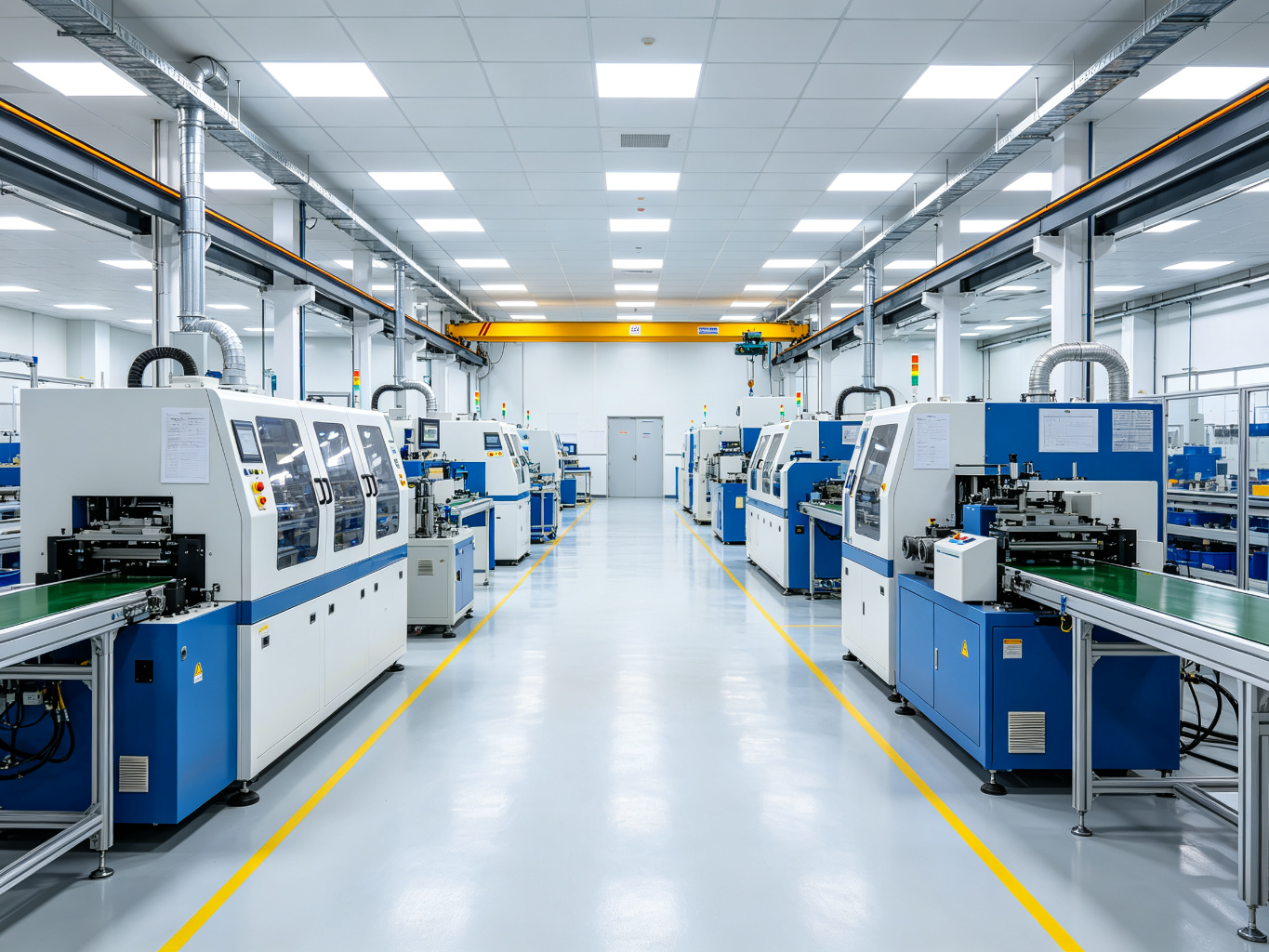
TL;DR. End-of-line safety fencing in 2026 costs $200–$600 per linear meter of machine guarding, plus interlocks $300–$800 per gate. The choice between welded wire mesh, polycarbonate and light curtains depends on risk assessment, cleaning need and visibility. This guide compares all three, OSHA/ISO requirements, and the 5 mistakes that get you cited.
By Tom Xu, Control Systems Engineer. Tom designs safety circuits to ISO 13849-1 PLd and OSHA 29 CFR 1910.212.
1. Why guarding matters
OSHA 29 CFR 1910.212 requires machine guards for any point of operation that could injure an operator. ISO 13849-1 defines the safety performance level (PL) required based on risk. Non-compliance carries $15,626 per violation in 2026.
PMMI’s 2025 safety survey found that 62% of end-of-line cells are under-guarded, and that retrofitting guarding costs 3× more than specifying it in the original machine.
2. Three guarding types
| Type | Price/m | Best for |
|---|---|---|
| Welded wire mesh | $200–$400 | General machine perimeter |
| Polycarbonate panel | $400–$600 | Visibility, noise reduction |
| Light curtains (electronic) | $800–$2,000 per pair | Access points, no physical gate |
3. Decision matrix
| Your situation | Recommended |
|---|---|
| General perimeter, no access | Welded wire mesh |
| Need to see inside, noise | Polycarbonate |
| Frequent access (loading) | Light curtains + muting |
| Rare access (maintenance) | Interlocked gate + mesh |
4. Configuration checklist
- Risk assessment: required before specifying; use ISO 12100.
- PL rating: PLd minimum for palletizer cells; PLe for high-speed robots.
- Interlocks: safety-rated, not standard microswitches.
- Stops: cat 1 or cat 2 stop; e-stop every 6 m.
- Grounding: mesh bonded to equipment grounding.
5. Common pitfalls
- Using standard microswitches — not safety-rated, OSHA cites.
- Bypassing interlocks for production — accident waiting to happen.
- No e-stop at operator station — OSHA violation.
- Under-rated light curtains — fingers not detected.
- Skipping risk assessment — guarding does not match actual risk.
6. Frequently asked questions

Tom programs and commissions the control layer that links separate machines into a coordinated end-of-line: PLC logic, sensor placement, conveyor synchronization, speed matching, HMI screens, alarms and safety interlocks. His articles explain control architecture, signal handover between machines and how automation affects line reliability.
See Full Bio ›