
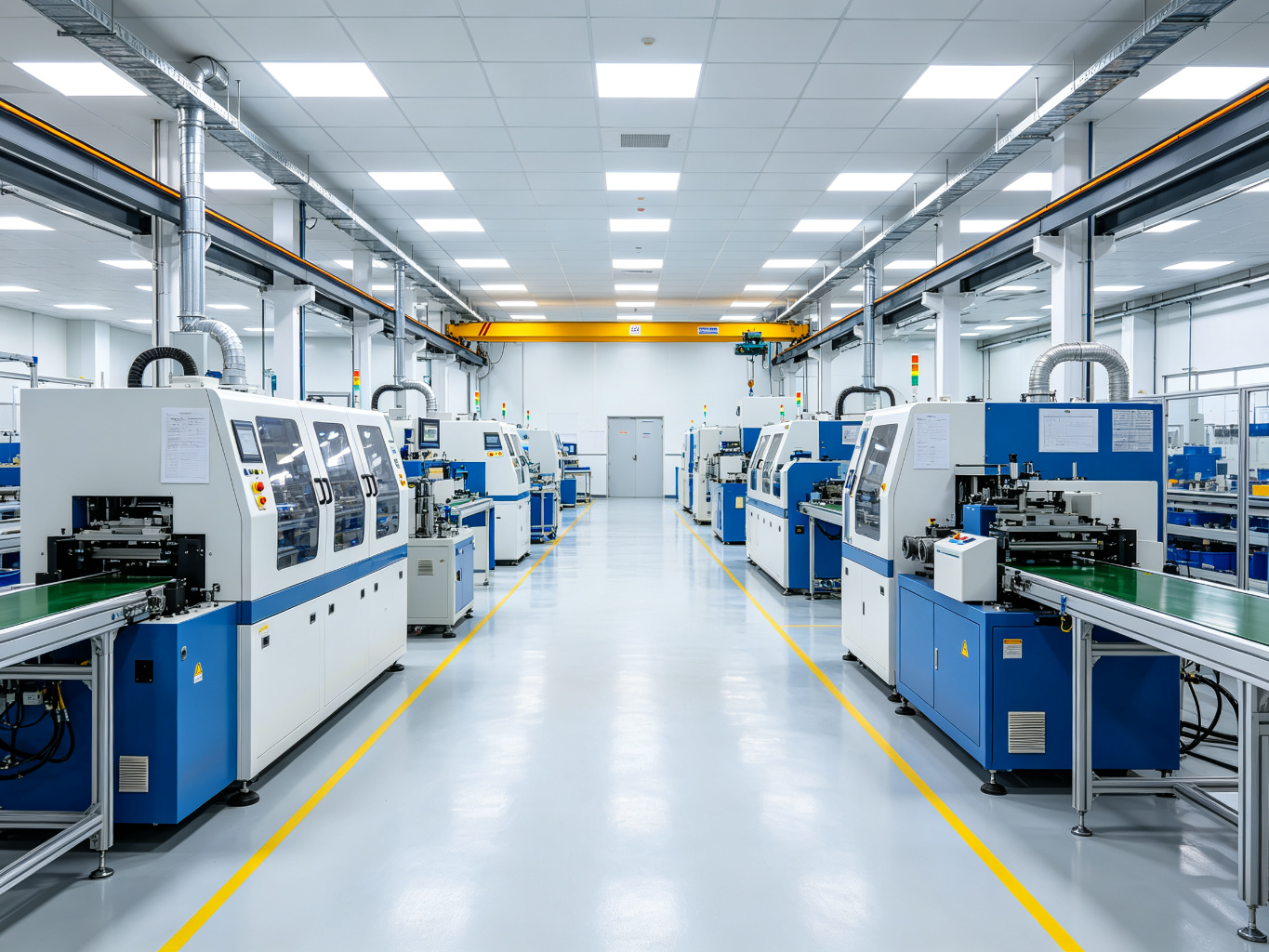
TL;DR. The best case sealer manufacturer for your plant is the one that already builds machines for companies with your box sizes, speed and tape or hot-melt preference. In 2026 the market splits into three tiers: global OEMs (3M, Combi, Interpack, Loveshaw) at $8,000–$40,000, mid-market integrators at $4,000–$18,000, and Asian builders at $1,500–$8,000. This guide walks through how to tell them apart, what to ask, and which tier fits your plant.
By David Chen, Lead Packaging Engineer. David has specified and commissioned case sealers across food, household chemicals and e-commerce fulfilment plants for 11 years.
1. How to define “best” before you call suppliers
“Best case sealer manufacturer” is a different answer depending on whether you run 200 boxes a shift or 20,000. Before comparing suppliers, lock in four numbers: your smallest and largest RSC box (L × W × H), boxes per hour, whether you need random-size or fixed-size sealing, and whether you use water-based tape, hot-melt glue or both. PMMI’s 2024 automation report notes that the most common buyer mistake is specifying a machine on box size alone and then discovering the tape head or speed class is wrong.
2. The three manufacturer tiers
| Tier | Representative brands | Semi-auto price | Fully-auto price | Best for |
|---|---|---|---|---|
| Tier 1 — Global OEM | 3M-Matic, Combi Packaging Systems, Interpack, Loveshaw/Little David, Wexxar/Belpac | $4,000–$9,000 | $15,000–$40,000 | High volume, 24/7, local parts and service |
| Tier 2 — Mid-market integrator | Regional US/EU builders, some SunAura-class exporters | $1,800–$4,500 | $6,000–$18,000 | Mid volume, custom guarding, value engineering |
| Tier 3 — Direct-from-Asia | Chinese and Korean builders (incl. SunAura) | $900–$2,500 | $3,500–$9,000 | Export buyers, plants with in-house maintenance |
3. What separates a serious manufacturer from a trader
Not every company that lists “case sealer” on Alibaba is a manufacturer. Verify five things before sending a PO:
- Owned factory. Ask for a 30-minute live video walkthrough of the assembly floor, not a curated photo album. A trader will redirect you to a supplier’s video; a manufacturer will walk you through their own bench.
- Core parts in-house. Tape heads, side-belt drives and gearboxes should be assembled in-house or sourced from named sub-suppliers (Bando, SEW, SMC). Avoid machines where every part is generic.
- Local reference customers. Ask for three references in your industry, not just any customer. Call them.
- Parts stock. Ask where tape rollers, drive belts and PCB spares are stocked. A 4-week ocean freight wait for a $40 sensor kills uptime.
- Warranty in writing. 24 months parts from commissioning, not 12 months from ship date.
4. Configurations buyers confuse
| Configuration | Speed | Box size range | Typical price |
|---|---|---|---|
| Semi-automatic, uniform box | 5–10 boxes/min | Fixed, 1–2 sizes | $1,500–$4,000 |
| Semi-automatic random box | 4–8 boxes/min | 150–500 mm adjustable | $3,000–$7,000 |
| Fully automatic uniform box | 10–25 boxes/min | Fixed to 2–3 sizes | $8,000–$18,000 |
| Fully automatic random (adaptive) | 10–20 boxes/min | 150–600 mm automatic | $18,000–$40,000 |
| Hot-melt sealer (glue) | 15–30 boxes/min | Various | $15,000–$35,000 |
5. Buyer segments: which tier fits you
Small plant / 500–2,000 boxes/day. A $1,500–$3,000 semi-automatic from a Tier 2 or Tier 3 builder is right. You don’t need adaptive sealing; your people adjust the machine when the box size changes.
Mid-volume / 5,000–15,000 boxes/day. A fully automatic uniform sealer from a Tier 1 or strong Tier 2 builder, budget $8,000–$18,000. Pay the premium for side belts that don’t slip on heavy boxes.
High-volume / e-commerce / 15,000+ boxes/day. You need an adaptive random sealer with automatic size recognition. Budget $18,000–$40,000, and insist on a 95%+ uptime guarantee in the contract.
6. Questions to ask every supplier
- What is the sustained boxes-per-minute at my largest box size, not the spec sheet?
- What tape width and roll diameter does the machine use? Is it compatible with my current tape supplier?
- How long does a box size changeover take, and what tools are required?
- What is the warranty, and what does it exclude?
- Where are spare parts stocked, and what is the longest-lead part?
- Can I see a reference installation in my industry?
- Does the machine carry CE (EU) or UL (US) certification? Ask for the certificate.
- How loud is the machine in dB(A), measured at operator position?
- What is the typical annual maintenance cost?
- What is the lead time, and what slips the schedule?
7. Common pitfalls
- Buying only on price. A $1,500 sealer that jams twice a shift costs more in labour than a $4,000 reliable one.
- Ignoring tape quality. Even the best sealer leaks with cheap tape. Budget tape at $8–$15 per carton-seal.
- No height adjustment for future boxes. If your packaging changes, you want tool-less adjustment.
- Forcing hot-melt into a tape application. Hot-melt is faster on high-volume lines but adds glue cost and maintenance.
- Skimping on guarding. Open nip points violate OSHA and EU machine directive requirements.
8. SunAura’s recommendation
If you ship 5,000–15,000 boxes a day and want a balanced Tier 2 machine, send us your box dimensions and boxes-per-hour target — we will quote a side-belt sealer with 24-month warranty and sea-freight to your port. If you run 24/7 at high volume, we will tell you honestly whether you should buy a Tier 1 OEM instead.
9. How case sealers fit the modern e-commerce line
E-commerce fulfilment is the fastest-growing buyer of case sealers in 2026, and it has changed the machine requirements. A traditional consumer-goods plant seals 2–3 box sizes on a fixed schedule. An e-commerce pack-station runs 20–50 box sizes across a shift, with boxes arriving at random from a pack table. That mix is why adaptive/random case sealers have moved from a premium option to a default requirement in 3PL and D2C warehouses.
An adaptive sealer uses side-belt tracking and a sensor array to measure each box as it enters, then automatically adjusts the top flap folder and drive height. Changeover happens in under a second and requires no operator. The trade-off is price: adaptive sealers start at $18,000 and climb past $35,000 when integrated with a case erector and a barcode scanner. For a fulfilment centre packing 5,000+ boxes a day, the payback on an adaptive machine over a manual size-adjustment sealer is under 18 months because it eliminates the 30–60 seconds of downtime per box-size change.
10. Tape vs hot-melt: the long-running decision
Tape sealing is the default for most plants because it is simple, cheap and easy to rework. A 48 mm water-based acrylic tape on a standard RSC box holds 15–25 kg of product without a problem. BOPP hot-melt tape runs faster in high-speed lines but costs more per carton.
Hot-melt sealing, by contrast, applies a bead of glue to the flaps and folds them under pressure. It is faster on lines above 20 cases/min and produces a more tamper-evident seal. The downsides are glue cost (roughly $0.02–$0.05 per box), weekly nozzle cleaning, and the fact that resealing a hot-melt box requires cutting it open — not practical for reverse logistics. For e-commerce returns, tape is almost always the better choice because the customer or returns depot can reopen the box without a knife.
| Cost element | Tape sealer | Hot-melt sealer |
|---|---|---|
| Machine purchase | $8,000–$18,000 | $15,000–$35,000 |
| Consumable per box | $0.015–$0.03 tape | $0.02–$0.05 glue |
| Annual consumable cost (3M boxes) | $16,000–$32,000 | $22,000–$55,000 |
| Weekly maintenance | Roller wipe, 10 min | Nozzle purge, 30 min |
| Resealing for returns | Easy | Difficult |
11. Supplier onboarding: the 30-day test
Even after you pick a manufacturer, run a 30-day pilot on one machine before ordering a second. The pilot should answer four questions: Does it run your worst-case box (largest, smallest, heaviest, lightest)? What is the actual jam rate over 5,000 boxes? How long does a real operator take to change box sizes? And does the supplier answer service calls within the SLA they promised? A machine that fails any of these in the pilot will fail in production too.
13. Field test: three real-world scenarios
Scenario 1 — A mid-sized e-commerce 3PL in Ohio packing 8,000 boxes/day across 30 box sizes. They need an adaptive random sealer at $22,000–$28,000 with automatic size recognition. A fixed-size sealer would cost $12,000 but require 45 minutes of changeover per box size, which at 30 sizes per shift means 22 hours of lost production per day — impossible. The adaptive machine pays back in under 12 months on labour saved alone.
Scenario 2 — A food co-packer in Wisconsin running 2 shifts, 5,000 boxes/day of a single RSC size. They need a $8,000–$12,000 fully automatic uniform sealer. Adaptive sealing is wasted money because they run one size. The payback on two operators replaced is under 14 months.
Scenario 3 — A small hardware distributor in Texas shipping 300 boxes/day. They need a $2,000–$3,000 semi-automatic table-top sealer. An automatic machine would take 5 years to pay back. The semi-automatic unit pays back in 6 months on the one part-time packing hand it replaces.
14. Frequently asked questions

David leads our case sealing and cartoning engineering team. Over 14 years he has specified, installed and commissioned hundreds of random-size case sealers, top- and side-loading cartoners, and automatic case packers for food, household and industrial product lines. He writes buying guides and troubleshooting articles around seal quality, tape and hot-melt glue selection, and carton throughput limits.
See Full Bio ›