

Semi-automatic: 5–8 boxes/min. Automatic pneumatic: 8–15. Servo random-size: 15–30. High-speed robotic: up to 40.
Do I need a case sealer after the erector?
If the erector only seals the bottom, yes — you need a top case sealer after the product is loaded. Some machines do both bottom and top in one frame.
Summary
Case erector for shipping boxes; carton erector for retail cartons; box erector is a vague term that needs clarification. Within case erectors, choose tape for e-commerce, hot-melt for food, staples for heavy loads. Choose servo if you change box sizes; pneumatic if you run one size. Send us your box sizes and line speed and we will spec the right machine — and tell you if a cheaper option will do.
Related products: KXS400-5 servo robotic case erector · K30T high-speed carton erector · FA500 semi-automatic case sealer.
Typically 200–600 mm on a side. Random-size servo machines handle this range with recipe changeover. Fixed-size machines are set for one box.
How fast is a case erector?
Semi-automatic: 5–8 boxes/min. Automatic pneumatic: 8–15. Servo random-size: 15–30. High-speed robotic: up to 40.
Do I need a case sealer after the erector?
If the erector only seals the bottom, yes — you need a top case sealer after the product is loaded. Some machines do both bottom and top in one frame.
Summary
Case erector for shipping boxes; carton erector for retail cartons; box erector is a vague term that needs clarification. Within case erectors, choose tape for e-commerce, hot-melt for food, staples for heavy loads. Choose servo if you change box sizes; pneumatic if you run one size. Send us your box sizes and line speed and we will spec the right machine — and tell you if a cheaper option will do.
Related products: KXS400-5 servo robotic case erector · K30T high-speed carton erector · FA500 semi-automatic case sealer.
In North America, often yes. In Europe and pharma, no — a carton erector forms small retail cartons at high speed, while a case erector forms shipping cases.
What box sizes can a case erector handle?
Typically 200–600 mm on a side. Random-size servo machines handle this range with recipe changeover. Fixed-size machines are set for one box.
How fast is a case erector?
Semi-automatic: 5–8 boxes/min. Automatic pneumatic: 8–15. Servo random-size: 15–30. High-speed robotic: up to 40.
Do I need a case sealer after the erector?
If the erector only seals the bottom, yes — you need a top case sealer after the product is loaded. Some machines do both bottom and top in one frame.
Summary
Case erector for shipping boxes; carton erector for retail cartons; box erector is a vague term that needs clarification. Within case erectors, choose tape for e-commerce, hot-melt for food, staples for heavy loads. Choose servo if you change box sizes; pneumatic if you run one size. Send us your box sizes and line speed and we will spec the right machine — and tell you if a cheaper option will do.
Related products: KXS400-5 servo robotic case erector · K30T high-speed carton erector · FA500 semi-automatic case sealer.
Carton Erector vs Case Erector vs Box Erector: What Is the Difference, and Which Machine Should You Buy?
If you have typed “carton erector”, “case erector” or “box erector” into Google, you will have noticed that the three terms are used almost interchangeably by suppliers — and that this makes comparison shopping harder than it should be. They are not the same machine. A carton erector forms small retail cartons; a case erector forms shipping cases; a box erector is the colloquial term buyers use that usually means one or the other. Buying the wrong one wastes six figures and six months of lead time. This guide separates the three by size, speed, sealing method and price, and tells you which one fits your line.
What each term actually means
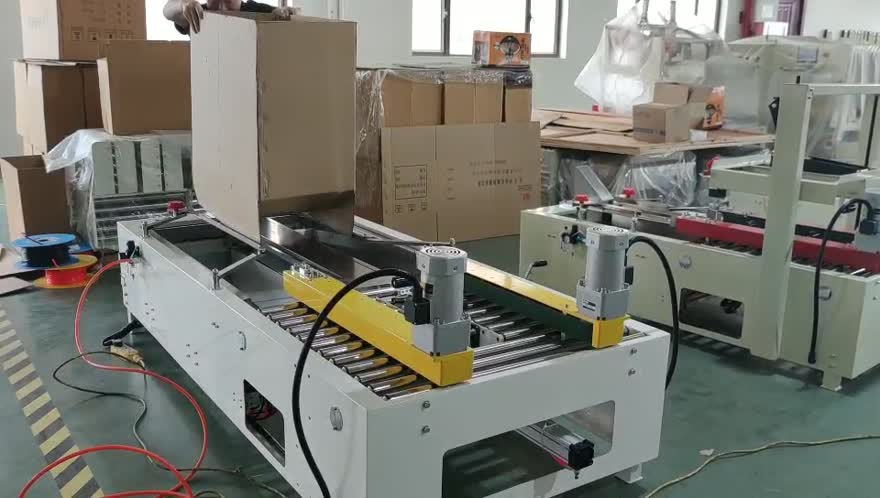
Case erector is the industry-standard term for a machine that takes flat corrugated blanks, opens them into a square tube, folds the bottom flaps and seals the base with tape, hot-melt glue or staples. It handles RSC (regular slotted container) boxes typically 200 mm to 600 mm on a side, at 5 to 30 boxes per minute. The output feeds straight onto a conveyor into a case packer or manual loading station. The case erector range on this site is built for this job.
Carton erector is used two ways in the market. In North America it is usually a synonym for case erector. In Europe and in pharmaceutical packaging, it means a machine that forms small retail cartons — the 350 g cereal box, the 500 g powder sachet carton — from blanks, at 60 to 200 cartons per minute. These are high-speed, servo-driven, hot-melt sealed machines, often integrated directly with a vertical form-fill-seal or a horizontal cartoner. They are not the same class of machine as a shipping case erector.
Box erector is the generic term buyers use when they have not yet decided. It usually means “the machine that makes my flat cardboard into a box I can fill.” It is not a technical category. When a supplier quotes you a “box erector”, ask them which one they mean — shipping case or retail carton — because the price difference is 3 to 5x.
| Case erector | Carton erector (retail) | Box erector (colloquial) | |
|---|---|---|---|
| Box size | 200–600 mm | 50–200 mm | Depends on supplier |
| Speed | 5–30 boxes/min | 60–200 cartons/min | Depends on supplier |
| Sealing | Tape / hot-melt / staple | Hot-melt only | Depends on supplier |
| Typical use | Shipping cases | Retail cartons | Unclear |
| Price band (USD) | $15k–$60k | $40k–$120k | Clarify before quote |
| Output feeds | Case packer / manual | Direct product loader | — |
How to know which one you need
Start with the box size you are shipping. If the box leaves your factory on a pallet and gets opened at a distribution center, you need a case erector. If the box goes onto a supermarket shelf and the consumer buys it, you need a cartoner (not a carton erector — the terminology is confusing on purpose). If you are e-commerce and ship directly to consumers, you need a case erector that handles random-size RSC boxes, plus a case sealer on the outfeed.
Tape vs hot-melt vs staple bottom sealing
Within the case erector category, the sealing method is the next decision. Tape is cheapest, easiest to change, and audit-friendly — the seal is visible. Hot-melt glue is faster and cleaner, but requires glue temperature control and glue nozzle maintenance. Staples are used for heavy or over-packed cases (construction, industrial parts) but are not food-contact friendly. For food and beverage, tape or hot-melt. For e-commerce, tape. For heavy industrial, staple.
Pneumatic vs servo case erector
A pneumatic case erector uses air cylinders to push the blank open and fold flaps. It is cheaper, simpler, and fine for a single box size at 5–10 boxes/min. A servo case erector uses servo motors for flap folding and blank squaring; it handles random box sizes with recipe changeover in 5–10 minutes, and runs 15–30 boxes/min. If you run one box size all day, pneumatic is enough. If you are a co-packer or e-commerce DC with 20 box sizes, servo is non-negotiable.
Random-size vs fixed-size case erectors
A fixed-size case erector is set up for one box dimension. The magazine, the opening mechanism and the flap folders are all tuned to that one blank. It is cheaper ($15k–$25k) and faster on that one size. A random-size case erector reads the blank size with a sensor and adjusts the flap folders automatically. It is more expensive ($35k–$60k) but handles 20+ box sizes with recipe changeover. If you run one SKU at high volume, fixed-size wins. If you are an e-commerce DC or a co-packer, random-size is the only way to avoid changeover downtime.
Inline vs rotary case erectors
An inline case erector pulls blanks from a magazine on one end, opens them, seals the bottom, and pushes them out the other end on a straight conveyor. It is the standard for 5–20 boxes/min. A rotary case erector uses a rotating carousel that opens and seals multiple boxes simultaneously. It runs 20–40 boxes/min but costs 2–3x more. For most factories, inline is enough. Rotary is only for high-volume food and beverage lines that run 24/7.
Bottom seal: tape, glue, or staple — a deeper look
Tape bottom seal is the most common. It uses a 48 mm or 75 mm tape roll applied to the center seam and two end seams. Tape is visible, audit-friendly, and easy to change. The downside is that tape can peel under heavy loads or in hot warehouses. Hot-melt glue applies a bead of adhesive along the flaps; it is cleaner and faster, but requires glue temperature control (typically 150–180°C) and periodic nozzle cleaning. Staple sealing punches a steel staple through the flaps; it is used for very heavy cases (construction materials, industrial parts) but is not food-contact safe and leaves a puncture in the box. For most food, beverage and e-commerce lines, tape or hot-melt is the right call.
Blank magazine and box storage
The magazine holds flat corrugated blanks. A standard magazine holds 150–250 blanks; an extended magazine holds 500+. If your line runs 24/7, you need an extended magazine so an operator does not reload every hour. The blank pick-up uses a suction cup; for dusty or printed blanks, specify a heavier-duty vacuum. The magazine also needs to be adjustable for blank size — a random-size machine has automatic magazine width adjustment.
What not to buy
Do not buy a “box erector” without clarifying whether it forms shipping cases or retail cartons — the price difference is 3x. Do not buy a pneumatic machine if you change box sizes more than once a shift. Do not buy a hot-melt sealer for a dusty or wet environment — the glue will not bond. And do not forget the outfeed conveyor and the case sealer on top; a case erector that drops boxes on the floor is a half-finished line.
Budgeting the case erecting section
The case erector itself is the headline, but the installed section includes the blank magazine, the outfeed conveyor, the case sealer, and the controls integration with your case packer or manual loading station. For a 10 boxes/min e-commerce line, budget $25k–$40k installed. For a 25 boxes/min servo line with random-size capability, budget $50k–$80k. Ask for the whole section, not just the erector head.
FAQ
Is a carton erector the same as a case erector?
In North America, often yes. In Europe and pharma, no — a carton erector forms small retail cartons at high speed, while a case erector forms shipping cases.
What box sizes can a case erector handle?
Typically 200–600 mm on a side. Random-size servo machines handle this range with recipe changeover. Fixed-size machines are set for one box.
How fast is a case erector?
Semi-automatic: 5–8 boxes/min. Automatic pneumatic: 8–15. Servo random-size: 15–30. High-speed robotic: up to 40.
Do I need a case sealer after the erector?
If the erector only seals the bottom, yes — you need a top case sealer after the product is loaded. Some machines do both bottom and top in one frame.
Summary
Case erector for shipping boxes; carton erector for retail cartons; box erector is a vague term that needs clarification. Within case erectors, choose tape for e-commerce, hot-melt for food, staples for heavy loads. Choose servo if you change box sizes; pneumatic if you run one size. Send us your box sizes and line speed and we will spec the right machine — and tell you if a cheaper option will do.
Related products: KXS400-5 servo robotic case erector · K30T high-speed carton erector · FA500 semi-automatic case sealer.

James oversees the engineering architecture for full end-of-line projects: defining machine sequence, conveyor layout, line balance, footprint and expansion capacity before individual machines are ordered. He reviews customer specifications, production rates and facility constraints, and signs off on the engineering drawings and acceptance tests. His articles take the system-level view a procurement manager needs.
See Full Bio ›