
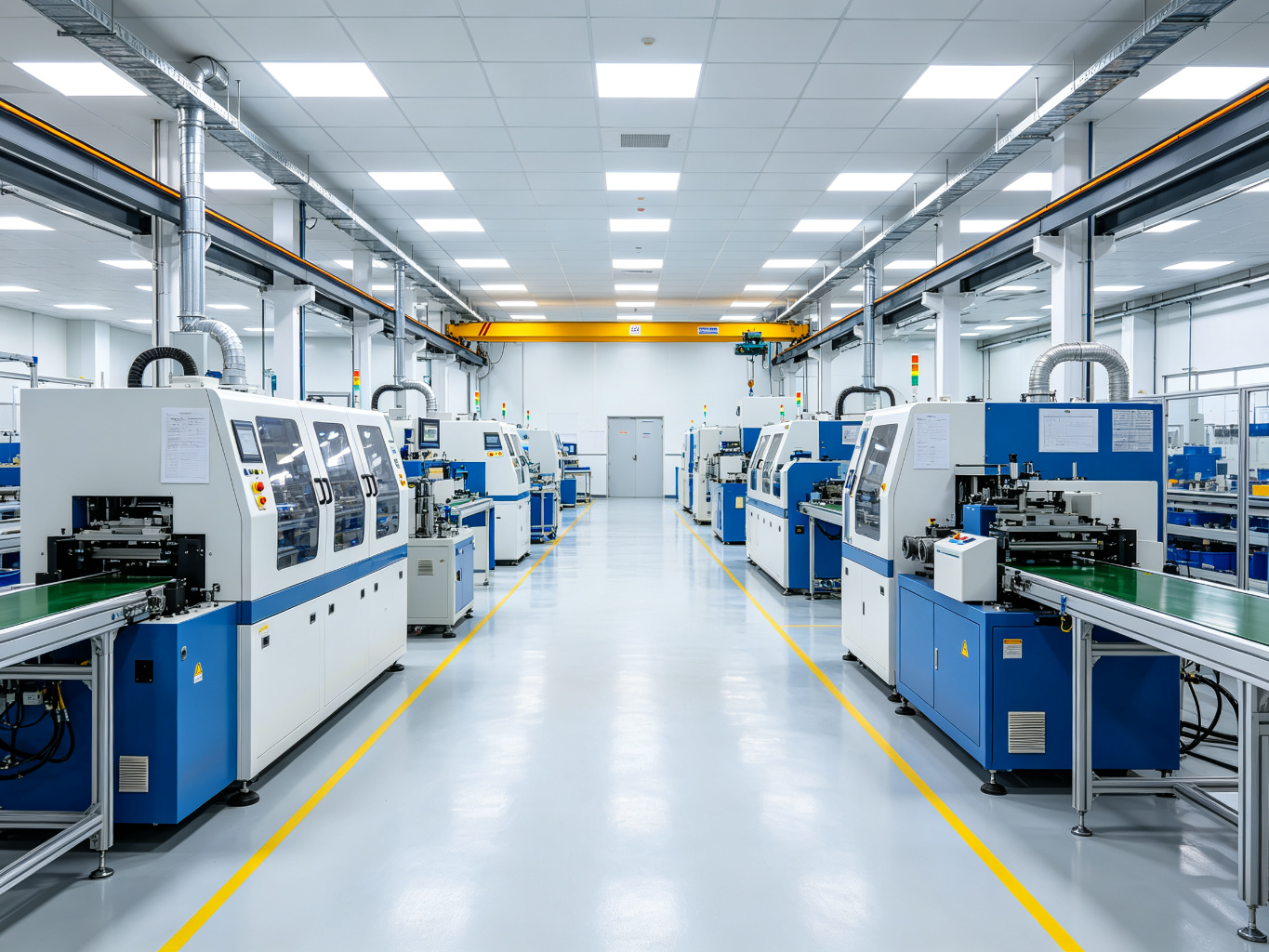
SunAura Packaging Machines will exhibit at Gulfood Manufacturing 2026, the food and beverage manufacturing industry’s largest event of its kind, which returns to the Dubai World Trade Centre from 3 to 5 November 2026. The company will use the show to present its end-of-line packaging equipment for food producers across the Middle East and the wider export markets served through Dubai, with case erecting, sealing, wrapping, strapping and integrated line solutions represented on the stand.
The announcement follows a year in which SunAura Packaging Machines has strengthened its regional service capacity and delivered a series of turn-key packaging projects into the Middle East and North Africa. For food and beverage manufacturers planning new lines, the exhibition offers a chance to review the equipment, discuss applications with the company’s engineers and work through the specifications that decide how a line performs on the factory floor.
Where and when
Gulfood Manufacturing runs over three days, opening on Tuesday 3 November and closing on Thursday 5 November 2026 at the Dubai World Trade Centre on Sheikh Zayed Road. The event covers the full food-manufacturing supply chain, with processing and packaging exhibitors alongside ingredients, logistics and private-label sections, reflecting how the industry sources complete lines rather than isolated machines. SunAura Packaging Machines will be located among the packaging exhibitors; visitors are encouraged to contact the company in advance to arrange a meeting at a specific time, particularly during the busier middle day of the show.
Dubai’s role as the event’s host is part of its value for exhibitors and buyers. The city sits at the centre of the trade routes connecting manufacturing markets in Asia with food producers and importers across the Gulf, North Africa, East Africa and South Asia, many of whom source equipment through the show. For SunAura Packaging Machines, which already ships lines into several of these markets, the exhibition is both a sales event and a regional meeting point for existing customers.
What SunAura Packaging Machines will present
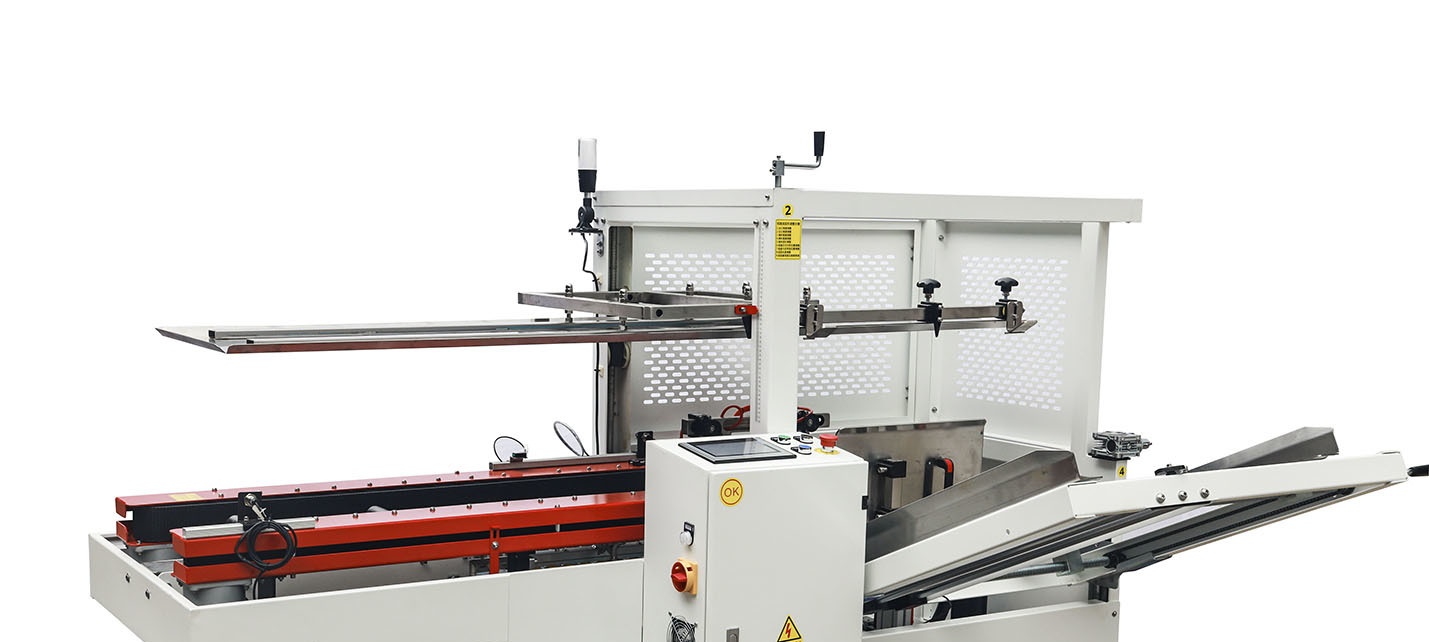
The equipment on show reflects the end of the food production line, where packed products are formed into cases, sealed, secured and palletised for distribution. A typical food line begins with a case erector that opens and bottom-seals corrugated cases before they reach the packing station. SunAura Packaging Machines’ range includes automatic and robotic erectors suited to different case rates and the mixed-SKU conditions common in regional food plants, with machines such as the high-speed servo and robotic erectors represented in the products hub. The erector’s reliability matters disproportionately: if cases are not formed and presented steadily, every machine downstream is starved.
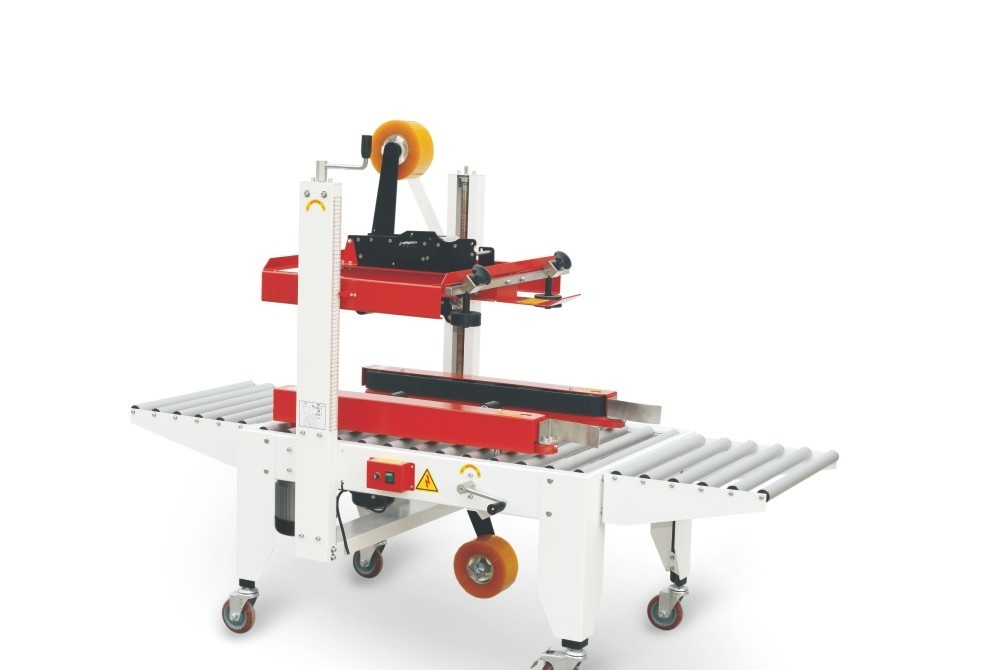
After packing, cases move through a top sealer and, where the load requires it, a strapper or wrapping station before palletising. SunAura Packaging Machines supplies uniform and random case sealers — the latter handling the mixed box sizes of e-commerce and varied production — along with fully automatic strapping and combined sealing-and-strapping cells. For food producers exporting across the Gulf and the wider region, securing cases for containers and long distribution routes is a core requirement, and the company’s strapping and wrapping equipment applies the protection the loads need.
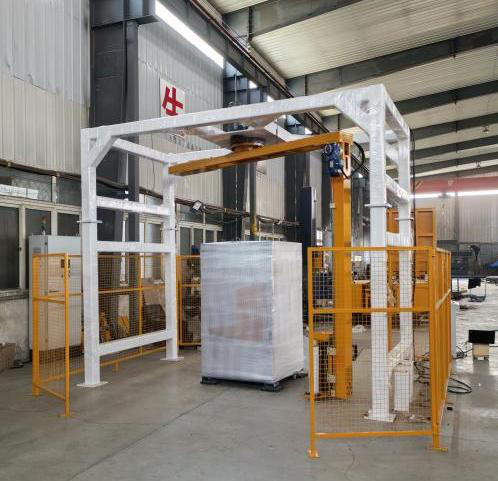
At the pallet stage, SunAura Packaging Machines offers turntable, rotary-arm and orbital wrapping machines and robotic or collaborative palletising, matched to the line’s speed and the load’s stability. High-speed and continuous lines favour rotary-arm machines that wrap without rotating the load, while moderate lines use turntable wrappers and collaborative robots provide a compact palletising option for facilities with limited space. The company will discuss how these stages are combined into a complete, balanced cell rather than quoted as separate machines.
Why the show matters for regional food producers
Sourcing a packaging line at an exhibition rather than solely online has practical advantages that buyers consistently value. The first is comparison: producers can review how different machines are constructed and access the engineers who will specify the line, rather than choosing from a catalogue. The second is application work — a productive stand conversation usually covers the case dimensions, products, target throughput and factory conditions that determine the right configuration, the same inputs SunAura Packaging Machines requests in its RFQ process. The third is the after-sales discussion: who commissions the line, where the spare parts are held, and how maintenance is supported, which for capital equipment matters as much as the machine’s price.
For the Middle East market, those questions carry particular weight. Food producers in the region handle a mix of domestic consumption and re-export, often across hot and humid conditions that affect both production and distribution, and they increasingly automate to manage the labour and consistency demands of growing volumes. SunAura Packaging Machines’ regional support — including its spare-parts and commissioning coverage — is part of what the company will present alongside the machines, so buyers can assess the full service package rather than the equipment alone.
Planning a stand meeting
SunAura Packaging Machines advises buyers who want a detailed technical discussion to prepare a few details before the show: the products being packed, the case or pack dimensions, the target cases per hour or packs per minute, the factory’s available space and services, and any existing machines the new line must connect to. With those inputs, the engineers at the stand can outline a configuration, indicate the appropriate machines and discuss lead and commissioning timelines on the spot. Buyers unable to attend can still submit the same details directly, and the company will arrange a separate review.
The company also expects to meet existing customers at the show, both to review running lines and to discuss expansions. Customers planning to attend are encouraged to make themselves known so time can be reserved, particularly for conversations about adding capacity, changing case formats or scheduling maintenance.
For buyers travelling from outside the UAE, SunAura Packaging Machines notes that the opening day tends to draw the heaviest footfall while the final afternoon closes earlier, at 5 pm; scheduling technical discussions for the first two days and the morning of the final day generally leaves the most room. The team can also advise on where within the processing and packaging halls the stand is located once the final stand allocation is published closer to the event.
From a stand conversation to a running line
Buyers who only attend exhibitions occasionally sometimes ask how a conversation on a stand becomes a line in their factory, and the process is worth understanding because the steps set the timeline. After the initial application discussion, SunAura Packaging Machines prepares a configuration based on the producer’s products, cases and throughput, indicating the machines, their layout and the integration points. Where the line is substantial or must connect to existing equipment, this is followed by a more detailed layout and, for turn-key projects, factory acceptance before shipment — the line or cell is built and tested, ideally with the customer’s actual cases and products, before it is packed for export. That pre-shipment testing is the step that most reduces commissioning time on site, because it finds issues in the builder’s works rather than the customer’s plant.
On arrival, the equipment is positioned and connected, commissioned with real product, and the customer’s operators and maintenance staff are trained before sign-off. For regional buyers, SunAura Packaging Machines’ local commissioning coverage and parts inventory shorten the wait both for installation and for any later work, which is why the company presents service as part of the package at the show rather than treating it as a separate conversation. Producers who plan around this sequence — agreeing the specification early and preparing the factory’s space and services ahead of delivery — tend to reach production fastest.
The regional market in context
The demand SunAura Packaging Machines expects to discuss at the show sits within a well-established regional trend. Food and beverage manufacturing across the Gulf has expanded to serve growing populations, tourism and large-scale catering, while governments in several markets have encouraged domestic production and food security, supporting investment in processing and packaging capacity. Alongside domestic output, the region is a re-export hub, with product moving through its ports and free zones to markets in Africa and Asia, much of it requiring the palletised, container-ready packaging that automated end-of-line equipment produces. Hot conditions and long distribution routes also place a premium on packs and pallets that hold their integrity from the factory to the shelf.
At the same time, producers face the same labour pressures seen in other markets: the repetitive work of forming, sealing and handling cases is harder to staff and retain, and its cost over the life of a line is substantial against the cost of automation. These forces together — capacity expansion, re-export, climate and labour — explain why regional producers increasingly specify complete, automated end-of-line cells rather than individual machines, and why a show that gathers the full supply chain remains the natural place to source them.
A wider calendar of regional engagement
Gulfood Manufacturing is the latest in SunAura Packaging Machines’ programme of trade-show and regional engagement, which the company uses to keep its applications engineers in direct contact with the markets it supplies. The company has reinforced support in Southeast Asia and Latin America alongside the Middle East, and it views exhibitions as part of the same approach: placing equipment, parts and expertise close to the producers running the machines. Details of further appearances in 2026 and into 2027 will be announced as they are confirmed.
Sustainability on the stand
Regional food producers increasingly raise material waste alongside throughput, and SunAura Packaging Machines expects the topic to feature in its stand discussions. End-of-line machines influence sustainability in practical, measurable ways: correctly applied stretch film reduces the film used per pallet while keeping loads secure, reliable sealing and strapping reduce the packs and cases rejected and reworked, and balanced lines cut the energy and time wasted when machines run while waiting on a bottleneck. The company will discuss how film settings, pack patterns and line balancing reduce consumable use without weakening load protection — a saving that, like the material itself, is counted per pallet and accumulates across a year of production.
SunAura Packaging Machines also supplies equipment compatible with a widening range of films, including recyclable and thinner-gauge materials, provided the wrapper or sealer is set correctly for the material’s sealing and handling requirements. Producers planning to move to more sustainable films are encouraged to raise this at the specification stage, so the machine is confirmed against the intended material rather than adjusted later.
Frequently asked questions
When and where is SunAura Packaging Machines exhibiting?
At Gulfood Manufacturing 2026, held 3–5 November at the Dubai World Trade Centre. SunAura Packaging Machines will be among the packaging exhibitors, with end-of-line equipment and applications engineers present throughout the show.
Do I need to arrange a meeting in advance?
It is not required to visit the stand, but buyers wanting a detailed technical or configuration discussion are encouraged to contact SunAura Packaging Machines beforehand to reserve a time, especially on the busier middle day.
What should I bring for a productive discussion?
Your product and case dimensions, target throughput, factory space and services, and details of any existing equipment. These allow the engineers to outline a suitable line rather than discuss machines in general terms.
I cannot attend the show — can I still get a specification?
Yes. Submit the same product, case and throughput details through the contact page and SunAura Packaging Machines will arrange a review and configuration directly, with regional commissioning and parts support as for any project.
Conclusion
Gulfood Manufacturing 2026 gives regional food and beverage producers a direct opportunity to review SunAura Packaging Machines’ end-of-line equipment — from case erection and sealing to strapping, wrapping and palletising — and to work through real specifications with the company’s engineers. Running 3–5 November in Dubai, the show combines the equipment, the applications expertise and the after-sales discussion that a packaging-line decision requires. SunAura Packaging Machines looks forward to meeting both new buyers and existing customers there, and invites anyone planning a line to arrange a meeting or make contact in advance.

Michael designs automated palletizing stations and ties upstream case or bag flow to downstream stretch wrapping. His work spans conventional layer palletizers, robotic arm cells, conveyor routing, safety fencing and handover logic between machines. He writes about palletizer selection, load stability and how an end-of-line sequence should be balanced.
See Full Bio ›